Cathedral Museum Santiago de Compostela
The Cathedral Museum of Santiago de Compostela holds the treasury, the Gelmirez Palace and access to the rooftops. Here is what it contains, what it costs and how to plan a visit.
Short answer
The Cathedral Museum of Santiago de Compostela is open daily from roughly 10:00am to 8:00pm, with the ticket office closing 30 minutes earlier. Tickets run from 9 to 23 EUR depending on what you include, from the permanent collection alone up to combinations with the rooftop tour and the Portico da Gloria.
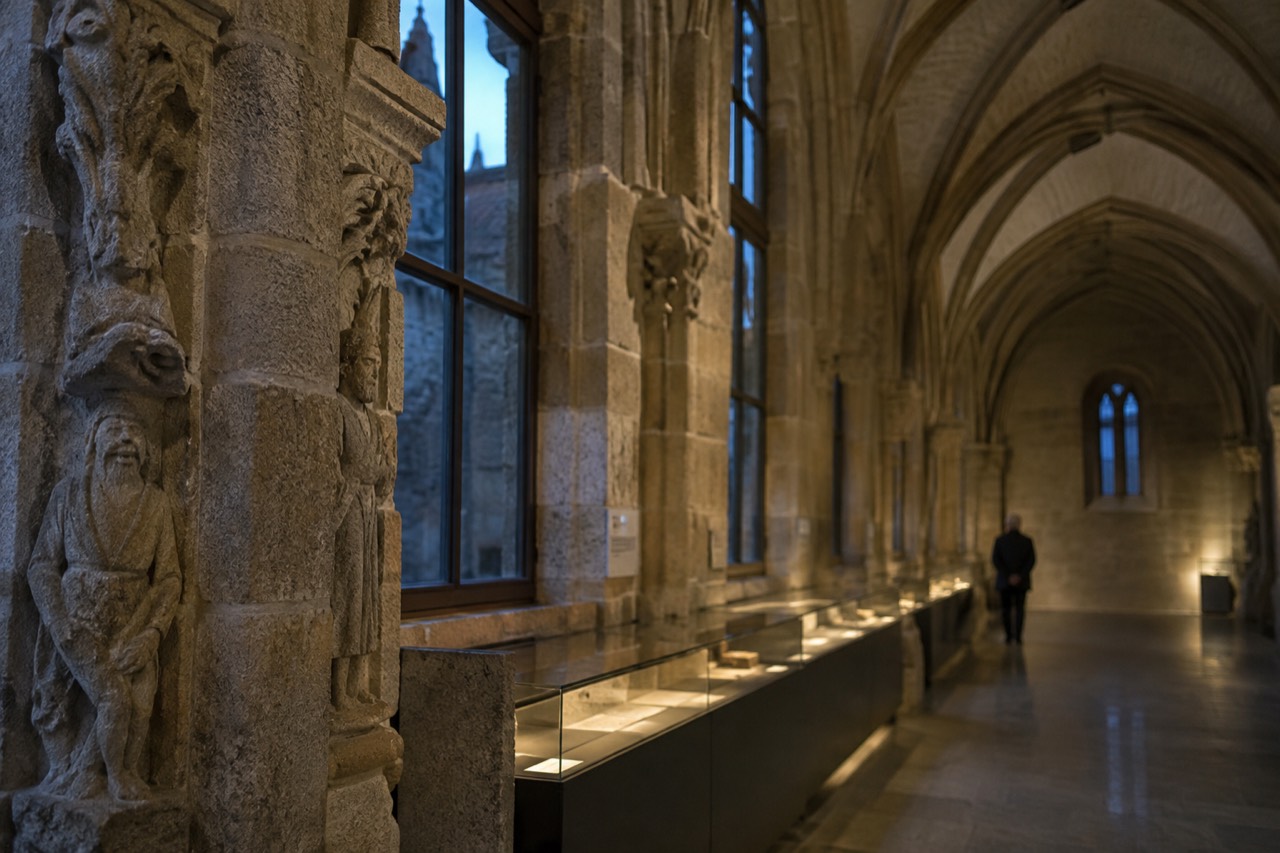
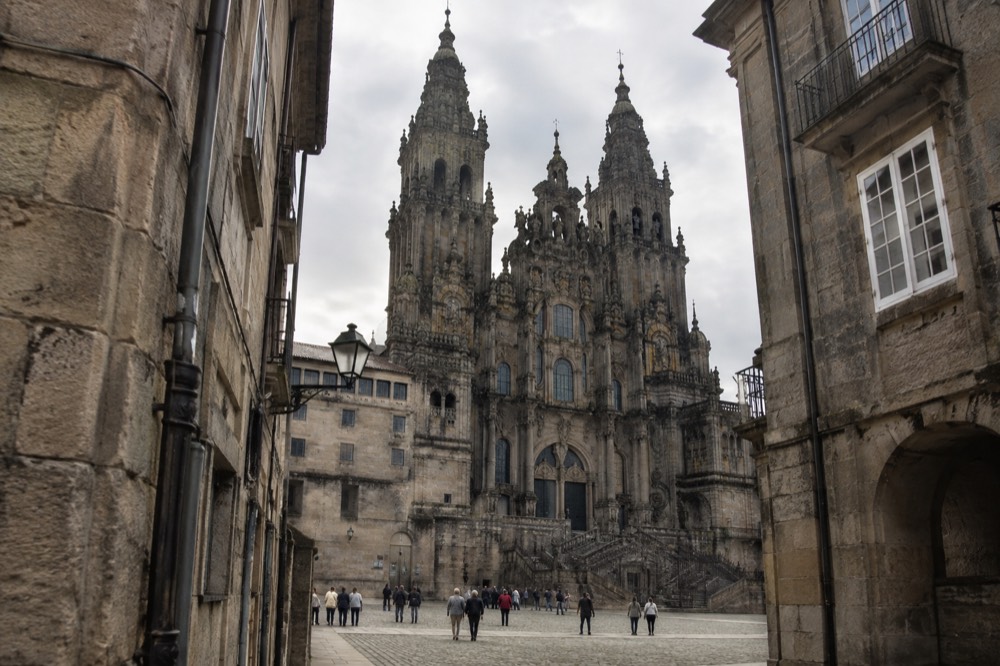
The Cathedral Museum of Santiago de Compostela is the part of the pilgrim cathedral complex most visitors underestimate. The basilica itself is free to enter and most people walk straight through it, hug the Apostle's statue, and leave. The museum, housed in the cloister and the Gelmirez Palace along the cathedral's flank, holds the silver reliquary, tapestries, the choir's stone carving and the chapter library, and its tickets are also the gateway to two experiences the free interior visit does not include: the rooftop walk above the granite towers and the time-limited visit to the Portico da Gloria. The Cathedral's own ticketing site lists the museum as open daily from roughly 10:00am to 8:00pm, with the ticket office closing 30 minutes earlier, and prices between 9 and 23 EUR depending on what the ticket bundles.
This guide, from the editors at Santiago de Compostela Travel Guide, covers what the museum actually contains, how the ticket tiers work, what the current restoration works do and do not affect, and how to fit a visit into a day in the old town. One thing worth knowing up front: the museum is not one room of dusty vestments. It spreads across several connected buildings, and the most expensive tickets include the single best view in the city.
What Is The Cathedral Museum Of Santiago de Compostela?
The Cathedral Museum, or Museo Catedral, is the chapter museum of the Santiago de Compostela Cathedral, spread through the cathedral cloister and the Gelmirez Palace, holding the cathedral's treasury, tapestries, sculpture, manuscripts and the tomb monuments of the archbishops, entered on paid tickets separate from the free basilica interior. It sits directly against the cathedral's south side, with its main access from the Obradoiro square level, and its tickets also unlock the rooftop tour and the Portico da Gloria.
The museum is an organised collection held by the cathedral chapter, but the buildings it occupies are far older than any modern gallery arrangement. The Gelmirez Palace, a Romanesque civil masterpiece from Master Mateo's era, was built to serve the medieval archbishopric, and its rib-vaulted banqueting hall is one of the finest secular Romanesque interiors anywhere in Spain. The Cloister of the cathedral, with its double level, connects the palace to the treasury rooms above.
For a pilgrim arriving in the city, the museum answers a question the free visit cannot: what was actually made here, and what was kept. The treasury holds reliquaries and processional silver accumulated across centuries of the Apostle's cult, the story told from the pilgrimage side in our guide to why the cathedral is so famous.
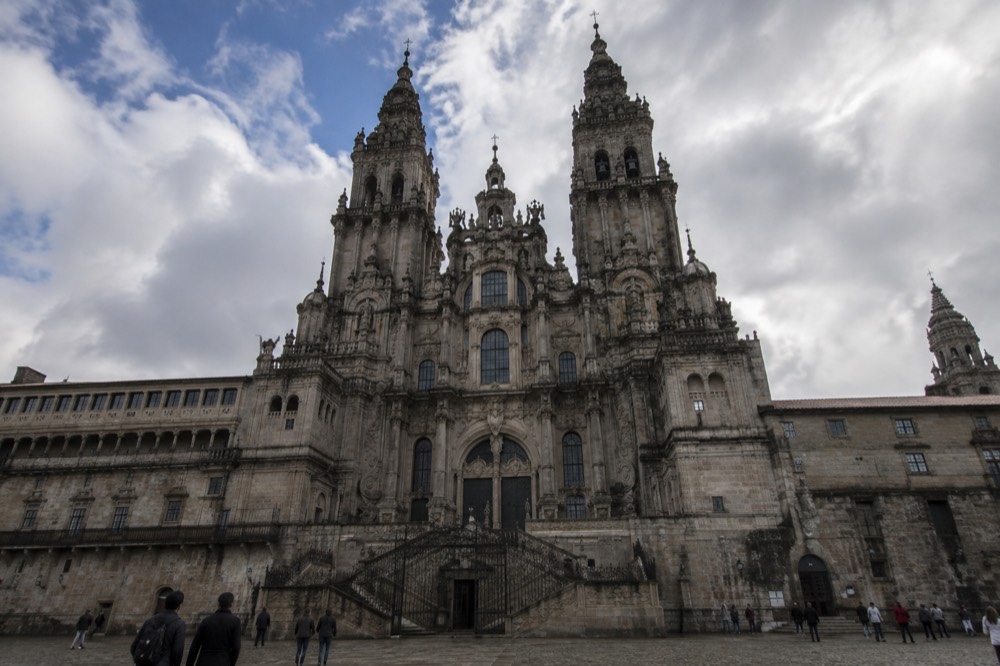
The Old Town of Santiago de Compostela was inscribed by UNESCO in 1985, and the cathedral complex is its centrepiece. The museum is the part of that complex you pay for, and the reason to pay is simple: the interior visit shows you the cathedral as a pilgrim sees it, while the museum shows you the institution behind it, with its wealth, its stonework, and its view from 72 metres up.
What Are The Cathedral Museum Opening Hours And Ticket Prices?
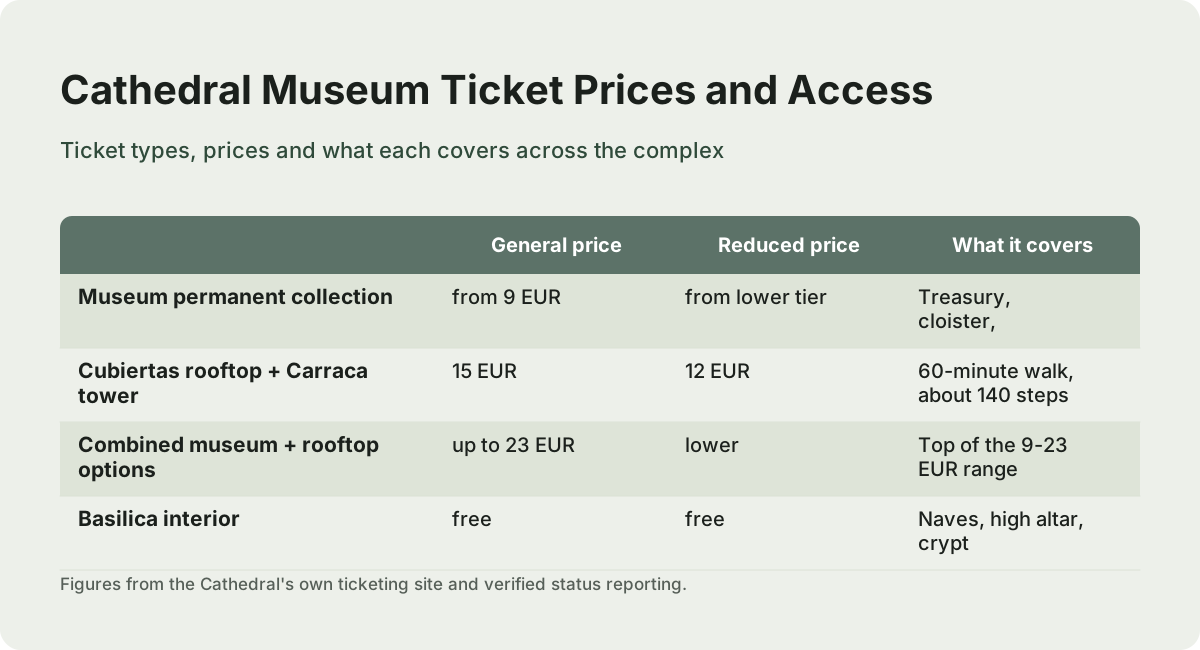
The Cathedral Museum of Santiago de Compostela opens daily from roughly 10:00am to 8:00pm, with the ticket office closing 30 minutes before the museum itself, and tickets cost between 9 and 23 EUR depending on the combination chosen. The cheapest tier covers the permanent collection and the Gelmirez Palace, while higher tiers add the Cubiertas rooftop tour at 15 EUR general or 12 EUR reduced, and combined options reach the top of the range at 23 EUR.
Those figures come from the Cathedral's own ticketing site and the verified current status of the works and closures reporting. The permanent collection ticket is the entry point, and the 9 to 23 EUR range on the Cathedral's site is the full spread across ticket types. The rooftop tour, sold as Cubiertas y Torre de la Carraca, is its own product at 15 EUR general, 12 EUR reduced for accredited pilgrims, students, over-65s and other qualifying groups, with proof required at entry. English-language rooftop visits are a flat 15 EUR.
| Ticket element | General price | Reduced price | What it covers |
|---|---|---|---|
| Museum permanent collection | from 9 EUR | from lower tier | Treasury, cloister, Gelmirez Palace, tapestries |
| Cubiertas rooftop + Carraca tower | 15 EUR | 12 EUR | Guided 60-minute rooftop walk, about 140 steps, plus 7-day museum access |
| Combined museum + rooftop options | up to 23 EUR | lower | Top of the 9-23 EUR range, one use per space over 7 days |
| Basilica interior | free | free | Naves, high altar, crypt, embrace of the Apostle |
The rooftop ticket deserves a note: the Cathedral's own ticketing page states it includes free access to the permanent museum collection, the Palacio de Gelmirez, the crypt of the Portico da Gloria, MuSar and the Diocesan Museum, valid for seven days with one use per space. That makes the 15 EUR rooftop ticket arguably the best value single purchase in the whole complex, because it effectively bundles the museum into it. Our separate cathedral rooftops tour guide covers that walk in detail.
Booking is online through the Cathedral's own ticketing site with timed slots, and advance booking is recommended in peak season because slots do sell out. Physical ticket offices exist, including at Praza do Obradoiro, but on a July day the timed-slot system is the difference between a planned visit and a long wait. If you prefer a guided visit with entry handled, there are also guided options, covered further down this page.
For current opening hours and ticket variations, always check the details near your travel date on the venue's own channels, and see our cathedral tickets and opening hours guide for the full picture across the complex, including the free basilica access from roughly 7:00am to 9:00pm daily.
What Does The Cathedral Museum Collection Actually Contain?
The collection spans the cathedral treasury, including reliquaries and processional silver, the Gelmirez Palace with its rib-vaulted banqueting hall, the double-level cloister, the chapter library, tapestries, stone sculpture from the cathedral's successive building campaigns, and the tomb monuments of archbishops, presented across connected buildings rather than a single gallery floor.
The Gelmirez Palace hall is the piece most visitors remember. Its rib vaults are among the earliest of their kind in Spain, and the hall was designed for the ceremonial banquets of the archbishopric. Walking through it after the crowded basilica changes the register of the visit entirely: suddenly the cathedral is not only a pilgrimage destination but a working medieval institution with a civil arm, a treasury and a bureaucratic life.
The treasury rooms hold the objects the liturgy needed: crosses, censers, reliquary busts and processional pieces, some connected directly to the Apostle's cult that made the city. The collection of textiles, assembled across centuries, is displayed in the cloister's upper level, where the chapter also kept its library.
| Museum space | What you see | Highlight |
|---|---|---|
| Gelmirez Palace | Romanesque civil architecture, banqueting hall | Rib vaults, secular Romanesque masterpiece |
| Cloister | Double-level walkway, cathedral interior views | Upper-level textile display |
| Treasury | Reliquaries, silver, liturgical objects | Processional pieces tied to the Apostle's cult |
| Sculpture and stonework | Fragments from building campaigns | Carving connected to Master Mateo's workshop |
| Chapter library | Manuscripts and archives | Documents of the pilgrimage institution |
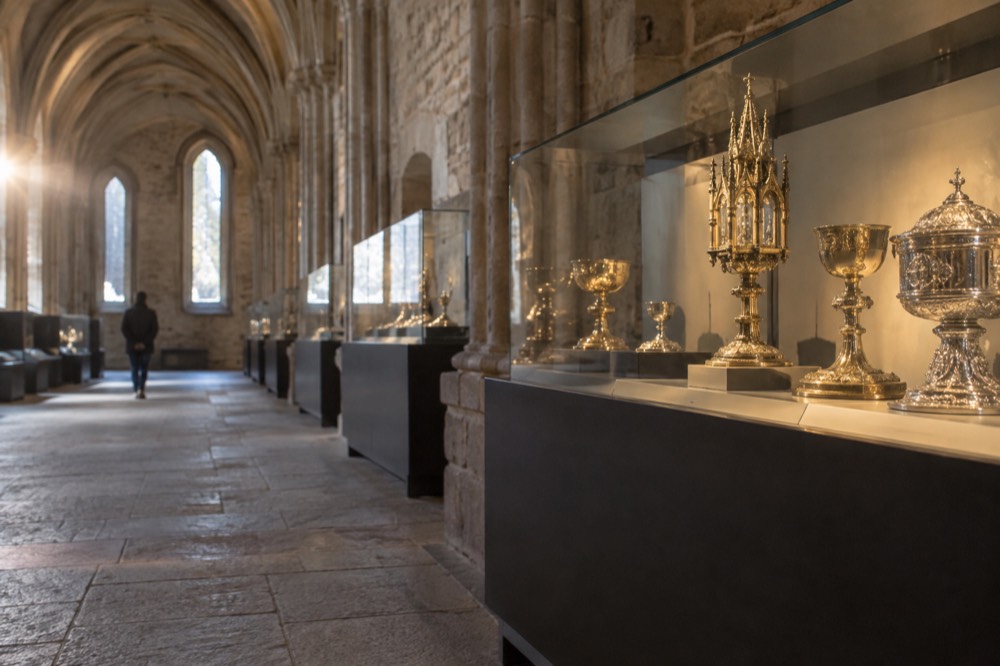
A useful contrast: the nearby Museo das Peregrinacions tells the story of the pilgrimage itself across all routes and centuries, while the Cathedral Museum tells the story of this one institution and its objects. The two complement each other rather than compete, and a visitor with a full day can do both. For that museum's current hours and any free-admission days, check the venue's own site before visiting, as they are not officially published.
If the self-guided route appeals, the related tour below is the guided version of exactly this visit, with the ticket line handled for you.
How Do Museum Tickets Work With The Rooftops And The Portico da Gloria?
The 15 EUR Cubiertas rooftop ticket includes access to the museum collection, the Gelmirez Palace, the crypt of the Portico da Gloria, MuSar and the Diocesan Museum, valid for seven days with one use per space, while the Portico da Gloria itself is visited on time-limited ticketed access for preservation reasons, its major restoration having been completed in 2018. Together the combinations span the 9 to 23 EUR published range.
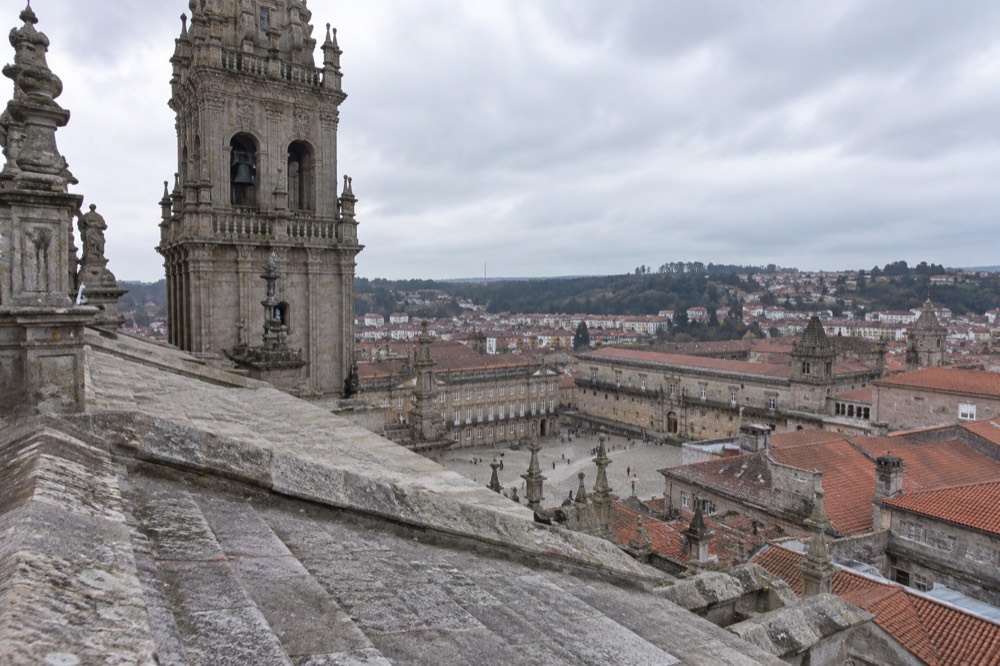
The rooftop tour, the Cubiertas y Torre de la Carraca, is a guided visit of about 60 minutes involving roughly 140 steps and reaching about 72 metres above the square. It is the only way to stand on the stone roof of the cathedral and look across the towers toward the Hostal dos Reis Catolicos on one side and the Alameda on the other. The Cathedral's ticketing site sells it online with timed slots, and reduced 12 EUR rates apply to accredited pilgrims, students, over-65s, large families and other qualifying groups, with proof required.
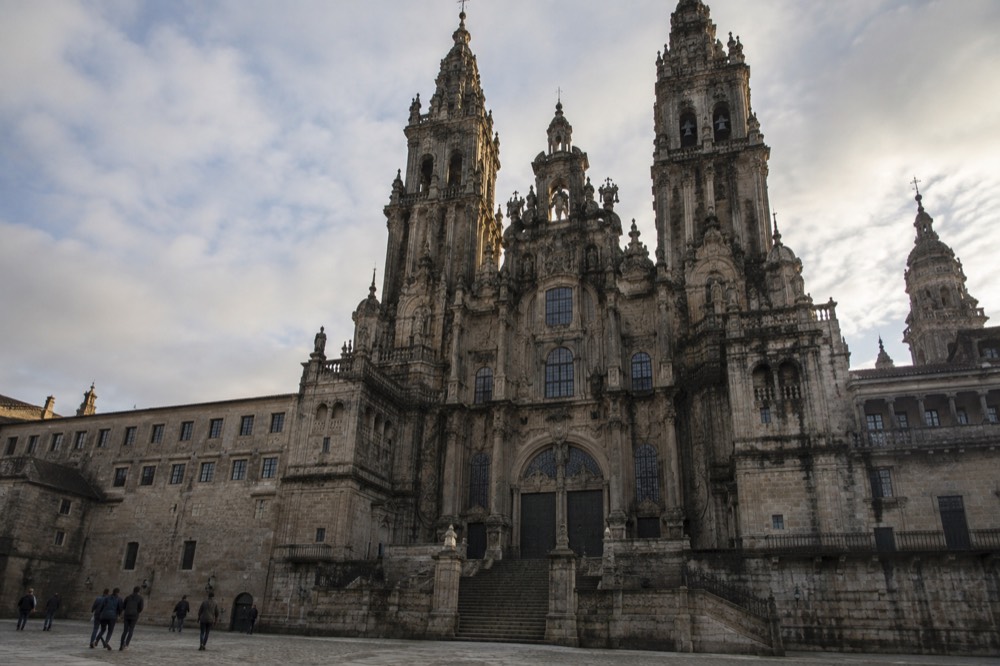
The Portico da Gloria, Master Mateo's carved portico inside the west facade, is a separate consideration. Its major restoration was completed in 2018, and the current arrangement is timed ticketing with limited visit duration, purely for preservation. The verified status reporting shows no closure or restriction on it beyond that normal timed access. Some museum ticket combinations include the Portico; the exact combination depends on which bundle you buy, so check the ticket description on the Cathedral's own site for the tier you choose.
The practical division of the complex looks like this:
| Part of the complex | Access | Ticket |
|---|---|---|
| Basilica naves, high altar, crypt, embrace | Free, roughly 7:00am-9:00pm daily | None |
| Museum permanent collection, Gelmirez Palace | Paid, roughly 10:00am-8:00pm | From 9 EUR tier |
| Rooftops, Cubiertas + Carraca tower | Guided only, timed slots | 15 EUR / 12 EUR reduced |
| Portico da Gloria | Time-limited guided access | Included in qualifying tickets |
For travellers who want the whole vertical experience in one guided block, this combination covers the cathedral, the museum and the rooftops with tickets included, at a mid-range price on the operator's live listing.
Should You Visit The Cathedral Museum Independently Or With A Guided Tour?
An independent visit using the Cathedral's own timed tickets suits confident travellers who want to move at their own pace and pay the published 9 to 23 EUR, while a guided tour suits visitors who want the line handled, a guide explaining the Gelmirez Palace and treasury in context, and a fixed time budget, typically at a higher combined price with entry included. Both see the same rooms; the difference is interpretation and logistics.
The guided options on this site range from a skip-the-line cathedral and museum walk to a fuller half-day that adds the old city. The cathedral of Santiago de Compostela is dense enough that a guide earns their fee in the first twenty minutes: the names, the building campaigns and the politics of the archbishopric are not readable from the stones alone unless you already know them.
| Option | Best for | Trade-off |
|---|---|---|
| Self-guided, Cathedral's own tickets | Independent travellers, tight budgets | You queue and interpret alone |
| Guided cathedral + museum, skip line | First-time visitors, short stays | Higher price than raw entry |
| Half-day with old city and tickets | One-day visitors wanting maximum coverage | Fixed schedule |
| Free GuruWalk city walk, tip-based | Budget travellers wanting orientation | City only, does not include museum entry |
That last row deserves its own note. GuruWalk runs free, tip-based walking tours of the old town, and one of the most complete, the Free Tour Santiago Fundamental with its 6,342 reviews, covers the city context around the cathedral. A GuruWalk walk does not include museum entry, so it pairs well with your own museum ticket rather than replacing one.
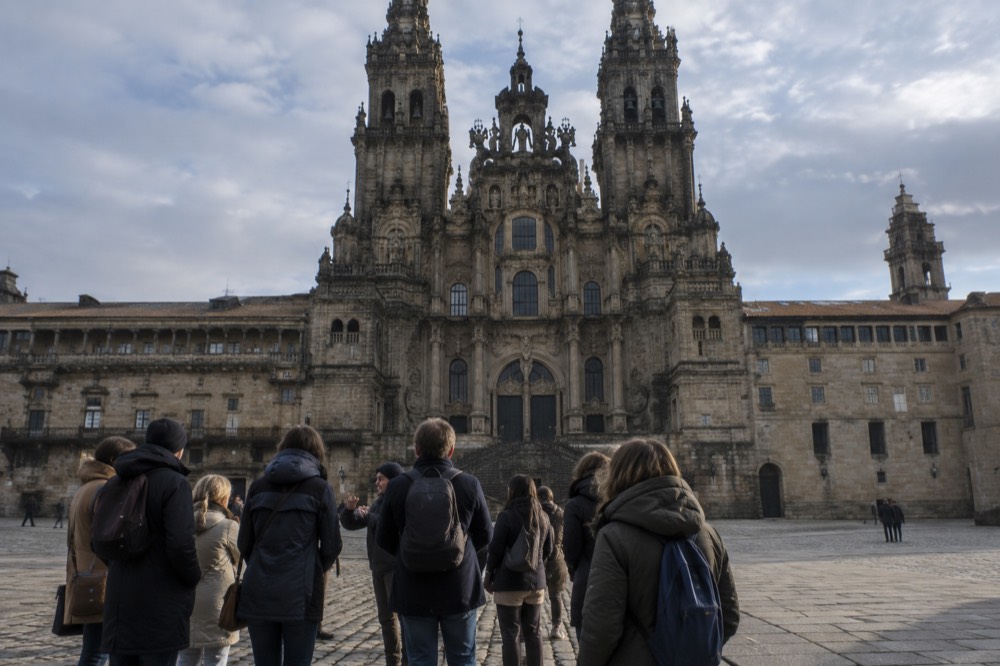
How Much Time Do You Need For The Cathedral Museum?
Plan on 60 to 90 minutes for the museum collection and Gelmirez Palace at a comfortable pace, another 60 minutes for the guided rooftop tour, and about 20 to 30 minutes for a time-limited Portico da Gloria visit, meaning a full cathedral-and-museum morning runs about three hours including the free basilica interior.
The most common mistake is booking the rooftop slot too close to the museum entry. The rooftop tour is guided and fixed to its start time, so it anchors the schedule: book the rooftop first, then work backwards, giving yourself the museum beforehand if you want the collection in context, or afterwards using the included seven-day access if you would rather see the view first.
A realistic half-day in the cathedral quarter looks like this:
| Time | Activity |
|---|---|
| 09:00 | Basilica interior, free, quietest early |
| 10:00 | Museum opens, collection and Gelmirez Palace |
| 11:30 | Rooftop guided tour, 60 minutes, about 140 steps |
| 12:45 | Pilgrim mass, noon or evening depending on the day |
| Afternoon | Old town, or rooftop ticket's included spaces over following days |
One scheduling fact matters enormously right now. From 16 October 2026, the 9:30am, noon and 7:30pm pilgrim masses relocate from the Cathedral's High Altar to the nearby Church of San Agustin while main chapel remodelling works prepare the cathedral for the 2027 Holy Year; only the 7:30am mass stays in the Cathedral's own Communion chapel. Before that date, all four masses are at the High Altar. Any visit plan built around attending mass needs to account for which arrangement is in force on the day.
What Should You Know Before Visiting In 2026 And 2027?
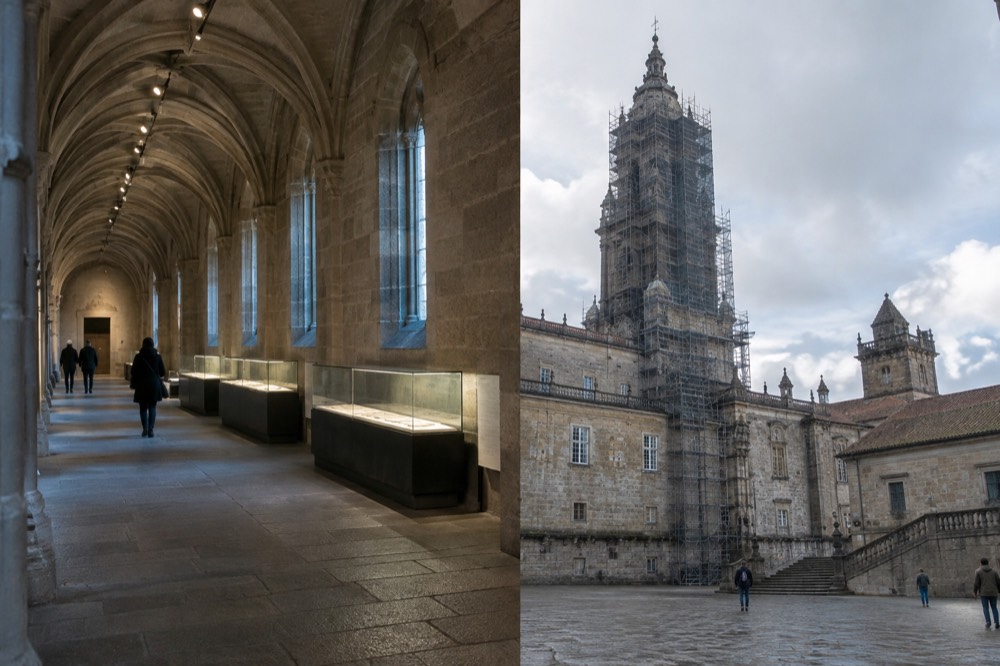
The cathedral, its naves, tomb and embrace of the Apostle are fully open with no visitor-facing closures, the only works being interior scaffolding over the crossing for cimborrio restoration, exterior works on the Berenguela clock tower spanning 2026 to 2027, and exterior chapel roof works, and the Botafumeiro is temporarily out of action because that crossing scaffolding covers its hanging mechanism, with no return date published.
The Botafumeiro point is the one visitors most often get wrong. The giant censer normally swings at the end of the main solemn Mass on 12 fixed solemnities each year, from Epiphany and Easter through the Feast of St. James on 25 July to the Transfer of the Apostle on 30 December. The Cathedral confirmed in writing that it is currently suspended and unavailable even for private requests, because the dome scaffolding covers the mechanism. No page should promise a visitor will see it swing in 2026. Our dedicated Botafumeiro guide covers the full solemnity list and current status.
The Holy Year timeline matters too. 2027, not 2026, is the next Xacobeo: the Holy Door opens on the evening of 31 December 2026 and remains open through 31 December 2027. The main chapel works now underway are preparation for that year, which is expected to draw pilgrim numbers well beyond the record 530,987 Compostelas issued in 2025. If you are visiting in late 2026 or 2027, book museum and rooftop slots early.
Two smaller practical points. First, the basilica has a dress expectation covered in our dress code answer; the museum, as a museum, is more relaxed, but modest clothing serves you for both in one visit. Second, Santiago de Compostela has charged a municipal tourist tax since 1 October 2025, a surcharge on Galicia's tourist-stay tax, ranging from 1 EUR per person per night (up to 5 nights) in private albergues, campsites and tourist apartments to 2.50 EUR in five-star hotels, with under-18s and stays in Xunta-run public albergues exempt.
How Does The Cathedral Museum Fit Into A Day In Santiago de Compostela?
The museum anchors the cathedral quarter, which most itineraries cover in a half day, leaving the afternoon for the old town lanes, the Alameda park viewpoint, the Mercado de Abastos, and the Holy Door side of the Praza da Quintana, all of which sit within a short walk of the museum entrance. A morning ticket plus a rooftop slot leaves the rest of the day open for the city beyond the squares.
Visitors with only one day should sequence the cathedral quarter in the morning, when the squares are quietest, then eat in the old town, then choose between the market, the parks or a museum such as the Museo das Peregrinacions in the afternoon. The Alameda park gives the classic postcard view of the cathedral towers, the Mercado de Abastos is the city's working food market, and the Praza da Quintana holds the Holy Door itself on the cathedral's east side. Visitors walking out the Camino's final stage will arrive, collect their Compostela at the Pilgrim's Office on Rua das Carretas 33, and typically see the museum the following morning.
| Visitor type | Suggested museum plan |
|---|---|
| One-day visitor | Morning museum + rooftop, afternoon old town |
| Pilgrim finishing the Camino | Next-morning museum, after the Compostela |
| Holy Year 2027 visitor | Book timed slots well in advance |
| Rainy-day visitor | Museum, rooftops depend on weather, see our rainy day guide |
| Family visitor | Rooftop for older children, collection at their pace |
The rooftop tour involves about 140 steps, so it suits visitors comfortable with stairs; the collection and Gelmirez Palace are far less demanding. Rain matters here: Santiago de Compostela's climate is temperate oceanic, wet year-round and wetter from October to March, with July and August the driest months, so a rooftop slot in November can be a grey one. Our best time to visit guide covers the seasonal trade-offs.
Common Questions About The Cathedral Museum
How much are Cathedral Museum Santiago de Compostela tickets?
Tickets run from 9 to 23 EUR depending on the combination, per the Cathedral's own ticketing site. The permanent collection tier starts the range, the Cubiertas rooftop tour is 15 EUR general or 12 EUR reduced, and the fullest combinations reach 23 EUR.
What are the Cathedral Museum opening hours?
Roughly 10:00am to 8:00pm daily, with the ticket office closing 30 minutes earlier. Check the venue's own site for the day you visit, as hours can shift seasonally.
Does the rooftop ticket include the museum?
Yes. The Cathedral's own ticketing page states the 15 EUR Cubiertas and Torre de la Carraca ticket includes free access to the permanent museum collection, the Palacio de Gelmirez, the crypt of the Portico da Gloria, MuSar and the Diocesan Museum, valid for seven days with one use per space.
Is the Portico da Gloria open in 2026?
Yes. Its major restoration was completed in 2018, and it is visited on normal timed ticketing with time-limited access for preservation, with no closure reported in the verified status reporting.
Does the Cathedral Museum ticket include the cathedral interior?
The basilica interior, including the naves, high altar, crypt and embrace of the Apostle, is free to enter daily, roughly 7:00am to 9:00pm, and needs no ticket. The museum ticket covers the paid spaces beside and above it.
How long does the Cathedral Museum take?
Allow 60 to 90 minutes for the collection and Gelmirez Palace at a comfortable pace, plus another 60 minutes if you add the guided rooftop tour, which involves about 140 steps.
The Cathedral Museum is the layer of Santiago de Compostela that turns a square you photograph into a story you can read: the treasury behind the altar, the hall behind the palace, and the roof behind the towers. Book a timed slot, wear shoes that can handle 140 steps if the rooftops are on your list, and give the cathedral quarter the half day it quietly deserves.