Best Hotels In Santiago de Compostela
The best hotels in Santiago de Compostela cluster in a small, walkable ring around the Cathedral, and the right choice depends less on star rating than on which side of that ring you sleep on. This guide breaks the city's hotel map into its real neighborhoods, explains when to book for the 2027 Holy Year, and flags the practical details, airport transfers, pilgrim mass schedules, that shape a stay.
Short answer
Stay inside the UNESCO-listed old town if you want the Cathedral, Praza do Obradoiro and the tapas bars of Rua do Franco at your door; stay just south or west of it if you want quieter rooms, easier taxi access and lower rates. Either way, book early: 530,987 Compostela certificates were issued in 2025, and the 2027 Holy Year begins 31 December 2026, so demand will keep climbing.
Santiago de Compostela, the pilgrim cathedral city in Galicia, packs nearly all of its hotel stock into a ring you can cross on foot in twenty minutes, and the decisions that matter when booking are neighborhood, timing and season, not star count. The city's old town has held UNESCO World Heritage status since 1985, and the Camino routes that feed it were listed separately in 1993, which tells you most of what you need to know: the historic core is protected, compact and expensive, while everything around it is newer, quieter and a short walk away. The Oficina del Peregrino's own figures record 530,987 Compostela certificates issued in 2025, a record year, and every one of those pilgrims needed a bed on arrival night.
This guide walks through the city's real hotel geography, neighborhood by neighborhood, then covers booking timing, the difference between pilgrim and tourist lodging, transport connections from your hotel door, and the checks worth making before you confirm any reservation. For the wider accommodation picture, including hostels and albergues, the companion where to stay in Santiago de Compostela guide covers the budget end in depth.
Where Should You Stay In Santiago de Compostela?
The strongest all-round choice is a hotel inside or directly on the edge of the old town, within a ten-minute walk of Praza do Obradoiro, because that location puts the Cathedral, the pilgrim office and the tapas bars all on foot. Second best is the area just south of the historic core near the Intermodal station, which trades atmosphere for easy connections and lower rates.
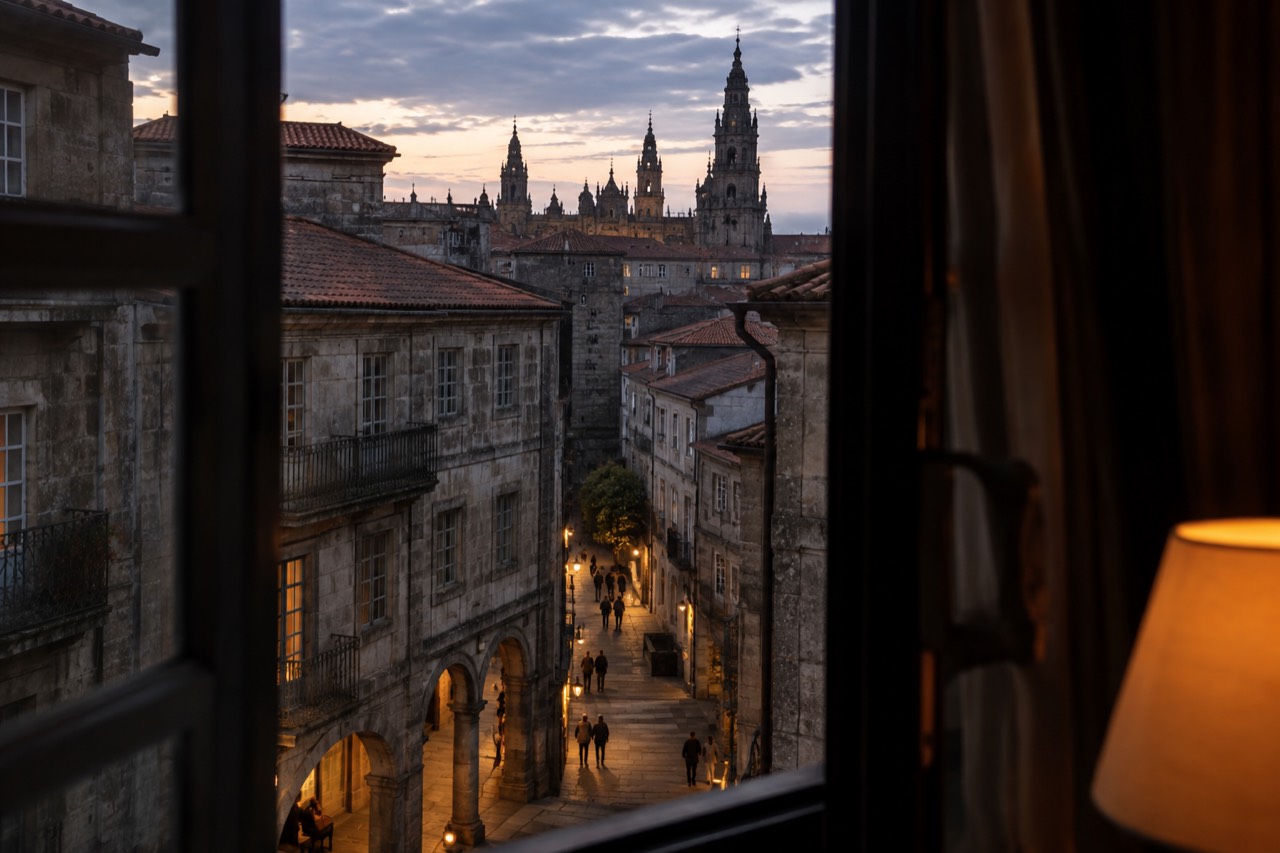
The old town is small enough that almost any address inside its boundary delivers the same basic promise: you wake up, walk out, and you are in the World Heritage city within a few steps. The trade-offs are real, though. Granite buildings, slate roofs and narrow lanes mean some rooms are small, some streets are loud until late, and vehicles have restricted access, which matters if you arrive with heavy luggage or need a taxi at the door.
South of the old town, the streets around the Intermodal station and the Alameda form the city's practical quarter. Hotels here sit on the flat, modern side of the city, within a walk of both the station and the green viewpoint of the Alameda park, from which the classic postcard view of the Cathedral's west front opens up. Guests who sleep here trade the cobblestones for convenience, and the walk into the old town takes minutes rather than requiring transport.
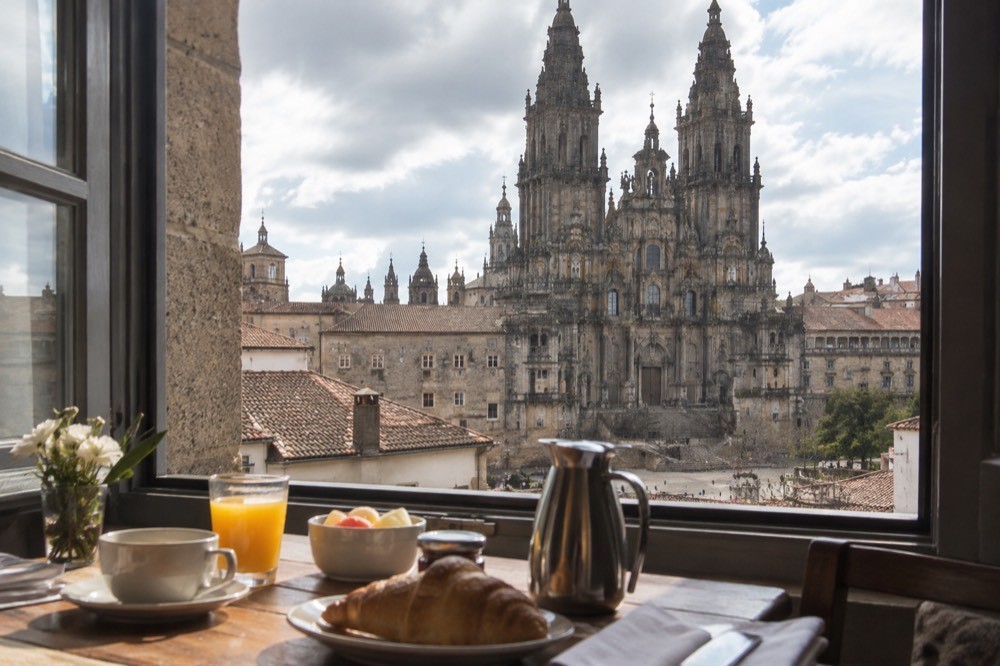
Neither choice is wrong, and price gaps between comparable properties inside and outside the core can be modest in low season. What genuinely separates the two is the character of the evening: staying inside the old town means the bars of Rua do Franco, the queimada shows and the night-lit Praza do Obradoiro are part of your doorstep, while staying outside means you walk home through quieter streets. The city's food scene is covered in detail in the where to eat in Santiago de Compostela guide, and most of the best addresses sit inside that same old-town ring.
Which Neighborhood Around The Cathedral Fits Your Trip?
The old town divides into four practical hotel zones: the monumental west around Praza do Obradoiro, the dining stretch along Rua do Franco, the quiet east around Praza da Quintana and San Martino Pinario, and the modern south around the station and Alameda. Obradoiro carries the highest rates and the most atmosphere, Franco puts you among the tapas but among the noise too, Quintana is the calm pilgrim side, and the south suits drivers and train travelers.
Each zone suits a different trip, and the differences are concrete rather than cosmetic. A couple arriving by train from Madrid, roughly a three-to-four-hour journey on direct high-speed services, will find the station quarter the least hassle. A pilgrim finishing the Camino Frances, on the other hand, usually wants to be as close to the Cathedral as possible for the arrival rituals: the tomb, the Pilgrim's Office, and the mass.
The table below sums up the four zones against the verified anchors of the city.
| Hotel zone | Key landmark | Best for | Main trade-off |
|---|---|---|---|
| West, Praza do Obradoiro | Cathedral west front, Hostal dos Reis Catolicos | Atmosphere, one-night splurge, photographers | Highest rates, busiest square |
| South, Rua do Franco | Tapas bars, queimada shows | Food-focused stays, nightlife | Noise until late |
| East, Praza da Quintana | Holy Door, San Martino Pinario | Quiet sleep, pilgrim rituals | Fewer dining options at the door |
| South of the core, station and Alameda | Intermodal station, Alameda park view | Train arrivals, drivers, value | Ten-minute walk into the old town |
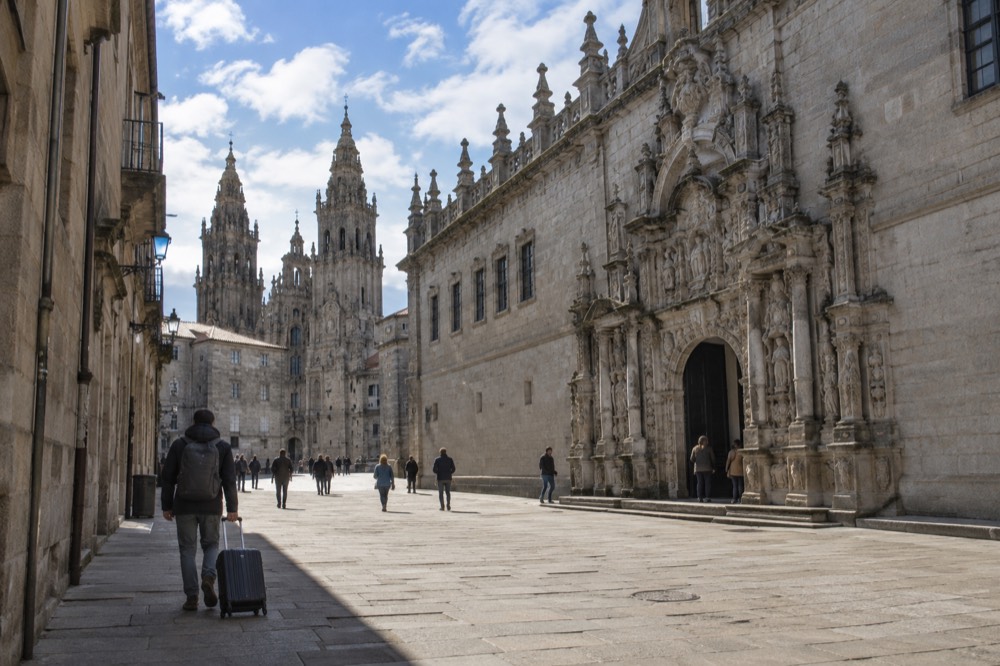
Before locking in any zone, it is worth walking the whole ring once, and a guided walk is the efficient way to do that. The roster's official-guide options include the old town walking tour with an official guide, from $12 per person and rated 4.8 from 338 reviews, and the historic town walk at $14, rated 4.8 from 144 reviews. For travelers who prefer sampling the full spread of experiences, the current highlights look like this.
How Close To The Old Town Do You Actually Need To Be?
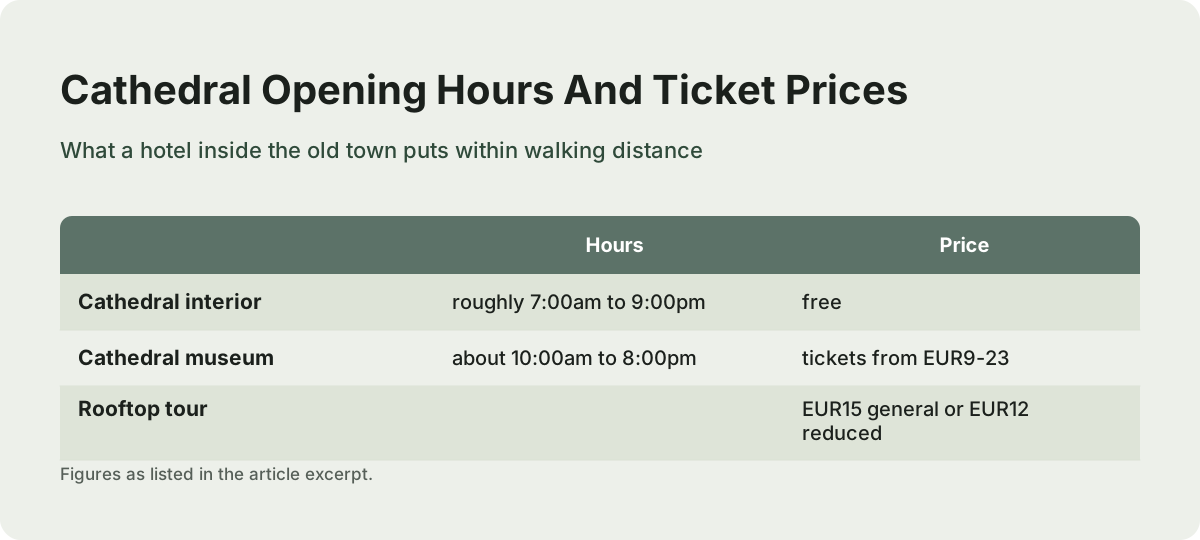
Closer than you might assume, because everything that justifies the stay sits within a few hundred metres: the Cathedral interior is free and open roughly 7:00am to 9:00pm, the museum runs about 10:00am to 8:00pm with tickets from EUR9-23, and the rooftop tour costs EUR15 general or EUR12 reduced. A hotel inside the old town covers all of these on foot.
The honest answer is that the city centre is so compact that "close" and "in the middle of it" are nearly the same thing. What changes with distance is not access to the sights but the texture of the stay: the sound of the cathedral bells, the ability to drop back to the room between the museum and dinner, and the late-evening walk home.
There is one timing wrinkle every 2026 visitor should know, and it affects the pilgrim rituals that draw many hotel guests to the east side of the old town in the first place. The Cathedral's own liturgy page lists daily pilgrim masses at 7:30am, 9:30am, noon and 7:30pm at the High Altar, but from 16 October 2026 the 9:30am, noon and 7:30pm masses relocate to the nearby Church of San Agustin while main-chapel remodelling continues, and only the 7:30am mass stays in the Cathedral's own Communion chapel. The pilgrim mass guide carries the detail, and anyone booking a hotel specifically to attend a mass at the High Altar should plan around the move.
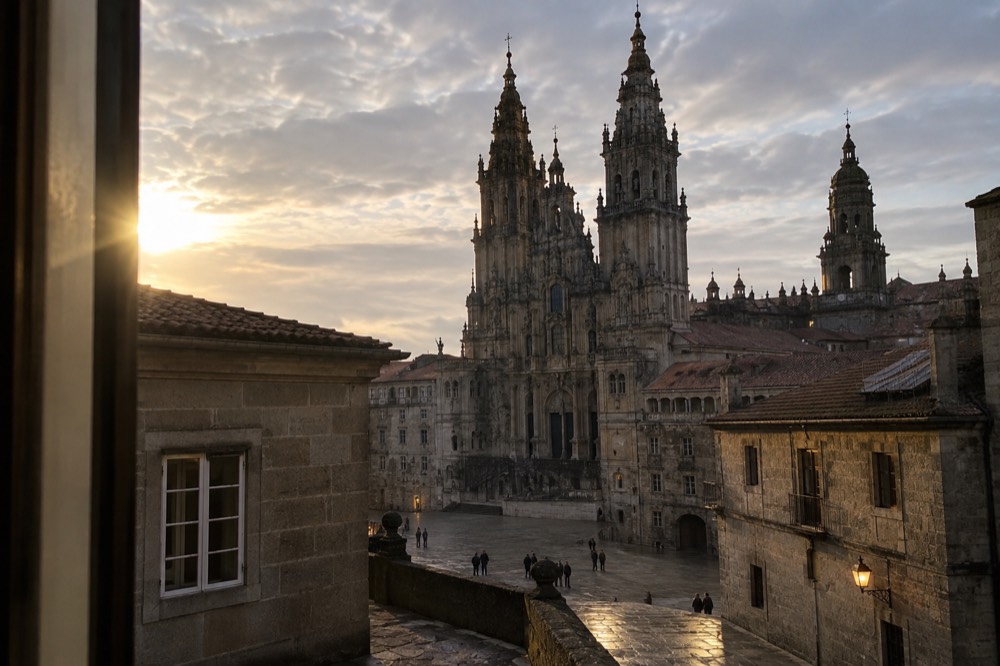
The other closing-time detail worth noting before you choose an address: the Cathedral's Saturday summer schedule shifts for the pilgrim vigil, with the interior closing around 8:30pm that day. A room two streets from Praza do Obradoiro lets you time a late visit without worrying about the walk back, which is exactly the kind of small advantage that compounds over a short stay.
When Is The Best Time To Book A Santiago de Compostela Hotel?
Book as far ahead as your dates allow, and treat late December 2026 as a hard deadline for 2027 trips: the Holy Door opens solemnly on the evening of 31 December 2026 and the Holy Year runs through 31 December 2027, so every weekend of 2027 will price like a festival weekend. The other demand peaks are the Feast of St. James on 25 July and the July-August holiday season, while the wet October-to-March shoulder brings the lowest rates.
The 2027 Holy Year changes the ordinary calculus. A Holy Year is declared whenever 25 July falls on a Sunday, which happens in 2027, and the door-opening ceremony on 31 December 2026 effectively starts the cycle early. Anyone with fixed dates inside 2027, including the spring and autumn Camino seasons, should assume that rooms inside the old town will sell first and that the station quarter will follow.
The seasonal pattern outside that anomaly is steady. The best time to visit guide covers it fully, but the essentials for hotel pricing look like this.
| Period | Demand | What it means for booking |
|---|---|---|
| July-August | High, driest months of the year | Book months ahead, old town sells first |
| 25 July, Feast of St. James | Peak, festival Mass and fireworks | Highest rates of the year, book very early |
| April-June and September | Shoulder, pilgrim season at its fullest | Moderate rates, book four to eight weeks out |
| October-March, wet season | Low | Widest choice, lowest rates, pack rain gear |
| 31 Dec 2026 through 31 Dec 2027 | Holy Year, exceptional | Expect peak pricing across the entire calendar |
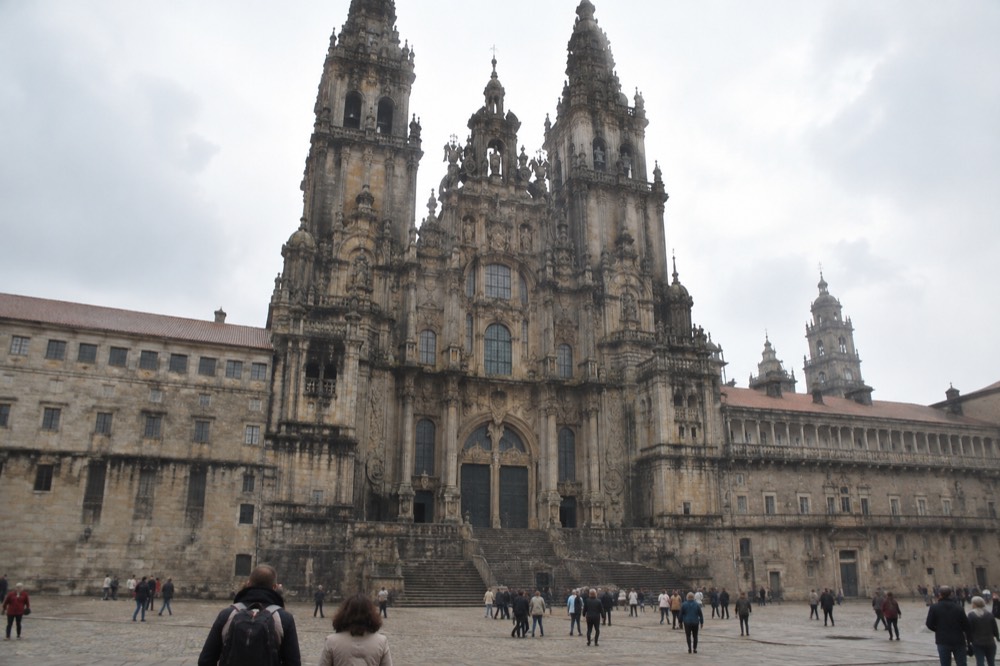
One more reason to book early rather than late: climate. AEMET's station data for Santiago de Compostela shows a wet, temperate oceanic pattern with annual precipitation on the order of 1,690-1,890mm, wet and cool from October to March and driest in July and August. That does not affect availability directly, but it does affect what you pay for, since a wet-season stay shifts value toward rooms with space to dry gear, and the weather guide explains what each season actually feels like.
Where Do Camino Pilgrims Stay Versus City Tourists?
Pilgrims walking into the city typically sleep in albergues, the shared pilgrim hostels, while tourists book ordinary hotels, and the two groups want different locations: pilgrims prioritize the Pilgrim's Office at Rua das Carretas 33 and the Cathedral, tourists prioritize dining and atmosphere. To claim the Compostela certificate, a pilgrgrim must have walked the last 100km, or cycled the last 200km, collecting two stamps per day, and it is issued in person only.
The split matters for hotel choice because arrival day is not a normal day. A pilgrgrim finishing a multi-week walk wants a bed within the shortest possible distance of the tomb, the certificate queue and a mass, and the east side of the old town around Praza da Quintana delivers that. The Camino accommodation guide covers the albergue system in full, and the arriving in Santiago on the Camino guide walks through the first hours in the city step by step.
City tourists face the mirror-image decision. Their anchor points are the rooftop tour, the museum, dinner on Rua do Franco and possibly a day trip to the coast, so the south and west of the core serve them better than the pilgrim quarter does. Day trips in particular reward a station-side address: the full-day coastal excursions to Finisterre, Muxia and the Costa da Morte, and the Rias Baixas winery runs, all depart from the city and eat an entire day. Everything else covered here is indexed on Santiago de Compostela Travel Guide.
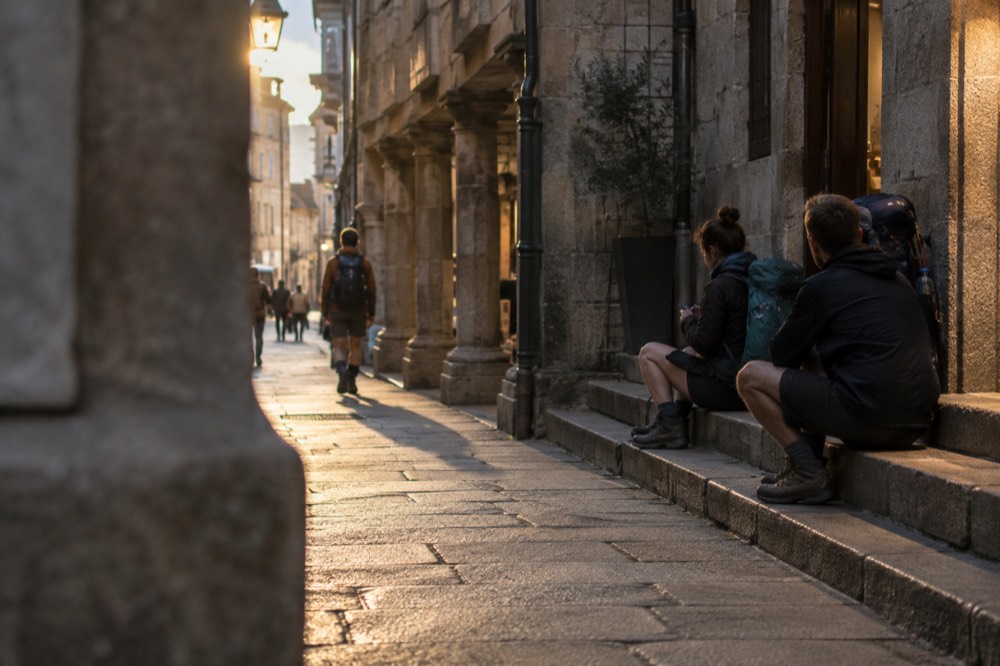
The certificate rules themselves are stricter than many first-time walkers expect, and the Compostela certificate guide carries the full detail. The essentials: the last 100km on foot or 200km by bike, on a recognized route, with at least two stamps per day in the credencial, which the pilgrim passport guide explains how to collect. None of this affects a hotel booking directly, but it explains why the streets around Rua das Carretas fill with pack-laden walkers from mid-morning, and why the quietest hotel rooms in the old town face inward courtyards rather than the pilgrim arteries.
How Do You Get From Your Hotel To The Airport And The Rest Of Galicia?
From an old-town hotel, the airport run is about 12km and the practical link is urban bus line 6A, which as of late September 2026 costs EUR1 paid to the driver or EUR0.36 on a card, runs roughly every 30 minutes, though a new Monbus contract with a fare near EUR6 is expected from autumn 2026. By train, Madrid is roughly 3-4 hours direct, A Coruna is a short hop, Vigo is about 1 hour, and there is no direct line to Porto.
The airport link deserves the caveat. The airport guide holds the detail, but the short version is that the city's own transport page still lists Tussa line 6A at the current fares while flagging the incoming Monbus reorganization, and no traveler should arrive in December 2026 or later assuming the EUR1 fare still applies. The distance figure itself is genuinely approximate: sources place the run between roughly 11 and 15km depending on the measured point, so "about 12km" is the honest number.
The rail picture from the station quarter is simpler and more stable.
| Route | Service pattern | Typical journey |
|---|---|---|
| Santiago to Madrid | Direct high-speed services | Roughly 3-4 hours |
| Santiago to A Coruna | Direct regional and high-speed | A short hop |
| Santiago to Vigo | Direct regional services | About 1 hour |
| Santiago to Porto | No direct line, change via Vigo | Two legs, no single figure published |
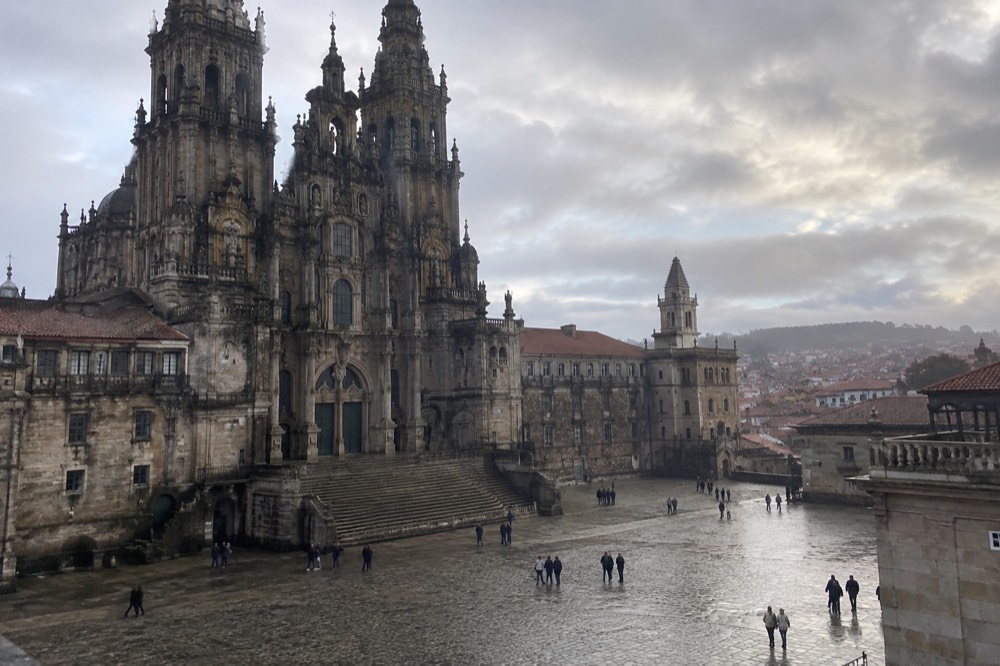
For anyone building a wider Galicia itinerary from a Santiago de Compostela base, the one-week Galicia road trip guide shows how the day-trip destinations connect, and the Cies Islands guide covers the island trip that departs from the Vigo side. Guests who stay near the station can realistically take a morning train to Vigo and still be on the islands by midday, which is a real advantage of that address.
What Should You Check Before You Book Any Santiago de Compostela Hotel?
Check five things before confirming: the walk time to Praza do Obradoiro, whether the property sits on a vehicle-restricted street that complicates taxi and luggage handling, the cancellation terms given Holy Year 2027 demand, heating or air conditioning appropriate to a wet October-to-March or dry July-August stay, and the current tourist-tax position, which since 1 October 2025 has been a municipal tourist tax of 1 EUR to 2.50 EUR per person per night for up to 5 nights in Santiago de Compostela.
Each of those checks earns its place. The walk-time check is simple arithmetic on a map, but the vehicle-access point is the one that surprises arrivals: much of the old town is closed to general traffic, so a taxi cannot always deliver you to the door, and the final stretch is on foot over granite cobbles with your bags. Travelers with mobility constraints or heavy luggage should confirm the exact drop-off point with the property before booking.
The tax point deserves its own sentence of caution. Santiago de Compostela has charged a municipal tourist tax since 1 October 2025, a surcharge on Galicia's tourist-stay tax upheld by Galicia's high court in September 2026, set per person per night for a maximum of 5 nights, from 1 EUR in private albergues, campsites and tourist apartments up to 2.50 EUR in five-star hotels, with under-18s and stays in Xunta-run public albergues exempt. The cancellation-terms check matters more than usual here, too, because Holy Year planning means many travelers book 2027 rooms long before their plans firm up.
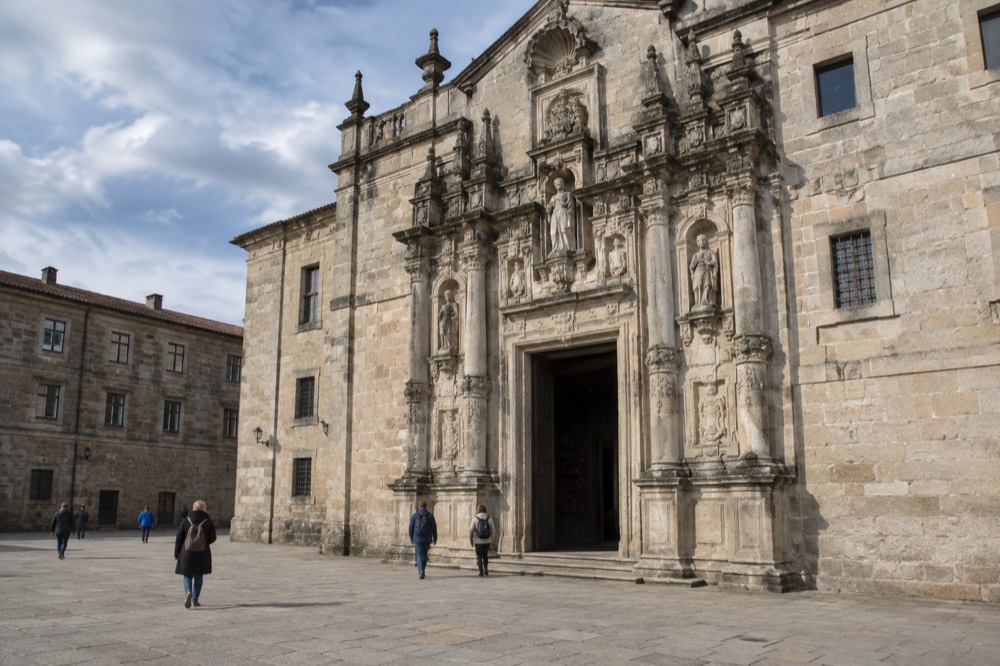
Finally, two cathedral-adjacent realities belong on any pre-booking checklist, both covered in depth in the cathedral tickets and opening hours guide. First, the Botafumeiro, the giant incense burner that normally swings on 12 fixed solemnities a year, is currently out of action: scaffolding for the dome restoration covers its hanging mechanism, the Cathedral confirmed this in writing on 5 September 2026, and no return date has been published, so no hotel should be booked on the promise of seeing it fly. Second, the rooftop and museum experiences that anchor most old-town itineraries are ticketed and timed, so a hotel that lets you reach the ticket office and the Praza do Obradoiro entrance without a detour saves time twice a day.
Which Guided Tours Pair Well With A City-Centre Stay?
A city-centre hotel pairs best with three kinds of experience: a guided walking tour of the old town on arrival day, from $12 per person with an official guide at 4.8 from 338 reviews; a skip-the-line Cathedral visit, from $31 per person and rated 4.7 from 582 reviews; and one coastal day trip, with the full-day Finisterre, Muxia and Costa da Morte options from $59-60 and the Cies Islands visit from $101.
The economics are straightforward. The walking tours are the cheapest items on the roster and take roughly two hours, the Cathedral options cost about the same as a restaurant dinner, and the day trips are the only items that need a full day and an early start. A traveler staying near the station should note that day-trip departures usually begin from central meeting points, so a five-minute cushion matters on departure morning.
The comparison below uses the roster's own verified figures.
| Experience | Kind | From (per person) | Rating |
|---|---|---|---|
| Old town walking tour, official guide | City walking | $12 | 4.8 from 338 reviews |
| Guided Cathedral visit, skip line | Cathedral | $31 | 4.7 from 582 reviews |
| Finisterre, Muxia and Costa da Morte, full day | Coastal day trip | $59 | 4.7 from 2,312 reviews |
| Finisterre, Muxia and Costa da Morte, 7 stops | Coastal day trip | $60 | 4.8 from 1,714 reviews |
| Cies Islands visit, full day | Coastal day trip | $101 | No rating published |
For a first visit built around one of these old-town bases, the current shortlist of pairings stands as follows.
One practical note on the coastal day trips: they are marked as full-day experiences in the roster, and the Finisterre guide and Costa da Morte guide explain why, the distances involved are the point of the journey. Anyone pairing a day trip with a hotel stay should book the trip for the day after arrival, not the day of, so the room is confirmed before the coach leaves. And for travelers combining the city with Porto on one itinerary, the Porto to Santiago de Compostela guide explains the rail change at Vigo that makes a two-city trip work.
Common Questions About Hotels In Santiago de Compostela
What is the best area to stay in Santiago de Compostela?
The old town inside the UNESCO-listed core, within about ten minutes' walk of Praza do Obradoiro, is the best all-round area, with the quieter east side around Praza da Quintana for calm and the station-and-Alameda quarter to the south for train travelers and drivers.
Should I book a hotel in Santiago de Compostela in advance?
Yes, especially for 2027. The Holy Door opens 31 December 2026 and the Holy Year runs through 31 December 2027, and the city issued a record 530,987 Compostela certificates in 2025, so demand is already high and rising.
Is it expensive to stay in Santiago de Compostela?
Old-town hotels carry a premium, the station quarter is generally cheaper, and the wet October-to-March season brings the lowest rates of the year. A municipal tourist tax has applied since 1 October 2025, from 1 EUR to 2.50 EUR per person per night for up to 5 nights, with under-18s and stays in Xunta-run public albergues exempt.
Can pilgrims stay in regular hotels in Santiago de Compostela?
Yes, any traveler can book any hotel. Pilgrims who want the Compostela certificate must have walked the last 100km or cycled the last 200km with two stamps per day, and the certificate is issued in person at Rua das Carretas 33.
How do I get from my hotel to Santiago de Compostela airport?
The airport is about 12km away. Bus line 6A costs EUR1 to the driver or EUR0.36 on a card as of late September 2026, but a new Monbus contract with a fare near EUR6 is expected from autumn 2026, so check the live fare for your travel date.
Will the Botafumeiro be flying during my hotel stay?
Not currently. The Botafumeiro is out of action because dome-restoration scaffolding covers its hanging mechanism, the Cathedral confirmed this in writing on 5 September 2026, and no return date has been published, so it should not factor into any booking.