Galicia Road Trip From Santiago de Compostela: The One-Week Route
Santiago de Compostela is the natural base for a one-week Galicia road trip: the cathedral city sits at the hub of every major route west to Fisterra, south to the Rias Baixas and north to A Coruna and Lugo.
Short answer
Base the week in Santiago de Compostela, spend Day 1 on the Old Town and Cathedral, drive the Costa da Morte to Fisterra and Muxia on Day 2, tour the Rias Baixas wineries and Combarro on Day 3, take Vigo and the Cies Islands on Day 4, A Coruna on Day 5, Lugo on Day 6, and return to Santiago for Monte do Gozo and departure on Day 7.
Galicia rewards drivers, and every road worth taking in this region starts or ends in Santiago de Compostela, the pilgrim cathedral city in northwest Spain. The city's UNESCO-listed Old Town, inscribed in 1985, sits roughly 12km from the airport and at the junction of the motorways that fan out to the coast, so a one-week Galicia road trip works best as a hub-and-spoke loop rather than a nightly hotel shuffle. This itinerary keeps one base, drives a different compass direction each day, and folds in the tours worth booking ahead on the days you stay in the city.
Why Base A Galicia Road Trip In Santiago de Compostela?
Santiago de Compostela is the only sensible hub for a week in Galicia because the city sits within a two-to-three-hour drive of every headline destination in the region, including Fisterra, the Rias Baixas, Vigo, A Coruna and Lugo, while offering the region's biggest hotel stock, its cathedral and its airport in one place. A single base removes four hotel changes from the week and keeps the car parked on the two days you do not need it. The city's own tourism transport page lists the airport bus connection that makes a fly-drive start straightforward, and the high-speed rail link to Madrid, roughly a three-to-four-hour journey, brings the car-free arrival option into play too. For anyone extending the trip, the two-day plan in Two Days In Santiago de Compostela slots neatly in front of this route.
The trade-off is honest: Galicia is wet year-round, and AEMET's climate data for the Santiago station shows annual precipitation on the order of 1,690 to 1,890mm, wettest from October to March and driest in July and August. A week here needs a rain layer every month of the year. The payoff is that the same Atlantic weather keeps the coastline green, the Rias Baixas vineyards cool and the summer temperatures far gentler than southern Spain.
One timing note matters more than any other. 2027 is the next Holy Year, or Xacobeo, not 2026: the Holy Door opens on the evening of 31 December 2026 and the Holy Year runs through 31 December 2027, so a road trip planned for 2027 will share the roads with heavier pilgrim traffic and should book coastal hotels earlier than usual.
What Does The Week Look Like At A Glance?
The route runs as six loop days from a single Santiago de Compostela base: Day 1 in the city itself, Day 2 west to Fisterra and Muxia on the Costa da Morte, Day 3 south to the Rias Baixas and Combarro, Day 4 to Vigo with a Cies Islands option, Day 5 north to A Coruna, Day 6 to Lugo with an Ourense hot-springs alternative, and Day 7 back in Santiago before departure. Nothing on the plan requires a hotel change, and the two heaviest driving days alternate with lighter ones so the week does not grind. The table below is the skeleton; each day gets its own section with the tours that fit it.
| Day | Direction | Headline Stops | Book Ahead? |
|---|---|---|---|
| 1 | In the city | Old Town, Cathedral, rooftops | Yes: cathedral tours |
| 2 | West | Costa da Morte, Fisterra, Muxia | Optional guided day trip |
| 3 | South | Rias Baixas winery, Combarro, Pontevedra | Optional mussel-boat tour |
| 4 | Southwest | Vigo, Cies Islands option | Yes: Cies ferry, limited daily visitor numbers |
| 5 | North | A Coruna, Tower of Hercules seafront | No |
| 6 | Northeast | Lugo Roman walls, Ourense alternative | Optional |
| 7 | In the city | Monte do Gozo, market, departure | No |
The week deliberately front-loads the city. Santiago de Compostela's cathedral is the reason most travelers are here at all, and the tours that cover it well sell timed slots, so booking them for Day 1 while energy is high beats gambling on Day 7 availability. If the flight lands late, swap Days 1 and 7 and keep the cathedral bookings flexible.
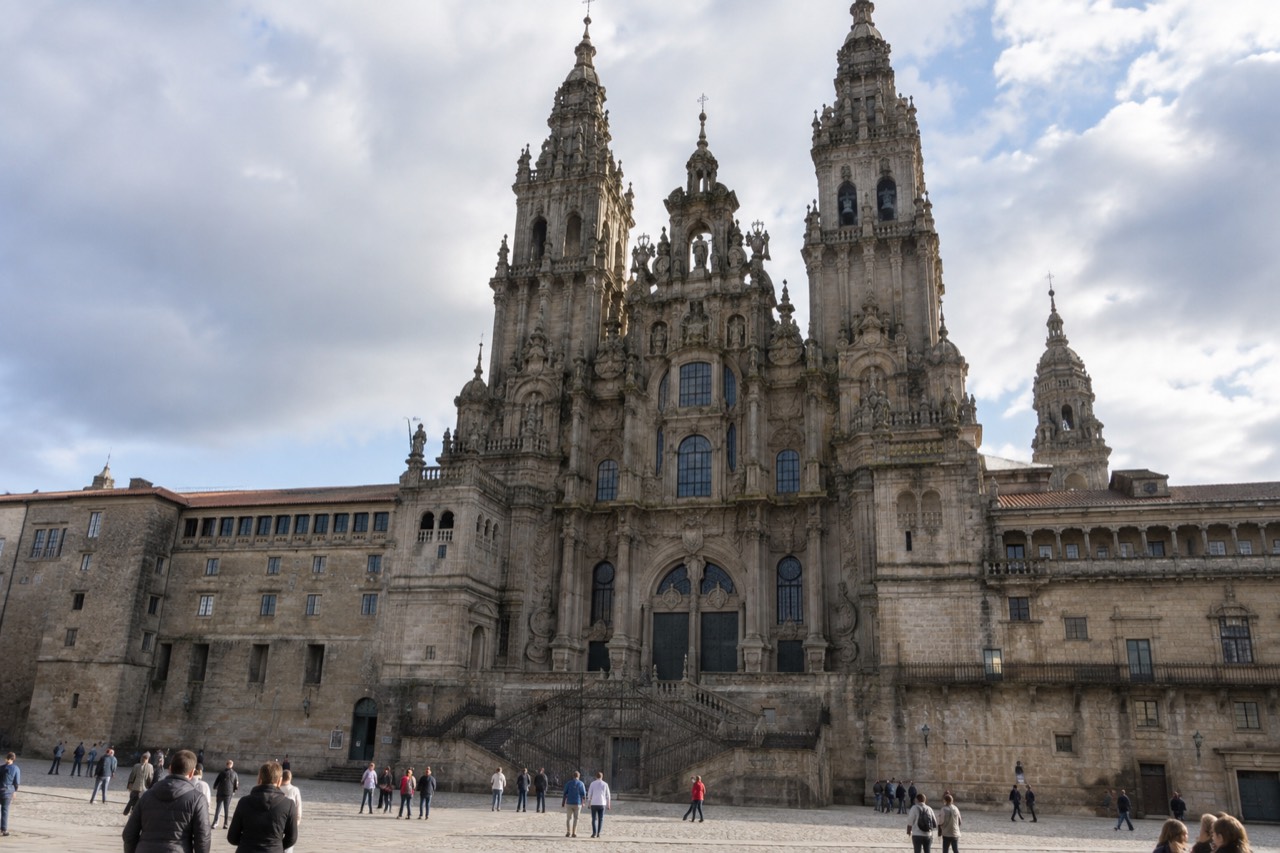
The three tours above cover the three anchors of a Santiago day: the full cathedral visit with Portico, roofs and museum, an official-guide walk through the historic town, and a tapas tour for the evening. Details on each appear in the Day 1 section below.
Day 1: Santiago de Compostela Old Town And The Cathedral
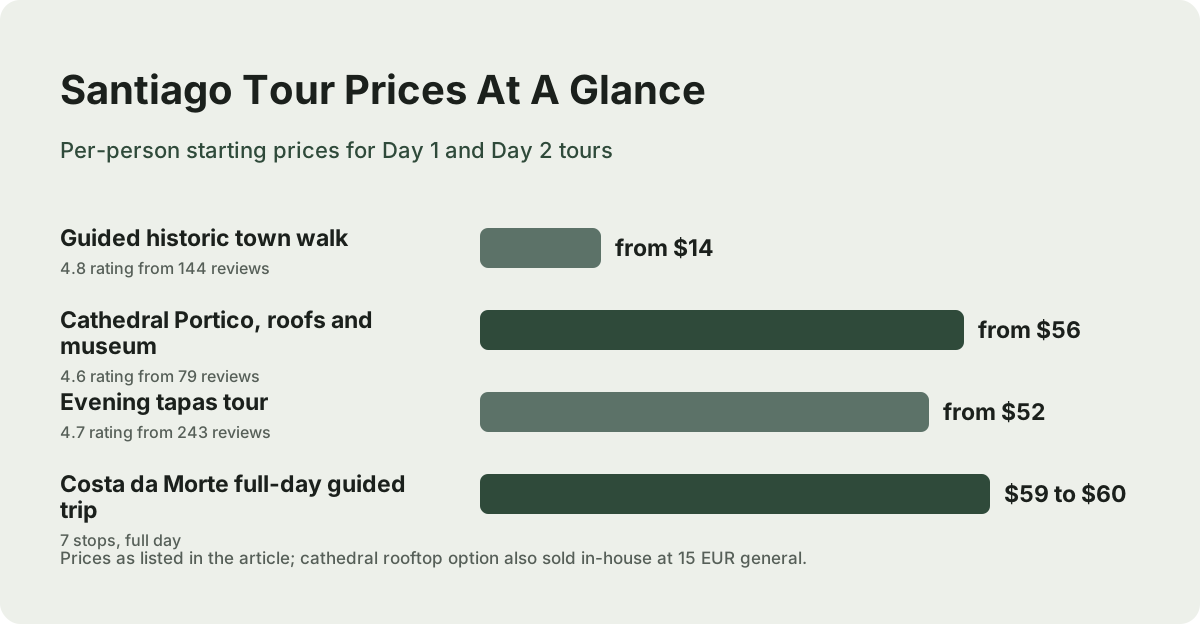
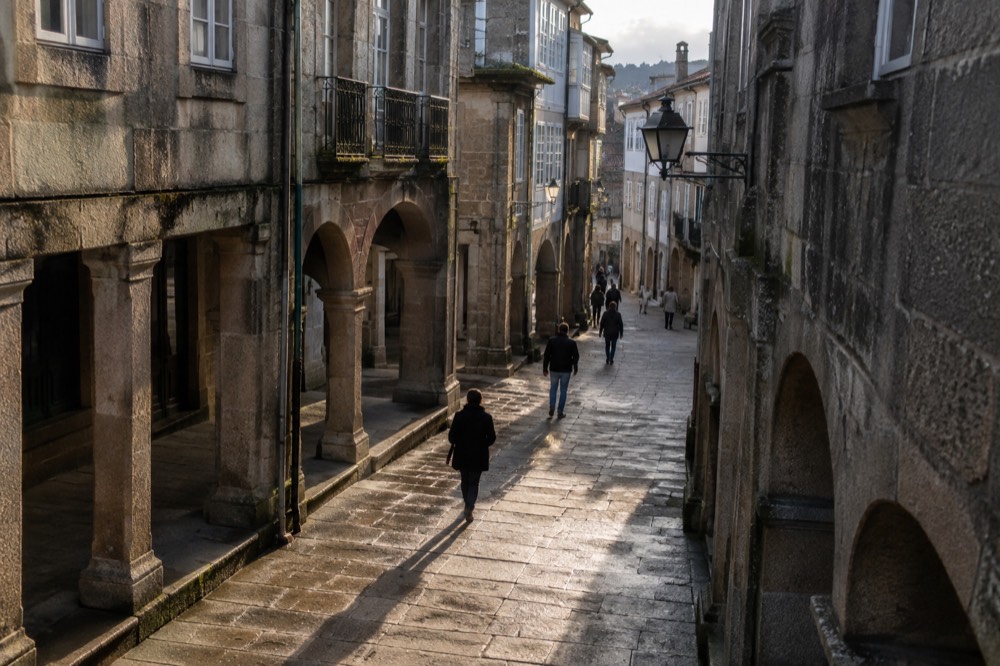
Day 1 belongs entirely to Santiago de Compostela's Old Town and the Cathedral of Santiago de Compostela, with the morning on a guided historic-town walk, the midday on a cathedral visit that includes the Portico da Gloria and the rooftops, and the evening on Rua do Franco and the tapas bars around Praza do Obradoiro, all reachable on foot from any Old Town hotel. The Old Town's granite lanes, arcades and squares earned the UNESCO inscription in 1985, and the cathedral's tomb of St. James is the endpoint of the entire Camino network, so the day has more substance per square metre than anywhere else on this itinerary.
Start with a walking tour because the Old Town is dense and genuinely easy to misread. The guided historic town walk with an official guide runs from $14 per person and carries a 4.8 rating from 144 reviews on its listing, a low-cost way to get the plaza-by-plaza context before the cathedral. Check availability beside the tour's own page, and use the free morning hours before the cathedral queues build.
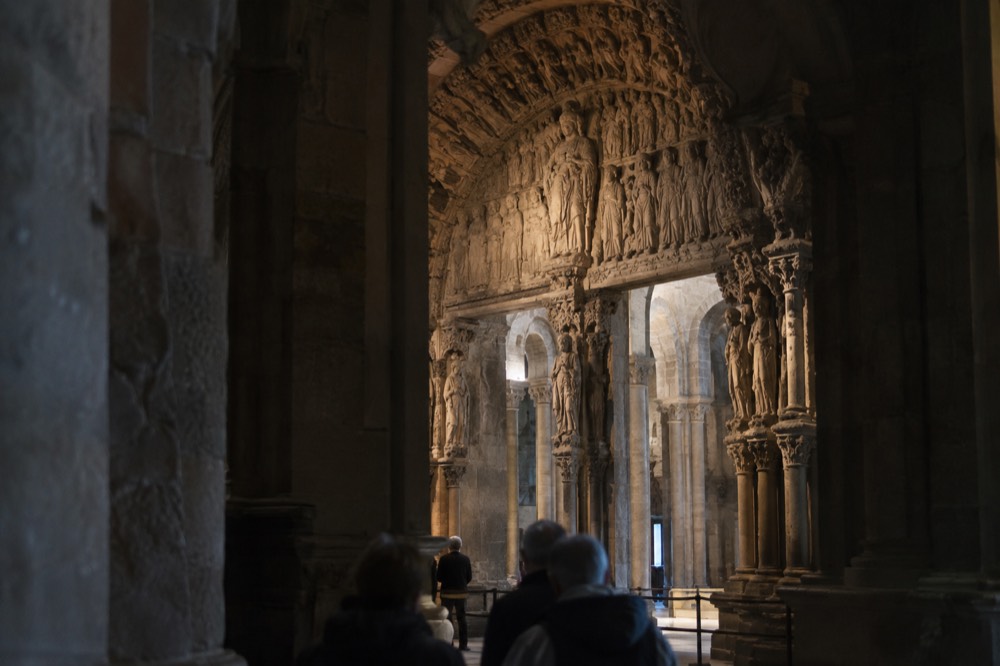
The cathedral itself deserves the biggest single block of the day. The listing for the combined Portico, roofs and museum visit, from $56 per person and rated 4.6 from 79 reviews, covers the parts of the building most visitors never see. The cathedral's own ticketing shows the rooftop option run in-house at 15 EUR general, 12 EUR reduced, about 60 minutes with roughly 140 steps, so the comparison is worth making before you buy anything. For the full picture of the building, see Cathedral Of Santiago de Compostela.
One Day 1 caution that most guides get wrong: the Botafumeiro, the cathedral's famous swinging censer, is currently out of action. Scaffolding for the dome restoration covers its hanging mechanism, the Cathedral confirmed the suspension in writing on 5 September 2026, and no return date has been published. Do not build the day around seeing it fly, and treat any claim that it swings on a given date as outdated.
The pilgrim mass schedule also changes mid-autumn. Until 15 October 2026 the 9:30am, noon and 7:30pm masses are held at the Cathedral's High Altar; from 16 October 2026 those three relocate to the nearby Church of San Agustin, with only the 7:30am mass remaining in the Cathedral's own Communion chapel. Plan a mass visit around whichever arrangement covers your dates.
For the evening, the tapas tour from $52 per person, rated 4.7 from 243 reviews, is the efficient way to eat on the first night in an unfamiliar city, and it doubles as a walking digestif through the Old Town lanes.
Day 2: Costa da Morte, Fisterra And Muxia
Day 2 drives west from Santiago de Compostela along the Costa da Morte, the Coast of Death, to Fisterra at what the Romans considered the end of the known world, then north to Muxia's cliff-top sanctuary, a loop that the major operators run as a full-day guided excursion if you would rather leave the winding coastal roads to someone else. The full-day guided version from $59 to $60 per person carries ratings between 4.7 and 4.8 across several listings, with the most-reviewed option drawing 2,312 reviews, and a half-day express alternative from $45 exists for anyone short on time. For more background, the What Is The Best Day Trip From Santiago de Compostela? answer compares this route with the Rias Baixas.
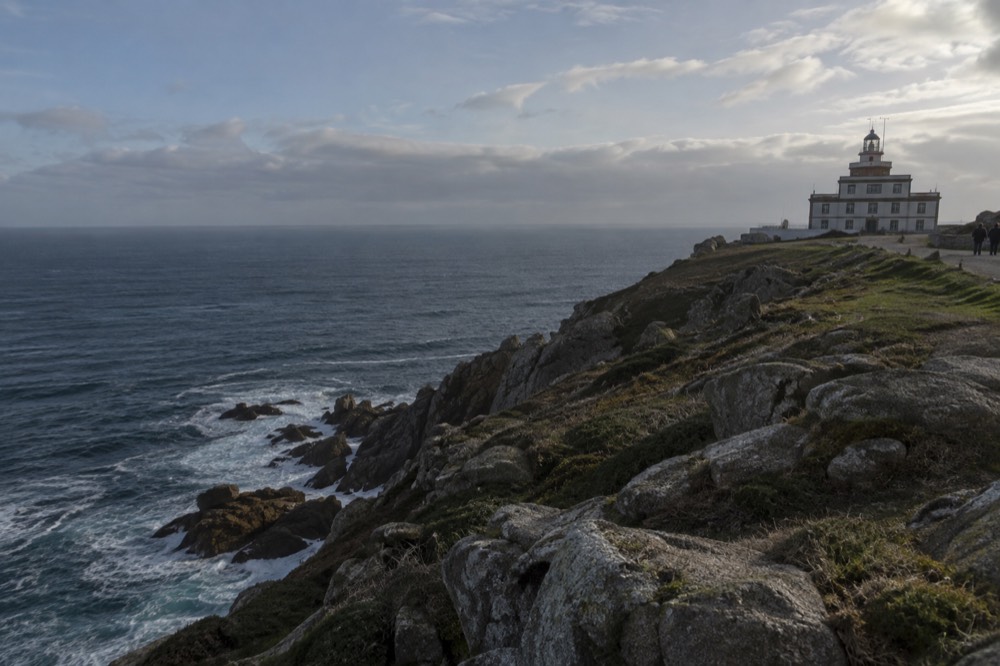
The name Fisterra is the Galician form; Finisterre is the Spanish spelling seen on older maps. Either is correct, and both point to the same lighthouse peninsula where the Camino officially continues past the cathedral, a symbolic zero-kilometre that many pilgrims walk on after arriving in Santiago.
| Costa Da Morte Tour Option | From (Per Person) | Rating | Length |
|---|---|---|---|
| Finisterre, Muxia and Costa da Morte, 7 stops | $60 | 4.8 from 1,714 reviews | Full day |
| Finisterre and Costa da Morte complete tour | $60 | 4.8 from 860 reviews | Full day |
| Costa da Morte with Cabo Vilan stop | $60 | 4.8 from 267 reviews | Full day |
| Fisterra and Muxia express | $45 | 4.4 from 50 reviews | Half day |
Driving it yourself costs less and allows stops the coaches skip, among them Ezaro, Muros and Carnota on the longer variants, but the coastal roads are narrow and the sea fog can arrive quickly even in summer. If the forecast is bad, this is the day to take the guided option and let a professional handle the weather decisions.
Day 3: Rias Baixas Wine Country, Combarro And Pontevedra
Day 3 heads south from Santiago de Compostela into the Rias Baixas, the drowned river valleys where Galicia's Albarino wine is grown, combining a winery visit in the Cambados area, the mussel platforms of the Arousa estuary and the granite horreo waterfront of Combarro, with Pontevedra's old centre as the cultural stop on the way back. The full-day guided excursions run from $45 to $54 per person with ratings between 4.7 and 4.8, and the mussel-boat option, which includes the boat trip with tastings served on the water, is the version most worth the upgrade.
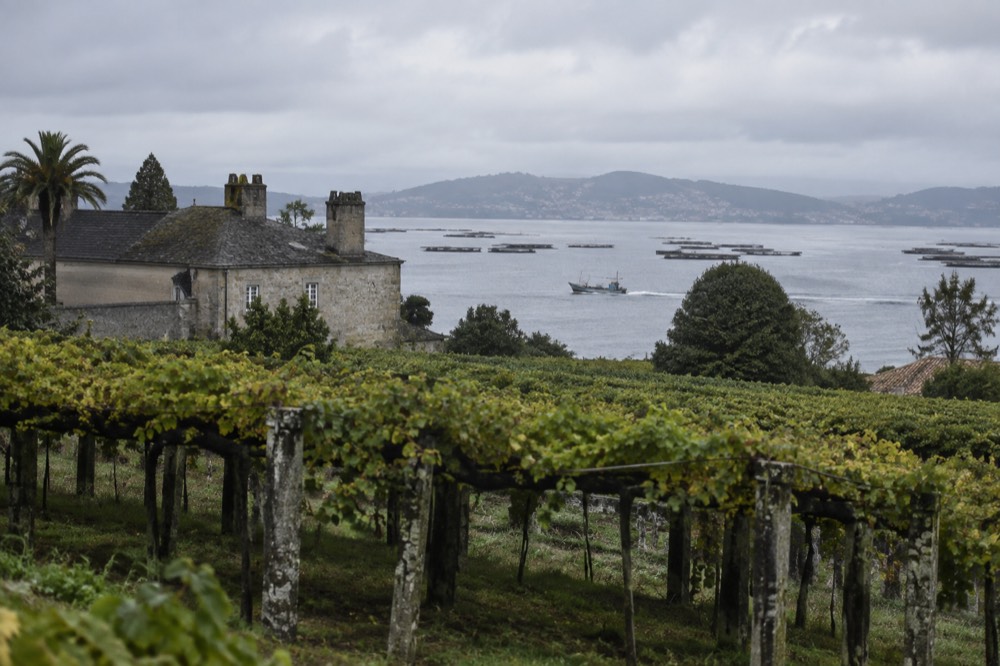
Combarro is the photographic hinge of the day: a fishing village where dozens of raised stone granaries stand directly on the waterline. Pontevedra, a short drive north, is one of the most walkable old towns in Galicia and almost entirely car-free in its centre, which makes it a restful second half of a driving day.
| Rias Baixas Tour Option | From (Per Person) | Rating | Highlights |
|---|---|---|---|
| Winery with optional mussel boat | $54 | 4.8 from 322 reviews | Winery, mussel boat |
| Boat trip and winery, full day | $53 | 4.7 from 482 reviews | Boat, winery |
| Arousa Island, Combarro and mussel boat | $45 | 4.7 from 30 reviews | Island, Combarro |
The Albarino grape thrives in exactly the cool, wet Atlantic climate that makes this a road trip with a rain layer in the bag, and the winery stops on these tours are the most sheltered bad-weather hours anywhere on the week. If Day 3 turns wet, swap it with Day 5: A Coruna's seafront is fully exposed, the Rias Baixas is not.
Day 4: Vigo And The Cies Islands
Day 4 drives southwest to Vigo, Galicia's largest city and its fishing capital, with the option of the ferry to the Cies Islands, an Atlantic archipelago whose visitor numbers are capped daily and whose main beach, Rodas, sits inside a protected marine reserve, so the ferry and the island authorization must be booked ahead rather than arranged on the dock. The full-day guided Cies Islands visit runs from $101 per person, and the listing currently shows no published rating, so book it on itinerary and price rather than reviews.
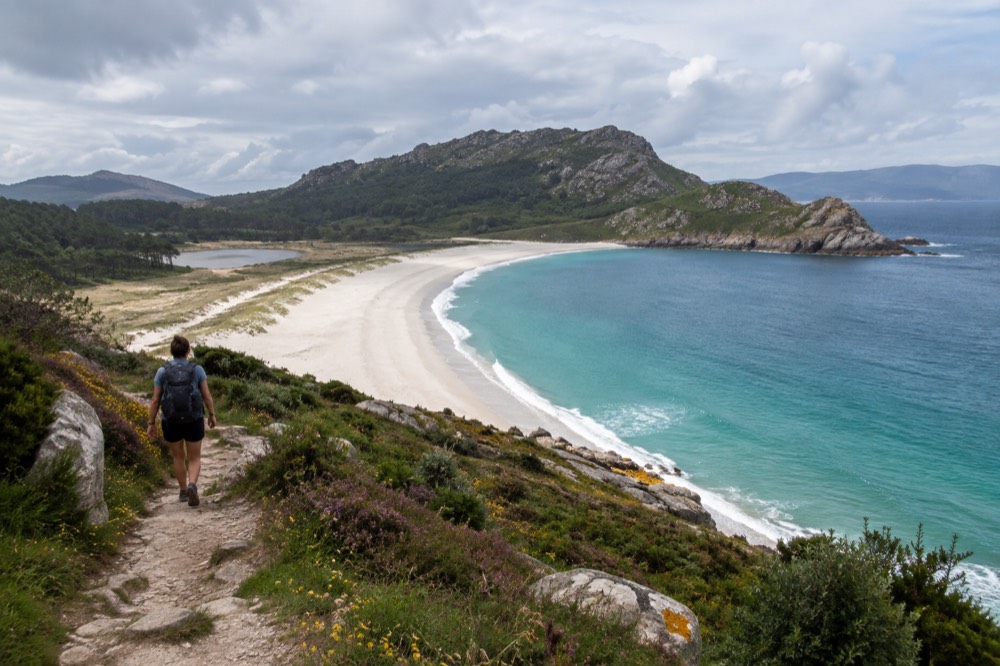
If the islands do not fit, or the ferry is weather-cancelled as Atlantic crossings sometimes are, Vigo itself fills a day: the port, the old quarter above it and the seafood restaurants near the harbour. The Cies option is the single most weather-dependent day of the week, which is why the plan keeps A Coruna in reserve on Day 5 rather than doubling up two exposed coastal days in a row.
Day 5: A Coruna And The Northern Coast
Day 5 takes the northern motorway from Santiago de Compostela to A Coruna, a short direct hop by both train and road, for the Tower of Hercules, the world's oldest working lighthouse and a UNESCO World Heritage Site in its own right, the glass-fronted seafront gallery of the Maria Pita square and some of the best seafood on the Atlantic coast. A Coruna and Santiago share the same Galician spelling in both languages, though the older Spanish form La Coruna still appears on some maps.
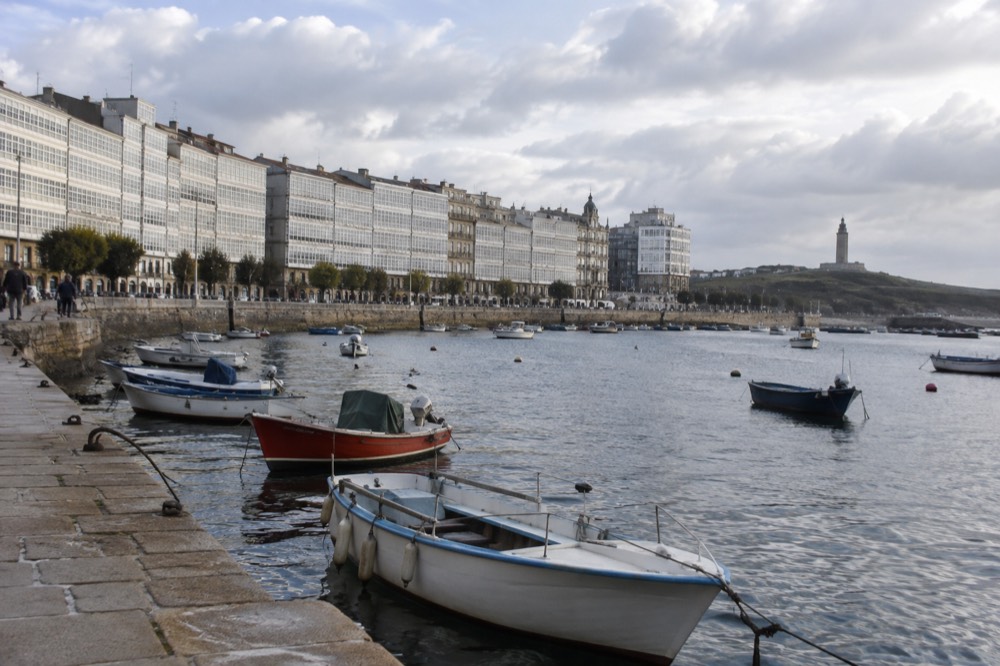
The city is compact and flat by the water, which makes it the easiest walking day of the week after four days partly behind a wheel. The seafront promenade runs for kilometres past the glass galerias that give A Coruna its nickname, and the Tower of Hercules stands at the end of it with two thousand years of continuous service behind it.
Day 6: Lugo, Or The Ribeira Sacra And Ourense Alternative
Day 6 is the inland day, and the choice is between Lugo, the only city in the world whose complete Roman walls still stand and are walkable on top, or the Ribeira Sacra, where a Sil river cruise runs through canyon walls past clifftop monasteries with an Ourense finish for the hot springs, and both work as a single-day loop from Santiago de Compostela. The Ribeira Sacra guided tours run from $64 to $68 per person with ratings between 4.3 and 4.6, and the river cruise is the centrepiece of both listings.
| Inland Day Option | From (Per Person) | Rating | Centrepiece |
|---|---|---|---|
| Ribeira Sacra: canyons, Sil river, Ourense | $64 | 4.3 from 11 reviews | Sil cruise |
| Ribeira Sacra: cruise, monasteries, Ourense | $68 | 4.6 from 166 reviews | Sil cruise, monasteries |
| Lugo and Cathedrals Beach guided excursion | $75 | 4.6 from 189 reviews | Lugo walls, As Catedrais |
The third row is the northern variant: a guided excursion combining Lugo's walls with As Catedrais, the beach of natural arches on the Costa da Morte side of the region. That option pushes the day long, and the arches themselves are tide-dependent, so check the tide tables for Praia de Augas Santas before committing.
Day 7: Monte do Gozo, The Market And Departure
Day 7 closes the loop in Santiago de Compostela with the morning on Monte do Gozo, the hill east of the city where arriving pilgrims first see the cathedral towers, followed by the Mercado de Abastos, the granite market hall that is the city's real food heart, and a final pass through any Old Town squares missed on Day 1 before the drive or flight home. Monte do Gozo is also the last-night stop for many cyclists and walkers finishing the Camino, so the hill has a pilgrimage atmosphere of its own in the mornings.
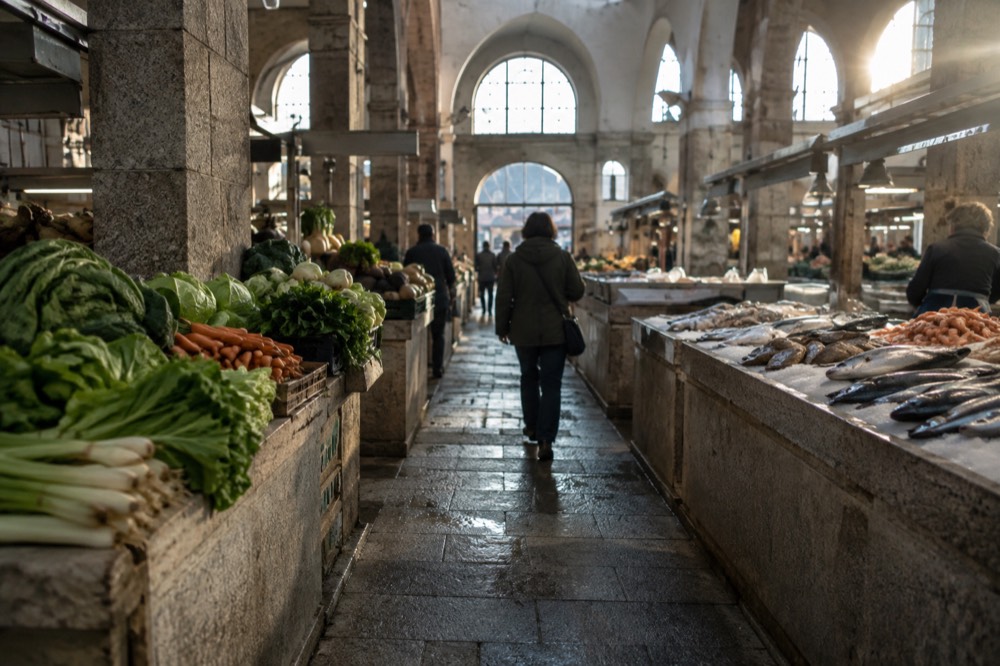
The market's hours are not published in this site's verified research, so check the venue's own site before going; the same applies to the city museums not covered in the Day 1 bookings. For anyone with a late flight, the Rest Day After The Camino plan overlaps with this day almost exactly, and the One Day In Santiago de Compostela guide compresses the essentials if time runs short.
The second tour band above is the last-booking fallback: if Day 1's cathedral slots sold out before you arrived, Day 7 morning is the quieter second chance, and the tapas tour works as a farewell dinner any evening of the week. A final square session at Praza do Obradoiro, watching pilgrims arrive under the facade, is the correct last hour in Santiago de Compostela and needs no ticket at all.
What Should You Book Ahead On A Galicia Road Trip?
Book three things ahead of arrival: the cathedral visit with rooftops and Portico access, the Cies Islands ferry and visitor authorization, and any full-day guided excursion on the days you would rather not drive, because all three sell timed or capped inventory while everything else on this itinerary can be decided on the day from the driver's seat. The table below ranks the week's bookable items by scarcity.
| Bookable Item | Scarcity | Why It Sells Out |
|---|---|---|
| Catedrais rooftop and Portico visit | High | Timed slots, small guided groups |
| Cies Islands ferry and entry | High | Daily visitor cap on the islands |
| Full-day coastal excursions | Medium | Fixed coach seats |
| Tapas and food tours | Medium | Small group sizes |
| Old Town walking tours | Lower | Frequent departures daily |
A practical note on the free walks: Santiago de Compostela has several GuruWalk free walking tours, tip-based and free to book, including the most-complete free tour rated 4.95 from 6,342 reviews with guide included in the listing. Naming the platform and the guide is the honest way to describe them; no price belongs in print because there is none, the tip is yours to set at the end.
Common Questions About A Galicia Road Trip
How many days do you need for a Galicia road trip?
Seven days covers the region's headline destinations from a single Santiago de Compostela base, with one city day, four coastal days, one inland day and one return day. Five days works if you drop the inland loop and one of the two big coastal days; anything shorter than that is better spent as a city stay with one day trip.
Is a car needed for a Galicia road trip from Santiago de Compostela?
For the region as a whole, yes: the Rias Baixas wineries, Combarro, the Costa da Morte back roads and Ourense are not all reachable by train. For Santiago de Compostela itself, no: the Old Town is fully walkable, the airport has a bus link, and the two in-city days on this itinerary leave the car parked.
What is the best month for a Galicia road trip?
AEMET's climate data for the Santiago station shows the driest months are July and August, with the wettest period running from October to March and annual precipitation between roughly 1,690 and 1,890mm. Summer is the most reliable for the coastal days and the Cies Islands, spring and autumn are quieter but wetter, and winter driving on the Costa da Morte is best avoided.
Can you see the Botafumeiro during a Galicia road trip?
Not currently. The Botafumeiro is out of action because dome-restoration scaffolding covers its hanging mechanism, the Cathedral confirmed this in writing on 5 September 2026, and no return date has been published. Normally it swings on 12 fixed liturgical dates a year, but no visitor should plan around seeing it until the restoration ends.
Is Santiago de Compostela worth more than one day on a road trip?
Yes. The Old Town, the cathedral with its rooftops and museum, the market and the food scene justify at least two full days, which is why this itinerary opens and closes inside the city. The answer page Is Santiago de Compostela Worth Visiting? covers the case in full.
Do you have to change hotels every night in Galicia?
No. This entire week runs from one Santiago de Compostela base because the region's headline destinations sit within a two-to-three-hour drive of the city in different directions, so hub-and-spoke day loops replace the nightly packing.
The week as drawn is a loop that always returns to the same door in Santiago de Compostela, and that is the point: one base, four compass directions, and a cathedral square waiting at the end of every road, which is what Santiago de Compostela Travel Guide exists to help you book.