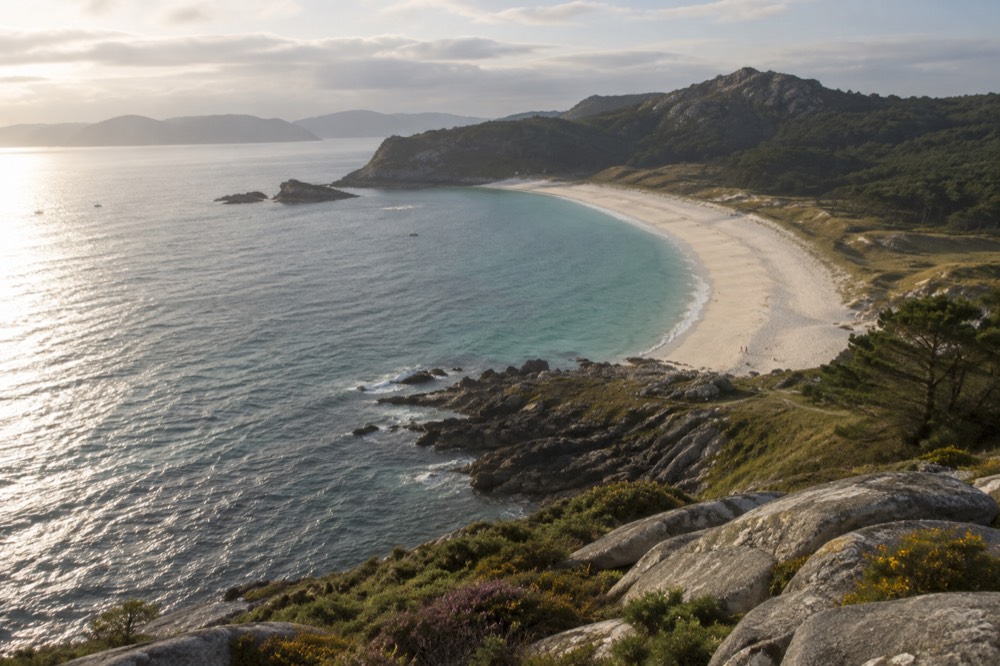
Cíes Islands Day Trip From Santiago de Compostela
The Cíes Islands are the beach-and-wildlife counterpoint to a Santiago de Compostela city break, reached through Vigo on Galicia's Atlantic coast.
Short answer
The Cíes Islands are a protected island group at the mouth of the Ría de Vigo, reached from Santiago de Compostela by train or bus to Vigo and then a ferry crossing. A guided full-day tour from Santiago runs from $101 per person.
Santiago de Compostela sits inland, wrapped in granite arcades and pilgrim crowds, and the nearest thing it has to a beach day is a full-day escape west to the Atlantic. The Cíes Islands, a protected island group guarding the mouth of the Ría de Vigo in Galicia, deliver exactly that: pale sand, calm shelving water and hiking trails with nothing on the horizon but open sea. The Oficina del Peregrino's own annual figures say the city issued a record 530,987 Compostela certificates in 2025, which tells you something about how many people are already in Santiago looking for something to do once the cathedral queues are done. This guide sets out how the day trip works, what the guided option covers, and how it compares with the coast road alternatives like Finisterre and the Rías Baixas.
Where Are The Cíes Islands?
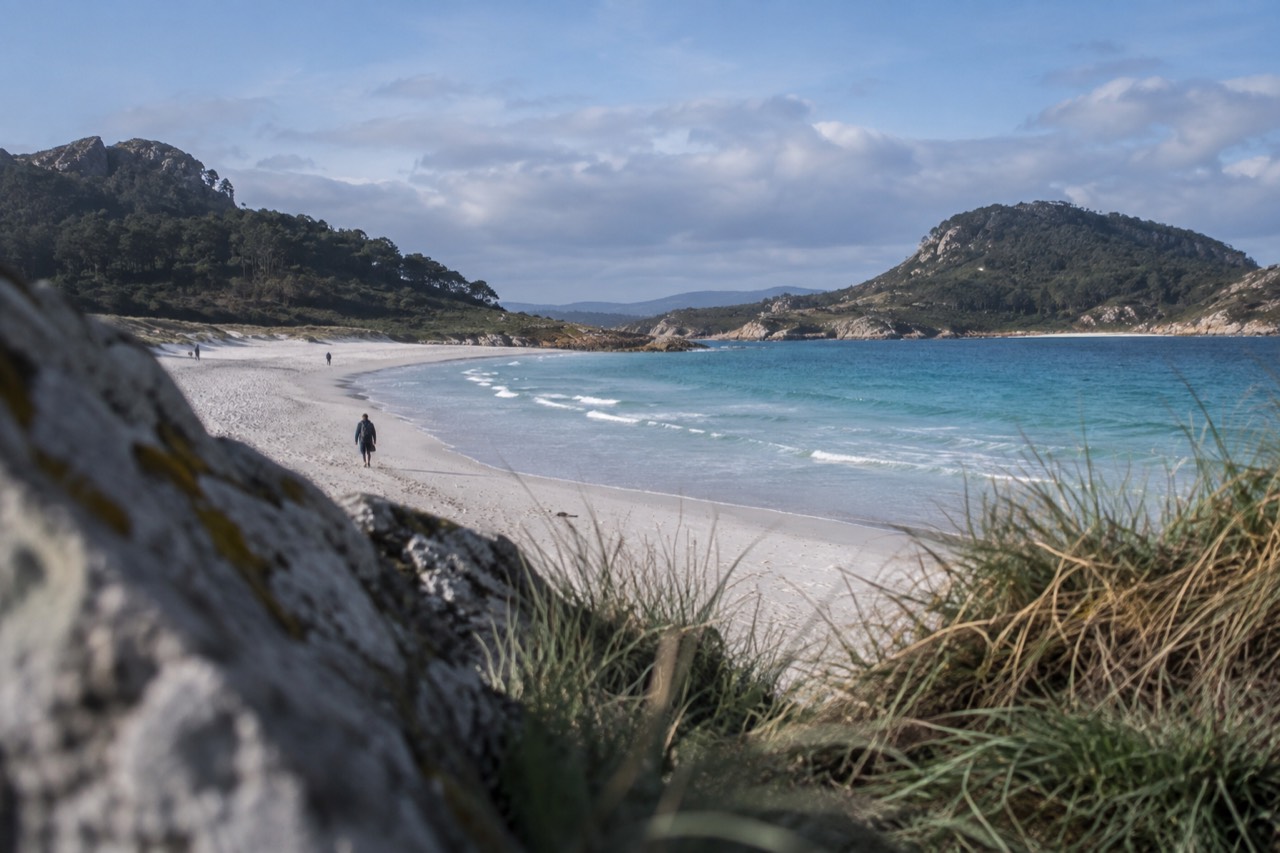
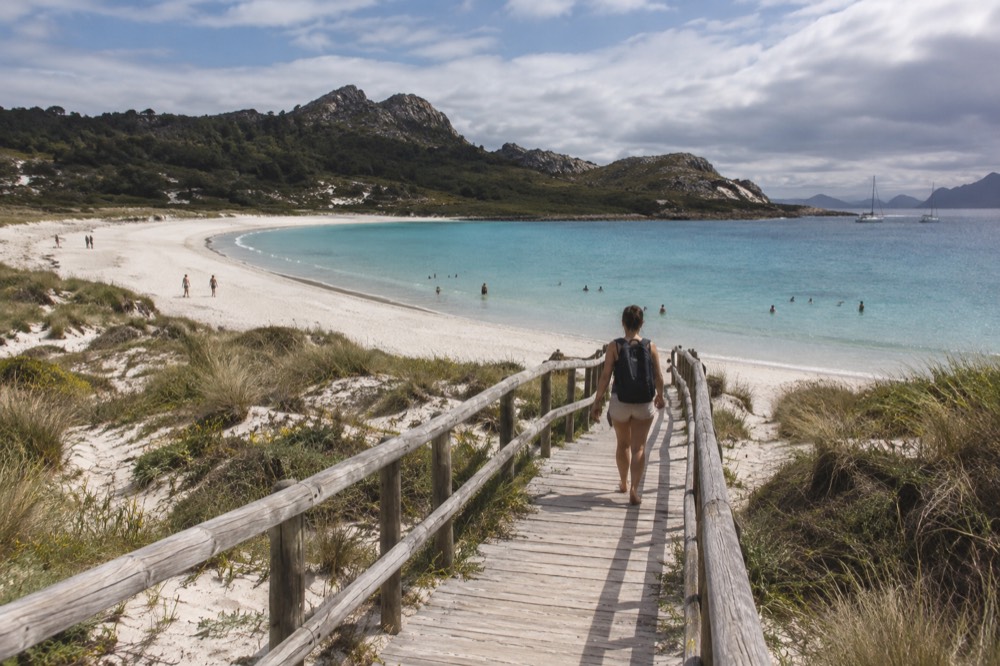
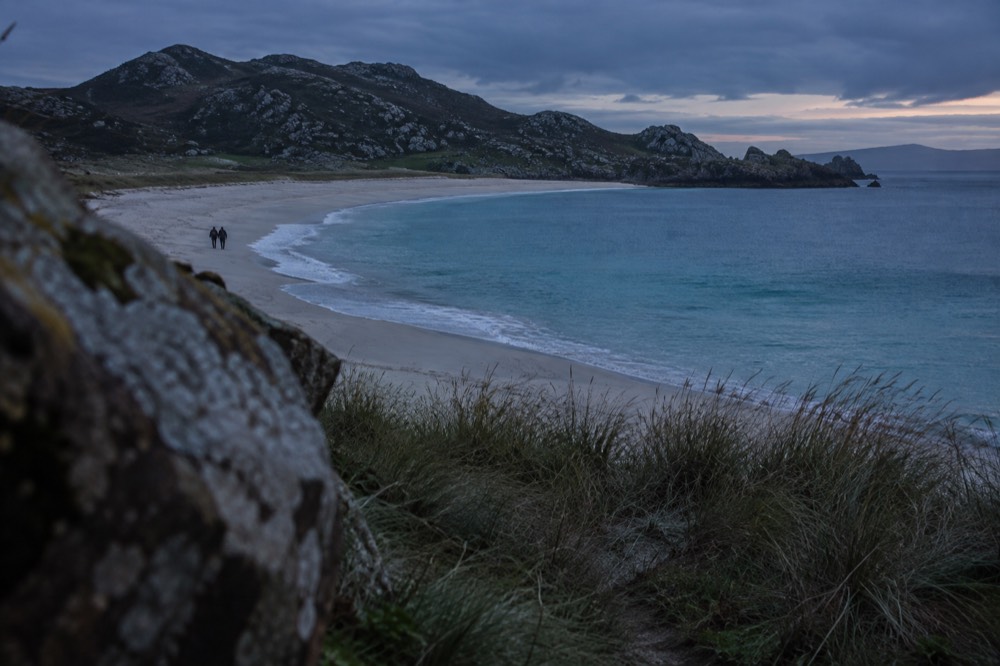
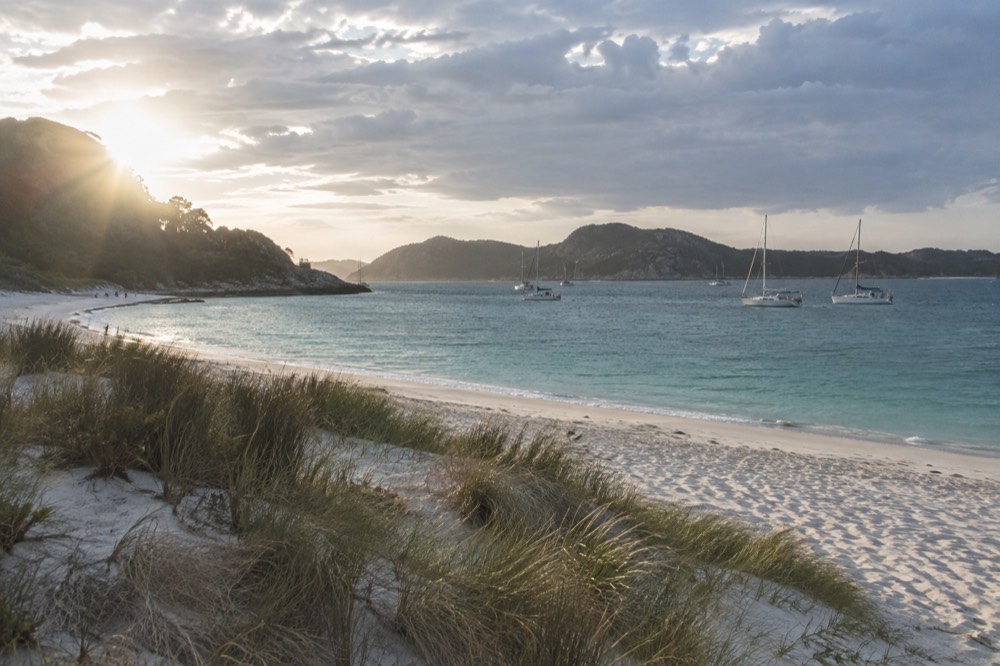
The Cíes Islands are a small archipelago of three main islands lying just off the Atlantic coast at the mouth of the Ría de Vigo, roughly 100km southwest of Santiago de Compostela by road and rail, and they are protected as part of a national park that also covers other island groups along the Galician coast. The islands face the open ocean on one side and the ría, the drowned river valley Vigo's port sits inside, on the other. That double aspect is the reason the trip works: ocean-facing cliffs and rolling grassland up top, and on the ría-facing side a long crescent of pale sand with shallow, comparatively calm water.
They belong firmly to the Vigo side of Galicia rather than to the pilgrim city's immediate hinterland. That matters for planning, because every route there from Santiago de Compostela runs through Vigo, the largest city in the region, and the day is really two journeys stitched together: Santiago to Vigo, then Vigo out across the water. The islands are uninhabited apart from their protected status, and day visitors are the only population they ever have.
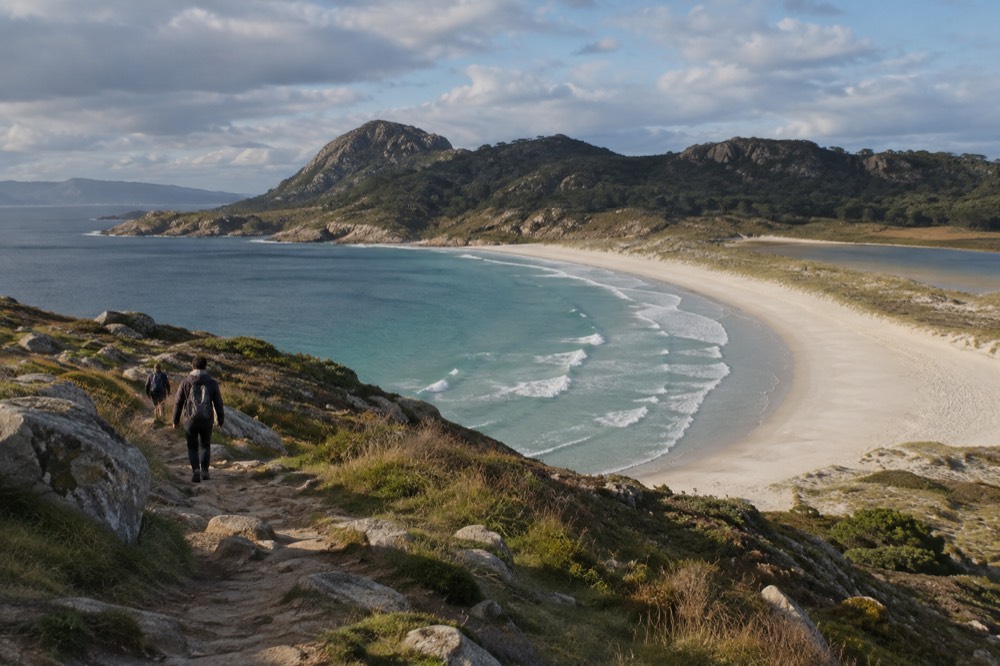
Because the archipelago sits inside a national park, the experience is closer to a nature reserve visit than a resort beach. There are no hotels, no beach bars beyond a small seasonal campsite, and no village to wander. What there is instead is walking: paths between the islands' low peaks, cliff viewpoints, and water that stays clear because boat traffic and visitor numbers are managed rather than left open.
For a sense of how the destination fits the wider region, our Vigo day trip guide covers the city on the mainland side of the crossing, and the general question of the best day trip from Santiago de Compostela is worth reading before committing to any single option.
How Do You Get From Santiago de Compostela To The Cíes Islands?
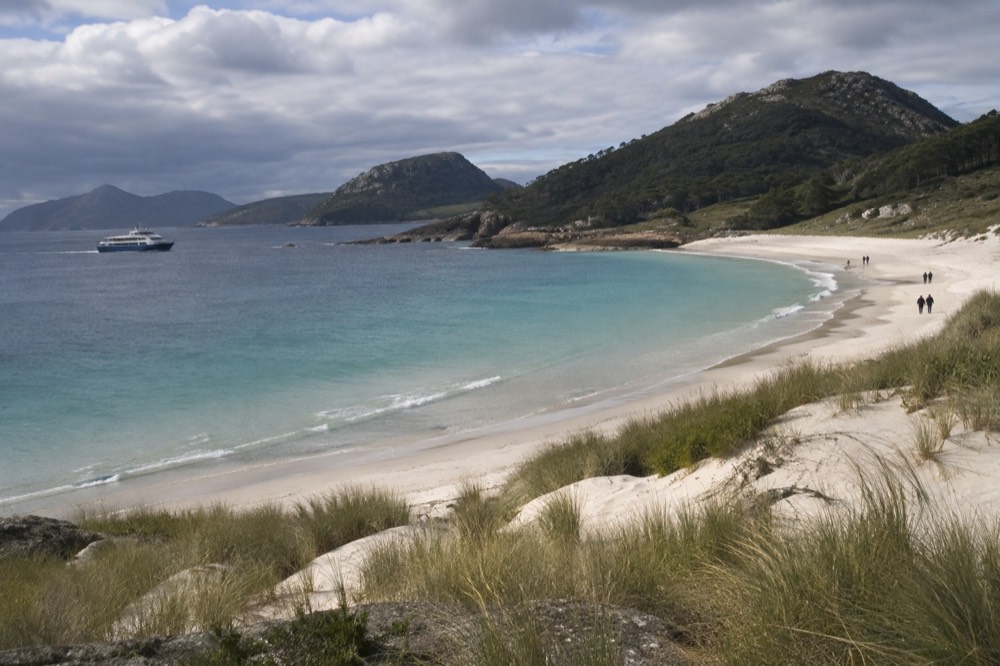
You reach the Cíes Islands from Santiago de Compostela in two stages: first by train or bus to Vigo, a rail journey of roughly one hour on direct services, and then by passenger ferry from Vigo's port out to the islands, with the crossing itself operated by seasonal boat services whose schedules and fares should be checked with the operator before you travel. The verified rail facts are straightforward: Santiago to Vigo runs direct on regional services in about an hour, Santiago to Madrid is a 3-4 hour high-speed hop if you are combining the trip with a longer itinerary, and there is no direct rail line to Porto, so Portuguese itineraries change via Vigo. None of those figures, including any ferry detail, should be guessed at: the pack used for this page does not carry the ferry's own timetable, fare or crossing time, and schedules for island boats in a national park change by season and by weather.
What the planning looks like in practice, using only the figures the research supports:
| Leg | Verified detail |
|---|---|
| Santiago de Compostela to Vigo by train | Direct services, roughly 1 hour |
| Santiago de Compostela to Madrid | Direct high-speed, roughly 3-4 hours |
| Santiago de Compostela to Porto | No direct rail line, change via Vigo |
| Santiago de Compostela to A Coruna | Direct services, a short hop |
| Vigo to the Cíes Islands | Seasonal passenger ferry, check the operator's live schedule |
Two practical warnings follow from that. The first is that the ferry is the part of the day you cannot control from Santiago: crossings in a national park are capacity managed, weather dependent and seasonally limited, so the operator's own current schedule is the only source worth trusting. The second is timing the return. A day trip built on a train at each end and a boat in the middle has three fixed points, and missing the last one strands you in Vigo overnight, which is a pleasant enough city to be stranded in but not the plan you set out with.
The station you arrive at matters too. Vigo's main rail connection points to the port area, and the ferry terminals sit within the working waterfront rather than at a dedicated cruise-style pier, so allow walking time and do not plan the train arrival and ferry departure to the same minute.
Readers working out how many days to give the region will find the how many days should I spend in Santiago de Compostela page useful, because an island day eats a full day of a short itinerary in a way a cathedral morning does not.
What Does A Cíes Islands Tour From Santiago de Compostela Include?
The verified guided option is a full-day Cíes Islands tour from Santiago de Compostela priced from $101 per person, with no rating published on its listing, and it covers the round-trip transport and the island access that independent travellers otherwise have to assemble themselves across train, ferry and national park booking steps. The listing says full day, and the price is the listing's own "from" figure, meaning it is the floor rather than a promise of what every date costs: check the operator's live listing for the departure you actually want. The reason to weigh this option seriously is that the independent route has more moving parts than almost any other day trip from the city. Finisterre is a bus seat. The Rías Baixas is a bus and a boat. The Cíes route is a train, a ferry with managed capacity, a national park visit and a return train, all on one clock.
The trade-off in plain terms:
| Planning factor | Guided full-day tour | Fully independent |
|---|---|---|
| Upfront cost | From $101 per person | Train fare plus ferry fare, check both live |
| Island access | Arranged with the tour | Booked by you with the boat operator |
| Timing risk | Handled by the operator | Three fixed legs to coordinate |
| Time in Santiago | One booking decision | A morning of schedule checking |
| Rating evidence | No rating published on the listing | Not applicable |
Neither answer is wrong. Pilgrims finishing a Camino walk often have the energy for exactly one logistics-heavy day and no appetite for a second, and a single booking is worth a premium after a week of self-management. Travellers who enjoy the mechanics of getting somewhere under their own steam will find the train ride to Vigo genuinely pleasant, and the ferry a destination in itself.
The tour sits in a wider roster, and the two most complementary options for the same Santiago base are worth seeing side by side:
When Is The Best Time Of Year To Visit The Cíes Islands?
The Cíes Islands are a strictly seasonal destination, and the best window follows Galicia's weather rather than the pilgrim calendar: AEMET's climate data for the Santiago de Compostela station shows a temperate oceanic pattern that is wet and cool from October to March and driest in July and August, and island boat services run to their own summer season rather than year-round. That creates a real tension with the Camino's own rhythms. The Oficina del Peregrino's record 530,987 Compostelas in 2025 were not spread evenly across the year, and the busiest walking months overlap heavily with the driest and therefore best island months. If you are walking into Santiago in the peak season, the islands are at their best precisely when you arrive.
The honest planning picture, without invented monthly figures:
| Season | Region-wide pattern | Island planning implication |
|---|---|---|
| July and August | Driest months in AEMET's data | Peak island season, book ahead |
| Late spring and early summer | Warming, showers possible | Quieter, check ferry season is running |
| October to March | Wet and cool, the wettest stretch | Outside the core season, limited or no sailings |
| Holy Year 2027 | Opens 31 December 2026 | City crowds spike, not island weather |
Two dated facts sharpen this. The next Holy Year, Xacobeo 2027, opens with the Holy Door on 31 December 2026 and runs through 31 December 2027, and 2026 itself is not a Holy Year. Anyone planning a Galicia trip around the 2027 celebrations should assume Santiago will be at its most crowded in the shoulder months as well as the summer, and treat a beach-island day as the pressure valve in that itinerary. The separate question of the best month to walk the Camino de Santiago covers the walking side of the same calendar.
Weather on the crossing deserves its own respect. The Atlantic side of the islands takes swell even when the ría is calm, and boat operators run to conditions, not to sentiment. A day planned for the islands should carry a mainland fallback, and the excellent news is that Vigo is a real city with a port, seafood restaurants and hills with views, so a cancelled sailing is a mediocre hour, not a lost day. Everything else covered here is indexed on Santiago de Compostela Travel Guide.
What Should You Know Before You Go?
Three practical constraints shape a Cíes Islands day more than anything else: the islands are a protected national park area with managed visitor access rather than an open beach, the only realistic food and water plan is to carry what you need for the whole day, and the return leg is the fixed point that everything else on the itinerary bends around. Park rules mean the standard beach-trip assumptions fail. Dogs, cars and unregistered camping have no place there, paths stay marked, and the sand you came for shares space with nesting birds and protected dunes in a way a resort beach never does.
Packing and planning, in the spirit of ranges rather than promises:
| Item | Planning range or rule |
|---|---|
| Water | Carry a full day's supply, more in July and August |
| Food | Picnic plus snacks, island dining is minimal |
| Footwear | Walking shoes for the paths as well as sandals for the sand |
| Sun protection | Real even on the oceanic coast, reflection off water adds exposure |
| Layers | Oceanic climate, cool morning crossings even in summer |
| Booking proof | Whatever the tour or ferry operator issues, on paper or on the phone |
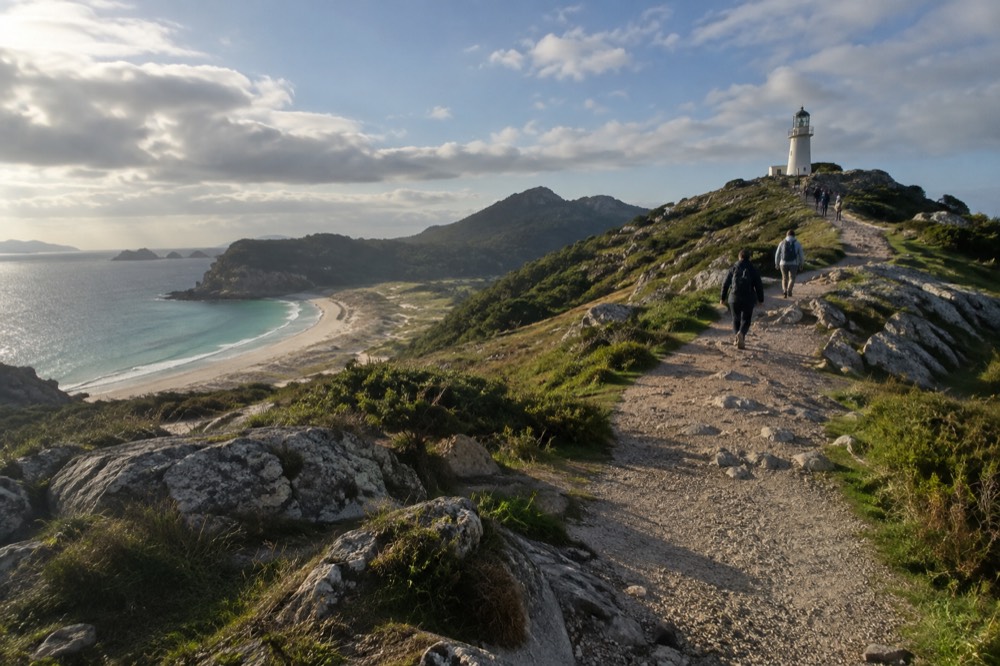
The composition of your day matters too. The islands' signature beach lies between two of the islands on the ría-facing side, which is why the water is calm there, and the main walking routes climb the ridge between that beach and the ocean cliffs. A good day does both: sand in the middle of the day when the sun is high, and the cliff path either side of it. Trying to do the walk after a full beach afternoon is how people end up racing the last ferry.
Back in Santiago, the evening options are worth pre-planning. A night walk is the natural companion to an island day, and Check availability covers the one most travellers pick. Its full card is below.
For the practicalities of the mainland end of the trip, the Santiago de Compostela airport guide covers arrivals, and the rest day after the Camino page is written for exactly the recovered-but-not-yet-departed traveller an island day suits best.
Cíes Islands Or The Mainland Coast: Which Day Trip Fits Your Plans?
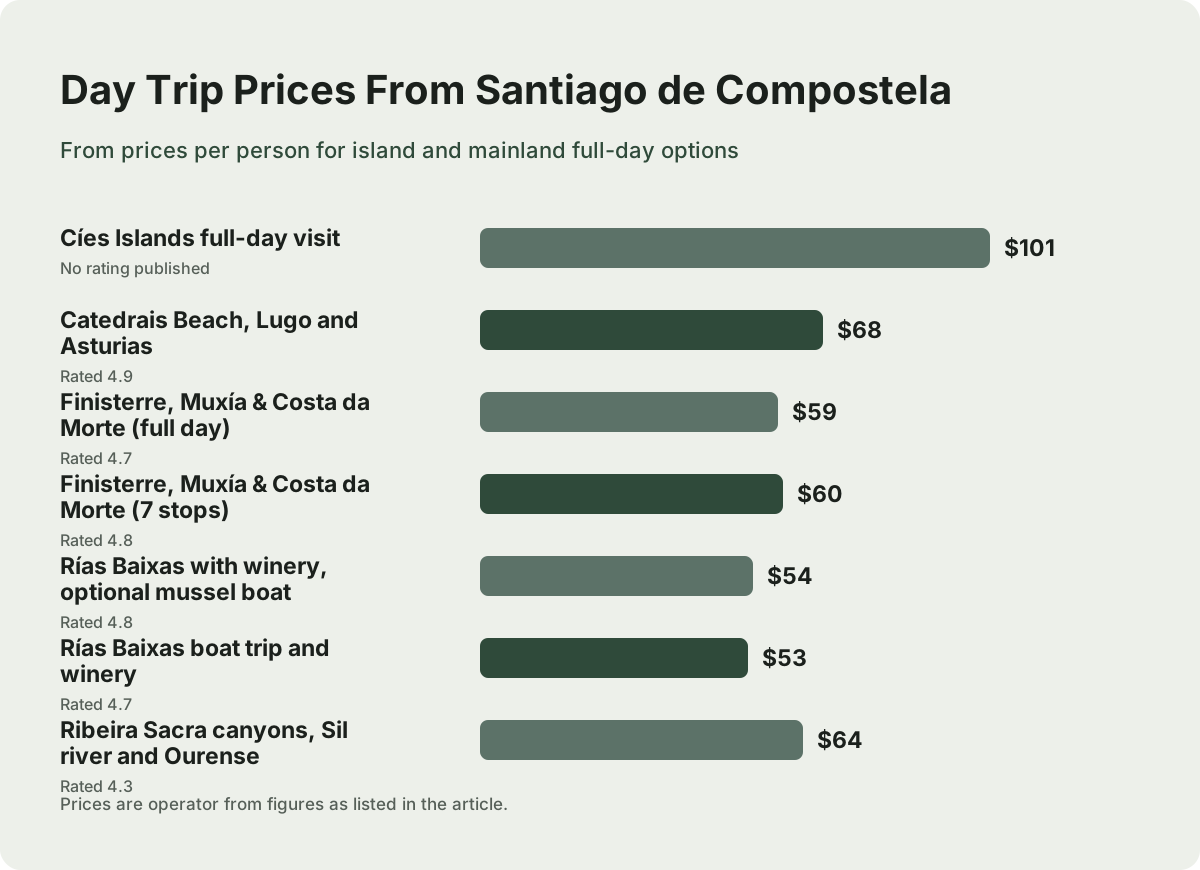
The Cíes Islands compete for a day of your itinerary against three verified mainland alternatives from Santiago de Compostela: the full-day Finisterre, Muxía and Costa da Morte tours from $59-60 per person rated 4.7-4.8 from large review bases, the Rías Baixas winery and mussel-boat trips from $53-54, and the northern Catedrais Beach and Lugo excursions from $68-75, and the choice comes down to whether you want swimming and wildlife or cliffs, wine and Roman walls. The islands are the only option built around sand and clear water, and that is the whole argument for them in one line. Everything else the Galician coast offers is better than the islands at its own thing: Finisterre has the end-of-the-world drama and the lighthouse, the Rías Baixas have Albariño cellars and mussels pulled from the water you sail on, and Lugo has the only fully intact Roman walls you will walk in this region.
The verified comparison, all figures from the current tour roster:
| Day trip from Santiago de Compostela | From price | Rating | Reviews |
|---|---|---|---|
| Cíes Islands full-day visit | $101 | No rating published | Not applicable |
| Finisterre, Muxía & Costa da Morte (full day) | $59 | 4.7 | 2,312 |
| Finisterre, Muxía & Costa da Morte (7 stops) | $60 | 4.8 | 1,714 |
| Rías Baixas with winery, optional mussel boat | $54 | 4.8 | 322 |
| Rías Baixas boat trip and winery | $53 | 4.7 | 482 |
| Catedrais Beach, Lugo and Asturias | $68 | 4.9 | 181 |
| Ribeira Sacra canyons, Sil river and Ourense | $64 | 4.3 | 11 |
Read that table with the price gap in mind. The island tour costs from $101 against $59-60 for the best-reviewed coast trip, and its listing publishes no rating, while the Finisterre options carry four-figure review bases. That is not a verdict, it is a trade: you are paying more for the water and the sand, on a tour with less published review evidence, and the roster's own numbers say so plainly.
The weather tie-breaker helps too. On a clear July day the islands are close to unbeatable in Galicia. On a grey, windy October day, when AEMET's data says the wet season is running, the Finisterre and Rías Baixas tours still work, because cliffs, lighthouses and wine cellars do not care about a shower, while a beach island very much does. Deep-dive guides to the alternatives sit at Finisterre, Costa da Morte and the Rías Baixas wine country around Cambados.
For travellers who like the idea of seafood pulled straight from the water but prefer it with a glass of Albariño beside it, the winery and mussel-boat version of the Rías Baixas day is the closest cousin to an island trip, and its card is here.
With that alternative on the table, the same three-way comparison from the top of the article closes the loop: the island day, the walking-tour day in the city itself, and the cathedral rooftops above it all.
One last planning note for itinerary builders. The question of whether Santiago de Compostela is worth visiting is usually really a question of what surrounds the city, and the honest answer is that the region, islands included, is half the reason to come. The Old Town holds its own UNESCO inscription from 1985, entirely separate from the 1993 inscription covering the Camino routes, and the day trips are how you see the Galicia beyond the granite.
Common Questions About The Cíes Islands
Can you do the Cíes Islands as a day trip from Santiago de Compostela?
Yes. It is a long day, built on a roughly one-hour train ride to Vigo and a ferry crossing out to the islands, and a guided full-day tour from Santiago runs from $101 per person with the transport and island access arranged.
How much does a Cíes Islands tour from Santiago de Compostela cost?
The verified guided full-day visit is priced from $101 per person on the operator's live listing, which publishes no rating. Independent travel costs a train fare plus the ferry fare, and both should be checked live before planning a budget.
When can you visit the Cíes Islands?
The islands are a strictly seasonal destination with managed access inside a national park, and boat services run to their own summer season. AEMET's climate data shows the region driest in July and August and wet and cool from October to March, so the island window follows the dry months.
Do you need to book ahead for the Cíes Islands?
Yes. Visitor access is managed by the park and the boat operators, and summer sailings fill. Booking applies both to independent ferry tickets and to the guided tour, whose departure availability shows on its live listing.
Are the Cíes Islands worth it compared with Finisterre or the Rías Baixas?
They are the only day trip from Santiago de Compostela built around swimming, sand and wildlife rather than cliffs, wine or Roman walls. The guided island tour costs from $101 against $59-60 for the best-reviewed Finisterre coast trips, so the choice is between the beach and everything else the coast does.
What should you bring to the Cíes Islands for the day?
Water and food for the full day, walking shoes for the island paths, sun protection, and layers for the oceanic climate, where morning crossings stay cool even in summer. Dining options on the islands are minimal, so the picnic is the plan.
The Cíes Islands are the day trip that answers the question Santiago de Compostela cannot ask of itself, because after days of granite, incense and pilgrim crowds, the thing a body wants is cold clear water over pale sand. Plan the crossing, pack the picnic, and treat the return ferry time as the one appointment of the day you do not miss.