Rias Baixas Wine: The Albarino Day Trip From Santiago de Compostela
The Rias Baixas, the drowned river valleys south of Santiago de Compostela, produce Albarino, the white wine Galicia is known for, and booked tours reach the wineries and mussel flats in a single full day.
Short answer
The most booked Rias Baixas wine trip from Santiago de Compostela is the full-day boat-and-winery excursion, from $53 per person, rated 4.7 from 482 reviews, which pairs a winery visit with a boat trip through the estuaries.
The Rias Baixas are the four flooded river valleys that notch Galicia's Atlantic coast south and west of Santiago de Compostela, and they are the home of Albarino, the crisp white wine that has become the region's calling card. A pilgrim can finish the Camino at the Cathedral in the morning and be standing in a seaside vineyard the next day, because the whole wine country sits within a single day-trip orbit of the city. The booked excursions that run there are among the most-reviewed trips on the whole Santiago de Compostela roster, combining winery visits with the thing no inland wine region can offer: a boat among the floating mussel platforms of the estuaries.
The figures below come from the tour listings themselves and from details verified on the site, and anything not confirmed is flagged as something to check rather than stated as fact.
What Is The Rias Baixas And Why Does Wine From Near Santiago de Compostela Taste Like The Sea?
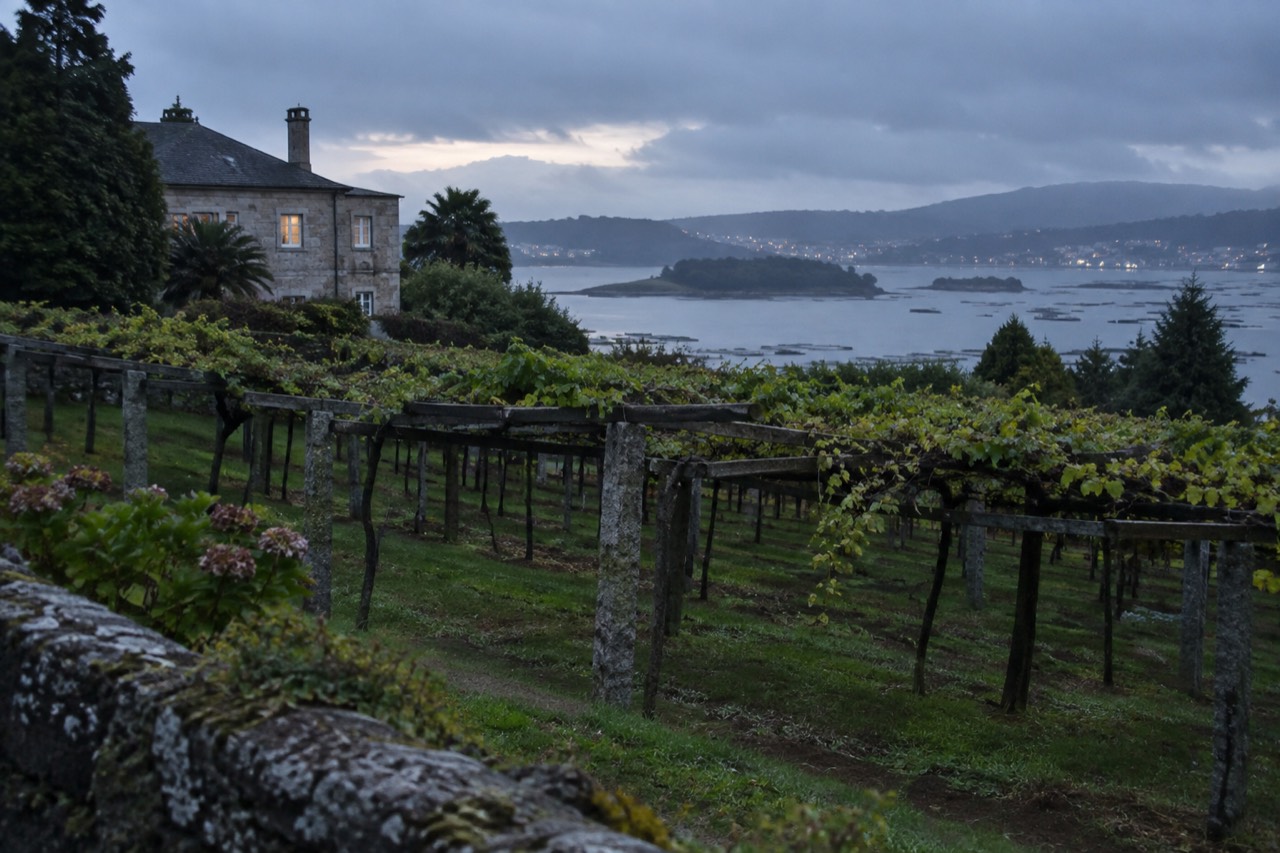
The Rias Baixas are a set of estuaries on Galicia's Atlantic coast where the wine is Albarino, a white grape grown on granite soils a short distance from salt water, and the combination of cool oceanic climate and coastal proximity gives the wine its dry, mineral, citrus-edged character. The name means lower rias, the drowned inlets south of the Fisterra peninsula, and the region is the wine country most visitors to Santiago de Compostela can reach in a day.
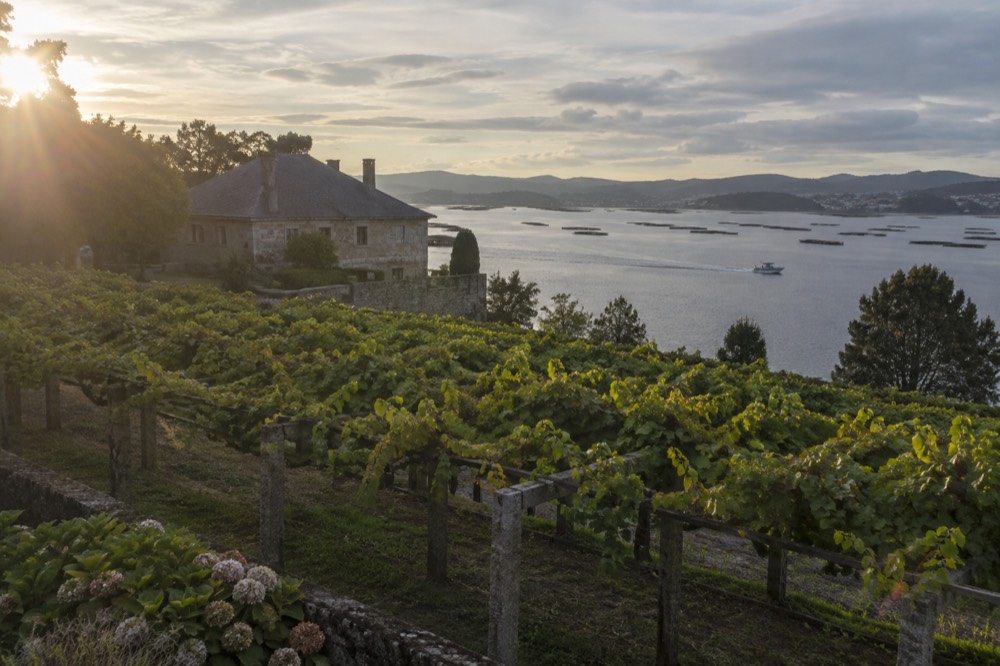
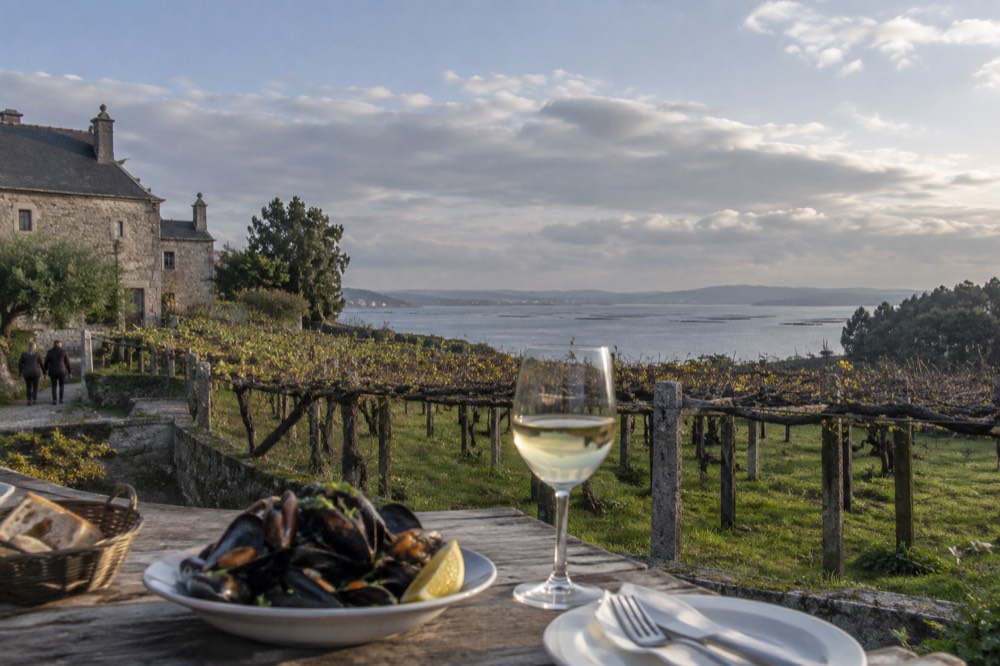
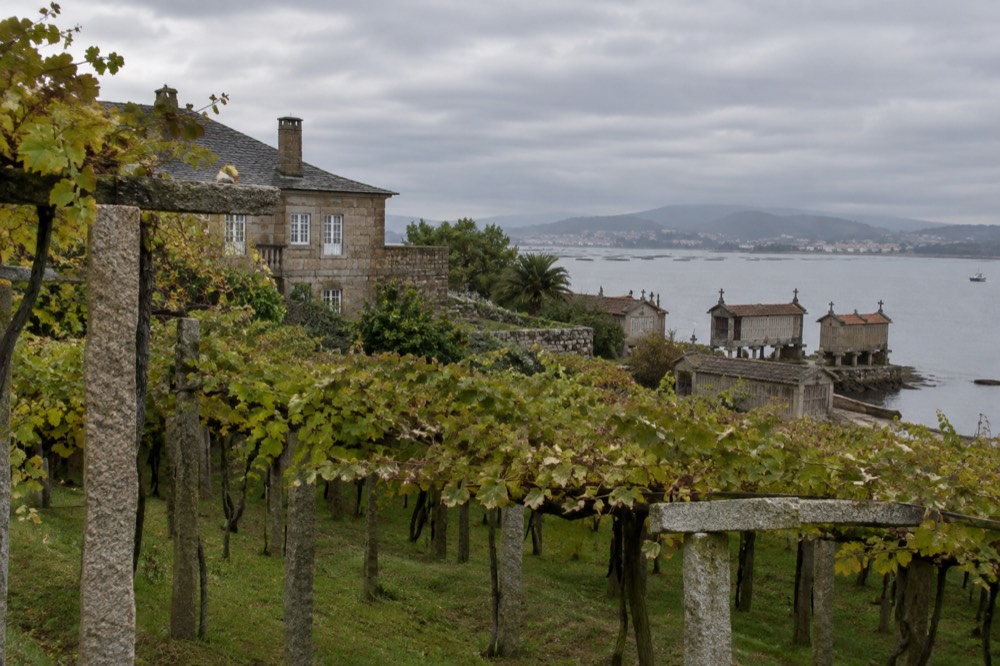
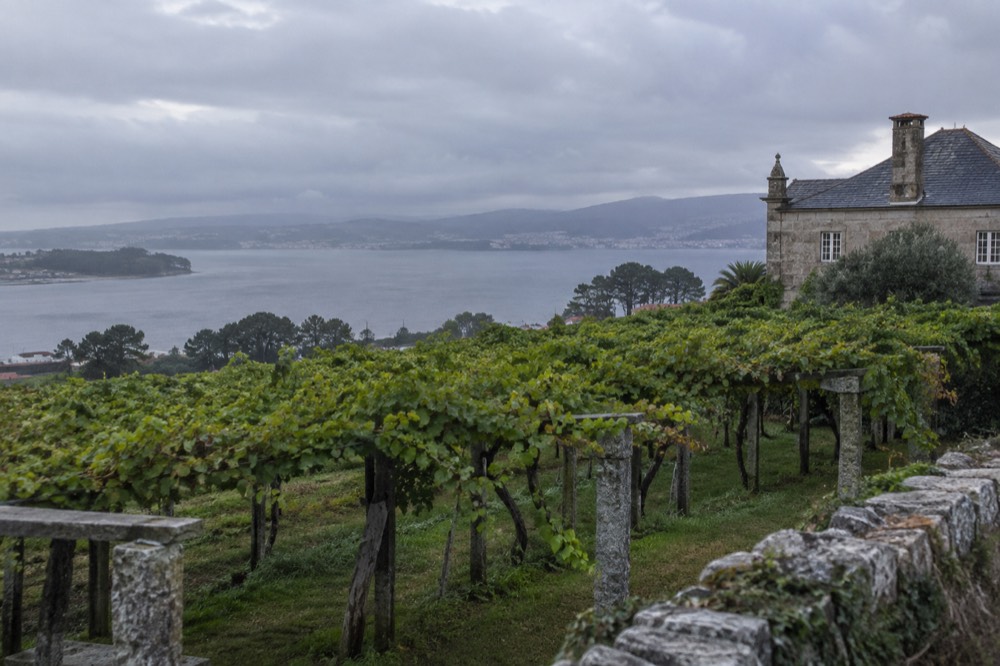
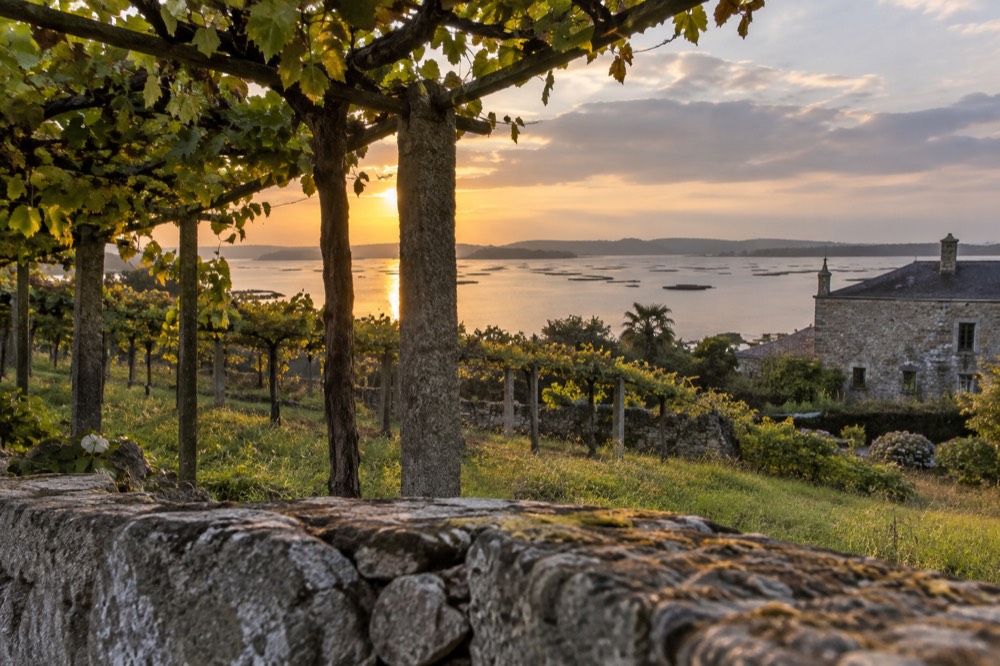
The climate is the reason the wine exists at all. AEMET's data for the Santiago de Compostela station shows a temperate oceanic pattern: wet year-round, wetter from October to March, and driest in July and August, with annual precipitation on the order of 1,690 to 1,890mm. That is a lot of rain for grape growing, and it shapes everything about how the vineyards here look and taste. The vines are typically trained high on pergolas to keep the fruit away from damp soil and to let the ocean wind move through the canopy, which is why the vineyards of the Rias Baixas look so different from the low bush vines of central Spain.
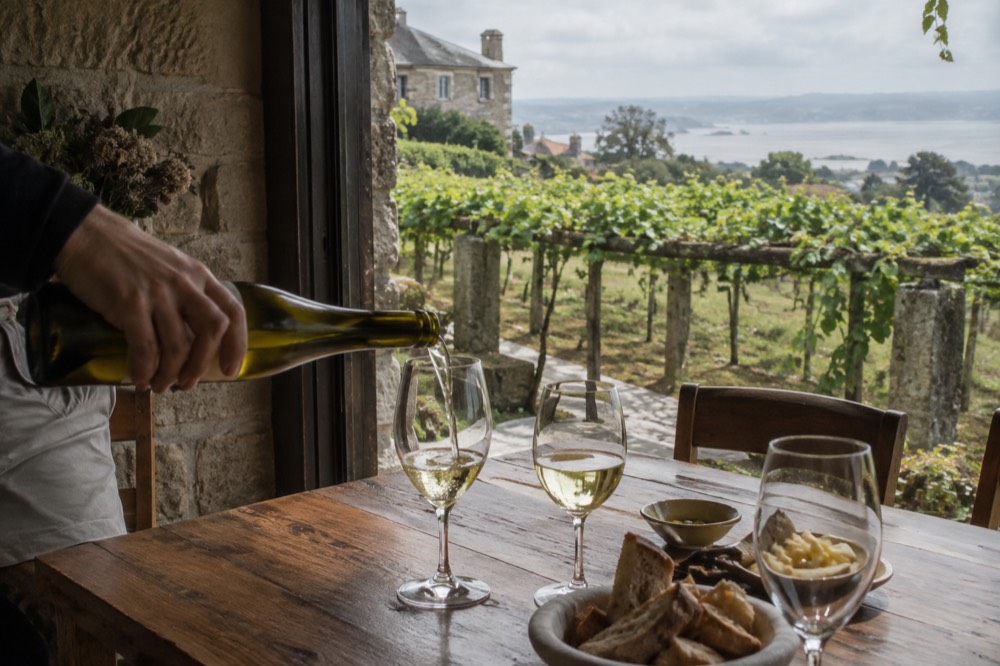
Albarino is the grape that suits this. It ripens slowly in the cool, humid air, keeps its acidity, and picks up saline and stone-fruit notes that the local winemakers attribute as much to the granite and the sea air as to anything done in the cellar. If you want the fuller background on the grape itself, the site's Albarino wine guide goes deeper into how it is made and served.
For a visitor basing themselves in Santiago de Compostela, the practical point is simpler: the Rias Baixas are the one wine region you can add to a cathedral-city trip without hiring a car or committing an overnight. The estuaries are also working seafood country, and the mussel platforms you pass on the boat are the same waters that supply the pulpo and shellfish kitchens of the old town. Wine and shellfish come from the same water in Galicia, and the day trip is built around that pairing.
How Do You Visit The Rias Baixas Wine Country From Santiago de Compostela?
The standard way is a booked full-day excursion from Santiago de Compostela, which handles the transport, the winery booking and the boat in one package, with the most-booked option running from $53 per person and rated 4.7 from 482 reviews. There is no practical public-transport route that strings a winery, the mussel flats and the coastal villages together in one day, which is why nearly every visitor goes with an organized trip.
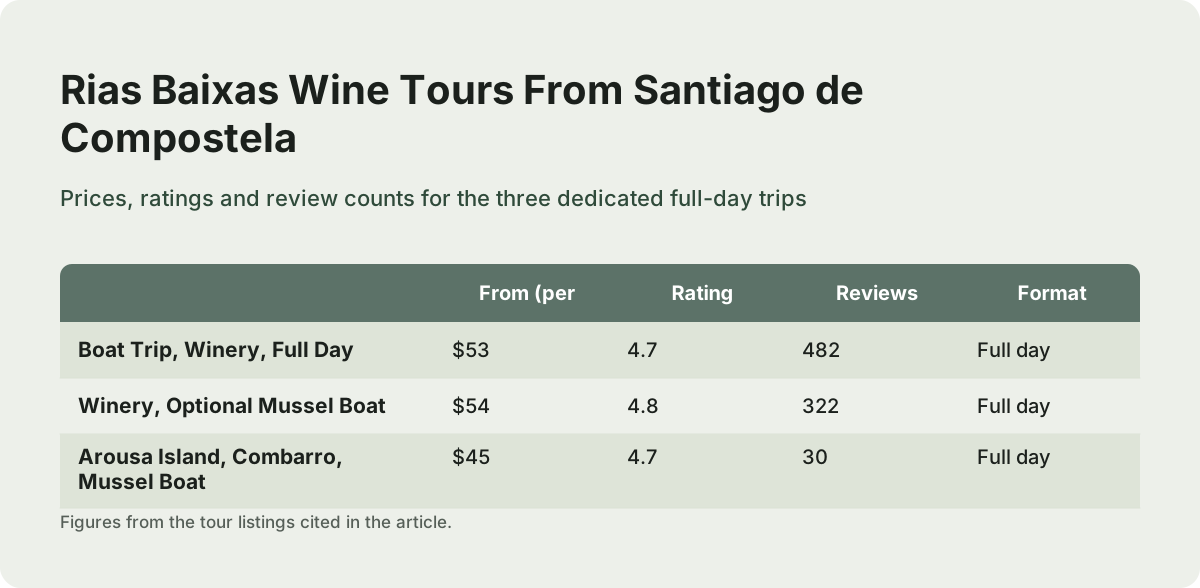
The listings give a clear picture of the market. The roster carries three dedicated Rias Baixas products: the full-day boat-and-winery trip from $53 rated 4.7 from 482 reviews, a winery excursion with an optional mussel boat from $54 rated 4.8 from 322 reviews, and an Arousa Island and Combarro trip with mussel boat from $45 rated 4.7 from 30 reviews. All three are full-day trips out of the city, and all three combine the wine country with at least part of the estuary coast.
| Tour (decision name) | From (per person) | Rating | Reviews | Format |
|---|---|---|---|---|
| Boat Trip, Winery, Full Day | $53 | 4.7 | 482 | Full day |
| Winery, Optional Mussel Boat | $54 | 4.8 | 322 | Full day |
| Arousa Island, Combarro, Mussel Boat | $45 | 4.7 | 30 | Full day |
What you are really buying is the driving. The wine country sits well outside the city in the estuaries, and the tours bundle a winery stop, coastal villages like Combarro, and the estuary boat into one itinerary. Doing that independently would mean several separate local connections and a winery that accepts walk-in visits, which is not confirmed for any specific producer, so the organized route is the honest recommendation for anyone on a short stay.
The one thing to be careful about is expecting a deep wine-education day. These are sightseeing excursions with a winery as the anchor stop, not cellar courses, and the value is in seeing the pergola vineyards and the estuaries in a single loop. Travelers who want more depth can read up on the grape first, then let the trip show them the landscape the words describe.
For anyone deciding whether the city itself justifies the trip at all, the site's answer page on whether Santiago de Compostela is worth visiting covers the case, and the how many days to spend in Santiago de Compostela page helps you see whether a day-trip day fits your itinerary.
Where Do Rias Baixas Wine Tours Actually Stop?
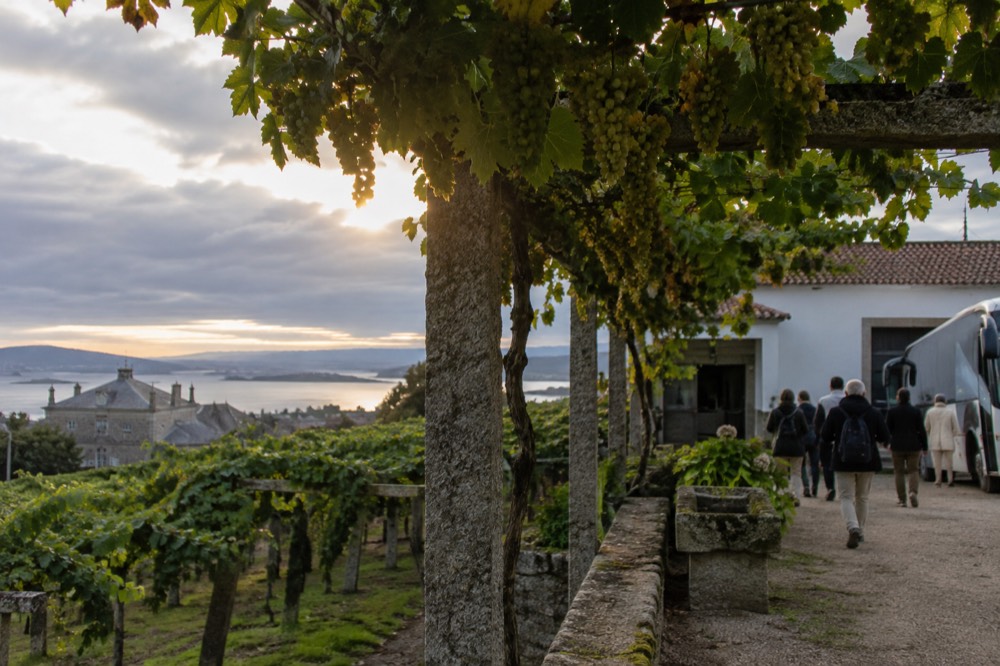
The published listings name a winery visit as the core stop on every Rias Baixas tour, paired with the mussel-boat trip on the estuary and coastal stops at Combarro and Arousa Island, so the shape of the day is: vineyard and cellar in the late morning, the villages and the boat through the afternoon. The exact winery and the order of stops vary by operator and by season, and the listing for each tour states what that departure includes.
The mussel boat is the stop that surprises people. The Rias Baixas estuaries are lined with bateas, the floating wooden platforms from which ropes of mussels are grown, and the boat trips thread between them with the shore villages on either side. On the trips where the boat is optional, you choose it when booking. The Arousa Island and Combarro version builds the boat in alongside its island and village stops.
| Stop | Which tours include it | What the listing shows |
|---|---|---|
| Winery visit | All three Rias Baixas tours | Core of the day, tasting at the cellar |
| Mussel-boat trip | Boat-and-winery tour; optional on the winery excursion; included on Arousa/Combarro | Estuary cruise among the mussel platforms |
| Combarro | Arousa Island and Combarro tour | Historic waterfront village, stone horreo granaries |
| Arousa Island | Arousa Island and Combarro tour | Island stop on the Arousa estuary |
Combarro deserves its own sentence. It is one of the most photographed villages in Galicia, a waterfront of stone houses and horreos, the granite granaries raised on pillars that dot the Galician coast, and it sits right on the estuary the boats use. The site's Combarro day-trip guide covers it in full if you want to treat it as a destination rather than a stop.
One honest caveat: the details below do not confirm opening hours, tasting fees or booking policies for any individual winery, so this guide does not print them. If a do-it-yourself visit is the plan, check the producer's own site before committing, exactly as you would for the museums in Santiago de Compostela itself, whose hours are similarly not officially published.
The tour below is the highest-reviewed dedicated wine-and-boat product on the roster and the one this site links as its related pick for the region.
What Do Albarino Taste Like And What Should You Eat With It?
Albarino from the Rias Baixas is a dry, high-acid white with lemon and stone-fruit notes and a saline finish, and it is built for the shellfish the same estuaries produce, so the classic pairing is mussels, clams, octopus and the white-fleshed fish of the Galician coast. It is a wine that tastes of where it is grown, which is exactly why tasting it on the estuary lands differently from tasting it at home.
The pairing logic is local and literal. The mussels you cruise past on the boat are the region's volume product, grown on the bateas of the Rias Baixas, and the wine's acid and salt cut through them cleanly. Galician octopus, pulpo a la gallega, and the small local dishes served in the old town's tapas bars do the same job, and the site's guides to Galician food traditions and to where to eat in the old town are the right companions for planning the eating side of the trip.
| Dish | Character | Why it works with Albarino |
|---|---|---|
| Steamed mussels | Grown in the same estuaries | Salt and acidity match the brine |
| Pulpo a la gallega | Octopus with paprika and olive oil | The acid lifts the oil and spice |
| Clams and barnacles | Strongly saline shellfish | Citrus edge balances the intensity |
| Padron peppers | Blistered green peppers | Fresh, light wine against the char |
| Fresh white fish | Delicate flesh | The wine does not overpower it |
Tasting at the winery itself is a different thing from tasting in a bar, and it is worth doing both. At the cellar you taste next to the vineyards and often with the people who made the wine, and the listing for each tour says what the visit includes. Back in Santiago de Compostela, the tapas streets around the old town pour the same wines by the glass, so a bottle you meet on the boat can be followed up that evening at a table in the city.
The grape also has a cultural footprint worth knowing. Albarino has its own fiesta in the region each summer, and the wine's rise from local curiosity to Galicia's best-known export is part of why the Rias Baixas day trips sell as strongly as they do: the 482 and 322 review counts on the two leading tours are not accidental, they reflect years of visitors doing exactly this loop.
When Is The Best Time Of Year For A Rias Baixas Wine Trip?
The driest and warmest window is July and August, which is also peak season in Santiago de Compostela, so the sweet spot for most travelers is late spring or September, when the summer crowds thin but the weather is still settled. October to March is the wet stretch of the Galician year, and while tours run year-round, the estuary views and the vineyard walks are weather-dependent.
AEMET's climate data for Santiago de Compostela is the anchor here: wet year-round overall, wetter from October to March, and driest in July and August. The Rias Baixas coast shares that pattern, and the difference between a bright day on the mussel boat and a grey one is the difference between two different trips. Nobody should cancel a trip over Galician rain, the region is green because of it, but anyone choosing dates should know which half of the year they are buying.
| Season | Weather character (AEMET ranges) | What it means for the trip |
|---|---|---|
| July and August | Driest months of the year | Best boat weather, busiest city and tours |
| May and June | Settling after the wet season | Good balance of weather and space |
| September | Often fine, thinning crowds | A strong compromise choice |
| October to March | Wettest stretch of the year | Tours run, but bring layers and expect rain |
The Holy Year point matters more than most visitors realize. The Holy Door opens on 31 December 2026 and the 2027 Holy Year runs to 31 December 2027, so the city's occupancy will be elevated through all of 2027, and the popular day trips, this one included, will feel it. Anyone planning a 2027 visit should book the excursion early rather than assume same-week availability. The same seasonal logic applies to the pilgrim routes, and the site's best time to visit Santiago de Compostela guide consolidates it for the city.
The winery-first version above, with the mussel boat as an optional add-on, suits travelers whose priority is the cellar time rather than the cruise.
Can You Do The Rias Baixas Without A Booked Tour?
It is possible to reach parts of the region independently, especially Pontevedra and Combarro, but a self-guided day cannot reliably reproduce the full loop, because the winery visits, the mussel boat and the coastal villages are scattered across different estuaries and the details below confirm no public-transport itinerary that ties them together. Travelers without a car should book the excursion; travelers with a car can build their own day from the same stops.
The honest split looks like this. The cities and large towns are reachable on regional transport: Pontevedra and Vigo are the two anchors on the south Galician coast, and the site has full guides to Pontevedra and Vigo. The Cies Islands sit off Vigo and need their own ferry planning if you want to add them. What independent travel does not easily get you is the winery-and-boat combination in one day, and that combination is the reason the tours exist.
| Aspect | Booked excursion | Independent day |
|---|---|---|
| Winery visit | Arranged by the operator | Check the producer's own site first |
| Mussel-boat trip | Included or optional at booking | Separate local operator, book direct |
| Coastal villages | Driven in the same loop | Reachable via Pontevedra and Vigo |
| Driving and parking | Handled | Your responsibility in small villages |
| Cost shape | One from-price, typically $45-$54 | Pay as you go, check each fee on site |
The table prices for the booked side come straight from the tour listings: from $53, from $54 and from $45 per person for the three dedicated products. The independent column deliberately carries no figures, because individual winery tasting fees, boat fares and parking costs are not officially published, and this site does not print numbers it cannot source. Tasting fees across wine regions usually run modest, but check the room, or in this case the producer's page, before you plan a budget around them.
For travelers stacking days, the region also pairs naturally with the other day trips out of Santiago de Compostela. The best day trip from Santiago de Compostela answer page compares the options, and A Coruna to the north makes a strong second excursion for anyone with three or more days in the city.
How Does The Rias Baixas Trip Compare With The Other Full-Day Tours From Santiago de Compostela?
The Rias Baixas wine trip is the only major full-day excursion from Santiago de Compostela that is built around food and drink rather than landscape or architecture, sitting alongside the Finisterre and Costa da Morte coastal trips, the Catedrais Beach and Lugo trip to the north, and the Ribeira Sacra river-canyon trip inland. Choosing between them is mostly a choice of coast, and many visitors with three or four days do two of them.
The roster makes the comparison easy to see. The coastal west is Finisterre and Costa da Morte territory, with the leading trip rated 4.7 from 2,312 reviews at from $59, and the site's Finisterre guide covers the lighthouse coast that route ends at. To the north, the Catedrais Beach and Lugo trip runs from $68 rated 4.9 from 181 reviews, and the Lugo guide covers the Roman-walled city it ends in. Inland, the Ribeira Sacra canyon trip runs from $64 or from $68 depending on the operator, and it pairs naturally with the thermal town of Ourense for travelers who want to extend inland.
| Full-day trip theme | Region | Leading listing price | Rating and reviews |
|---|---|---|---|
| Wine, boat, shellfish | Rias Baixas, south coast | From $53 | 4.7 from 482 |
| Sea cliffs, lighthouse, sunset coast | Costa da Morte, west | From $59 | 4.7 from 2,312 |
| Beaches and a Roman wall | Lugo and Catedrais, north | From $68 | 4.9 from 181 |
| River canyons and monasteries | Ribeira Sacra, inland | From $64 | 4.3 from 11 |
The wine trip's identity is the table. Every other full-day tour out of Santiago de Compostela sells scenery or history, and this is the one that feeds you. That makes it the natural rest-day choice for pilgrims who have just walked in: the site's rest day after the Camino guide makes exactly this argument, and a seated boat with a glass in hand is a gentler first day after 100km of walking than a clifftop trail.
It also explains the review profile. A trip that feeds people and pours wine collects goodwill efficiently, and the 482-review count on the leading listing, with a 4.7 average, sits in the same band as the best-reviewed excursions on the roster. Those figures come from the listings and are the only performance numbers this site prints.
What Should You Book Before You Go And What Can Wait?
Book the full-day excursion itself before you travel, especially for July, August and the whole 2027 Holy Year, because the Rias Baixas trips sell from a fixed pool of seats per departure. The winery visits, the boat legs and any city add-ons, such as a cathedral tickets tour, can wait until your dates are fixed, but the day trip itself is the scarce item.
The Holy Year arithmetic again: 2027 is the next Xacobeo, with the Holy Door opening 31 December 2026 and the year running to 31 December 2027, and pilgrim numbers were already at a record 530,987 Compostelas issued in 2025 before any Holy Year uplift. More pilgrims in the city means more day-trip seats sold, and the second tour_picks band below is the set of three tours this site recommends most often for visitors combining the city with an excursion.
Note what the band contains: the wine trip plus two cathedral tours, because the honest pattern for most visitors is one day of the city and one day of the coast. The Cathedral of Santiago de Compostela guide covers the building, and the official tickets-and-hours page for the Cathedral sets out the booking mechanics for the visits themselves.
Two current caveats from the Cathedral belong here even on a wine page, because they shape any combined itinerary. First, the Botafumeiro is currently out of action: scaffolding for the dome restoration covers its hanging mechanism, the Cathedral confirmed this in writing on 5 September 2026, and no return date has been published, so no visit should be planned around seeing it swing. Second, from 16 October 2026 the 9:30am, noon and 7:30pm pilgrim masses relocate from the Cathedral's High Altar to the nearby Church of San Agustin, with only the 7:30am mass staying in the Cathedral's Communion chapel; before that date the four masses are held at the High Altar. Both facts are dated and current.
Common Questions About Rias Baixas Wine
How far is the Rias Baixas wine country from Santiago de Compostela?
The region is a day-trip distance from Santiago de Compostela, and the booked tours run as full-day excursions from the city. There is no single verified mileage for the whole loop, and the exact drive depends on which winery and villages a given departure includes, so the honest answer is a full day out of the city rather than a number of kilometres.
What is the best Rias Baixas wine tour from Santiago de Compostela?
The most-booked option is the full-day boat-and-winery excursion, from $53 per person and rated 4.7 from 482 reviews, which pairs the winery visit with the estuary boat. A winery-first version from $54, rated 4.8 from 322 reviews, adds the mussel boat as an option, and an Arousa Island and Combarro tour from $45, rated 4.7 from 30 reviews, suits visitors who want the villages as much as the cellar.
Do you need a car to visit the Rias Baixas?
No, and most visitors go without one. The booked excursions handle all the driving between the winery, the coast and the boat, which is the practical reason they exist: no single public-transport route strings those stops together in a day. Travelers who prefer independence can base themselves in Pontevedra or Vigo and build the region from there.
What wine is the Rias Baixas region known for?
Albarino, a dry, high-acid white grape grown on granite soils close to the Atlantic. The cool, wet oceanic climate of Galicia, the same pattern that makes Santiago de Compostela wet from October to March and driest in July and August, is what preserves the wine's acidity and saline character.
Can you buy Albarino at the wineries on the tour?
The tours include a winery visit and tasting, and buying at the cellar is a normal part of that stop on wine excursions generally. The listings do not state each producer's sales policy or shipping options, so treat on-site purchase as likely but check with the operator or the producer's own page if taking bottles home is a priority.
Is the Rias Baixas trip suitable for non-drinkers?
Yes, with the honest caveat that the winery is the anchor stop. The boat leg, the estuary scenery and the villages of Combarro and Arousa stand on their own, and non-drinkers can sit out the tasting. Travelers purely interested in the coast may prefer the Finisterre and Costa da Morte trips instead, which are landscape-led rather than wine-led.
The Rias Baixas loop is the easiest good decision a visitor to Santiago de Compostela can make: one booked day, one famous white wine, and a boat through the water that made both possible. Choose the season with AEMET's pattern in mind, book the seats before the 2027 Holy Year squeeze, and let the Santiago de Compostela Travel Guide pages on the city and the coast do the rest of the planning.