Combarro Day Trip From Santiago de Compostela: The Hórreo Village On The Ria De Pontevedra
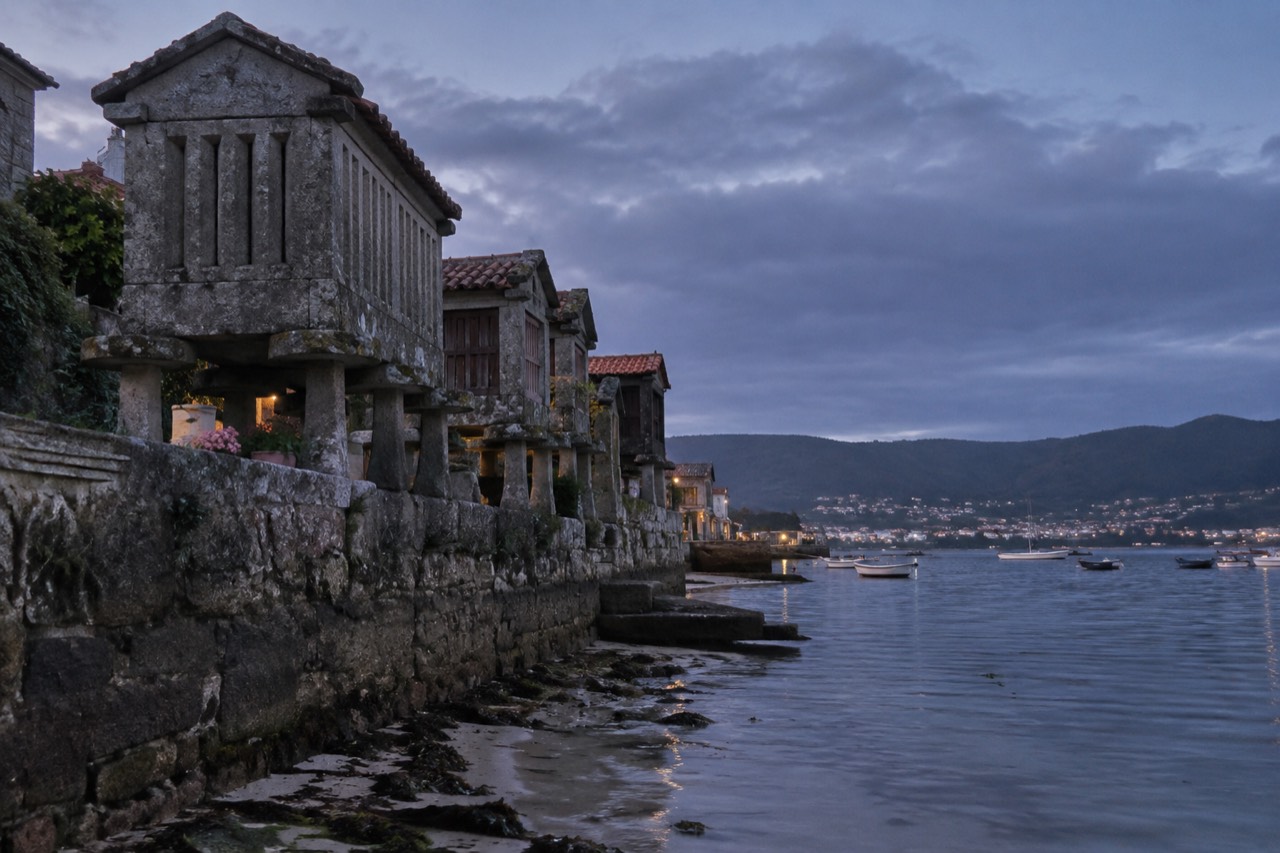
Combarro, on the Ria de Pontevedra south of Santiago de Compostela, is the Galician village where granite hórreos stand directly over the sea, and it has become the region's most photographed fishing-harbour day trip.
Short answer
Combarro is a small traditional village on the Ria de Pontevedra in Galicia, roughly an hour's road travel from Santiago de Compostela via Pontevedra, famous for its rows of stone hórreo grain stores raised on pilings at the water's edge. Most visitors reach it as one stop on a guided Rias Baixas day trip, which typically combines Combarro with an island or mussel-boat cruise and a winery visit.
Combarro, on the southern shore of the Ria de Pontevedra, is the village that put the Galician hórreo in every Galicia photo album. Rows of granite grain stores on stone pilings stand straight out over the tidal line, backed by a tight web of lanes, cross-crowned houses and bars serving pulpo. For travellers based in Santiago de Compostela, the cathedral city about an hour of road travel to the north, it has become the default answer to the question of which coastal village deserves a day away from the Praza do Obradoiro. This guide covers what Combarro is, how the logistics work from Santiago de Compostela, what the guided Rias Baixas tours include, when to go, what to eat, and how to pair it with the rest of the region.
Why Do Travellers From Santiago de Compostela Add Combarro To A Galicia Trip?
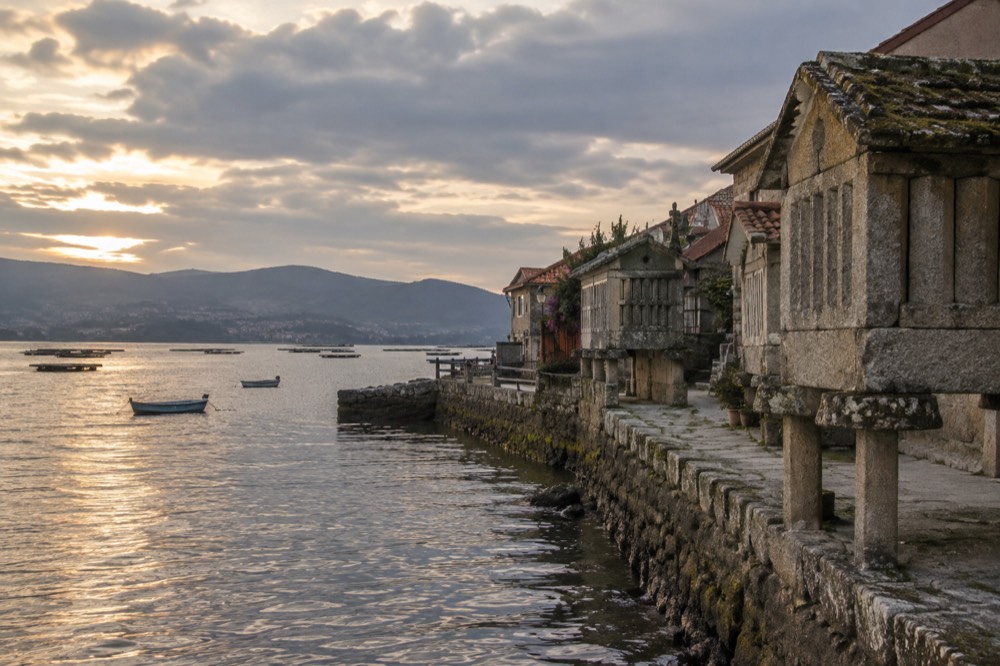
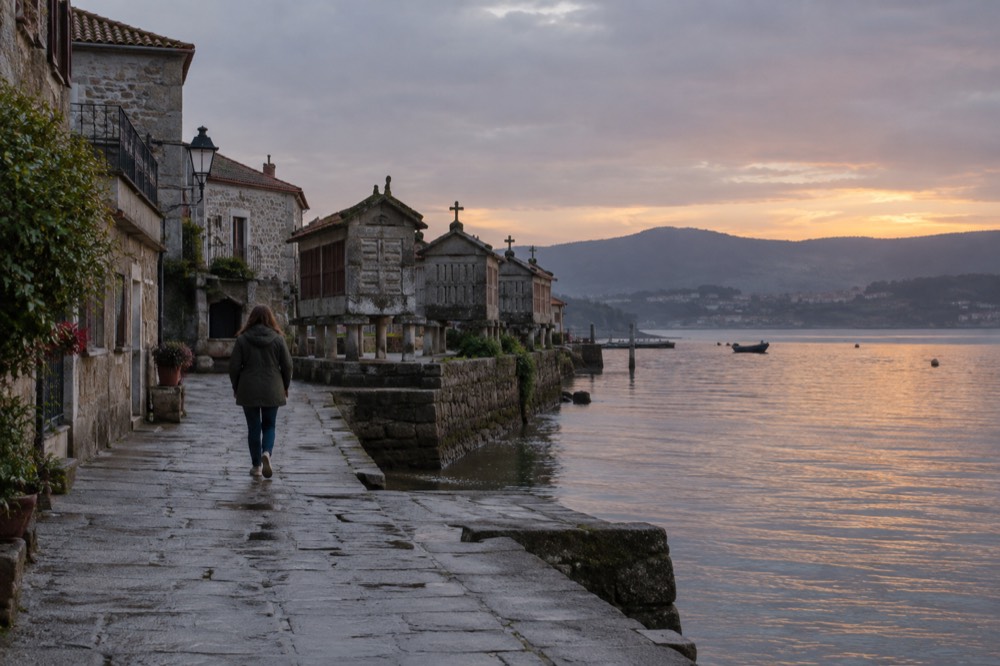
Combarro is the one village on the Galician coast where a whole row of traditional stone hórreos stands on pilings directly in the sea rather than in fields or village squares, and that single image, granite granaries reflected in tidal water with small boats moored alongside, is what draws day trippers from Santiago de Compostela down the Rias Baixas side of the region. The village itself is small enough to walk end to end in an unhurried afternoon, which is exactly the point: after the stone scale of the Cathedral and the pilgrim crowds of the old town, Combarro offers the low, maritime Galicia of the rias, the drowned river valleys that define the coast south of Fisterra. The old town is a protected historic ensemble, and the hórreo row along the shore is its centrepiece. You do not come here for monuments with ticket queues. You come for the waterline, the seafood terraces and a rhythm that has barely moved in a century.
The contrast with the city is the whole appeal. Santiago de Compostela is granite solemnity and incense; Combarro is nets drying and the smell of grilled octopus. Both belong to the same cultural landscape, and that landscape is what UNESCO recognised when it inscribed the Old Town of Santiago de Compostela in 1985 and the Routes of Santiago de Compostela, the Camino Frances and the Northern Spanish routes, in 1993. Those are two separate listings, never one, and a day trip like this one is how most visitors see the Galicia that sits outside both.
Planning context matters here. Day-trip demand from Santiago de Compostela has grown alongside Camino traffic, and the Oficina del Peregrino's own figures recorded 530,987 Compostela certificates issued in 2025, a record year, which means the city's population of people looking for a day on the coast has never been larger. Combarro, reached via Pontevedra, sits on the same southern coast as the wineries of the Rias Baixas, which is why the village almost always appears on combined tours rather than as a standalone destination.
What Exactly Is An Hórreo, And Why Does Combarro Have Them Standing In The Sea?
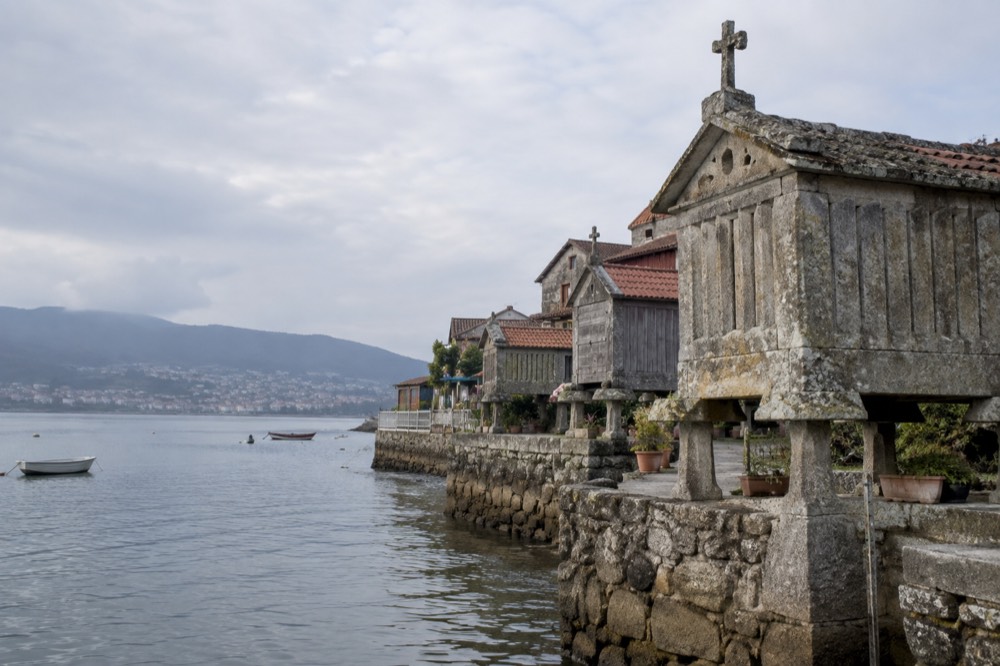
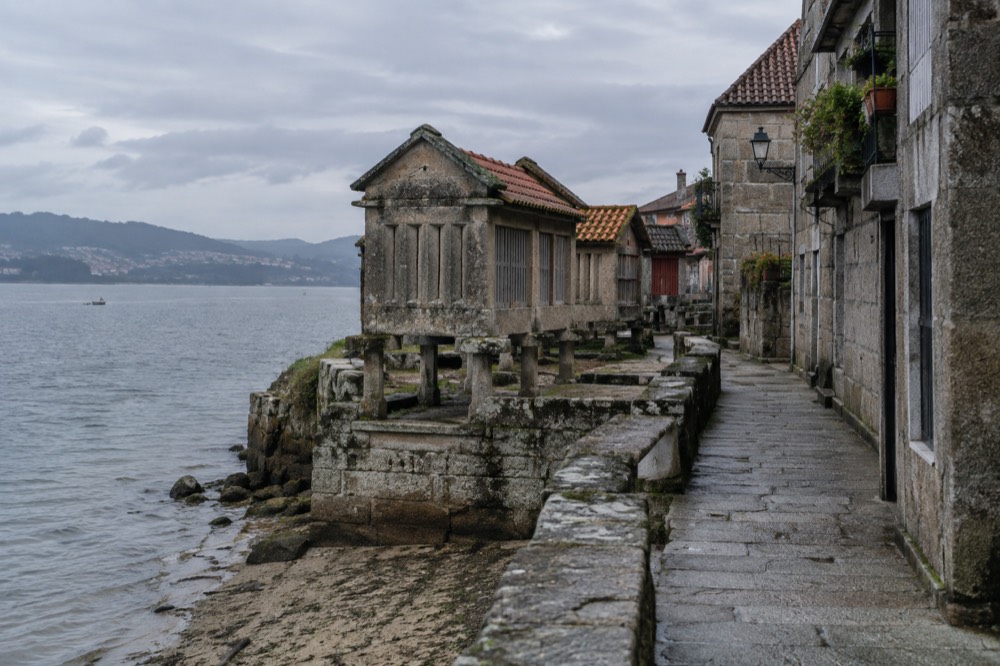
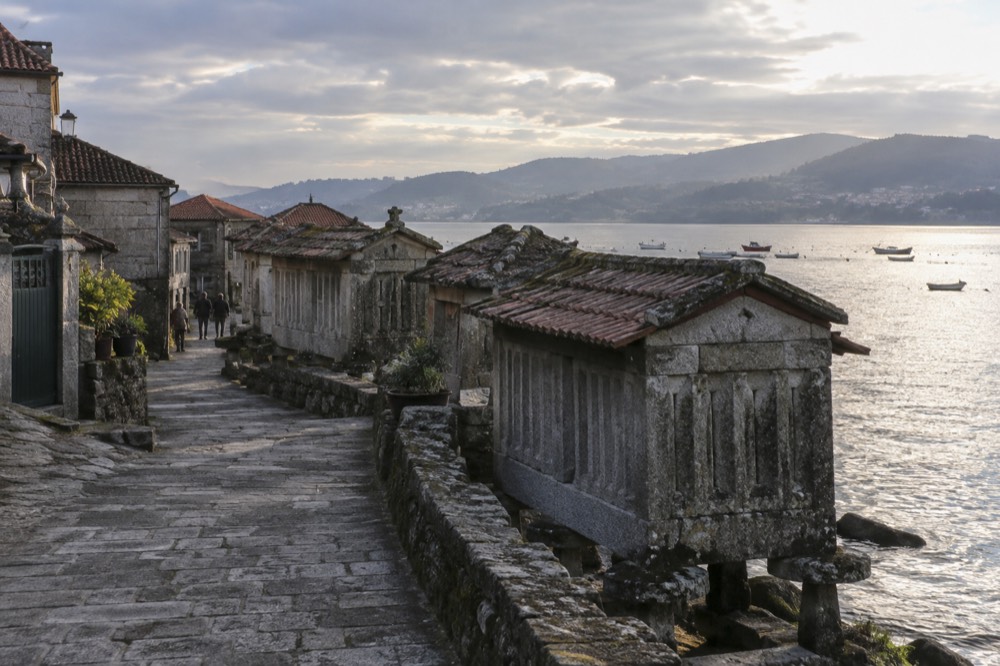
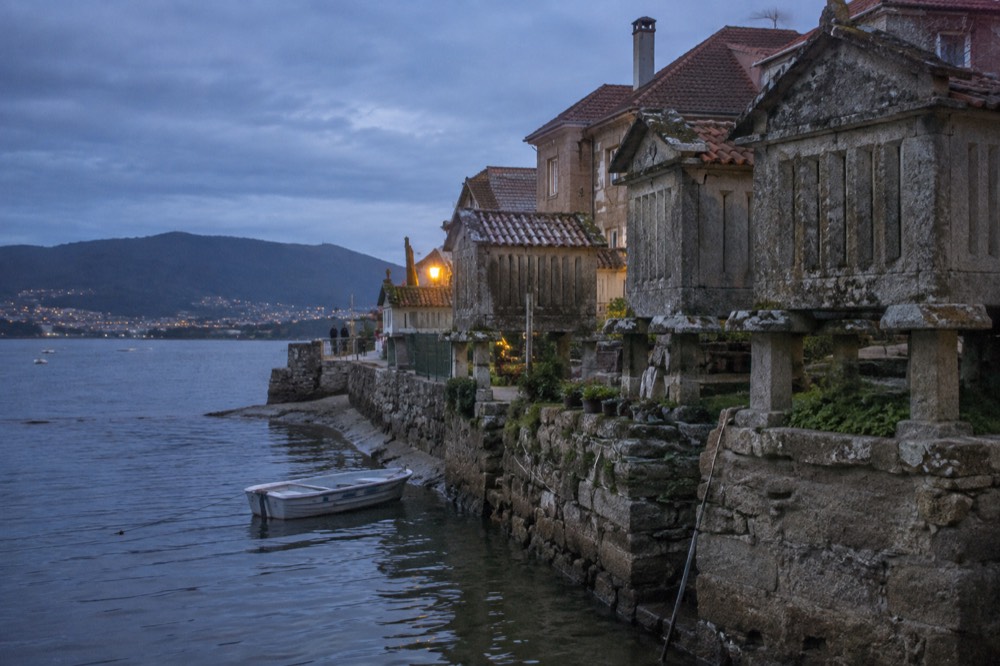
An hórreo is a raised granary, a stone or timber storehouse lifted on pillars so that grain stays dry, ventilated and out of reach of rodents, and Combarro's examples are unusually set at the water's edge because the village's small plots of farmland ran straight down to the shore, leaving no room anywhere else to build them. The design is shared across Galicia and northern Spain, and the Combarro variant is known for its long rows of stone hórreos facing the ria at once. Walking the shoreline lane, you pass dozens of them in a few hundred metres, each on its own cluster of pilings, some still used for drying corn, others simply part of the village fabric now.
The cross-crowned gables are the detail to notice. Many Combarro hórreos carry a carved cross at one end, a blend of practical farm architecture and devotion that repeats all over the Galician countryside. On a day trip the best approach is simply to walk the full waterfront line slowly, then loop up into the upper lanes where the bars and terraces sit, and come back down at the opposite end of the village. That circuit takes a comfortable hour and covers everything Combarro offers at street level.
For travellers who want the same kind of slow, guide-led uncovering of a historic townscape, Santiago de Compostela itself has an equivalent product in the city-walking category. The Hidden City Walking Tour, from $17 per person and rated 5 from 13 reviews, digs into the streets most Camino arrivals walk past without ever looking up, and it makes a sensible pairing with a Combarro day: one morning in the city, one afternoon on the ria. Check availability for that option alongside the coastal trips.
How Do You Get From Santiago de Compostela To Combarro Without A Car?
Combarro is reached by road travelling south from Santiago de Compostela through or past Pontevedra to the village's position on the Ria de Pontevedra, and travellers without a car overwhelmingly reach it as a stop on a guided Rias Baixas day trip, because the tour operators run the full-day route that links the village with an island cruise, a mussel-boat option or a winery in a single booking. Independent travel is possible, and the standard plan is a bus or train towards Pontevedra followed by a short local connection on the ria side, but the details below do not carry a verified timetable or fare for that specific connection, so schedules should be checked against the operator's own listings before committing to a DIY plan rather than taking any figure from a general guide at face value.
That honesty matters on this coast. The train network is strong between the big Galicia cities: Santiago de Compostela to Vigo is roughly an hour by direct regional service, and Santiago de Compostela to A Coruna is a short hop, while there is no direct rail line to Porto, travellers change via Vigo. But Combarro is a village stop on a ria, not a city terminus, and the final stretch is where public-transport planning gets fiddly. Anyone determined to go independently should plan around Pontevedra, which is itself a worthwhile day-trip city with a compact old town and a pilgrim-church riverside, and treat the onward leg as a local connection to confirm on the day.
For most visitors the guided day trip is simply the better trade. It removes the connection risk, and the best-reviewed options in this category bundle Combarro with the other two headline experiences of the southern rias, the water and the wine. Before or after the coastal day, the city itself deserves at least one guided walk: the table below shows the strongest city-walking options from Santiago de Compostela as listed on the operators' own pages, and those prices are from-prices per person that should be confirmed on the live listing.
| Guided walk in Santiago de Compostela | Decision name | From price | Rating | Reviews |
|---|---|---|---|---|
| Hidden City Walking Tour | Hidden City Walking Tour | $17 | 5.0 | 13 |
| Old Town Walk with official guide | Old Town Walk, Official Guide | $12 | 4.8 | 338 |
| Historic Town with official guide | Historic Town Walk, Official Guide | $14 | 4.8 | 144 |
| Historic walk, small group | Private Historic Walk, Small Group | $29 | 4.9 | 16 |
| Historic walk and highlights | Historic Walk, City Highlights | $17 | 4.9 | 29 |
What Does A Guided Rias Baixas Tour That Stops In Combarro Actually Include?
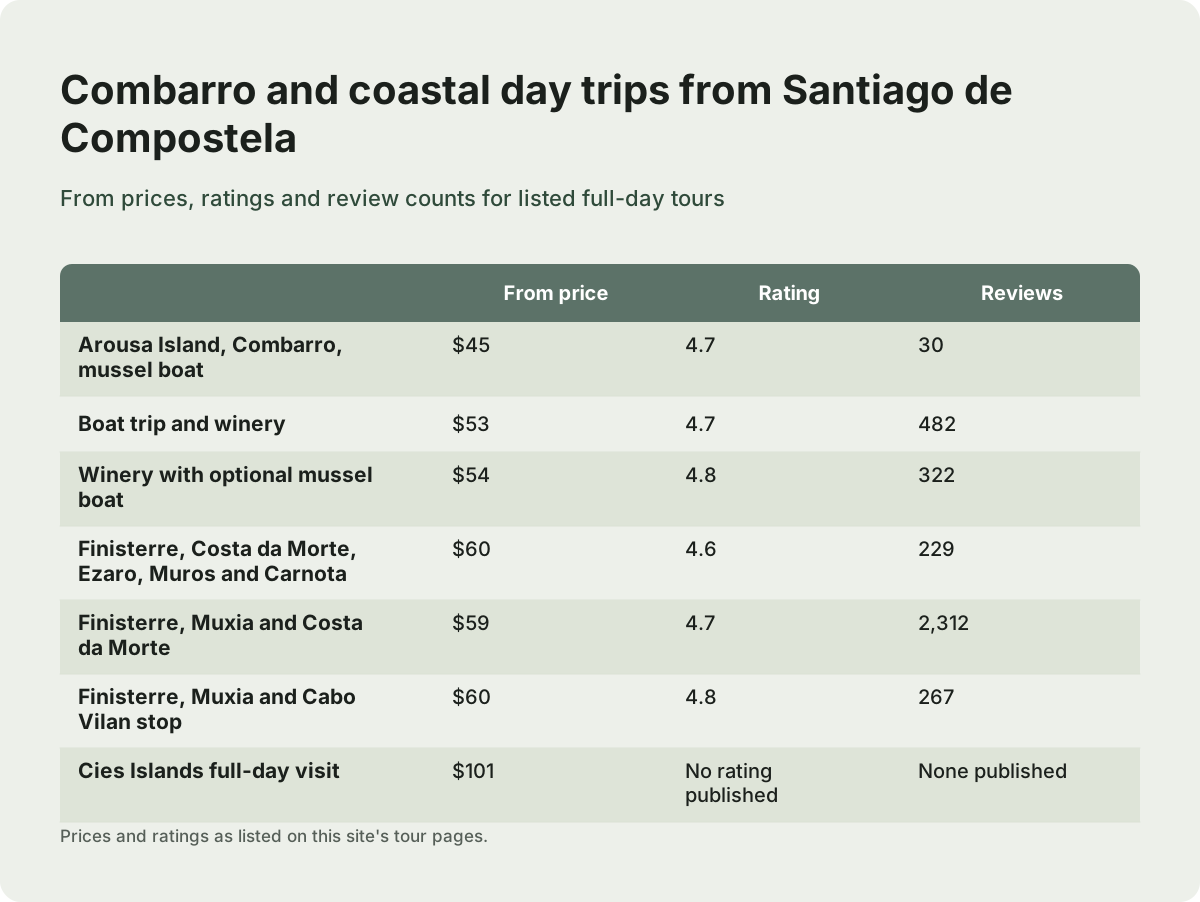
The strongest Combarro-inclusive day trip listed for this site is the Rias Baixas, Arousa Island, Combarro and Mussel Boat excursion, a full-day tour from $45 per person rated 4.7 from 30 reviews, which combines the village's waterfront with an island stop and the mussel-boat experience that defines the southern rias, and the equivalent winery-led alternatives run from $53 to $54 with review counts in the hundreds. Those three products cover the whole Combarro day-trip market between them: one anchors on Arousa Island and the mussel route, one pairs a boat trip with a winery, and one adds an optional mussel boat to a winery-focused itinerary. All are full-day tours, so plan to leave Santiago de Compostela in the morning and return in the evening.
The mussel-boat leg deserves its own sentence of explanation. The Rias Baixas are Galicia's shellfish engine, and the raft platforms, the bateas, that farm mussels on ropes in the ria are visible from the water everywhere around Combarro and Arousa. A boat run out among them, usually with mussels and Albarino served on board, is the midday centre of most tours. The village stop typically comes with free time to walk the hórreo line, and the winery stop, where included, sits in the Albarino country around Cambados, covered in depth by this site's Rias Baixas wine guide.
The comparison below uses the from-prices and ratings exactly as the operators' listings publish them. Every figure is a from-price per person and should be confirmed on the live listing, since availability and seasonal pricing move both directions.
| Rias Baixas day trip | Decision name | From price | Rating | Reviews | Length |
|---|---|---|---|---|---|
| Arousa Island, Combarro, mussel boat | Arousa Island, Combarro, Mussel Boat | $45 | 4.7 | 30 | Full day |
| Boat trip and winery | Boat Trip, Winery, Full Day | $53 | 4.7 | 482 | Full day |
| Winery with optional mussel boat | Winery, Optional Mussel Boat | $54 | 4.8 | 322 | Full day |
Because these tours run rain or shine, the practical detail worth locking in early is the booking window: full-day Rias Baixas tours are the most date-sensitive products in the whole Santiago de Compostela day-trip roster, since boats and wineries both book out faster than any city walk. The cancellation terms on the operator's live listing are the safety net, and checking them before you commit is the one step that makes booking ahead low-risk on this coast.
Travellers whose day starts or ends with the Cathedral rather than the coast should also know about the city's most complete sightseeing product: the Santiago Complete Tour with city walk, Portico and Cathedral tickets, from $47 per person and rated 4.8 from 194 reviews, which handles the Cathedral's timed ticketing for you and pairs naturally with a coastal day trip on the following morning.
When Is The Best Time Of Year To Visit Combarro?
AEMET's climate data for the Santiago de Compostela station describes a temperate oceanic climate that is wet year-round, wetter from October to March and driest in July and August, so Combarro is at its most reliable in the high-summer window and at its most atmospheric, with low tide over the mudflats and quiet lanes, in the shoulder months of late spring and early autumn. No month-by-month table of verified normals has been extracted for this site yet, so this page deliberately gives seasons rather than invented monthly millimetre or degree figures. What can be said firmly is that the wet season, October to March, is also the season of dramatic skies over the ria, and Combarro in rain is a different but genuine experience, seafood bars with steamed windows and empty lanes.
One planning caveat belongs to the whole southern coast: the tours run on the water, and the mussel-boat and island legs are weather-dependent in ways the village walk is not. Booking with a free-cancellation option and watching the forecast in the final days before travel is the standard approach on this coast. The table below turns the seasons into a planning frame. More of these guides are collected on Santiago de Compostela Travel Guide.
| Season | What AEMET's regional pattern means for Combarro | Why it matters for the day |
|---|---|---|
| October to March | The wet, cool half of the year | Waterfront photos are moody; boat legs face more weather risk |
| July and August | The driest period of the year | Most reliable water legs; busiest lanes and terraces |
| Late spring, April to June | Between the wet season and the dry peak | Long evenings, greener hills, moderate crowds |
| September | Late-summer warmth before the rains return | Balanced mix of reliability and calm on the waterfront |
What Can You Eat In Combarro, And What Should A Day Tripper Order?
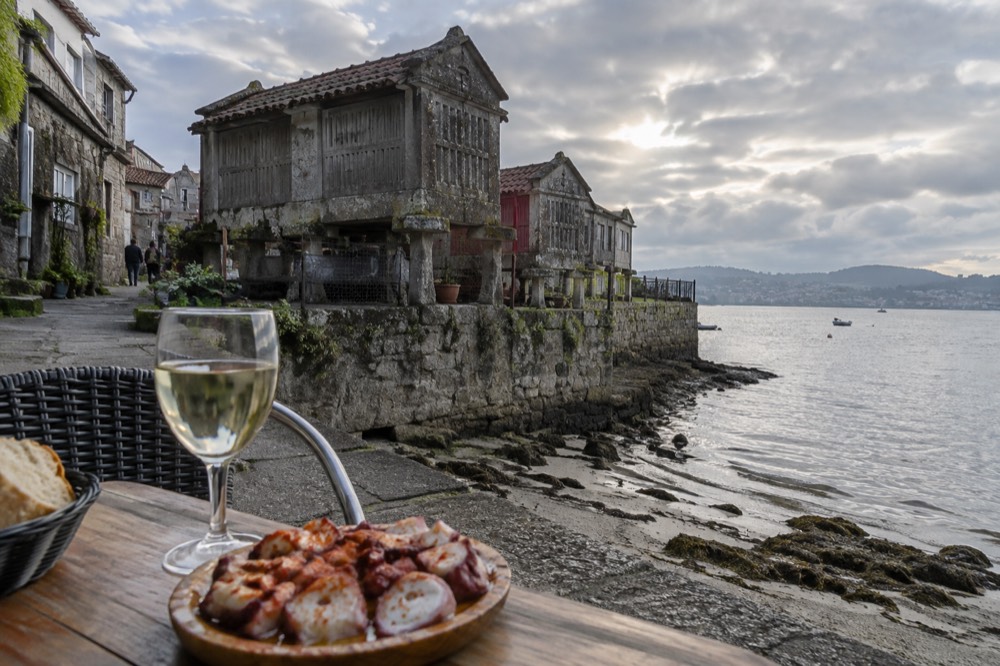
Order the pulpo a la gallega, octopus cooked tender and dressed in olive oil and paprika, alongside padron peppers and a glass of Albarino, the white wine grown on the hills of the Rias Baixas within sight of the ria, because that trio is the culinary identity of this exact stretch of coast and Combarro's waterside bars exist to serve it. This site carries full guides to pulpo a la gallega, padron peppers and Albarino wine, and each explains the dish's rules and history in more depth than a day-trip page can. What belongs here is the ordering logic: the terraces with a view of the hórreo row fill first, and the kitchen rhythm runs to the boat schedules, so arriving slightly off the tour-bus hour gets the better table.
The deeper point is that Combarro is part of the food economy of the rias, not a museum with a café attached. The mussels served on the boats come from the bateas visible offshore; the octopus arrives through the Galician octopus trade that supplies the whole region; the wine list in any bar here leans on the same denomination that the winery stops of the day tours visit. A day trip that walks the hórreo row and then eats overlooking it closes the loop between the architecture of storage and the food it once protected. Hórreos were built to keep grain dry through Galicia's wet winters, and the same climate still drives what grows, what ferments and what surfaces on the table.
No specific menu prices for Combarro's bars are officially published, so no figure is invented here: expect coastal village pricing and check the chalkboard before sitting, the honest answer every time. What can be said is that this is not the expensive end of Galicia. The costs that are verifiable are the tour prices, from $45 to $54 for the full Rias Baixas day including the village, and the same logic that makes those tours good value, several experiences bundled into one day, applies to lunch.
What Else Can You Pair With Combarro On A Full Day From Santiago de Compostela?
The strongest pairings are Pontevedra's old town and the Albarino town of Cambados on the same southern loop, both reachable within the same day-trip arc from Santiago de Compostela, and if you would rather trade the rias for the Atlantic, the western coast offers the Finisterre and Costa da Morte full-day tours from $59 to $60 with review counts from 229 to 2,312, plus the Cies Islands full-day visit from $101. The southern and western coasts are the two real choices from Santiago de Compostela, and Combarro defines the southern one. Pontevedra makes the natural independent pairing; the wineries make the natural guided pairing; the western coast is the alternative when the pull is open ocean rather than sheltered water.
The western-coast options are compared below using the operators' own listed figures, all from-prices per person to be confirmed on the live listings.
| Western-coast day trip from Santiago de Compostela | Decision name | From price | Rating | Reviews |
|---|---|---|---|---|
| Finisterre, Costa da Morte, Ezaro, Muros and Carnota | Ézaro, Muros & Carnota Stops | $60 | 4.6 | 229 |
| Finisterre, Muxia and Costa da Morte | Finisterre, Muxía & Costa da Morte | $59 | 4.7 | 2,312 |
| Finisterre, Muxia and Cabo Vilan stop | Costa da Morte, Cabo Vilán Stop | $60 | 4.8 | 267 |
| Cies Islands full-day visit | Cíes Islands Full-Day Visit | $101 | No rating published | None published |
For a two-day coastal plan, the cleanest split is one southern day, Combarro and the Rias Baixas, followed by one western day on the Costa da Morte toward Finisterre, or a full Rias Baixas day followed by the city itself, since Vigo and the Cies Islands sit on the same southern circuit. Travellers weighing all the options at once will find this site's best day trip from Santiago de Compostela answer useful as a decision summary.
Is Combarro Worth The Day Trip From Santiago de Compostela?
Yes, for one clear reason: no other village in Galicia gives you a whole waterfront of sea-standing stone hórreos within a comfortable day tour of Santiago de Compostela, and the full-day guided product that includes it, from $45 per person and rated 4.7 from 30 reviews, is priced below almost every comparable full-day tour on either coast, so the trade of one city day for one ria day is easy to justify. The honest counterpoint is that Combarro is a small village, not a city: if your list is Cathedrals, museums and major monuments, the day is better spent in Santiago de Compostela itself or in A Coruna. The village rewards travellers whose list already includes seafood, water and architecture that ordinary people built for ordinary reasons.
The decision table below matches traveller type to the right version of the day.
| If this is you | Best Combarro plan | From price | Rating |
|---|---|---|---|
| First visit to Galicia, want the postcard coast | Arousa Island, Combarro, mussel boat full-day tour | $45 | 4.7 from 30 reviews |
| Wine first, village second | Boat trip and winery full-day tour | $53 | 4.7 from 482 reviews |
| Independent traveller, no car | Bus or train to Pontevedra, local connection, waterfront walk | No tour cost | Village is free to explore |
| Photographer chasing low tide and light | Self-planned morning arrival, shoulder season | No tour cost | Village is free to explore |
Common Questions About Combarro
Where is Combarro in relation to Santiago de Compostela?
Combarro sits on the Ria de Pontevedra on Galicia's southern coast, reached from Santiago de Compostela by road travelling south through or past Pontevedra, and it appears on this site's day-trip map alongside Pontevedra, Vigo and the other Rias Baixas destinations.
Can you visit Combarro on a day trip from Santiago de Compostela?
Yes. The Rias Baixas, Arousa Island, Combarro and Mussel Boat excursion runs as a full-day tour from $45 per person, rated 4.7 from 30 reviews on the operator's live listing, and two winery-led alternatives from $53 and $54 also include the region.
What are the hórreos in Combarro?
Hórreos are raised granaries built to keep grain dry and rodent-free through Galicia's wet climate, lifted on stone pillars with capstones, and Combarro's are unusual for standing in rows on pilings directly at the water's edge.
Is Combarro better than Finisterre for a day trip?
They are different experiences: Combarro is a sheltered ria village of hórreos, seafood terraces and mussel-farming waters, while the Finisterre and Costa da Morte tours from $59 to $60 deliver open Atlantic cliffs and lighthouse headlands. The southern rias suit travellers who want calm water and food; the west coast suits travellers who want drama.
Do you need a car to see Combarro?
No. Guided full-day tours from Santiago de Compostela include the village as a stop, and independent travellers can route via Pontevedra by bus or train and complete the final leg with a local connection, though this site's verified research does not carry a confirmed timetable for that specific connection, so schedules should be checked with the operator directly.
What should you eat in Combarro?
Pulpo a la gallega, padron peppers and a glass of Albarino are the defining order of this stretch of coast, and this site's dedicated guides to each cover their history and rules in full.
Combarro is the day trip that shows the Galicia behind the pilgrimage: granite raised against the rain, shellfish farmed on the ria, and a village that has never needed a monument to justify the journey south from Santiago de Compostela.