Is The Walk From Santiago To Finisterre Worth It?
Is the walk from Santiago to Finisterre worth it? A clear answer on the Camino Finisterre extension, who it suits, and the bus-day-trip alternative from Santiago de Compostela.
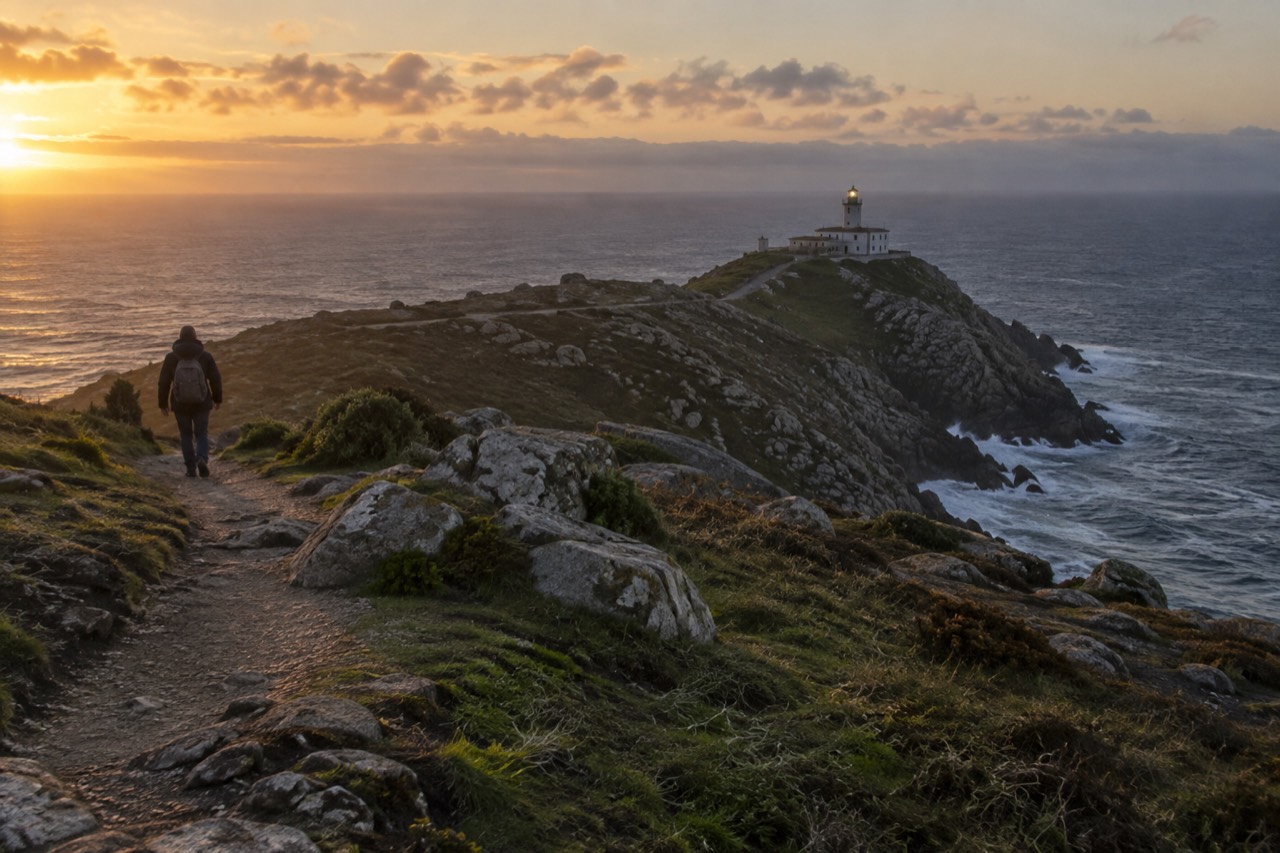
Most pilgrims finish their Camino at the Cathedral of Santiago de Compostela in Galicia, Spain. A smaller group lifts the backpack the next morning and walks west again, toward Fisterra, the Atlantic cape the Romans treated as the end of the known world. The Oficina del Peregrino's own statistics point the other way from the crowd: a record 530,987 Compostelas were issued in 2025, and the certificate itself only recognises routes that end at the Apostle's tomb in Santiago de Compostela. Walking onward to Fisterra is therefore a choice nobody makes for a stamp. It is made for the sea, and that distinction shapes the whole answer.
Is The Walk From Santiago To Finisterre Worth It?
Yes, if you have spare days, healthy legs, and a reason to want the sea rather than another certificate: the Camino Finisterre gives pilgrims a quiet final stage, empty compared with the crowds funnelling into Santiago de Compostela, and a symbolic finish at the ocean that many describe as more emotional than the tomb itself. No, if your knees are shot, your schedule is tight, or you expected a Compostela at the end, because the official certificate is only issued for routes into Santiago de Compostela, never out of it.
The value of this extension is almost entirely emotional and physical rather than bureaucratic. The Camino Finisterre guide on this site covers the route in detail, but the short version is that it is the only major Camino that starts where the others end. Pilgrims who arrive in Santiago de Compostela after weeks of walking often report a strange flatness once the goal is reached. The Cathedral square is packed, the queue for the Pilgrim's Office at Rua das Carretas 33 is long, and the trip is suddenly over. Walking three more days to the coast replaces that abrupt ending with a slow decompression through Galician villages, eucalyptus forest, and finally open Atlantic cliff.
The honest counterargument is real. By the time most people reach Santiago de Compostela, something hurts. The Compostela certificate they walked for was collected at the end of the inward route, and Fisterra offers no equivalent document, so the extension buys scenery and silence rather than proof. If any of that matters more to you than one more stretch of trail, a Fisterra day trip delivers the cape, the lighthouse and the coast without the blisters, and there is a separate comparison in the best day trip from Santiago de Compostela for readers weighing that option.
Who Should Walk It, And Who Should Take The Bus Instead?
Walk it if you arrived on foot, still have functioning legs, and have a few unscheduled days after Santiago de Compostela: the route suits people who want to keep the daily rhythm of the Camino going while the crowds thin out behind them. Take the bus or a guided excursion instead if you came as an ordinary tourist, are travelling with children or heavy luggage, or if the appeal was only the destination, because the coast is fully reachable by road in a fraction of the time.
The deciding factors are practical before they are philosophical. Pilgrims finishing the Camino Frances or the Camino Portugues have their walking machinery already tuned: boots broken in, pack weight solved, the habit of finding a bed and a dinner in an unfamiliar village every evening. For that reader, Fisterra is a natural last act. A visitor who flew into Santiago-Rosalia de Castro airport for a city break, on the other hand, has none of that infrastructure, and starting a multi-day walk cold is a different proposition entirely. The Pilgrim's Office FAQs are blunt about the one rule that matters for documents either way: the Compostela requires the last 100km walked, or the last 200km cycled, on a recognised route into Santiago de Compostela, with at least two credencial stamps per day. Fisterra lies outside that system completely.
There is also a middle path that gets mis-sold. Some walkers treat the Santiago-Fisterra leg as a way to "keep collecting" pilgrim credentials. The Fisterra town hall does issue its own completion document locally, but that is a municipal memento, not the Compostela, and the distinction matters to anyone who walked the full route for the real thing. Readers deciding how long to stay in the region overall should read how many days to spend in Santiago de Compostela before committing the extra nights.
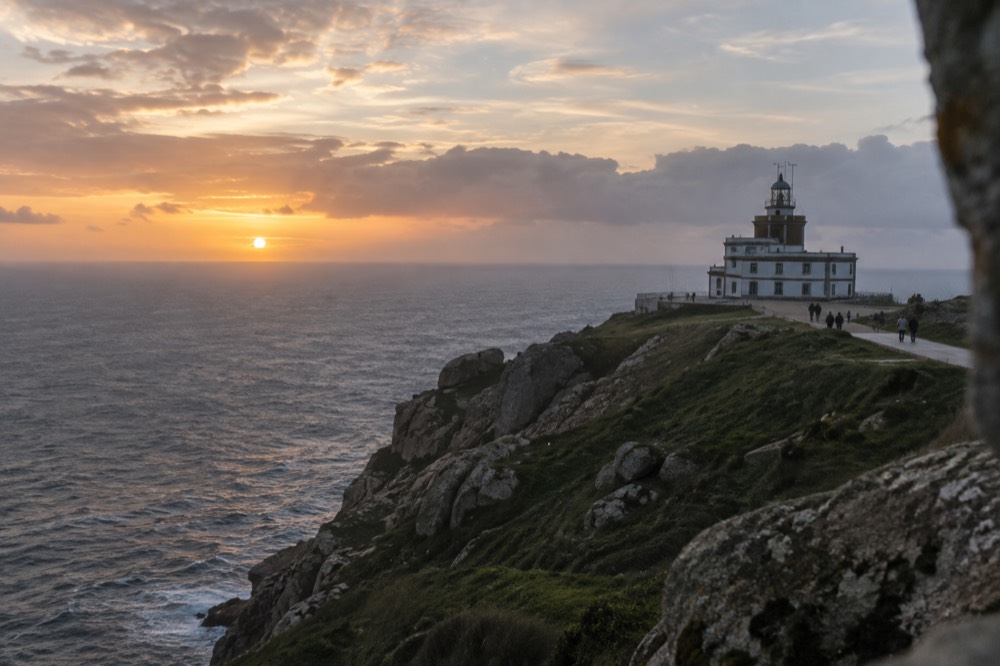
What Are The Real Ways To Reach Fisterra From Santiago de Compostela?
There are three: walk the Camino Finisterre over several days on foot; take a full-day guided excursion along the Costa da Morte that stops at Fisterra and usually Muxia; or travel independently by intercity bus from Santiago de Compostela and overnight in Fisterra town. Walking gives the coast at foot pace and costs least in cash, guided excursions give the most coastline in one day for roughly $45 to $60 per person, and the independent bus is the flexible middle option.
The table below compares the three approaches on the figures this site has verified. Prices for the guided options come from each operator's live listing and can change by season.
| Approach | Time needed | Verified cost indicator | Best for |
|---|---|---|---|
| Camino Finisterre on foot | Several walking days | Lowest cash cost, highest physical cost | Pilgrims already conditioned, wanting the sea at walking pace |
| Full-day Costa da Morte excursion from Santiago de Compostela | One long day | From $45 to $60 per person depending on operator and stops | Tourists who want Fisterra, Muxia and the coast in one outing |
| Independent bus to Fisterra town | Day trip or overnight, own schedule | Intercity bus fare on top of accommodation | Travellers who want to sleep by the harbour and linger |
What Should Walkers Know Before Starting Out?
Take the credencial if you want the local Fisterra certificate, carry the same gear discipline you used on the inbound Camino, and plan around the seasons: AEMET's climate data for the Santiago de Compostela station shows a temperate oceanic pattern, wet year-round and wetter from October to March, with the driest window in July and August, so the shoulder months trade fewer walkers against a real chance of Atlantic rain on the final stages.
The weather point deserves its emphasis, because the Costa da Morte earns its name honestly and the last stages sit on exposed ground. AEMET's figures put annual precipitation in this part of Galicia on the order of 1,690 to 1,890mm depending on the station and year, which is a level of rain a walker from a drier climate genuinely does not expect in summer. The best month to walk the Camino question on this site goes deeper, but the rule of thumb holds: the same Atlantic systems that green the landscape will soak an unprepared walker on the way to Fisterra. Pack for rain even in the dry months, and check whether albergues along the route are open if travelling outside the main season, since accommodation on quieter branches thins out when the pilgrim flow drops.
The second thing to know is what waits at the far end, and the current state of it. Fisterra's ritual is the sunset at the lighthouse, sometimes paired with the older pilgrim traditions of burning a boot or a piece of clothing at the cape. Many walkers then continue or return via Muxia on the coast north. What does not currently apply is the most famous indoor spectacle in the region: the Botafumeiro, the giant censer of Santiago de Compostela Cathedral, has been temporarily out of action since at least early September 2026, with the Cathedral confirming in writing on 5 September 2026 that restoration scaffolding on the dome covers its hanging mechanism and no return date is published. Anyone building an itinerary around seeing it swing should plan for that reality, not the old one.
How Does The Fisterra Walk Compare With Other Camino Extensions?
Against the two classic add-ons, the Muxia leg and simply resting in Santiago de Compostela, Fisterra is the strongest choice for first-time extenders: it carries the full mythic weight of the end-of-the-world cape and its lighthouse, and it links naturally into Muxia for anyone with more days. The Muxia-first variant suits walkers who prefer the sanctuary and the rocky coast over the cape's crowds, while a rest day in the city suits the exhausted.
None of these options produces the Compostela, which belongs to the inbound routes only.
Tradition on this final stretch has its own choreography. Walkers historically bathed at Fisterra's beach to mark the end of the road, and the sunset at the lighthouse remains the fixed point of arrival, though midsummer gathers a crowd there that a shoulder-month walker will not see. Muxia adds the Virxe da Barca sanctuary and its rolling stones, reached by a connecting coastal stage. The choice between them is a matter of taste rather than difficulty. For a sense of how the closing stretch compares in effort with the most-walked final section of the inbound Camino, see how difficult the walk from Sarria to Santiago de Compostela is, which is the segment most Fisterra extenders have just completed. Readers still deciding whether the whole pilgrimage idea suits them at all can start with whether Santiago de Compostela is worth visiting.
One planning note that saves disappointment: the walk to Fisterra is not a lap of honour after the Cathedral, it is a real multi-day route with real daily distance, and this site's full Camino Finisterre route guide breaks the stages down. The Camino's own timing questions are covered in how long it takes to walk the Camino de Santiago alongside the average-cost breakdown for the whole pilgrimage. Treat the extension with the same respect.
What If You Would Rather Ride The Coast Than Walk It?
If the answer to the walking question is no, the coast still justifies the trip: a guided Costa da Morte excursion from Santiago de Compostela covers Fisterra, Muxia and stops such as Cabo Vilan in a single day, with the strongest-rated options running roughly $45 to $60 per person, and the independent bus reaches Fisterra town for an overnight by the harbour at lower cost but with none of the coastal stops between.
The strongest of the guided options on this site's roster is the Santiago de Compostela: Finisterre, Muxia & Costa da Morte full-day excursion, which is also this article's featured pick: it stops at Cabo Vilan's lighthouse, one of the most dramatic points on the Costa da Morte, alongside the Fisterra and Muxia headlands, runs from $60 per person, and carries a 4.8 rating from 267 reviews on the operator's live listing. For travellers short on days in Galicia, one long guided day replaces several walking days and a fistful of logistics. The Santiago de Compostela Travel Guide homepage collects the full range of cathedral, city and coast options for comparison.
The deciding question, in the end, is not whether Fisterra is worth it, because the cape and the ocean earn their reputation on any mode of travel. It is whether you want to earn them at walking pace. Pilgrims with days and legs left almost never regret the walk, and the quiet of the route after Santiago de Compostela's crowds is its own reward. Tourists on a tight Galicia schedule lose nothing by riding out along the Costa da Morte with a guide and a window seat, as long as nobody arrives expecting the Botafumeiro to swing or a second certificate to be waiting at the water's edge.
Common Questions About The Santiago de Compostela To Finisterre Walk
Is the walk from Santiago to Finisterre worth it?
Yes for pilgrims with spare days and healthy legs who want a quiet, emotional finish at the Atlantic; no for anyone short on time or expecting another certificate, since the official Compostela is only issued for routes arriving in Santiago de Compostela. The coast itself is equally reachable by guided day trip or intercity bus.
Do you get a Compostela for walking to Fisterra?
No. The Oficina del Peregrino issues the Compostela only for recognised routes into Santiago de Compostela, requiring the last 100km walked or 200km cycled with at least two credencial stamps per day. Fisterra's town issues its own local completion document, which is a memento rather than the Compostela.
How long does the walk from Santiago de Compostela to Fisterra take?
It is a multi-day route walked in several daily stages, not a single day's outing. The exact stage breakdown is covered in this site's full Camino Finisterre route guide, and walkers should plan overnight stops rather than a same-day return.
Can you visit Fisterra from Santiago de Compostela without walking?
Yes. Full-day guided excursions along the Costa da Morte run from roughly $45 to $60 per person and stop at Fisterra, Muxia and points such as Cabo Vilan, and intercity buses reach Fisterra town for an independent overnight by the harbour.
What is the weather like on the walk to Fisterra?
AEMET's data for the Santiago de Compostela station shows a temperate oceanic climate: wet year-round, wetter from October to March, and driest in July and August. Annual precipitation runs on the order of 1,690 to 1,890mm, so pack for rain even in the drier months.
Is the Botafumeiro running when walkers return to Santiago de Compostela?
Not currently. The Cathedral confirmed in writing on 5 September 2026 that dome-restoration scaffolding covers the Botafumeiro's mechanism and no return date is published, so no itinerary should promise seeing it swing.