What Are The New Rules For The Camino de Santiago?
The current Camino de Santiago rules that matter in 2026 and heading into the 2027 Holy Year: Compostela requirements, mass relocation in the Cathedral, and what changed for pilgrims finishing in Santiago de Compostela.
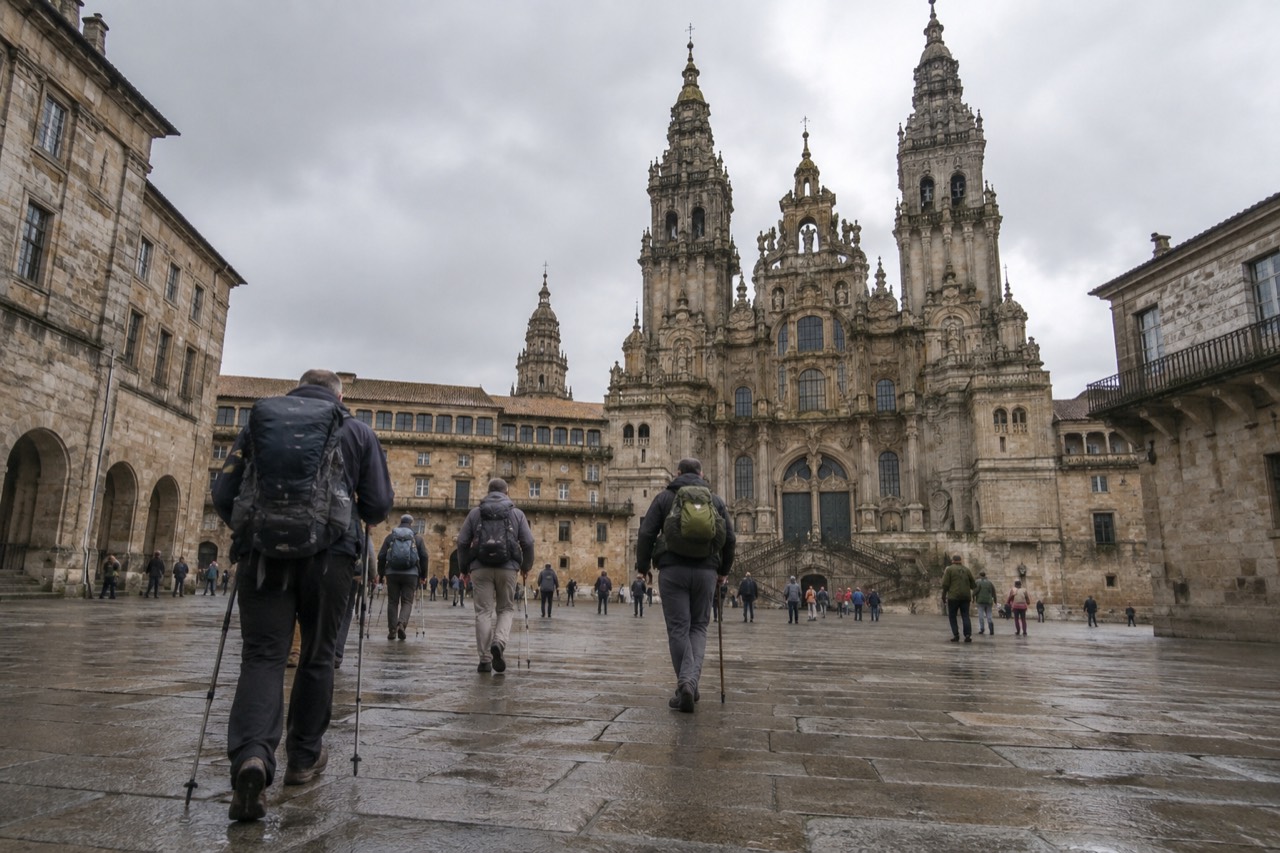
The Camino de Santiago has no single governing rulebook and never has, but that has never stopped pilgrims from asking what the rules are, especially in a year when several things have genuinely changed. The Oficina del Peregrino's FAQs set the requirements for the Compostela certificate, the Cathedral's own liturgy page sets what happens at the pilgrim masses in Santiago de Compostela, and the city's transport and tourism pages set the practical conditions on the ground in Galicia, Spain. Three changes matter most right now: pilgrim masses relocate from the Cathedral's High Altar on 16 October 2026, the Botafumeiro is temporarily out of action, and the next Holy Year is 2027, not 2026. Everything below comes from those primary sources, and this Santiago de Compostela Travel Guide page keeps the rules and the 2026 changes separate so neither gets confused with the other.
What Are The New Rules For The Camino de Santiago?
The short answer is that no sweeping new Camino regulations exist for 2026, but three changes directly affect pilgrims finishing in Santiago de Compostela: the 9:30am, noon and 7:30pm pilgrim masses move from the Cathedral's High Altar to the nearby Church of San Agustin from 16 October 2026, the Botafumeiro is suspended indefinitely because dome restoration scaffolding covers its mechanism, and the next Holy Year is 2027, opening 31 December 2026, so 2026 grants no Holy Year privileges. The Compostela certificate rules themselves are unchanged.
That distinction is worth dwelling on, because most search results blur it. A pilgrim arriving in October 2026 will walk the same routes, sleep in the same albergues and claim the same certificate under the same distance requirements as one who arrived in spring. What has changed is inside the Cathedral and around its calendar. The city's own page on the Cathedral states the main chapel remodelling is preparation for the 2027 Holy Year, and that the relocation of three of the four daily masses to San Agustin lasts until further notice. Only the 7:30am mass stays in the Cathedral itself, in its Communion chapel.
What Do The Compostela Certificate Rules Actually Say?
The Oficina del Peregrino's FAQs state that the Compostela requires pilgrims to walk at least the last 100km of a recognized Camino route, or cover the last 200km by bicycle, with at least two stamps per day in the credencial from official stamping points, collected continuously on the route. The certificate is issued in person only, at the Pilgrim's Office at Rua das Carretas 33 in Santiago de Compostela, and no other channel exists.
These are the rules that matter most in practice, because they are the ones a pilgrim can accidentally break. The two-stamps-per-day requirement is the classic trap: someone who starts at 100km out but collects only one stamp on a light day can find their credencial questioned at the counter. The distance rules also explain why Sarria, roughly 100km from Santiago de Compostela, has become the busiest starting point on the entire network, a point covered in detail in the guide to Camino routes and starting points.
The record numbers also explain why the rules get enforced carefully. Press reporting citing the Oficina del Peregrino counted 530,987 Compostelas issued in 2025, a record year, and the office expects heavier traffic still as the 2027 Holy Year approaches. The office closes on 25 December and 1 January, and its hours shift seasonally, so late arrivals in the evening should not assume a same-day certificate.
| Rule | Requirement | Where It Applies |
|---|---|---|
| Minimum walking distance | Last 100km on foot or horseback | Any recognized Camino route |
| Minimum cycling distance | Last 200km by bicycle | Any recognized Camino route |
| Stamp frequency | At least two stamps per day | Official stamping points along the route |
| Continuity | Stamps collected sequentially on the route | Entire qualifying distance |
| Issue | In person only | Pilgrim's Office, Rua das Carretas 33 |
| Office closures | 25 December and 1 January | Santiago de Compostela |
The credencial itself is cheap and widely available, and the guide to the pilgrim passport and credencial covers where to obtain one before setting out. Nothing in the 2026 changes touches any of this. If a blog post claims new stamp rules or new distances were introduced this year, treat it with suspicion: the Oficina del Peregrino's own FAQs are the source that counts, and they still state the 100km and 200km thresholds in the same terms they have used for years.
Planning around the rules is easier with a sense of timing and cost. How long the walk takes depends heavily on route choice, with the full French route measured in weeks and the final 100km from Sarria in about five walking days. Daily budgets vary more than most first-timers expect, since albergue beds, menu del dia lunches and the occasional private room can swing a per-day figure by a wide margin depending on season and standard of comfort.
Which Cathedral Rules Changed In Santiago de Compostela In 2026?
Three Cathedral-level changes are live as of late September 2026: the 9:30am, noon and 7:30pm pilgrim masses relocate to the Church of San Agustin from 16 October 2026 while the main chapel is remodelled, the Botafumeiro is suspended with no return date after the Cathedral confirmed it in writing on 5 September 2026, and the Berenguela clock tower carries exterior restoration scaffolding through a 2026-2027 project. None of this closes the Cathedral to visitors.
The mass relocation is the change pilgrims feel most. Until 15 October 2026, the four daily pilgrim masses, at 7:30am, 9:30am, noon and 7:30pm, are held at the Cathedral's High Altar. From the next day, three of the four move a short walk away to San Agustin, and only the early 7:30am mass stays inside the Cathedral, in its Communion chapel. Anyone planning to attend a noon pilgrim mass in November 2026 needs to know this before walking to Praza do Obradoiro expecting the usual scene. The guide to the pilgrim mass covers the normal rhythm of these services.
The Botafumeiro suspension disappoints more pilgrims than any other change, and the rules of engagement with it have shifted completely for now. It normally swings on twelve fixed solemnities each year, from Epiphany on 6 January through the Feast of St. James on 25 July to the Transfer of the Apostle on 30 December, and outside those dates it can be requested privately. But the scaffolding erected for the cimborrio restoration covers its hanging mechanism, and the Cathedral's written confirmation of 5 September 2026 gave no return date, so no date in the current calendar can be promised. The dedicated Botafumeiro guide lays out the full annual schedule and the current status, clearly flagged as suspended.
| Pilgrim Mass | Until 15 October 2026 | From 16 October 2026 |
|---|---|---|
| 7:30am | Cathedral, High Altar | Cathedral, Communion chapel |
| 9:30am | Cathedral, High Altar | Church of San Agustin |
| 12:00 noon | Cathedral, High Altar | Church of San Agustin |
| 7:30pm | Cathedral, High Altar | Church of San Agustin |
Visitor access itself is unchanged and worth stating plainly. The basilica interior remains free to enter, generally from about 7:00am to 9:00pm via the Praterias door, per the city's Cathedral page. The Cathedral Museum runs on timed tickets in the EUR9-23 range depending on ticket type, and the rooftop tour with the Torre de la Carraca costs EUR15 general or EUR12 reduced, per the Cathedral's own ticket page. A guided visit with skip-the-line entry is one way to see the interior efficiently, and Check availability shows the operator's live listing.
The rooftop tour deserves a note here because its rules are stricter than most visitors expect. The Cathedral's own ticket page describes a guided visit of roughly 60 minutes with about 140 steps, at a height around 72 metres, and reduced EUR12 rates apply to accredited pilgrims, students, over-65s and several other groups with proof. English-language visits are flat EUR15. The ticket also includes access to the permanent museum collection and several associated spaces, valid for seven days, one use per space, which makes it more than a viewpoint ticket.
How Do The Holy Year Rules Work For 2027?
The next Holy Year, or Xacobeo, is 2027, because 25 July 2027 falls on a Sunday, and the Holy Door opens on the evening of 31 December 2026 at Praza da Quintana and stays open through 31 December 2027. The city's own news page lists the subsequent Holy Years as 2032, 2038 and 2049. In 2026 itself the Holy Door remains closed and no Holy Year privileges apply.
This is the rule most often gotten wrong online. A Holy Year is declared whenever the Feast of St. James, fixed at 25 July, lands on a Sunday, and the irregular 6-5-6-11 year cycle means they do not come evenly. Pilgrims walking in 2026 sometimes assume they are in a Holy Year because crowds are building toward one; they are not. The privileges, including the plenary indulgence traditionally associated with passing through the Holy Door, attach to 2027 only. The guide to the 2027 Holy Year covers what that means for planning, and the main chapel remodelling that triggers the mass relocation is itself preparation for the influx.
The crowd implications are the practical rules. A record 530,987 Compostelas were issued in 2025, per press reporting citing the Oficina del Peregrino, and the 2027 Holy Year will exceed that. Albergue beds near Santiago de Compostela, especially in the final 100km from Sarria, will be scarcer in peak season, and the booking-versus-first-come etiquette that governs Camino accommodation becomes more competitive when every bed in a town is claimed by mid-afternoon. Pilgrims who want a quieter walk while still earning the certificate can look at shoulder-season timing, trading thinner crowds against wetter weather on the Atlantic stretches.
What Rules Apply On The Route Itself Before You Arrive?
The route-level rules are unchanged and unwritten rather than new: there is no mandatory registration, no compulsory guide, no official booking system and no minimum fitness standard, and the only hard requirements are the credencial stamp discipline needed for the Compostela and ordinary Spanish law along the way. What changes year to year is local detail, such as albergue opening patterns, municipal pilgrim taxes, none of which currently apply in Galicia, and seasonal weather discipline on the wet Atlantic stretches.
That last point deserves emphasis because the region's rules of survival are set by climate, not by committee. AEMET's climate data for station 1475X at Santiago de Compostela shows a temperate oceanic pattern, wet year-round and wetter from October to March, with July and August the driest months, and annual precipitation on the order of 1,690 to 1,890mm. A pilgrim walking the final week into the city in November is walking in the wet season, and the packing rules that follow from that are practical ones. The Camino packing list exists for exactly this reason.
On the ground in the city, one live change is worth flagging for anyone flying in or out. The city's transport page lists line 6A, operated by Tussa, at EUR1 to the driver or EUR0.36 on a card as of late September 2026, but a new Monbus contract with a proposed fare around EUR6 is expected in autumn 2026, possibly by December, so the fare should be treated as subject to change rather than permanent. The airport guide tracks this in detail. The airport sits about 12km from the old town.
| Rule Area | Current Status | Source Basis |
|---|---|---|
| Route registration | None required | Camino operates without mandatory sign-up |
| Compostela distance | 100km walked, 200km cycled | Oficina del Peregrino FAQs |
| Holy Year | 2027, door opens 31 December 2026 | santiago.es Xacobeo 2027 notice |
| Pilgrim masses | 7:30am stays, others move to San Agustin from 16 October 2026 | Cathedral liturgy page |
| Botafumeiro | Suspended, no return date | Written confirmation, 5 September 2026 |
| Tourist tax | Santiago de Compostela has charged a municipal tourist tax since 1 October 2025, from 1 EUR to 2.50 EUR per person per night for up to 5 nights, with under-18s exempt | Verified facts file |
Common Questions About Camino de Santiago Rules
What are the new rules for the Camino de Santiago?
No sweeping new regulations exist for 2026. The changes that matter are specific to Santiago de Compostela: pilgrim masses relocate to the Church of San Agustin from 16 October 2026, the Botafumeiro is suspended with no return date, and the next Holy Year is 2027, opening 31 December 2026. The Compostela rules are unchanged.
Do I still qualify for the Compostela if I start at Sarria?
Yes. Sarria sits roughly 100km from Santiago de Compostela, which meets the Oficina del Peregrino's minimum walking distance, provided the credencial carries at least two stamps per day from official stamping points, collected continuously.
Can I get the Compostela by mail?
No. The Oficina del Peregrino issues the certificate in person only, at Rua das Carretas 33 in Santiago de Compostela. The office closes on 25 December and 1 January.
Will the Botafumeiro swing if I finish in late 2026?
It cannot be promised. The Cathedral confirmed in writing on 5 September 2026 that it is temporarily out of action because dome restoration scaffolding covers its mechanism, and no return date has been published.
Is 2026 a Holy Year?
No. The next Holy Year is 2027, because 25 July 2027 falls on a Sunday. The Holy Door opens on 31 December 2026 and the Holy Year runs through 31 December 2027.
Where do pilgrim masses happen now?
Until 15 October 2026 all four daily masses are at the Cathedral's High Altar. From 16 October 2026 the 9:30am, noon and 7:30pm masses move to the Church of San Agustin, and only the 7:30am mass remains in the Cathedral, in its Communion chapel.