Is It Safe For A Woman To Walk The Camino de Santiago Alone?
A factual, source-backed answer for women considering the Camino de Santiago alone, covering route choice, daily safety habits, albergue sleeping arrangements and what happens at the finish in Santiago de Compostela.
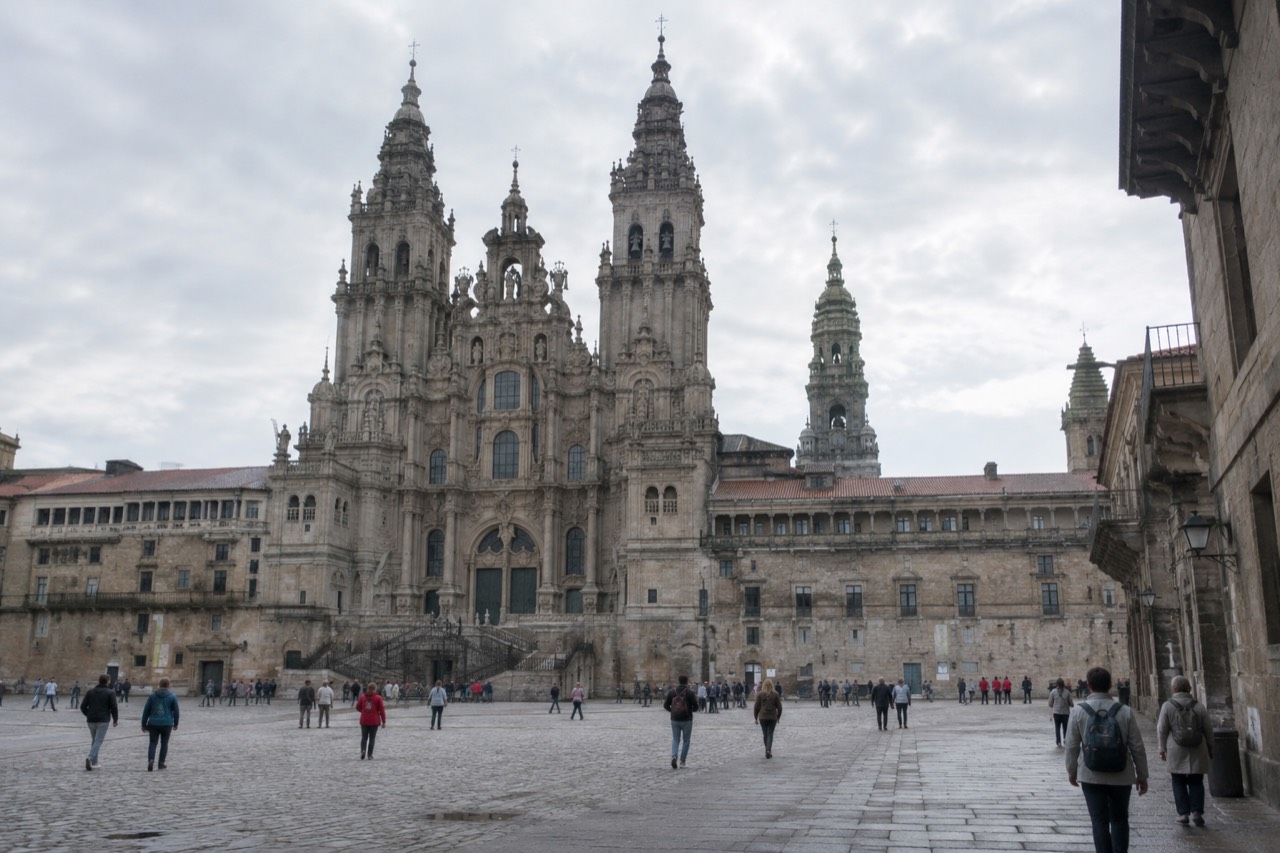
The Oficina del Peregrino's own figures record 530,987 Compostelas issued in 2025, the highest annual total on record, and every one of those journeys finished at the Cathedral of Santiago de Compostela in Galicia, Spain. The question of whether a woman can walk there alone is asked constantly, and the honest answer sits in the structure of the route itself rather than in reassurance. This page works from the verified record: what the pilgrim infrastructure actually provides, where the walking is densest with other people, and which practical habits the trail rewards.
Is It Safe For A Woman To Walk The Camino de Santiago Alone?
For the great majority of women who plan it sensibly, the Camino de Santiago is a realistic solo trip, and the reasons are structural rather than sentimental: the routes are waymarked end to end, walkers are present in large numbers for most of the year, accommodation sits at regular intervals, and Spain's EU-wide emergency number 112 works everywhere on the trail. The Oficina del Peregrino's record 530,987 Compostelas issued in 2025 reflect a route system built to receive individuals travelling on their own.
That last point deserves plain statement. The Camino is not a conventional hiking holiday that happens to be open to solo travellers, it is an institution organised around individuals. Pilgrims have arrived at Santiago de Compostela alone, in ones and twos, for the better part of a millennium, and the infrastructure that grew up along the route, the albergues, the stamping points, the pilgrim office itself, exists because individuals walking unaccompanied are the normal case rather than the exception. The Camino de Santiago guide on this site covers the route system in full.
None of that means the trail is risk-free, and no honest guide would claim it is. The realistic concerns on the Camino for a woman walking alone are mostly the same ones any solo walker manages: blisters and injury on quiet stretches, exhaustion, the occasional stretch where nobody else is in sight, and the ordinary theft risk that comes with sleeping in shared rooms. The sections below deal with each in turn, using what the verified record supports.
Which Camino de Santiago Route Suits A First Solo Walk?
The Camino Frances from Sarria is the most-used final 100km in the entire network, and for a woman walking alone for the first time that density of fellow pilgrims, waymarking and albergues is the single biggest safety factor. The Compostela rules in force at the Pilgrim's Office set the qualifying distance at the last 100km on foot or the last 200km by bicycle, which is exactly why the Sarria stretch concentrates so many walkers onto the same paths each day.
The density argument matters more than any anecdote. A route walked by hundreds of people daily is a route where you are rarely out of sight of others, where albergue owners know the pattern of arrivals, and where getting into difficulty is usually a matter of waiting minutes rather than hours for another pilgrim to appear. The Oficina del Peregrino's FAQs state the certificate requirements in full, and the fact that the minimum walking distance is defined as the last 100km means every route has a busy final week built into it by design.
Alternative starting points change the character considerably. The Portuguese Camino from Tui and the Camino Ingles from Ferrol are both legitimate 100km-plus options, quieter than the French route's Sarria week and still well provided with beds in the towns they pass through. Quieter is a preference, not a defect: some solo walkers actively want the emptier paths. For a first solo trip, though, the difficulty of the Sarria to Santiago de Compostela walk and its companionable trail traffic make it the conventional recommendation, and the record number of Compostelas issued in 2025 was earned overwhelmingly on these Galician stages.
Season shifts the picture as much as route choice. The busiest months concentrate walkers from late spring through early autumn, with the feast of St James on 25 July marking the high point of the summer season. Midwinter walking is perfectly possible and some women prefer it precisely for the cool weather, but beds are fewer, days are shorter and the network of open albergues thins out. Whatever the month you settle on, the practical planning in the next section applies unchanged.
How Do You Manage Each Day On The Trail Alone?
The habits that keep a solo walker safe are simple and mechanical: carry a charged phone with 112 saved, tell someone at your morning albergue which stage you are walking, keep your credencial stamped at least twice a day as the Compostela rules require, plan to arrive at your night's stop before dark, and walk the first hour with other pilgrims leaving the same albergue, which on the popular stages happens without any arrangement at all.
The credencial is worth singling out, because it does double duty. The Oficina del Peregrino's FAQs state that the certificate requires at least two stamps per day from official stamping points along the route, which means a solo walker is structurally pushed into daily contact with albergues, bars and churches where staff see her face and know her direction of travel. That is not a surveillance system and should not be oversold, but it is a genuine difference between the Camino and an anonymous long-distance trail: the route's own paperwork makes you a known person to a chain of hosts, not a stranger passing through. The pilgrim passport guide explains how the document works.
The table below pulls together the daily habits and the figures attached to them.
| Situation on the trail | Habit that covers it | Figure or contact |
|---|---|---|
| Medical or safety emergency anywhere in Spain | Call the EU-wide emergency number, works on any phone | 112 |
| Compostela qualification on foot | Stamp the credencial at official points along the way | Minimum 100km walked, two stamps per day |
| Compostela qualification by bicycle | Same credencial discipline over the longer distance | Minimum 200km cycled, two stamps per day |
| Arrival at the Pilgrim's Office | Certificate issued in person only, at Rua das Carretas 33 | Office closed 25 Dec and 1 Jan |
Two habits deserve a line more than the table can hold. First, arriving before dark matters more on the Camino than on many trails, because Galician stages often end in towns rather than at trailheads, and walking the last kilometres on a road shoulder in low light is the most avoidable risk a solo walker faces. Second, the afternoon rest stops, the bars and cafes at the halfway point of most stages, are where solo walkers naturally regroup; you will see the same faces there that you saw at breakfast, and that continuity is the trail's quiet safety net. The wider set of guides lives on Santiago de Compostela Travel Guide.
Where Do You Sleep, And Is A Shared Albergue Room Safe?
Shared municipal and private albergues are the standard Camino sleeping arrangement and the record shows no pattern of danger in them: dormitory rooms host mixed groups of pilgrims, wardens manage the buildings, valuables lockers are common, and the certificate system's twice-daily stamping means your day's route is known to the people housing you each night. Women who want single-sex rooms can find them, particularly in the larger towns on the final 100km.
The albergue accommodation guide covers the types and their differences in detail. The safety-relevant point is that the albergue system removes the two things that make solo travel elsewhere harder to manage: you are not hunting for a bed alone in an unfamiliar town at dusk, because the stages are built around towns with beds, and you are not anonymous to your host, because you stamped your credencial at an official point earlier that day and your arrival was expected.
Theft in shared rooms is the one routine risk worth naming plainly, and it is ordinary opportunistic theft rather than anything targeted. The standard practice every albergue warden will repeat is the same practice any dormitory anywhere rewards: carry cash and documents on your person or in a locked locker, and never leave a phone charging unattended in an open dorm. Readers weighing the overall budget should also look at the average cost of walking the Camino, because choosing a few private rooms along a mostly-albergue route is a common way solo walkers buy themselves occasional solitude without giving up the network.
What Happens At The Finish In Santiago de Compostela?
The walk ends in a UNESCO-listed city where the Old Town inscription dates from 1985 and the separate Routes of Santiago de Compostela inscription from 1993, and the practical finish-line routine for a solo walker is straightforward: collect the Compostela in person at the Pilgrim's Office at Rua das Carretas 33, attend a pilgrim mass, and give yourself at least one full day in the old town before travelling home.
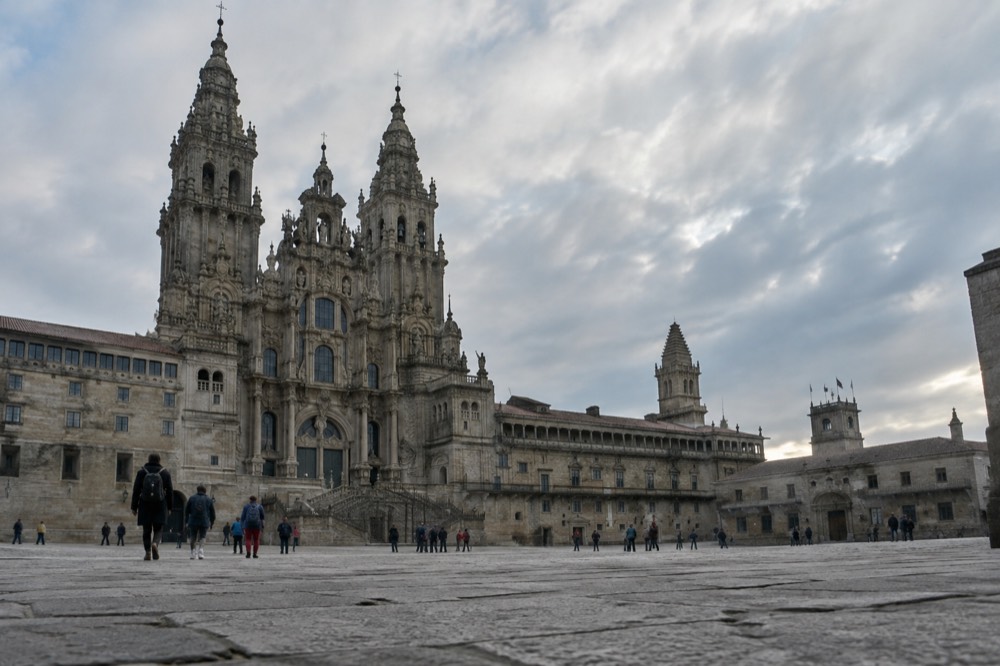
Arriving alone is, once again, the normal case here. The Pilgrim's Office exists to receive individuals; the in-person-only rule for the certificate means every single walker who earned one queued at that address on Rua das Carretas. A woman arriving solo is walking into an institution designed for her situation, and the moment of arrival in Praza do Obradoiro, whatever anyone writes about it, is a public square full of pilgrims doing exactly the same thing.
The current state of the Cathedral deserves accuracy, because several things changed in 2026 and stale information is everywhere.
For the day or two after arrival, a guided walk is a common and useful choice for someone travelling alone, less for safety than for orientation. The small-group historic tour of the old town, led by an official guide, is the natural fit at this point in the trip.
The wider question of how the city itself treats a woman walking its streets at night is covered separately in the is Santiago de Compostela safe page, and the two-day and three-day itineraries on this site give the post-Camino time a shape. Older walkers weighing the same decision may also find the can a 70 year old walk the Camino page answers the version of this question that matters to them.
Common Questions About Walking The Camino de Santiago Alone
Is it safe for a woman to walk the Camino de Santiago alone?
For the great majority who plan sensibly, yes, and the reasons are structural: continuous waymarking, high walker density on the popular stages, albergues at regular intervals, a credencial system that makes you known to a chain of hosts, and the emergency number 112 available across Spain. The realistic risks are the ordinary ones of any long walk, managed with the daily habits above.
Which route should a woman choose for a first solo Camino?
The Camino Frances from Sarria concentrates the most walkers onto the final 100km, which is the qualifying distance for the Compostela, and that density is the main safety asset for a first solo trip. The Portuguese and English routes are quieter but still well supplied with beds.
Do many women walk the Camino alone?
Solo walking is the historical norm of the pilgrimage rather than an exception to it, and the Oficina del Peregrino's record 530,987 Compostelas in 2025 were overwhelmingly earned by individuals and small informal groups forming and dissolving along the way.
What should I do in an emergency on the trail?
Call 112, the EU-wide emergency number that works anywhere in Spain, from any phone. For non-urgent problems, the nearest albergue or bar is the working node of the trail network: staff there deal with struggling pilgrims daily and can arrange transport to the next town.
Will I actually be alone the whole way?
On the busy stages, almost never. Pilgrims leave albergues in morning waves, regroup at midday bars and reconverge at night's stop, so most solo walkers spend their days loosely in company while keeping full control of their own pace and plans.
Is it better to walk in a Holy Year?
2027 is the next Holy Year, with the Holy Door opening on 31 December 2026. The trade-off is sharper: more company, more atmosphere, and considerably more pressure on beds, so booking ahead matters far more than in an ordinary year.
The Camino de Santiago, ending as it does at a cathedral city that has received individuals arriving on their own for centuries, answers this question more convincingly than any list of tips can: the route is built for the solo walker, and a woman planning it with the habits on this page is walking a path designed with her in mind.