Camino Luggage Transfer: How To Walk The Camino To Santiago de Compostela Without A Heavy Pack
Walking into Santiago de Compostela does not require carrying a week of gear on your back. Luggage transfer services move your main pack between accommodations while you walk with a day pack, and this guide covers how the arrangement works, what it does and does not change about your Compostela, and what to do with the legs you save.
Short answer
Camino luggage transfer is a courier arrangement in which a driver collects your main bag at each morning's accommodation and delivers it to your next night's lodging while you walk with a small day pack. Rates are set by each operator per stage, the service does not affect Compostela eligibility, which still depends on walking the last 100km yourself, and your bag meets you at your Santiago de Compostela address on arrival day.
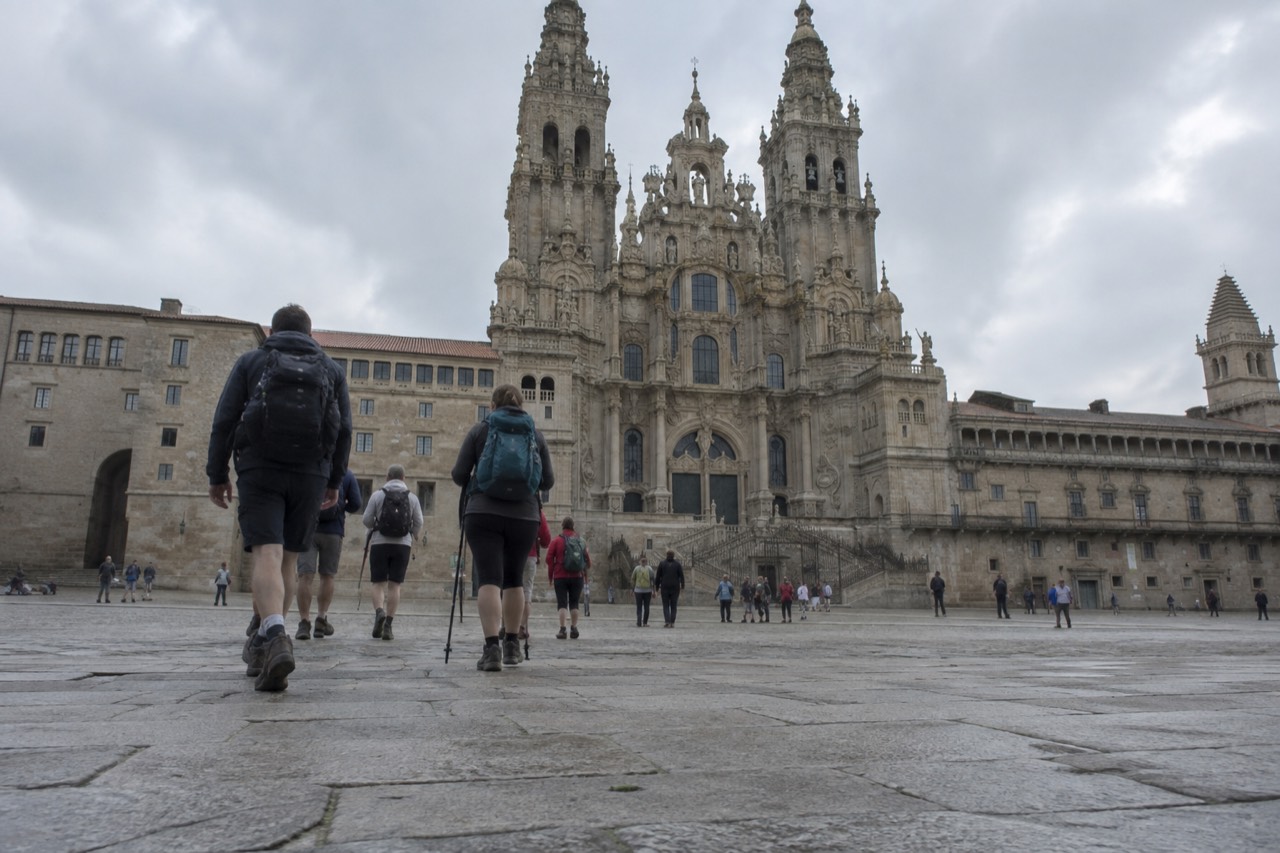
Walking the Camino de Santiago ends at one fixed point: the tomb of the Apostle beneath the Cathedral of Santiago de Compostela, in Galicia, in the wet green northwest of Spain. What is not fixed is how much weight you carry for the hundreds of kilometres before it. The classic image of the pilgrim bent under a full pack is only one way to do the walk. A parallel industry has grown up around doing it differently, and the Santiago de Compostela Travel Guide editors have assembled this page to explain exactly how it operates, from the morning handoff to the final delivery in the old town.
The reason this matters here more than on most long-distance trails is volume. The Oficina del Peregrino's own figures, reported in press coverage of the office's statistics, put 2025 at a record 530,987 Compostelas issued, and every one of those walkers finished in this city. Services in Santiago de Compostela have scaled to meet that flow, and luggage transfer is one of the most visible pieces of it. The full background on the trail itself is in our Camino de Santiago guide, and the route-by-route breakdown sits in the routes overview.
What Is Camino Luggage Transfer And How Does It Work?
Camino luggage transfer is a door-to-door courier service along the pilgrim routes into Santiago de Compostela: a driver collects your main pack at your morning accommodation, moves it by road to wherever you have booked that night, and leaves you walking each stage with only a small day pack. You hand the bag over at reception in the morning and collect it at the next address in the afternoon, so your gear covers the same distance as you do, just in a van rather than on your shoulders.
The mechanics are simple because the trail made them simple. The Camino is a chain of towns and villages roughly a day's walk apart, and almost every night's lodging sits on or near a road. A transfer driver works that chain in one direction each morning, picking up bags at one set of addresses and dropping them at the next. Your job is limited to two things: have the bag ready at the reception desk in the morning, and tell the operator each night's address when you book.
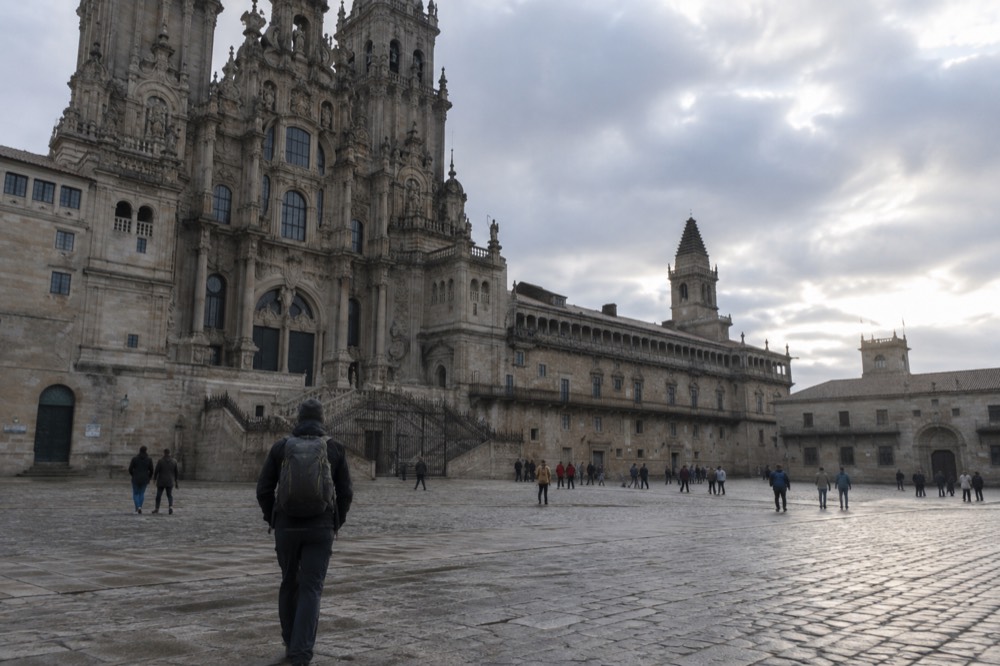
What you carry instead is a day pack, the kind of small bag you might take on a day hike. The dividing line between the two bags is the organizing decision of the whole trip, and we come back to it in detail further down. The short version: anything you need between the morning handoff and the afternoon collection stays with you, and everything else goes in the van.
Booking usually happens per stage or for a whole route at once. Per-stage booking suits walkers who want flexibility, since you can skip a stage, rest, or change plans without paying for a transfer you did not use. Whole-route booking suits the walk you have planned in advance, and it is the only realistic option for the busiest weeks, when drivers have limited space and operators stop taking new bags partway through a season. If you are still weighing whether the whole undertaking is for you, our beginner-oriented comparison at which Camino is best for beginners covers the planning end of that decision.
How Much Does Camino Luggage Transfer Cost, And How Do You Book It?
There is no single fixed tariff for luggage transfer on the Camino: each operator sets its own per-bag, per-stage rate, publishes it on its own booking page, and varies it by season and route, so any figure printed on a static page like this could be stale by the time you book. The honest method is to price your exact route and dates on the operator's live booking page before committing, and to book early if you are walking in the 2027 Holy Year.
That answer frustrates people who want a number, and it should. A transfer price attaches to a specific route, a specific number of stages, a specific bag and a specific month. Printing one number here would either be invented or wrong within a season. What transfers into your planning is the cost question itself: luggage transfer sits alongside accommodation, food and flights as one of the four main lines in a Camino budget, and the full budget framework, built from the same verified sources as this page, is laid out in the average cost to walk the Camino.
Booking itself is a two-step process. First you fix your accommodation chain, because the operator needs a street address and a reception point for every stage. Then you enter the whole chain, stage by stage, into the operator's booking form. Many walkers book the two together in one sitting: rooms first, transfer second, because the second is impossible without the first. Our albergues and accommodation guide covers the lodging side, including where private rooms make delivery easier than dormitory-only stops.
Two timing questions shape the booking. The first is the season: July and August are the driest months in AEMET's data for this region and the busiest on the trail, and the months around 25 July, the fixed feast of St. James, concentrate demand further. The second is the Holy Year: 2027 is the next Xacobeo, the Holy Door opens on the evening of 31 December 2026 and the Holy Year runs through 31 December 2027, and the city's own preparation works, including the Cathedral's main chapel remodelling, are already visible. Walking in 2027 with luggage transfer means booking further ahead than you otherwise would.
Which Camino Routes Suit Luggage Transfer Best?
Any route into Santiago de Compostela can in principle be served by luggage transfer, because the bags travel by road while you walk. What differs is coverage: each operator publishes a route page listing exactly which stages it collects from, and you should read it before you commit to a route. The certificate rules do not care how your bag travels, since on foot the last 100km of a recognized route must still be covered by you, and by bike the last 200km.
The route guides on this site map directly onto the operator question. The Camino Frances is the trunk route of the whole system, the spine along which most support services developed, and any operator serving multiple routes serves it. The Camino Portugues runs up from the south and crosses into Galicia on its final stages, which are the ones that matter for a transfer booked only into Santiago de Compostela. The Camino del Norte and the Camino Primitivo cross rougher, more remote country, where the distances between road access and the trail itself are longer, and the Camino Ingles is short enough that many walkers transfer on it simply to avoid carrying at all.
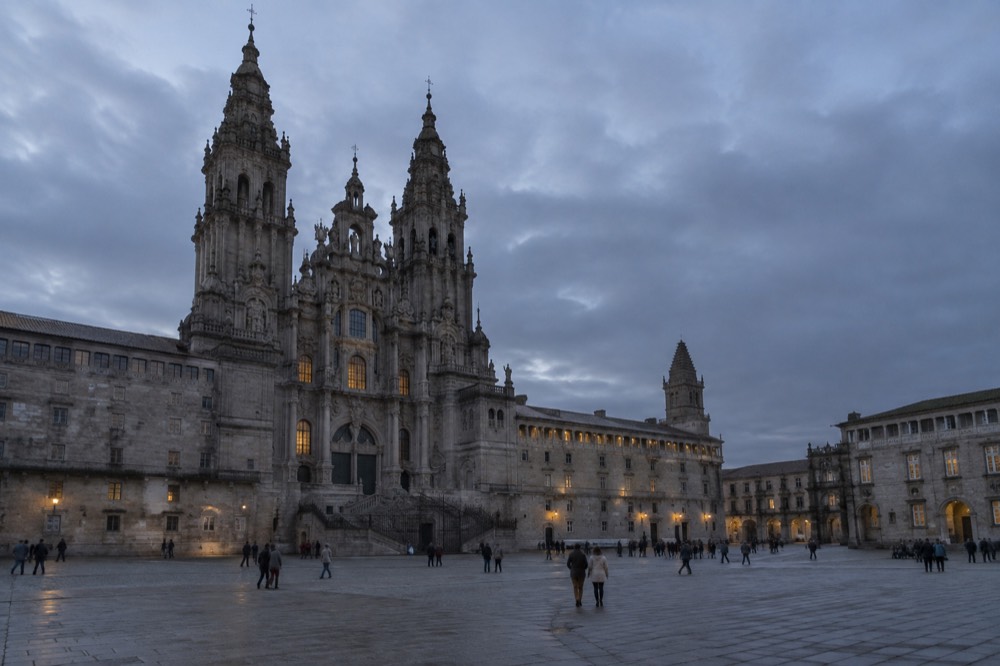
The practical test for your chosen route is not its beauty or its difficulty, both covered in the route pages above, but its stage structure. A route of short stages between substantial towns is easy for a courier. A route with long stages between hamlets needs more care, because a driver collecting and delivering across a wide area in one morning can run late, and a bag that arrives after you do is a bag you walk to collect. Ask the operator, before booking, what time deliveries typically land at your final stage's address.
For walkers assembling the trip from scratch, the map guide on this site shows how the routes converge on the city, and the history behind that convergence is a story of a medieval pilgrimage network revived into the modern one. The convergence is the point: every route ends inside the same square kilometre of Santiago de Compostela, which is why a single transfer industry can serve all of them.
Does Luggage Transfer Affect Your Compostela Certificate?
Using luggage transfer does not affect your Compostela certificate at all. The Oficina del Peregrino's rules reward distance covered under your own power: the last 100km walked or on horseback, or the last 200km cycled, on a recognized route, continuous, with at least two stamps per day in your credencial from official stamping points. The certificate is issued in person only, at the Pilgrim's Office on Rua das Carretas 33, and the office issued a record 530,987 of them in 2025.
The question keeps coming up because the certificate rules are about walking, and people reasonably assume anything that makes the walk easier might disqualify them. It does not. The rulebook draws its line at propulsion, not at comfort. Your legs must cover the qualifying distance. Your bag's journey is irrelevant to it. What the rules do police is the credencial, the pilgrim passport explained in full in our credencial guide: two stamps per day minimum, from official stamping points, along the recognized route.
| Certificate Requirement | The Verified Rule |
|---|---|
| Minimum distance on foot or horseback | Last 100km of a recognized Camino route |
| Minimum distance by bicycle | Last 200km |
| Stamp frequency in the credencial | At least 2 per day, from official stamping points |
| Where the Compostela is issued | In person only, Rua das Carretas 33, Santiago de Compostela |
| Compostelas issued in 2025 | 530,987, a record year |
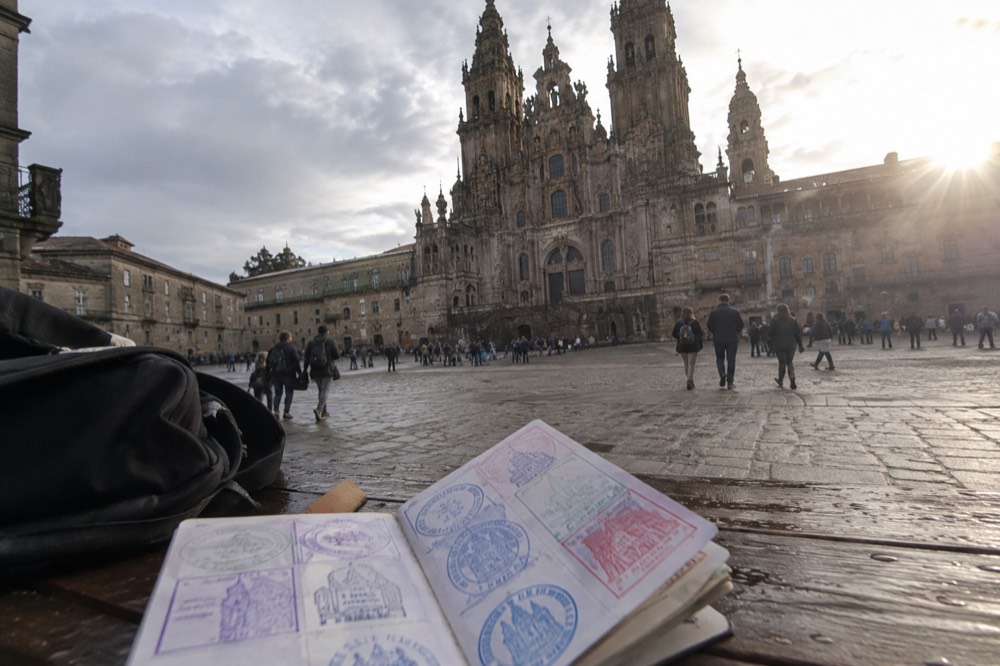
One caveat belongs here, because it is the one way a transfer can indirectly cost you the certificate. If you skip a stage by bus or taxi, the distance you rode does not count, and a credencial showing gaps can fail at the desk on Rua das Carretas. The transfer itself never creates such a gap. Skipping stages does. Walkers who rest a day should simply keep the bag with them that day and resume stamping the next, and the arrival-side process, including what the office checks, is covered in arriving in Santiago on the Camino.
For anyone planning the walk itself, the season-by-season tradeoffs matter as much as the budget: the wettest months of AEMET's record, October to March, thin the crowds but test the rain gear, while the July and August peak trades dry paths for full albergues and busy transfer vans.
What Should You Carry In Your Day Pack Between Handoffs?
Your day pack should carry only what you need between the two luggage handoffs: water, rain protection, the credencial with its stamps, your documents and phone, a spare layer and a small first-aid kit. AEMET's data for station 1475X, Santiago de Compostela, shows a temperate oceanic climate with annual precipitation on the order of 1,690-1,890mm, wettest from October to March and driest in July and August, so rain protection stays in the day pack in every single month of the year.
That last clause is the one walkers from drier parts of the world resist. Galicia is green because it rains, in every season, and the AEMET station at Labacolla records totals that would startle someone who has only read about southern Spain. A wet July stage is entirely normal. The day pack, not the transferred bag, is where the rain layer lives, because the van does you no good at 3pm on an exposed hillside in the middle of a shower.
| Period | What AEMET Station 1475X Shows | Day-Pack Planning Note |
|---|---|---|
| October to March | Wettest stretch of a wet year, 1,690-1,890mm falls annually | Full rain protection carried daily |
| July and August | Driest months of the year | Rain layer still carried; lightest loads |
| Whole year | Temperate oceanic pattern, precipitation 1,690-1,890mm | No month with a dry-pack guarantee |
The full packing framework, including what belongs in the van bag versus the day bag, is in the Camino packing list. The organizing principle there and here is the same: the day pack is your life support, the main bag is your wardrobe. If an item would ruin your stage to be without, it walks with you. If you would merely be annoyed, it rides.
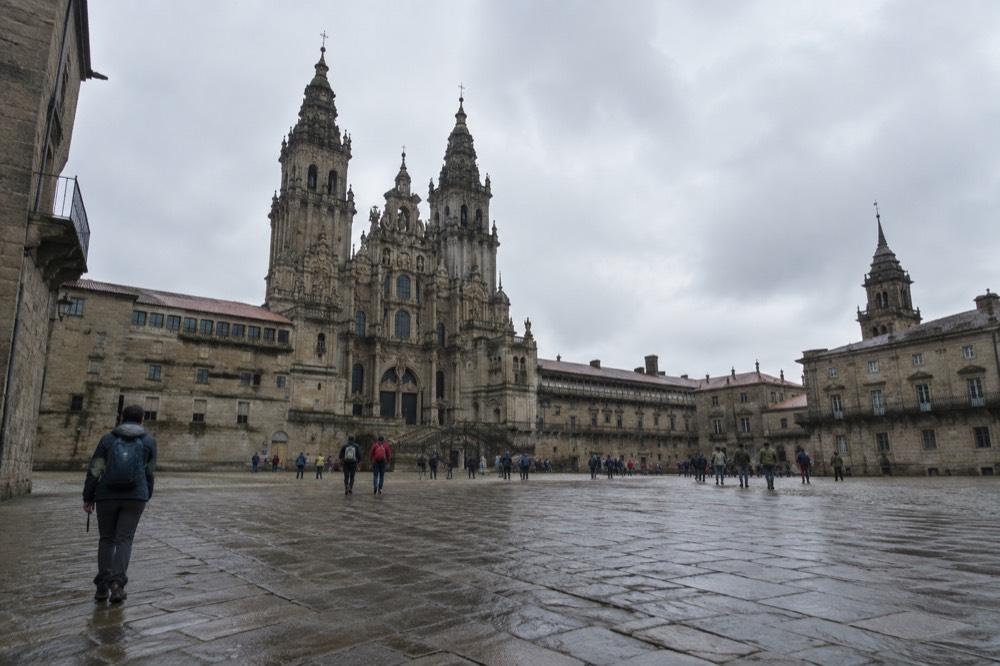
One practical habit closes the loop between the two bags. Pack the day pack the night before, at the same moment you set out the transfer bag for the morning handoff. The morning of a stage is the worst possible time to be re-sorting gear, and the ten minutes of evening preparation is the difference between a calm handoff and a reception-desk scramble.
Where Does Your Bag Meet You In Santiago de Compostela?
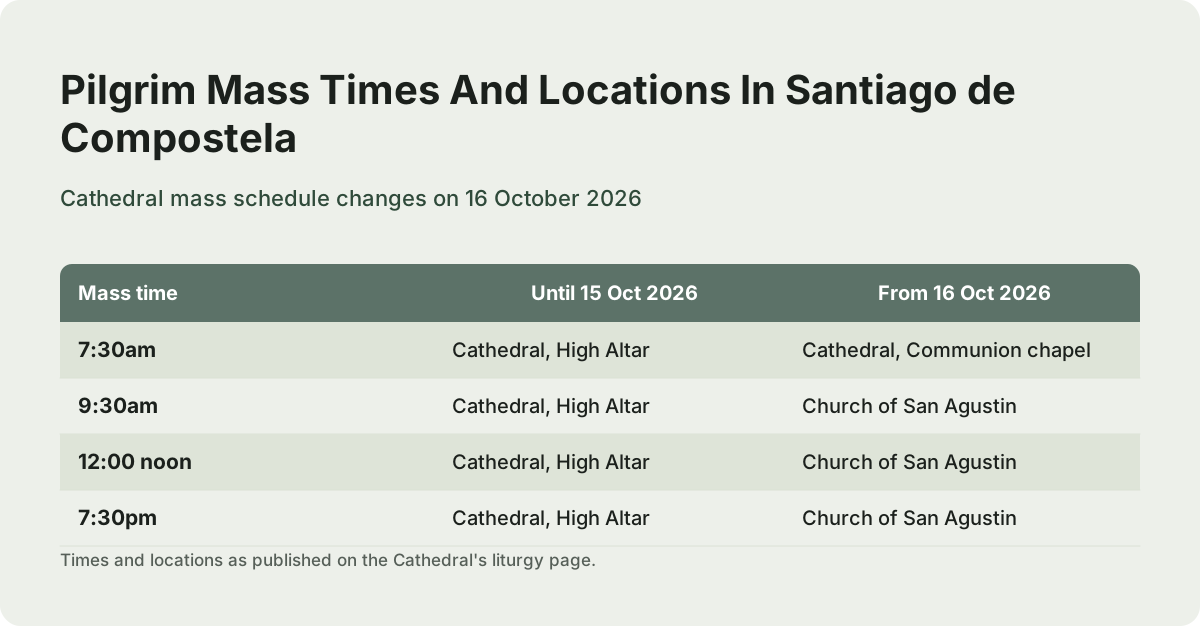
Most transfer services run to a fixed final-stage delivery: your bag is dropped at your Santiago de Compostela accommodation on the day you arrive, and anything beyond that, storage for your days in the city or an onward courier home, depends on the operator, so ask before you assume. Book the Santiago address before your last stage begins, because the driver needs a street and a reception point, and confirm the property accepts delivered bags, since smaller albergues sometimes do not.
That last point catches people out. The old town of Santiago de Compostela is a UNESCO World Heritage Site, inscribed in 1985, and its streets predate vans by several centuries. Hotels inside the zone handle deliveries constantly and know the drill. Small albergues and apartments can be a different matter: no desk, no reception hours, no obvious place for a driver to leave a pack. A quick message to your final accommodation before the last stage saves the uncertainty.
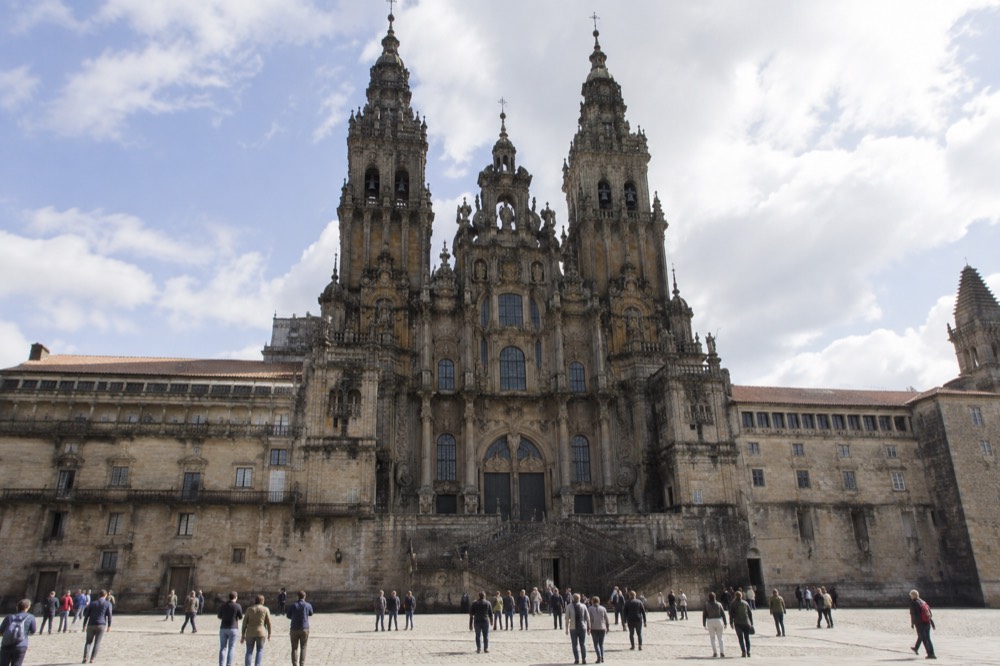
The arrival day itself has a rhythm worth knowing in advance, and the full version is in our arriving in Santiago guide. Many walkers time the final stage to reach the Cathedral for a pilgrim mass. Here the current arrangement matters and is dated on this page deliberately: until 15 October 2026, masses are held at the Cathedral's High Altar at 7:30am, 9:30am, noon and 7:30pm. From 16 October 2026, while main chapel works continue ahead of the 2027 Holy Year, the 9:30am, noon and 7:30pm masses move to the nearby Church of San Agustin, and only the 7:30am mass remains in the Cathedral, in its Communion chapel.
| Mass Time | Until 15 October 2026 | From 16 October 2026 |
|---|---|---|
| 7:30am | Cathedral, High Altar | Cathedral, Communion chapel |
| 9:30am | Cathedral, High Altar | Church of San Agustin |
| 12:00 noon | Cathedral, High Altar | Church of San Agustin |
| 7:30pm | Cathedral, High Altar | Church of San Agustin |
One further dated note, because pages all over the internet still get it wrong: the Botafumeiro, the Cathedral's famous swinging censer, is currently out of action. Scaffolding for the cimborrio restoration covers its hanging mechanism, the Cathedral confirmed the suspension in writing on 5 September 2026, and no return date has been published. It normally swings on twelve fixed solemnities a year, from Epiphany on 6 January through the Translation of the Apostle on 30 December, but no visitor should currently plan around seeing it. Our pilgrim mass coverage elsewhere on this site keeps the fuller liturgical detail.
What Is Worth Doing In Santiago de Compostela Once The Pack Is Off?
With the pack off, the Cathedral complex rewards the hours you saved on the trail. Entry to the basilica itself is free, roughly 7:00am to 9:00pm via the Praterias door; the Cathedral Museum runs EUR9-23 depending on ticket type, open about 10:00am to 8:00pm with the ticket office closing 30 minutes earlier; and the rooftops and Carraca Tower guided visit costs EUR15 general or EUR12 reduced, lasts about 60 minutes, climbs about 140 steps and reaches roughly 72 metres above the city.
These are the Cathedral's own figures, published on its ticketing site, and they are the ones to plan around rather than third-party roundings. The rooftop visit, the Cubiertas and Torre de la Carraca tour, is the single best convert of saved leg strength into viewpoint: a guided hour on the stones with the whole old town, itself the UNESCO listing of 1985, spread below, and the 1993 Routes of Santiago inscription lying out beyond it. The separate listing dates are worth remembering: the Old Town and the Camino routes are two distinct UNESCO entries, 1985 and 1993, not one combined date.
| Cathedral Visit Option | Price | Verified Details |
|---|---|---|
| Basilica interior | Free | Open roughly 7:00am-9:00pm, entry via the Praterias door |
| Cathedral Museum | EUR9-23 by ticket type | About 10:00am-8:00pm, ticket office closes 30 minutes earlier |
| Rooftops and Carraca Tower | EUR15 general, EUR12 reduced | Guided, about 60 minutes, about 140 steps, about 72m height; English visits flat EUR15 |
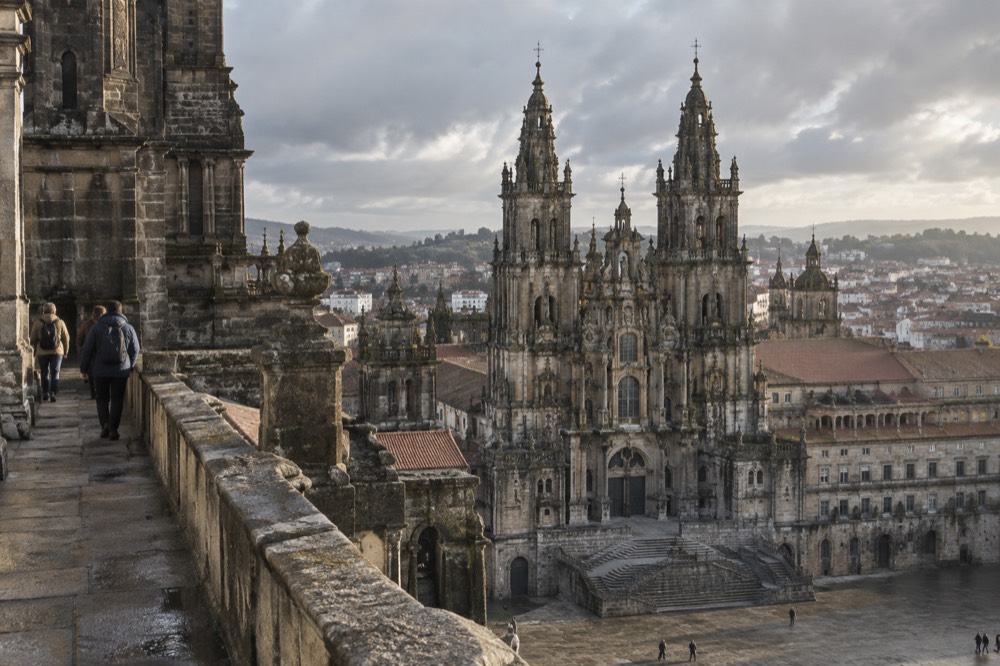
If you would rather not manage timed tickets on arrival day, guided options bundle the queueing into one booking. The Cathedral Sightseeing Tour runs from $28 per person, rated 4.6 from 542 reviews, and the full ticketing mechanics, including which door serves which ticket, are broken down in our Cathedral tickets and opening hours guide. Check availability on the live listing for your date, since timed slots in peak season sell out ahead of the day.
Beyond the Cathedral, the light-pack dividend keeps paying. The old town guide covers the walkable core, and a first day without a heavy bag turns the granite lanes and colonnaded squares from a slog into a stroll. Walkers finishing sore will find the recovery-focused version of this advice in our rest-day coverage elsewhere on this site.
Which Day Trips From Santiago de Compostela Reward The Legs You Saved?
The saved legs convert best into a coastal day trip from Santiago de Compostela: a full-day Finisterre, Muxia and Costa da Morte circuit with seven stops runs from $60 per person, rated 4.8 from 1,714 reviews, a half-day express version to Fisterra and Muxia runs from $45, and a Rias Baixas day with boat trip and winery runs from $53. Prices and ratings come from the live listings; confirm current figures there before booking, since operators adjust both.
There is a historical neatness to finishing at the coast. For centuries, pilgrims who reached Santiago de Compostela walked on to Fisterra, the Galician name also spelled Finisterre in Spanish, treating the Atlantic cliffs as the true end of the road. Our Camino Finisterre guide covers that extension on foot, and the Costa da Morte, the coast of death named for its shipwreck history, is the coastline it traverses. A seat in a tour van is the modern, luggage-transfer-spirit version of the same tradition, and after a hundred walking kilometres it is a defensible one.
| Day Trip From Santiago de Compostela | From | Rating | Format |
|---|---|---|---|
| Finisterre, Muxia & Costa da Morte, 7 stops | $60 per person | 4.8 from 1,714 reviews | Full day |
| Fisterra & Muxia Express | $45 per person | 4.4 from 50 reviews | Half day |
| Rias Baixas Boat Trip and Winery | $53 per person | 4.7 from 482 reviews | Full day |
| Arousa Island, Combarro & Mussel Boat | $45 per person | 4.7 from 30 reviews | Full day |
| Catedrais Beach, Lugo & Asturias | $68 per person | 4.9 from 181 reviews | Full day |
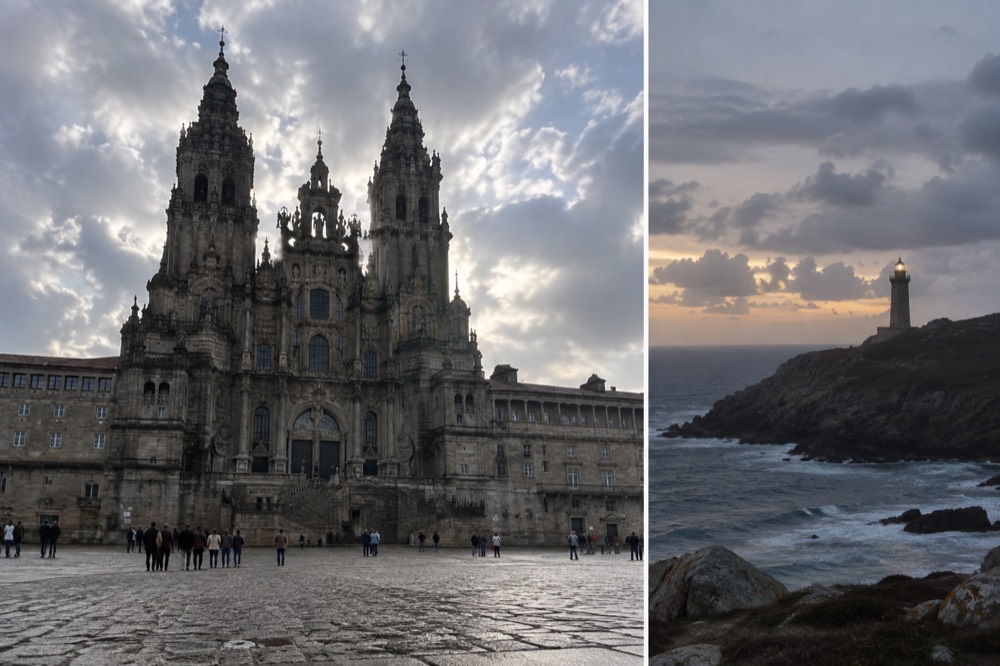
The wine-and-sea alternative deserves its own word. The Rias Baixas, the fjord-like inlets south of the city, are the home of Albarino wine and the mussel platforms that define Galician seafood, and a full-day tour with a boat trip among the platforms, from $53 per person and rated 4.7 from 482 reviews, does the driving and the mooring for you. The region's wineries and coastal villages are mapped in our Rias Baixas coverage elsewhere on this site.
Among those three, the seven-stop Finisterre, Muxia and Costa da Morte circuit is the one that pairs most naturally with a luggage-transfer trip, because it covers in one comfortable seat the very coastline that medieval pilgrims added on foot after reaching the tomb. It runs from $60 per person, rated 4.8 from 1,714 reviews, and the live listing carries the current dates and availability.
How Do You Get Home From Santiago de Compostela?
Getting home starts with the same 12km that got you in: Santiago-Rosalia de Castro airport sits about 12km from the old town, a 20-30 minute drive, and Tussa bus line 6A currently costs EUR1 paid to the driver or EUR0.36 on a rechargeable card, though a new Monbus contract at a higher fare is expected in autumn 2026, so recheck it after December. Direct trains reach Madrid in roughly 3-4 hours and Vigo in about 1, and there is no direct rail line to Porto.
The fare caveat is doing real work in that paragraph. The city's own transport page listed Tussa line 6A at the EUR1 and EUR0.36 rates in its update of 23 September 2026, with the Monbus reorganization expected within about three months of contract signing, potentially by December. A page that printed the old fare as permanent would mislead anyone reading it after the change. The current page itself advises verifying line numbers after December, and that is exactly the right instruction for anyone flying out in late 2026 or 2027.
| Leg | Verified Detail |
|---|---|
| Airport to old town | About 12km, a 20-30 minute drive |
| Bus line 6A, Tussa | EUR1 to the driver, EUR0.36 per trip on a card |
| Line 6A frequency | Roughly every 30 minutes, about 06:30 to 00:30, journey ~25-45 minutes |
| New Monbus contract | Expected autumn 2026, proposed about EUR6 one-way, verify after December |
| Train to Madrid | Direct high-speed services, roughly 3-4 hours |
| Train to Vigo | Direct regional services, roughly 1 hour |
| Train to Porto | No direct line; change via Vigo |
The rail options matter for anyone walking the Portugues in reverse or connecting onward through Iberia. The Porto corridor requires a change via Vigo, and the Madrid high-speed link makes a same-day connection to the capital realistic after a morning arrival. Our airport guide holds the flight-side detail, including which airlines serve the field. For the return luggage problem, the mirror of the one this page solves, some transfer operators run a courier toward the airport or a storage service in the city; ask at booking, because it is far easier to arrange in the same transaction than to improvise on your last morning.
Common Questions About Camino Luggage Transfer
These are the questions walkers ask most often about sending their packs ahead on the Camino to Santiago de Compostela, answered from the verified sources this guide cites: whether the transfer counts against the Compostela, how far ahead to book, what size of bag operators accept, what happens if you skip a stage, and where the bag lands on the final day in the city.
Does using luggage transfer stop me getting the Compostela?
No. The Oficina del Peregrino's rules require the last 100km on foot or horseback, or the last 200km by bike, with at least two credencial stamps per day. The rules govern how you move, not how your bag moves, and the certificate is issued in person at Rua das Carretas 33.
How far in advance should I book luggage transfer?
Book once your accommodation chain is fixed, since the operator needs every night's address. For July and August, the driest months in AEMET's data and the busiest on the trail, and above all for the 2027 Holy Year running from 31 December 2026 through 31 December 2027, book as early as your lodging allows.
Is there a weight or size limit for the transferred bag?
Each operator publishes its own cap on its booking page, and they differ, so read the terms before packing. The honest general rule is to pack as if the bag will be lifted by one person many times in one morning, because it will be.
What happens to my transfer if I skip a stage or take a rest day?
Tell the operator as soon as your plan changes. The distance you cover by bus or taxi does not count toward the Compostela's 100km or 200km minimums, so skipping stages is a certificate question rather than a luggage one, and the bag simply follows the revised chain of addresses.
Where does my bag go once I arrive in Santiago de Compostela?
To your final booked address in the city, on your arrival day, provided the property accepts delivered bags. Confirm that with the accommodation before your last stage, and ask the operator about storage for your days in the city, since not every service offers it.
Does luggage transfer run on every Camino route?
Operators publish route coverage pages, and coverage differs between the Camino Frances, Portugues, Ingles, Norte and Primitivo. Read the operator's own route list before choosing, and for the more remote routes confirm that your specific stages are served rather than assuming the route as a whole is.
Sending the pack ahead changes the shape of a Camino more than its weight alone suggests. The stages feel longer in the legs and shorter in the mind, the evenings start earlier, and the last morning into Santiago de Compostela arrives with a lightness that no amount of training replicates. Whether that trade suits you is a personal call; how the machinery works, what it costs to plan honestly, and what it leaves untouched in the Compostela rules are now on the record above.