Which Camino Is Best For Beginners?
The Camino Francés from Sarria is the classic beginner route to Santiago de Compostela, but three other routes also suit first-time pilgrims. Here is how to choose.
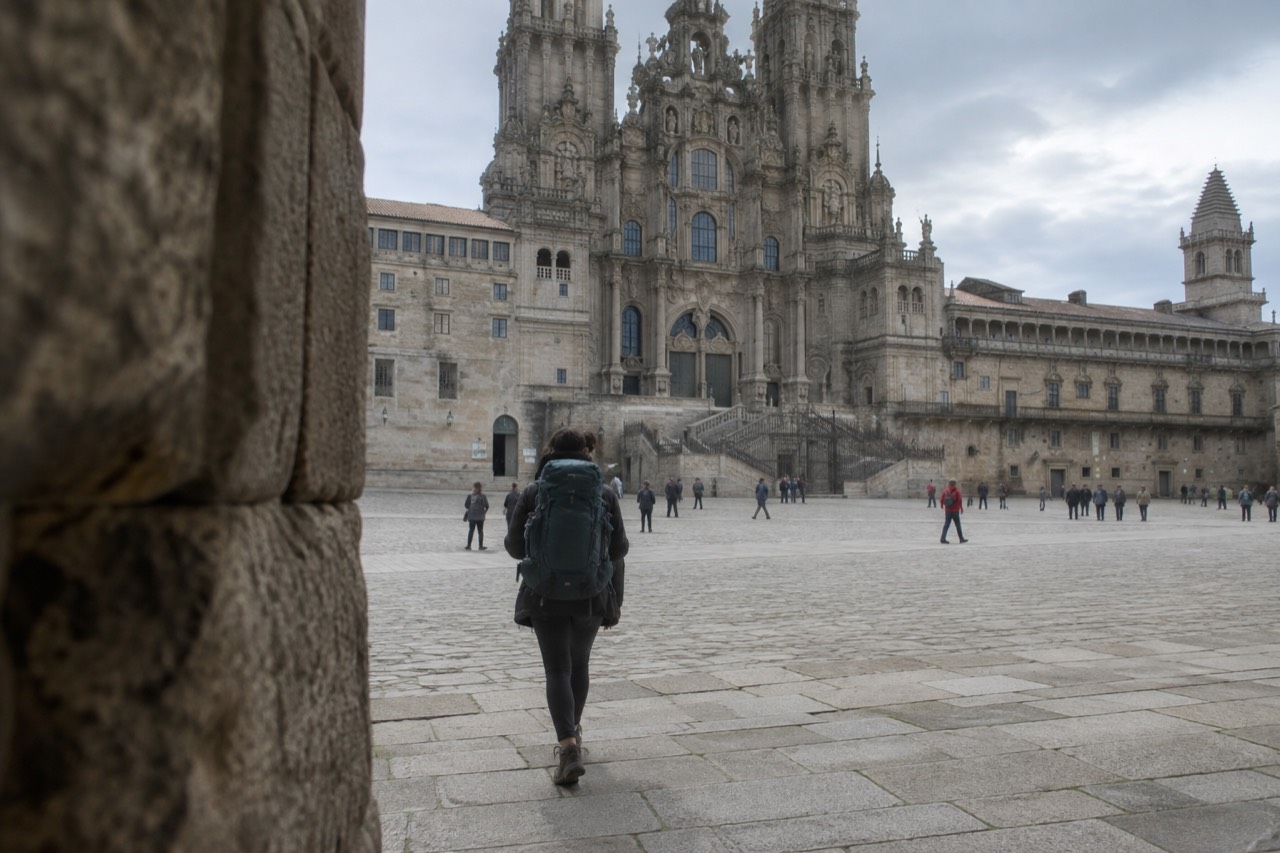
The Camino de Santiago ended in Santiago de Compostela for 530,987 pilgrims who collected the official Compostela certificate in 2025, a record year according to figures reported by the Pilgrim's Office. Every one of those people chose a route, and for a first-time walker the choice matters more than the boots. The routes differ in length, terrain, services and crowding, and the best one for a beginner is not the most famous one in every case. The Oficina del Peregrino's own rules set the frame: the last 100km walked, or the last 200km cycled, with at least two stamps per day in the pilgrim passport, qualifies a walker for the certificate, issued in person at Rua das Carretas 33.
Which Camino Is Best For Beginners?
The Camino Francés starting at Sarria is the best Camino for most beginners walking to Santiago de Compostela, because its final section is the busiest and best-served stretch of the whole network, it comfortably covers the last 100km the Pilgrim's Office requires for the Compostela, and albergues, bars and waymarking are close enough together that a first-time pilgrim is never left guessing where to sleep or turn next.
That answer comes with a caveat. The Francés is the busiest route by a wide margin, and the Sarria start concentrates crowds. Walkers who want a first Camino with fewer people, or fewer days, should look at the Portugués from Tui or the Inglés from Ferrol. The main Camino guide breaks the network down route by route, and the comparison below is the short version for a first walk.
The reason Sarria dominates first-timer plans is arithmetic. The Pilgrim's Office requires the last 100km on foot for the Compostela, and Sarria sits just past that threshold on the Francés, which is why the town has become the single most popular starting point on the entire Camino. A walker starting there collects two stamps a day, arrives in Santiago de Compostela within about a week, and meets hundreds of other first-timers doing exactly the same thing. Some people find that company reassuring. Others find it a con.
Why Does The Camino Francés From Sarria Suit First-Time Walkers?
Because it removes almost every practical risk a beginner worries about: beds are plentiful, food and pharmacies sit on the route itself, the yellow arrows and scallop shells are constant, and the walking days are short and gentle compared with the mountain stages further back along the route. A first-time pilgrim can focus on walking rather than logistics, which is the main reason guidebooks and the Pilgrim's Office describe it as the classic introduction.
The Francés is the route most people picture when they hear "Camino": farm tracks, eucalyptus and oak, small stone villages, the meseta plains further back and green Galician hills at the end. From Sarria onward the profile is forgiving, with rolling terrain and no serious climbs, which makes it manageable for walkers of average fitness and for older pilgrims. The Camino Francés guide covers the full route from the French border for anyone with more time.
Services are the real argument. The final stretch of the Francés has the densest concentration of albergues, private hostels, small hotels and bars of any Camino route, so a beginner never faces a long gap without a bed or a meal. The trade-off is demand: in July and August, and around the feast of St James on 25 July, beds in the most popular albergues fill by early afternoon. Walkers who start early in the day largely avoid the problem.
The beginner comparison in brief:
| Route | Typical first walk | Best for | Watch out for |
|---|---|---|---|
| Francés from Sarria | About a week on the final stretch | Company, services, certainty of the Compostela | The busiest stretch on the whole network, July and August squeeze |
| Portugués from Tui | A short final-stage walk in Spain | Quieter trails, a border-town start | Fewer albergues than the Francés in the last 100km |
| Inglés from Ferrol | A compact first Camino | Walkers with five to six days | Thin services; requires planning the last 100km carefully |
| Primitivo from Oviedo | A demanding first route | Fit walkers who want hills and solitude | Mountain stages; not the gentlest introduction |
| Del Norte along the coast | A longer, scenic commitment | Repeaters more than beginners | Longest combined distance of the popular options, variable services |
One planning note cuts across every route. The Pilgrim's Office issues the Compostela only in person, so arrival day in Santiago de Compostela should leave time for the queue at Rua das Carretas 33, and the office closes on 25 December and 1 January. The pilgrim passport guide explains the two-stamps-per-day habit that decides whether the certificate is granted.
Which Alternative Routes Work For A First Camino?
The Portugués from Tui and the Inglés from Ferrol are the two beginner-friendly alternatives to the Francés: both finish in Santiago de Compostela, both can be shaped to cover the last 100km on foot, and both carry noticeably fewer pilgrims than Sarria, with the Portugués offering a smoother trail profile and the Inglés the shortest overall first walk of the main Spanish routes.
The Portugués enters Spain at Tui on the Miño river and follows quiet tracks through Galician countryside. For a walker who has already spent time in Portugal or wants a calmer variant, it is the strongest second choice, and the Portugués comparison weighs the two head to head. Services are thinner than the Francés, so booking ahead matters more, especially outside the summer shoulder months.
The Inglés suits walkers with under a week. It is historically the route of pilgrims arriving by sea at Ferrol and A Coruna, and its Spanish section is compact and green. The catch is the 100km rule: starting points matter, and a walker needs to plan the stages so the qualifying distance is walked inside Spain on the recognized route. The routes overview lists the recognized options.
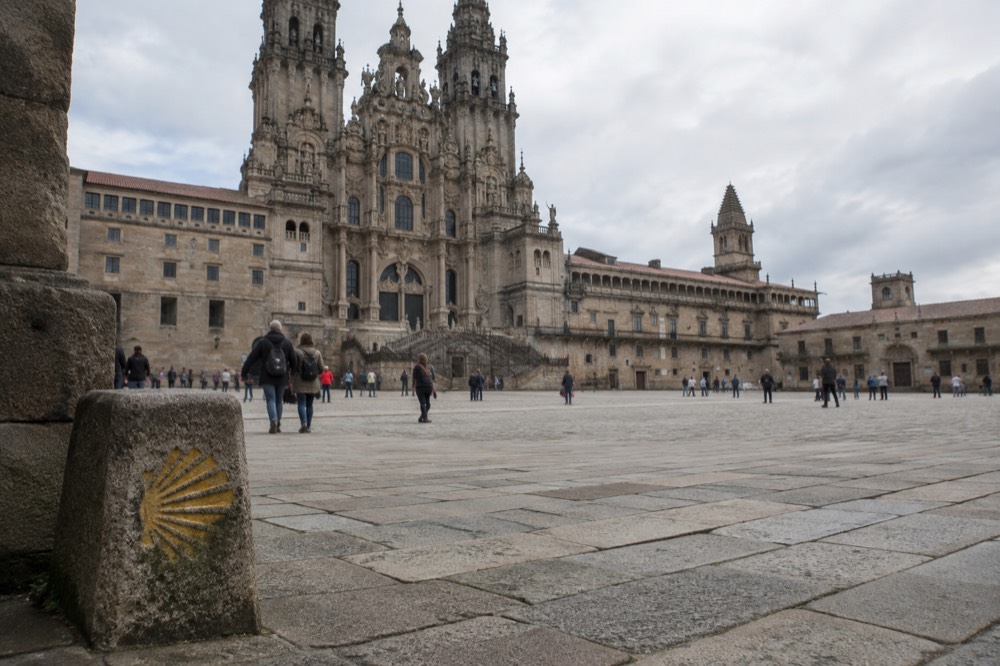
For completeness: the Primitivo from Oviedo is beautiful and hard, the real original Camino, with mountain stages that punish an unprepared first-timer. The coastal Norte is spectacular and long. Neither is the wrong choice, but both are better as a second Camino, which is the honest framing most experienced pilgrims give them. Everything else covered here is indexed on Santiago de Compostela Travel Guide.
When Should A Beginner Walk To Santiago de Compostela?
The shoulder months of May, June, September and early October are the best window for a first Camino to Santiago de Compostela, because AEMET's climate data for the city's own station shows a temperate oceanic pattern that is wet year-round, wetter from October to March, and driest in July and August, so the shoulder months combine the best chance of dry walking with fewer pilgrims competing for beds than the July peak.
July and August bring the most reliable weather and the most people. The feast of St James on 25 July, when the city marks its patronal feast with a Pontifical Mass, concerts and fireworks, draws the biggest crowds of the year, and 2027 will be more intense still: it is the next Holy Year, or Xacobeo, declared because 25 July 2027 falls on a Sunday. The Holy Door opens on the evening of 31 December 2026 and the Holy Year runs through 31 December 2027. A beginner walking in 2027 should expect fuller albergues and book ahead more aggressively.
Rain is the thing Galicia never promises to spare anyone. Annual precipitation at the Santiago station runs on the order of 1,690 to 1,890mm depending on the station and year measured, which is why every packing list for this city leads with a shell and a decent rain layer rather than sun protection. The best month question is covered in more detail in its own page.
What Should A Beginner Plan For The Arrival In Santiago de Compostela?
Plan two things before the last walking day: the Compostela collection at the Pilgrim's Office on Rua das Carretas 33, which requires the stamped passport and is issued in person only, and a realistic view of the Cathedral itself, which is free to enter daily from around 7:00am to 9:00pm, while the rooftop tour run by the Cathedral costs EUR15 general or EUR12 reduced and must be booked in timed slots that often sell out in peak season.
The arrival has a rhythm. Praza do Obradoiro, the pilgrim mass, the hugging of the Apostle's statue at the tomb, then the queue for the certificate. One thing has changed recently and first-timers should know it before they build an itinerary around a mass time: from 16 October 2026 the Cathedral's 9:30am, noon and 7:30pm masses relocate temporarily to the nearby Church of San Agustin while main-chapel works prepare the 2027 Holy Year, and only the 7:30am mass stays inside the Cathedral itself, in its Communion chapel. Before that date the four daily masses are held at the Cathedral's High Altar.
The Santiago Complete Tour is the one that fits this moment best: it bundles the old town, the Portico da Gloria and the Cathedral with tickets included, so a pilgrim who has just spent a week walking does not have to solve the Cathedral's separate ticket queues on arrival day. It runs about half a day, which leaves the afternoon for the Compostela queue and a long dinner on Rua do Franco.
The Botafumeiro deserves a specific warning, because beginner guides written a few years ago treat a scheduled swing as a checklist item. It is currently out of action: scaffolding for the restoration of the cimborrio, the dome above the crossing, covers its hanging mechanism, the Cathedral confirmed this in writing on 5 September 2026, and no return date has been published. It normally swings at twelve fixed solemnities a year, from Epiphany on 6 January to the Transfer of the Apostle on 30 December, but no page should promise a visitor a swing on any date until the Cathedral announces otherwise.
For anything beyond the city, a full rest day is worth planning. Many new pilgrims use it for a Finisterre and Costa da Morte excursion or simply for sleeping, and both are valid answers.
Common Questions About Camino Routes For Beginners
Which Camino is best for beginners?
The Camino Francés starting at Sarria, because its final stretch is the best-served and most forgiving part of the network and it covers the last 100km the Pilgrim's Office requires for the Compostela. The Portugués from Tui and the Inglés from Ferrol are strong quieter alternatives for a first walk.
How fit do you need to be for a first Camino?
Average fitness is enough for the Francés from Sarria, whose final stages roll rather than climb. Beginners should still train with a few long walks carrying a loaded pack before departure, because foot and blister problems, not hills, end most first attempts.
Can you walk the Camino alone as a beginner?
Yes, and most pilgrims on the Francés final stretch effectively do, in the safest possible way: surrounded by other walkers, with services close at hand. The solo-safety question for women walkers has its own detailed page.
How many days does a beginner Camino take?
The Sarria start to Santiago de Compostela takes most first-timers about a week. The full Francés from the French border is roughly five weeks, which is why beginners usually start partway along the route.
Do beginners need to book accommodation in advance?
On the Francés final stretch in July, August and Holy Year 2027, yes, at least for the first and last nights. In shoulder months a mix of public albergues and same-day private bookings usually works, though arriving in a town by mid-afternoon is the habit that keeps the system working.
Which route should a beginner avoid?
The Primitivo from Oviedo and the full coastal Norte are better as second Caminos: the first for its mountain stages, the second for its length and thinner services. Neither is impossible for a fit, well-prepared first-timer, but both raise the difficulty of a first attempt.
A beginner who starts at Sarria in a shoulder month, stamps the passport twice a day, and reaches Praza do Obradoiro with a rest day to spare has done the Camino the way most of those 530,987 pilgrims from 2025 did it, and the city at the end rewards the planning.