Which Is Better Portuguese Camino Or French Camino?
A practical comparison of the Portuguese Camino and the French Camino for walkers finishing in Santiago de Compostela: terrain, crowds, certificate rules and what each route suits best.
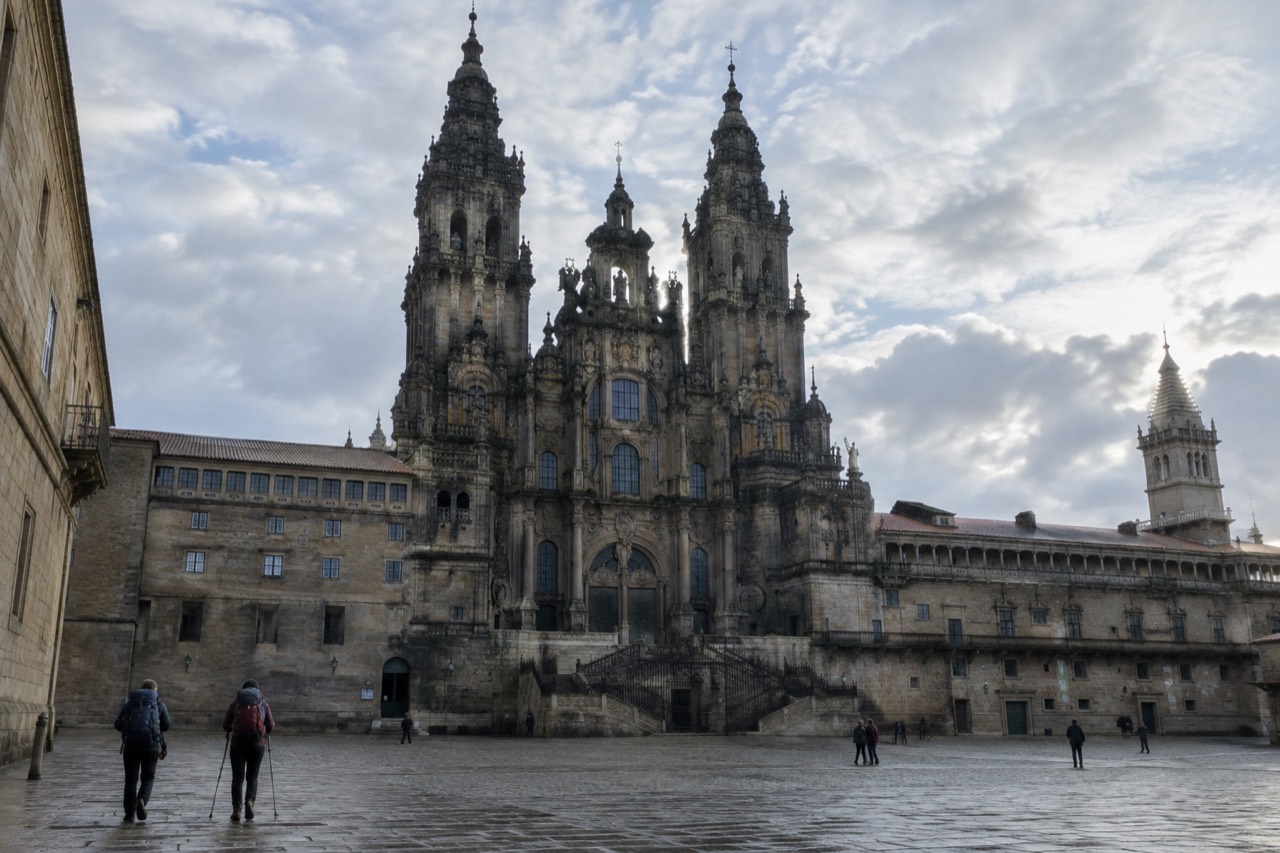
Both the Portuguese Camino and the French Camino end at the same place: the tomb of St. James beneath the Cathedral of Santiago de Compostela in Galicia, Spain. The Portuguese route is walked north out of Portugal, while the French route is the long classical path across northern Spain, and pilgrims argue about which one is "better" the way people argue about wine. The honest answer is that neither is better in the abstract. The Portuguese Camino suits walkers who want a shorter, quieter, gentler approach with a coastal option, while the French Camino suits walkers who want the full historic pilgrimage with the deepest trail infrastructure in Europe. The Oficina del Peregrino's own figures point the same way: a record 530,987 Compostelas were issued in 2025, and the overwhelming majority of those pilgrims walked one of these two routes into the city.
Which Is Better Portuguese Camino Or French Camino?
Neither route is objectively better: the Portuguese Camino is the better choice for most first-time walkers because it is shorter, flatter on its central variant, quieter and cheaper to reach, while the French Camino is the better choice for walkers who want the classic month-long pilgrimage, richer services and the most famous final week in northern Spain. If your goal is simply to reach Santiago de Compostela with the Compostela certificate in hand, both routes deliver exactly the same reward.
That reframing matters because most people asking this question are really asking something narrower: "which one should I walk, given two weeks, a modest budget and average fitness?" For that profile the Portuguese route usually wins on logistics. It is a shorter commitment, the walking is widely described by pilgrims as gentler day to day, and the start in Portugal is easy to combine with a few days in Porto before setting off. The French route asks for more time and more stamina, and in exchange it gives the walker the most developed pilgrim infrastructure anywhere on earth: albergues, bars and yellow arrows at a density the newer routes have not matched.
The comparison below works through the decision honestly, using what primary sources in Santiago de Compostela actually publish rather than forum folklore. For a deeper dive into route length and stages, the site's Camino routes overview and the full French route guide carry the detail.
How Different Are The Two Routes Day To Day?
The French Camino is a long mountain-and-mesa walk across northern Spain with a demanding opening week in the Pyrenees foothills, while the Portuguese Camino is a shorter, lower walk from Portugal that mixes small towns, farmland and, on its coastal variant, the Atlantic. The French route carries bigger crowds and more services; the Portuguese route carries fewer walkers, fewer beds and a slower pace. They feel like different trips that happen to share a finish line.
The French Camino is the original mass pilgrimage route, the one inscribed by UNESCO in 1993 as part of the "Routes of Santiago de Compostela: Camino Frances and the Routes of Northern Spain." That listing is not just an honour. It reflects a thousand years of built infrastructure: the bridges, hospitals and churches that line the corridor from the Pyrenees to Galicia. Walking it, you are moving through the most-served long-distance trail in the world, with accommodation and food at close intervals nearly the whole way.
The Portuguese Camino shares the medieval pedigree but not the volume. Pilgrims leave Portugal heading north, and the route splits into a central variant through inland towns and a coastal variant that tracks the Atlantic before the two arms meet again in Galicia for the final approach. Walkers who choose the coastal variant get sea horizon and fishing villages; walkers who choose the central variant get the shortest, simplest logistics of any major route.
Here is how the decision factors stack up:
| Decision factor | Portuguese Camino | French Camino |
|---|---|---|
| Overall character | Shorter, quieter, easier pace | Classic long pilgrimage, busiest route |
| Terrain feel | Lower, gentler walking; coastal or central choice | Mountain start, then long meseta stages |
| Variants | Central and coastal variants that rejoin | Single main corridor with side branches |
| Services and beds | Fewer albergues, plan ahead in villages | Densest accommodation of any Camino route |
| Crowd level | Noticeably thinner outside July and August | Busy for most of the season, very busy in summer |
| Best suited to | First-timers, shorter holidays, walkers wanting calm | Walkers with 4-6 weeks, wanting the full tradition |
None of that makes the French route the "serious" option and the Portuguese one the easy option, a framing you will meet on every forum. The certificate in Santiago de Compostela does not care which route you arrived on. The Pilgrim's Office applies the same rules to everybody, as the certificate guide explains, and the tomb under the Cathedral is the same tomb either way.
Which Camino Suits A First-Time Walker?
The Portuguese Camino is the safer recommendation for a first Camino: its central variant is shorter, its gradients are gentler on untested legs, and its thinner crowds mean a nervous walker is never swept along by someone else's pace. The French Camino from Sarria onwards is the better first taste for anyone who wants the classic social Camino in a single week, because that final stretch packs the full experience, crowds and all, into the certificate-qualifying distance.
The key fact that shapes this whole debate is the Pilgrim's Office's minimum-distance rule. To earn the Compostela certificate you must walk at least the last 100km of a recognized route on foot, or the last 200km by bicycle, collecting at least two stamps per day in your credencial from official stamping points. That is why Sarria, at roughly that qualifying distance from Santiago de Compostela on the French route, has become the busiest joining point in the entire Camino world: walk from there and the certificate is yours.
A first-timer with one free week therefore has two clean options. Join the French route at Sarria for the classic final week: the crowds are real, but so are the friendships, and the infrastructure means you never have to think hard about where to sleep or eat. Or walk a comparable stretch of the Portuguese route, where the same week buys more calm, more flexibility and a slower daily rhythm. The trade is society versus solitude, and both are legitimate first pilgrimages. Newer walkers should also read the site's longer treatment of which Camino is best for beginners, which unpacks fitness, packing and pace for a first attempt.
Age and solo walking worry people more than terrain does, and the evidence there is reassuring. Walkers well past seventy finish both routes every year, and women walking alone make up one of the largest groups of modern pilgrims. The two routes differ in atmosphere, not in safety. On either one, the practical anxieties that actually trip people up are mundane ones: sore feet, thin stamp collections, booking beds in July. All of those are solvable, and none of them depends on which border you started behind.
What Does The Compostela Certificate Require On Either Route?
The Compostela certificate requires the same thing on both routes: at least the last 100km walked on foot or the last 200km cycled, on a recognized Camino, continuous, with a minimum of two stamps per day in the credencial from official stamping points. It is issued in person only, at the Pilgrim's Office at Rua das Carretas 33 in Santiago de Compostela, which is closed on 25 December and 1 January and otherwise opens seasonally between roughly 8am and 8pm.
The Office does not distinguish between routes for a simple reason: the Compostela certifies that you completed a qualifying pilgrimage to the tomb, not which road you took. The Portuguese walker who started in Portugal and the French-route walker who started in the Pyrenees stand in the same queue on Rua das Carretas and receive the same Latin document. What the Office checks is the credencial itself: the stamps, dated, at least two per walking day, from places authorized to stamp pilgrim passports.
| Certificate rule | On foot | By bicycle |
|---|---|---|
| Minimum qualifying distance | Last 100km of a recognized route | Last 200km of a recognized route |
| Stamps required | At least two per day, official points | At least two per day, official points |
| Where issued | Rua das Carretas 33, in person only | Rua das Carretas 33, in person only |
| Issuing office closed | 25 December and 1 January | 25 December and 1 January |
| Record year for issuance | 530,987 Compostelas in 2025 | Included in the same total |
Practical note for cyclists: the 200km rule makes the Portuguese route a popular bike pilgrimage, since the shorter overall distance fits a two-wheeled schedule comfortably. On either route, the single most common certificate failure is a thin credencial, days with only one stamp, so stamp at every bar, church and albergue that offers one. The credencial itself is cheap or free from pilgrim associations and the Office, and losing it means losing the pilgrimage on paper, so keep it dry and keep it on your body.
What Awaits At The Finish In Santiago de Compostela?
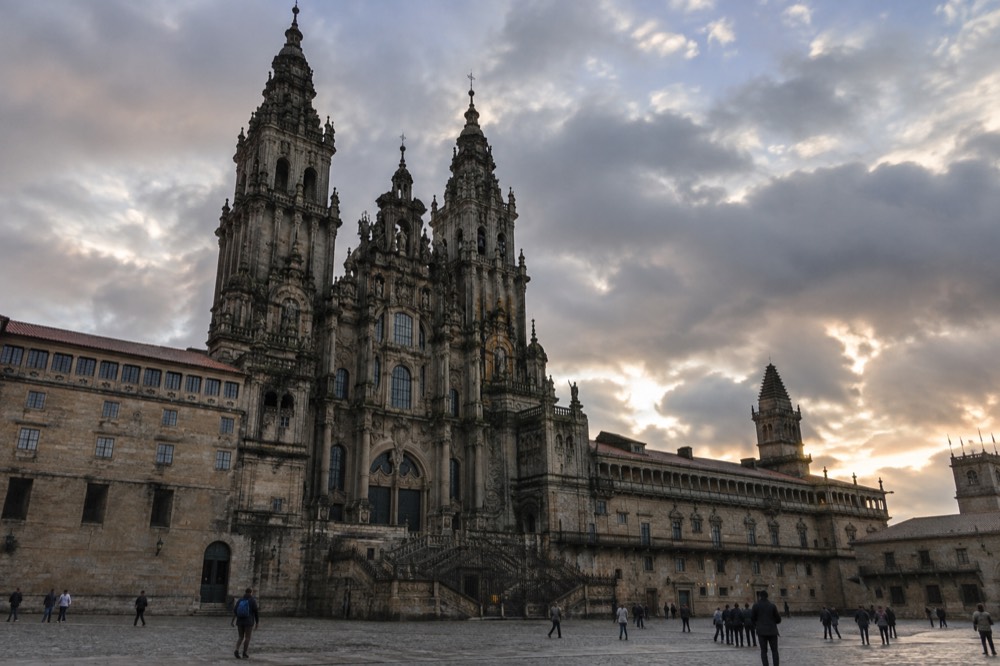
Every pilgrim on both routes finishes the same way: at the Cathedral of Santiago de Compostela, where the interior with the Apostle's tomb is free to enter and generally open about 7:00am to 9:00pm, with pilgrim masses at 7:30am, 9:30am, noon and 7:30pm. From 16 October 2026 the 9:30am, noon and 7:30pm masses move to the nearby Church of San Agustin while works prepare the Cathedral for the 2027 Holy Year; the 7:30am mass stays in the Communion chapel.
That relocation, confirmed by the Cathedral and published with dates, is the single most important thing to know about arriving in the second half of 2026. Walkers arriving before 16 October 2026 can attend mass at the High Altar as generations of pilgrims have; walkers arriving after that date follow the signs a few streets away to San Agustin. The Cathedral itself remains fully open to visitors throughout the works, and the museum, rooftops and Portico da Gloria are unaffected. The pilgrim mass guide carries the full detail.
The other famous arrival moment, the Botafumeiro swinging at the end of the pilgrim mass, is currently suspended. The Cathedral confirmed in writing on 5 September 2026 that scaffolding for the cimborrio restoration covers the giant censer's hanging mechanism, with no return date published. Normally it swings on twelve fixed solemnities a year, including the Feast of St. James on 25 July, but no visitor should plan an arrival around seeing it until the Cathedral says otherwise.
For the days after arrival, a guided visit turns the finish line from a landmark into a story. The Santiago Complete tour, city, Portico and Cathedral tickets included, runs about half a day and is rated 4.8 from 194 reviews, from $47 per person, and it pairs naturally with a first afternoon in the old town.
How Do You Get To Either Starting Point?
The French Camino's classic start lies across the border in France at the foot of the Pyrenees, which for most international walkers means flying into a Spanish hub and travelling on by rail, while the Portuguese Camino starts in Portugal and is usually reached through Porto. From Santiago de Compostela itself there is no direct rail line to Porto: travellers change at Vigo, a direct hop of roughly an hour, and Santiago connects to Madrid by direct high-speed services in roughly three to four hours.
Those rail facts matter more than they first appear, because they shape the cost of the whole trip. A Santiago-to-Madrid direct train of three to four hours makes the French route reachable without internal flights; the Vigo change en route to Porto makes the Portuguese route a natural loop for anyone who wants to see both cities. Walkers flying in specifically to start a Camino should weigh the airport options carefully, since the choice of hub often adds or removes a full travel day at each end of the walk.
Timing the start matters as much as the route itself. AEMET's climate data for the Santiago de Compostela station shows a temperate oceanic pattern: wet year-round, wetter from October to March, driest in July and August, with annual precipitation on the order of 1,690 to 1,890mm. In practice that means the shoulder months of spring and early autumn offer the best walking weather on both routes, and the busiest months combine the driest weather with the thinnest bed availability. Summer is the driest season but also the busiest on the French route, which pushes quieter-season walkers toward the Portuguese route by default.
Which Should You Choose For Your Next Walk?
Choose the Portuguese Camino if you are walking your first Camino, have one to two weeks, prefer quieter trails and want gentler daily distances, and choose the French Camino if you have the time for the classic long pilgrimage, want maximum infrastructure and company, or want to finish through the most storied final week in the Camino world. Both routes end at the same tomb, both earn the same certificate, and neither choice can be wrong once the boots are moving.
If it helps to collapse the decision to one line: first Camino and short on time, walk the Portuguese. Third Camino or a sabbatical, walk the French. Everything in between is a coin toss between society and solitude, and plenty of pilgrims walk one route one year and the other the next. The choice of route also barely affects the two questions that actually worry new walkers, cost and safety, which the site covers separately in what is the average cost to walk the Camino de Santiago.
One forward-looking factor belongs in the decision for anyone reading this in late 2026: 2027 is a Holy Year. The Holy Door opens on the evening of 31 December 2026 and the Xacobeo runs through 31 December 2027, which will swell numbers on every route into Santiago de Compostela. Both the French and Portuguese routes will be busier than a normal year, and the Portuguese route's thinner bed count will feel that pressure sooner. Walkers planning a Holy Year pilgrimage should book key stages early, a point the Holy Year 2027 guide develops in full.
However you arrive, the finish deserves more than a photograph. Praza do Obradoiro, the old town's granite squares and the food of Galicia reward an extra day or two, and the planning pages of this Santiago de Compostela Travel Guide cover where to sleep and where to eat so the trip ends as thoroughly as the walk itself.
Common Questions About The Portuguese And French Camino
Which is better Portuguese Camino or French Camino?
Neither is objectively better. The Portuguese Camino suits first-timers, shorter holidays and walkers who want calm, gentler gradients and a coastal option. The French Camino suits walkers with several weeks who want the classic pilgrimage and the densest services on any Camino route. Both finish at the same tomb in Santiago de Compostela and both earn the same Compostela certificate.
Can you earn the Compostela on either route?
Yes, under identical rules. The Pilgrim's Office requires at least the last 100km on foot or 200km by bicycle on a recognized route, continuous, with at least two stamps per day in the credencial, and issues the certificate in person only at Rua das Carretas 33 in Santiago de Compostela.
Which route is better for beginners?
The Portuguese Camino is the safer first choice: shorter, quieter and gentler on untested legs. A one-week walk of the French route from Sarria is the other classic beginner option, since Sarria sits at roughly the 100km qualifying distance, but it comes with the route's famous crowds.
Does the Botafumeiro swing when pilgrims arrive?
Not currently. The Cathedral confirmed in writing on 5 September 2026 that the Botafumeiro is suspended because dome-restoration scaffolding covers its hanging mechanism, and no return date has been published. Normally it swings on twelve fixed solemnities a year, but no arrival should be planned around it until the Cathedral announces its return.
Do pilgrim masses still happen at the Cathedral's High Altar?
Until 15 October 2026, yes, at 7:30am, 9:30am, noon and 7:30pm. From 16 October 2026 the 9:30am, noon and 7:30pm masses move to the nearby Church of San Agustin while main-chapel works prepare the Cathedral for the 2027 Holy Year, and the 7:30am mass stays in the Cathedral's Communion chapel.
Is 2027 a Holy Year for the Camino?
Yes. A Holy Year falls whenever 25 July, the Feast of St. James, lands on a Sunday, which next happens in 2027. The Holy Door opens on 31 December 2026 and the Holy Year runs through 31 December 2027, so both the French and Portuguese routes will be busier than usual throughout 2027.