Hostels In Santiago de Compostela
Santiago de Compostela is the end point of the Camino de Santiago and one of Europe's most hostel-heavy small cities, with beds spread between pilgrim albergues, private hostels and guesthouses all inside or beside a UNESCO-listed old town.
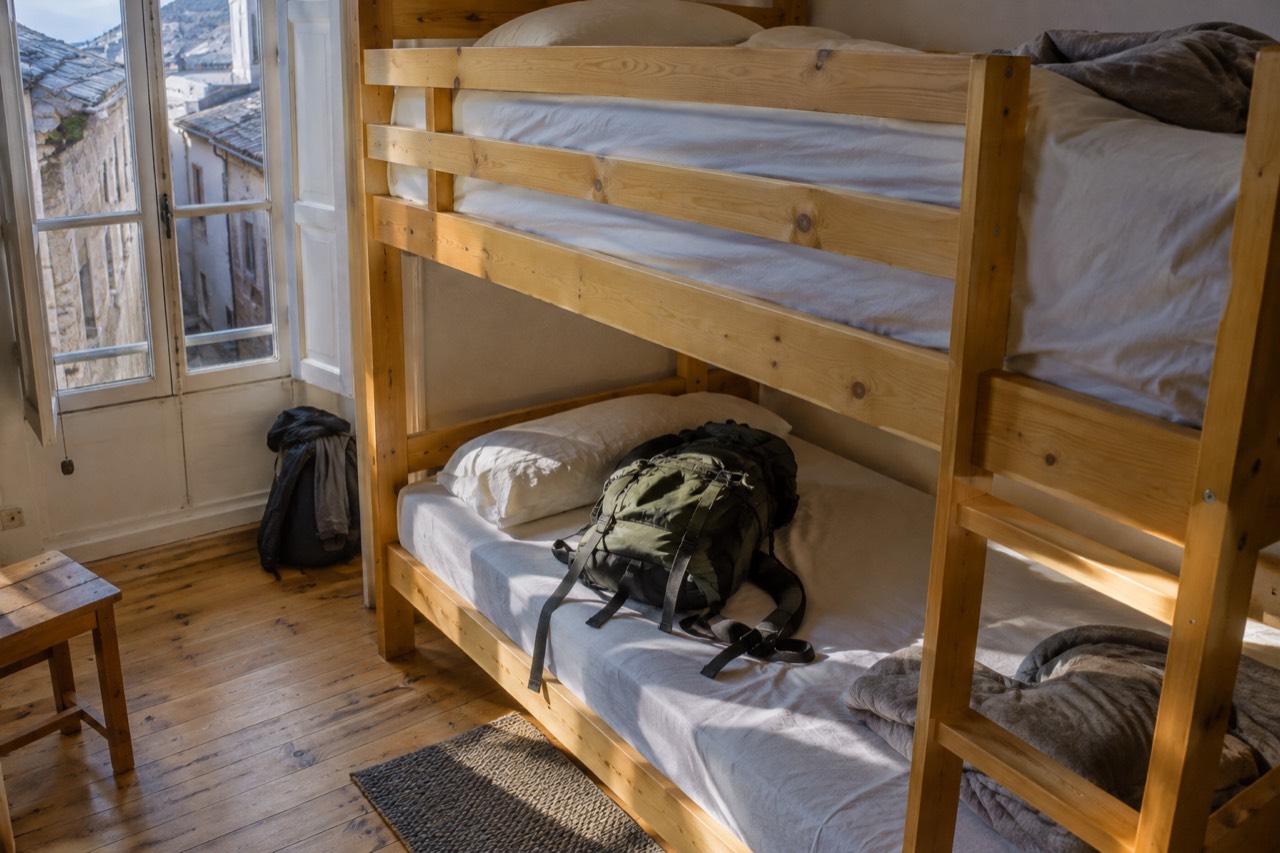
Short answer
Santiago de Compostela has two broad kinds of budget bed: pilgrim albergues tied to the Camino de Santiago and independent hostels open to any traveler. Book early around 25 July and around the Holy Year window opening 31 December 2026, check live listings for current rates, and use city bus line 6A from the airport, about 12km away.
Santiago de Compostela sleeps a disproportionate number of people in shared rooms. The Oficina del Peregrino's figures show 530,987 Compostelas issued in 2025, a record year, and every one of those pilgrims needed a bed at the end of the walk, most of them in the albergues and hostels that ring the Cathedral. For non-pilgrim travelers the same beds are often the cheapest and most social way to stay inside the UNESCO-listed old town, which was inscribed in 1985 as a separate listing from the Camino routes inscription of 1993. This guide covers what kinds of shared accommodation exist, where to book, when the pressure points hit, and how a hostel stay fits around arrival, the Pilgrim's Office and the Compostela certificate.
Why Choose Hostels In Santiago de Compostela?
Hostels in Santiago de Compostela exist because the city is a terminus, not a resort: pilgrims arrive on foot from across Galicia and beyond, need a bed within walking distance of the Cathedral, and have usually been paying low nightly accommodation costs for weeks. The shared-room economy that serves them also gives ordinary travelers beds inside the old town for less than a hotel, with a built-in social scene of people finishing the Camino de Santiago. It is the default budget option here rather than a niche one.
The dynamic is unusual. In most Spanish cities hostels serve backpackers on a circuit. Here, the majority of the people in the bunk next to you have walked the last 100km from Sarria or further, and the conversation at breakfast is about blisters and the Pilgrim's Office queue rather than nightlife. The city's accommodation stock grew around that flow, and it stays busy outside the classic summer season because the Camino runs year-round.
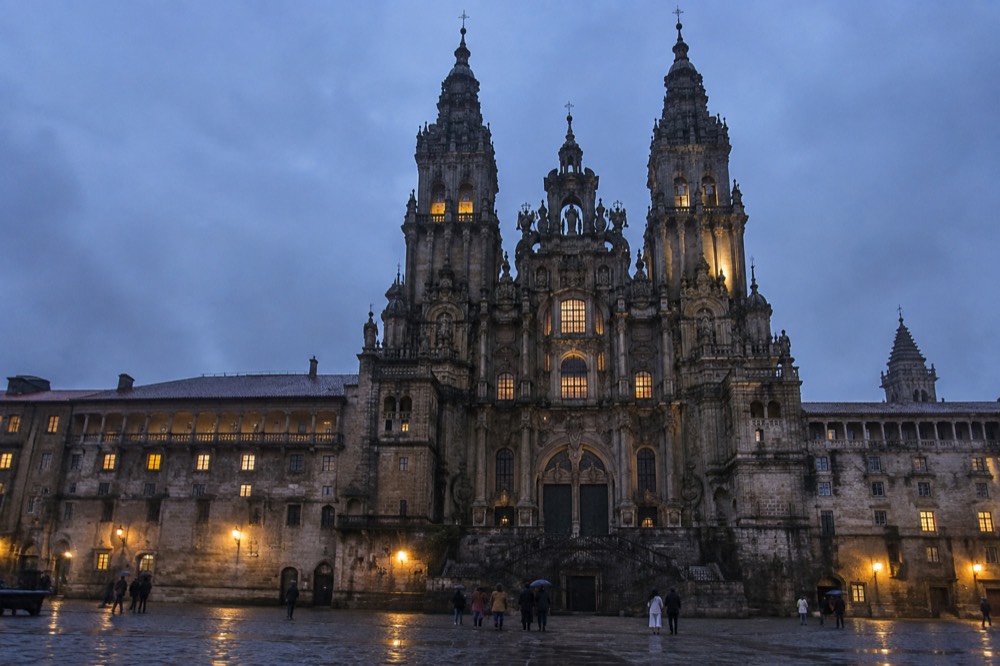
There is also a practical geometry to it. The old town is compact and largely pedestrian, so a bed anywhere inside the historic core puts the Cathedral, the Praza do Obradoiro and the eating streets within an easy walk. Travelers who expect to commute will find there is rarely a commute to make.
The trade-off is simple: shared rooms, shared bathrooms in many properties, and high demand on the dates that matter most to pilgrims. The rest of this guide is about working through exactly those three things.
What Kinds Of Hostel Accommodation Exist In Santiago de Compostela?
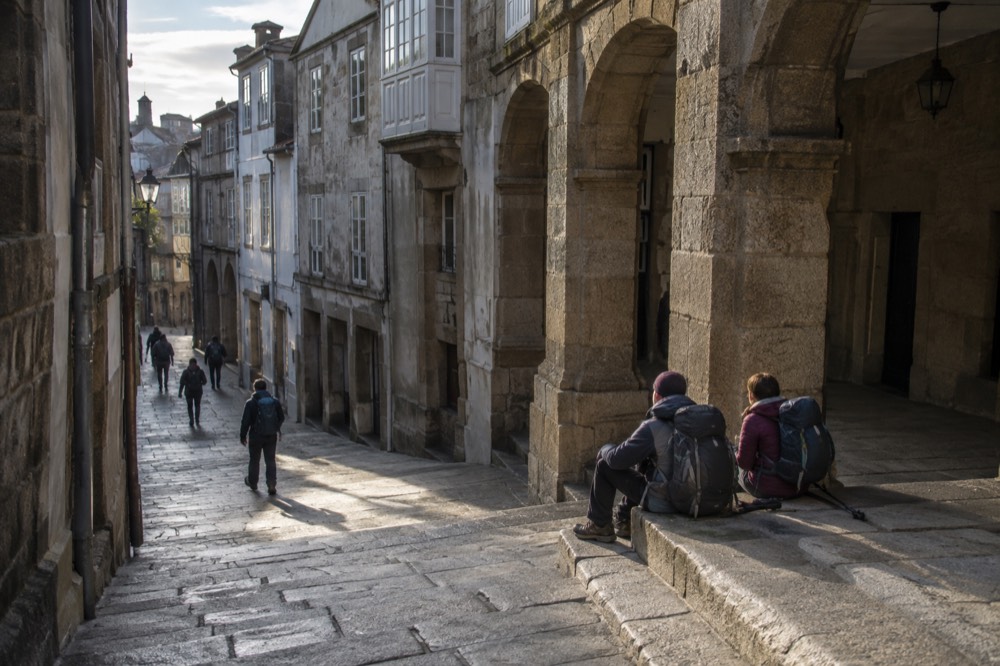
Santiago de Compostela splits its budget beds into three groups: pilgrim albergues run on Camino lines, including public and parish options that prioritize credencial holders; independent private hostels and guesthouses open to anyone regardless of how they arrived; and hybrid properties with both dorms and private rooms. The distinction matters because albergue beds are cheap and rule-bound while private hostels trade a higher rate for freedom of schedule, and most travelers end up in one or the other based on whether they hold a pilgrim passport.
If you are walking the Camino, the albergue system is the reason your nightly costs stay low for the whole route, and the same logic applies on arrival. The site's dedicated guide to Camino accommodation and albergues covers that system in depth. What follows here is the Santiago-specific picture at the finish line.
| Type | Who it suits | What you usually get | What to check before booking |
|---|---|---|---|
| Public / pilgrim albergue | Credencial holders finishing a Camino route | Dorm bed, shared bathrooms, Camino-focused services | Live listing, since beds are limited and demand is seasonal |
| Parish / donated albergue | Pilgrims, often walk-ins | Simple dorm, communal spirit | Whether it accepts advance booking at all |
| Independent hostel dorm | Any traveler, pilgrim or not | Bunk or pod, lockers, common areas, sometimes breakfast | Live rate on the operator's listing, which moves with demand |
| Hostel private room | Couples, families wanting budget privacy | Own bathroom in many cases | Same property can price very differently by room type |
| Guesthouse / pension | Longer stays, quieter base | Private room, sometimes shared bath | Location inside versus outside the old town walls |
Two rules of thumb hold across all of them. First, the cheapest beds go first on high-demand dates, so the booking window matters more than the property choice. Second, descriptions on live listings change faster than any guide can track, so treat what a listing says today as the source of truth for facilities, and take this page's categories as the map rather than the inventory.
Which Neighborhood Should You Book A Hostel In?
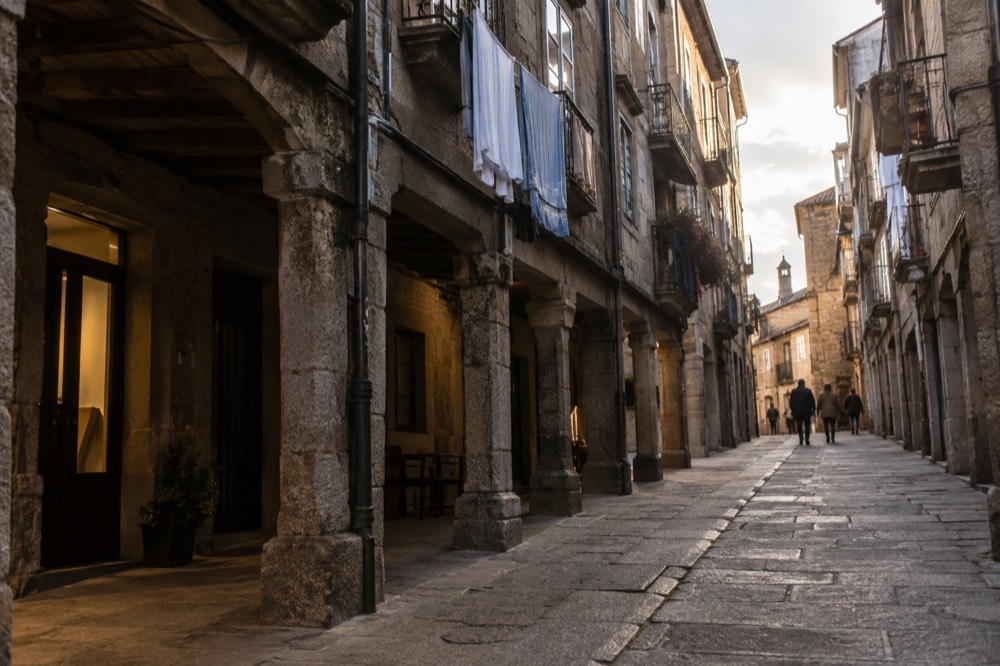
The old town itself, inside the UNESCO boundary, is the best base for almost every hostel guest: the Cathedral and its Praza do Obradoiro, the Rua do Franco eating street and the Alameda park viewpoint are all reachable on foot, and no bus is needed for anything a visitor wants to do. Beds outside the core, around the station side and the newer ring, are easier to book at short notice and sit on the airport bus route, at the cost of an uphill walk back after dinner.
The historic core is small enough that neighborhood choice is really a choice of hill. The streets around the Praza da Quintana and San Martino Pinario sit high beside the Cathedral; the riverside lanes drop toward the Sar and Sarela. Both are genuinely central, but a dorm at the top of the town means fewer stairs at midnight.
| Area | Character | Best for | Trade-off |
|---|---|---|---|
| Around Praza do Obradoiro | The postcard core, granite and arcades | First-time visitors wanting maximum atmosphere | Highest demand, beds vanish first |
| Quintana and San Martino side | Quiet lanes beside the Cathedral | Pilgrims who want to wake up next to the finish | Steps, everywhere |
| Rua do Franco and south | Eating streets, tapas energy | Travelers who want evening life on the doorstep | Noisier into the night |
| Station and Intermodal side | Flatter, more ordinary city fabric | Late arrivals and departures, easier booking | A short walk back up to the old town |
| Beyond the ring, toward Monte do Gozo | Camino approach territory, quieter | Cheaper beds, pilgrim atmosphere | Bus or a long walk to the center |
Whatever you choose, the arrival experience is the same: you will walk in, because that is how everyone arrives here. The site's guide to arriving in Santiago on the Camino describes that final-approach feeling, and the general where to stay in Santiago de Compostela guide places hostels against hotels and paradores for travelers weighing the options.
When Should You Book, And What About The 2027 Holy Year?
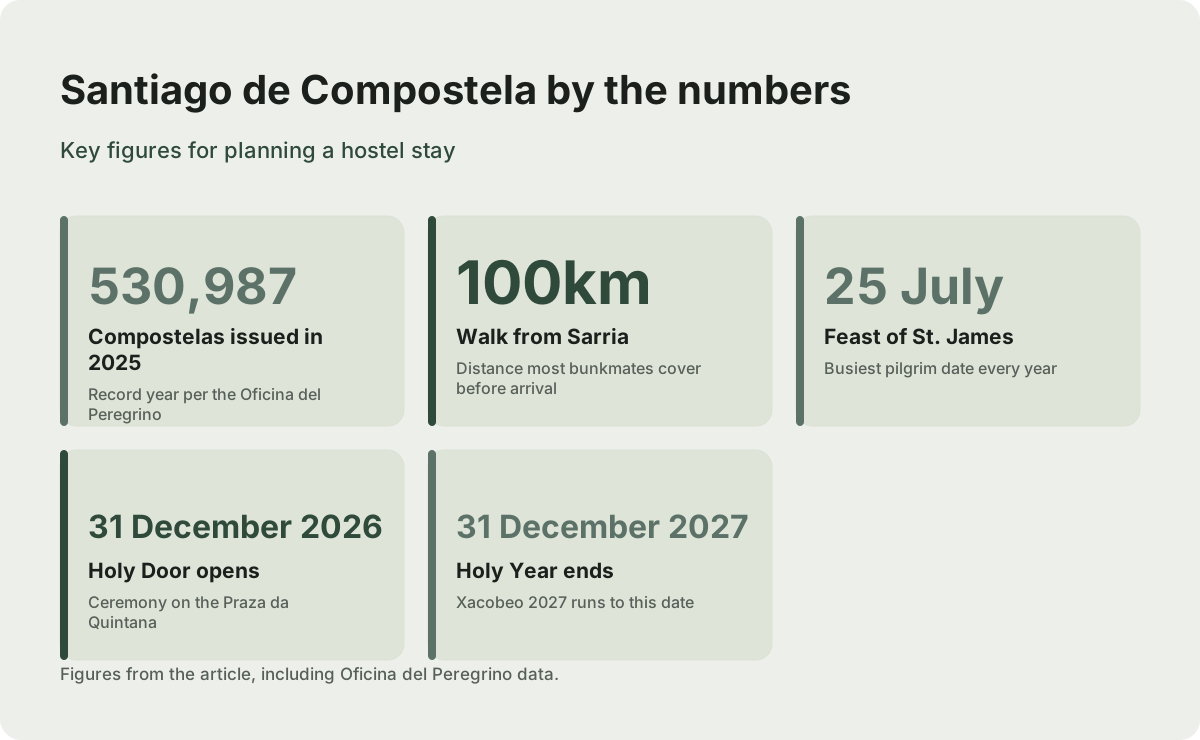
Book early for late July: the Feast of St. James falls on 25 July every year and is the city's busiest pilgrim date, and the next Holy Year, Xacobeo 2027, opens with the Holy Door ceremony on the evening of 31 December 2026 and runs through 31 December 2027, so demand stays elevated from New Year 2027 onward. Outside those windows, spring and autumn are busy but bookable at shorter notice, and the wet October-to-March stretch is the easiest time to find a dorm bed close in.
The Holy Year point deserves emphasis because it is widely misread. 2026 is not a Holy Year: the Holy Door stays closed, and 25 July does not fall on a Sunday. The next one is 2027, and the door opens on 31 December 2026 at a ceremony on the Praza da Quintana. Anyone planning a hostel stay across that New Year period is planning for the start of a jubilee year, not an ordinary winter week.
AEMET's climate data for the Santiago station shows a temperate oceanic pattern, wet year-round and wetter from October to March, with July and August the driest months. That is the second lever on hostel demand after the liturgical calendar. The site's best time to visit Santiago de Compostela and Santiago de Compostela weather guides unpack it month by month, and the Feast of St. James July 25 page explains why that single date reshapes the whole city, including its beds.
| Period | Demand for beds | Why |
|---|---|---|
| Late July, around the 25th | Highest of the normal calendar | Feast of St. James, plus peak summer Camino traffic |
| 31 December 2026 onward | Rising into an extraordinary year | Holy Door opens 31 December 2026, Holy Year runs to 31 December 2027 |
| Easter and May | High | Traditional Camino season solemnities and school holidays |
| June and early July | High | Main walking season before the feast |
| Spring shoulder, April to June | Moderate | Reliable demand but wider bed choice |
| October to March, outside holidays | Lowest | Wet season, fewer walkers, easiest bookings |
How Much Should You Budget For A Hostel Bed?
This site's verified research carries no fixed nightly rate for any individual Santiago de Compostela hostel, and rates move with season and demand anyway, so the reliable method is to budget by category of bed, then check the live listing price on the operator's own page before booking. The market's shape is firm: albergue-style pilgrim beds sit at the bottom, independent hostel dorms in the middle, private rooms at the top, with late July and Holy Year 2027 dates well above the wet-season floor.
That restraint is deliberate. Prices shown through booking links change by date and demand, and a number printed today would be wrong by the time you read it. Treat any figure you see on a third-party page as a snapshot, and the operator's live listing as the truth.
What you can plan around is relative cost, which is stable even when absolute prices move:
| Cost factor | Direction it pushes the price | How to work it |
|---|---|---|
| Dorm versus private room | Dorm beds are the cheapest roof in the building | Book the dorm if you only need a bed for one or two nights |
| Date | Late July and Holy Year dates carry peak rates | Shift a few days off the feast, or book far ahead |
| Position inside the old town | Central beds command a premium | One street outside the core often costs meaningfully less |
| Advance booking | Early beds are cheaper and more plentiful | Lock dates the moment your travel is fixed |
| Length of stay | Some properties discount longer stays | Ask, or check the listing's stay options |
If your budget is tight enough that the hostel choice determines the trip, the site's broader Santiago de Compostela on a budget advice and the Camino packing list for what you actually need to carry both help keep the total spend down. Food is the other big line item, and the where to eat in Santiago de Compostela guide maps the cheap end of the old town's eating streets.
What Should You Expect Inside A Santiago de Compostela Hostel?
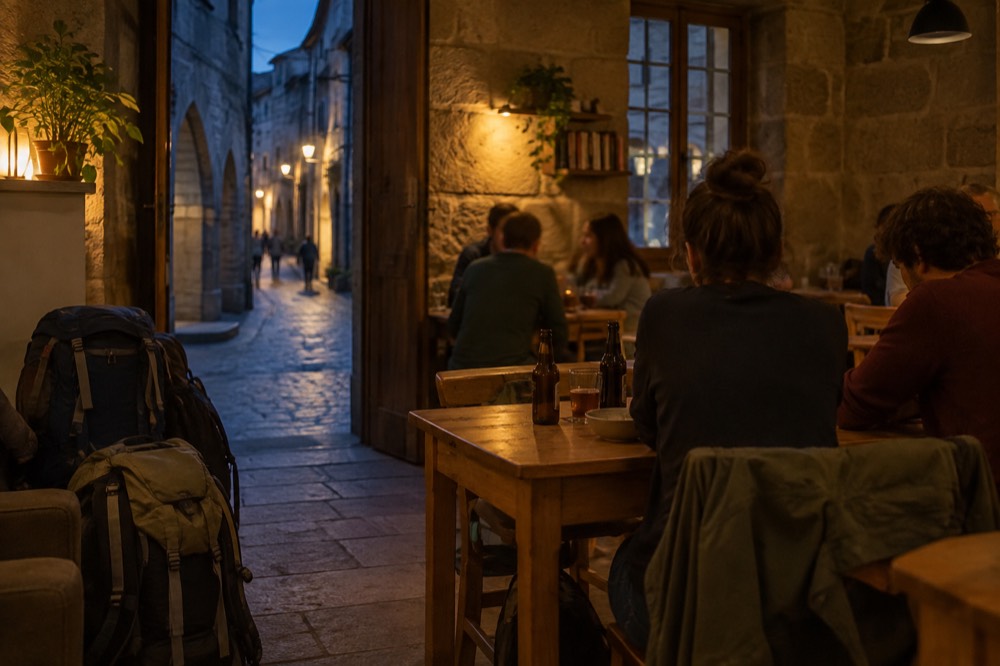
Expect a working building, not a design statement: granite-walled or modern-fit dorms, bunks or pods, lockers, shared or en-suite bathrooms depending on the room type, and common areas that fill with pilgrims comparing routes in the evening. The two things worth verifying on the live listing before you commit are the bathroom arrangement for your specific room type and the reception hours, because properties built into medieval buildings differ wildly from one address to the next.
Etiquette in this city is Camino etiquette. Lights-out habits, quiet hours and early departures are the norm because pilgrims start walking, or start sightseeing, at dawn. Dorm guests who pack the night before and leave before breakfast are not being antisocial, they are being normal.
On practical standards, five things separate a good Santiago hostel from a frustrating one. Lockers or secure storage matter more than usual here because pilgrim passports and gear are the whole trip. Bed linen is included at some properties and expected from your own pack at others, especially albergue-style ones, so check before you assume. Reception hours decide whether a late flight arrival lands you outside a locked door, and a breakfast option, or at least early-opening cafes nearby, shapes the first morning. Luggage storage is the quiet winner on departure day, when you want to visit the Pilgrim's Office or the Cathedral without dragging a full pack through the crowds.
One building worth knowing about even if you sleep elsewhere is the Hostal dos Reis Catolicos parador on the Praza do Obradoiro itself, historically the pilgrim hospital and now the grandest beds in the city. It frames the whole spectrum: from donated albergue beds to Spain's most storied hotel, all within a few hundred meters of each other around the same square.
How Do You Get From Santiago de Compostela Airport To Your Hostel?
City bus line 6A runs from Santiago de Compostela airport to the center for 1 EUR paid to the driver, or 0.36 EUR per trip on a rechargeable card, covering the roughly 12km to the old town in about 25 to 45 minutes, with services roughly every 30 minutes from early morning to around half past midnight. A contract change expected in autumn 2026 brings a new operator and a reported fare around 6 EUR, so travelers arriving late in 2026 should treat the fare as subject to change.
That last point is not a footnote, it is the single most important sentence in this section. The city's own transport page listed the Tussa-operated 6A at 1 EUR as of late September 2026, while the incoming Monbus contract was pending, with a new dedicated airport line at a higher unsubsidized fare expected within months. Check the airport and city transport pages on your travel date rather than relying on either number here.
| Option | Fare | Journey | Notes |
|---|---|---|---|
| Bus line 6A | 1 EUR to driver, 0.36 EUR by card | About 25 to 45 minutes | Runs roughly every 30 minutes, early morning to about 00:30 |
| New airport line, from autumn 2026 | Reported around 6 EUR | Similar route | Monbus contract, fare subject to change, verify before travel |
| Taxi or private transfer | Check the operator's live price | About a 20 to 30 minute drive | Fixed distance of about 12km to the old town |
The bus terminates around the Estacion Intermodal and center stops, from which the old town hostels are an uphill but short walk. For fuller arrival planning, including what to expect if you come overland instead, the guides on Santiago de Compostela airport, flights to Santiago de Compostela, the Madrid to Santiago de Compostela train and the Porto to Santiago de Compostela route cover each approach in detail. Train travelers should note the verified ranges: Santiago to Madrid is roughly 3 to 4 hours direct, Santiago to Vigo about an hour, and there is no direct rail line to Porto, so that journey changes via Vigo.
Can You Still Earn The Compostela While Staying In Hostels?
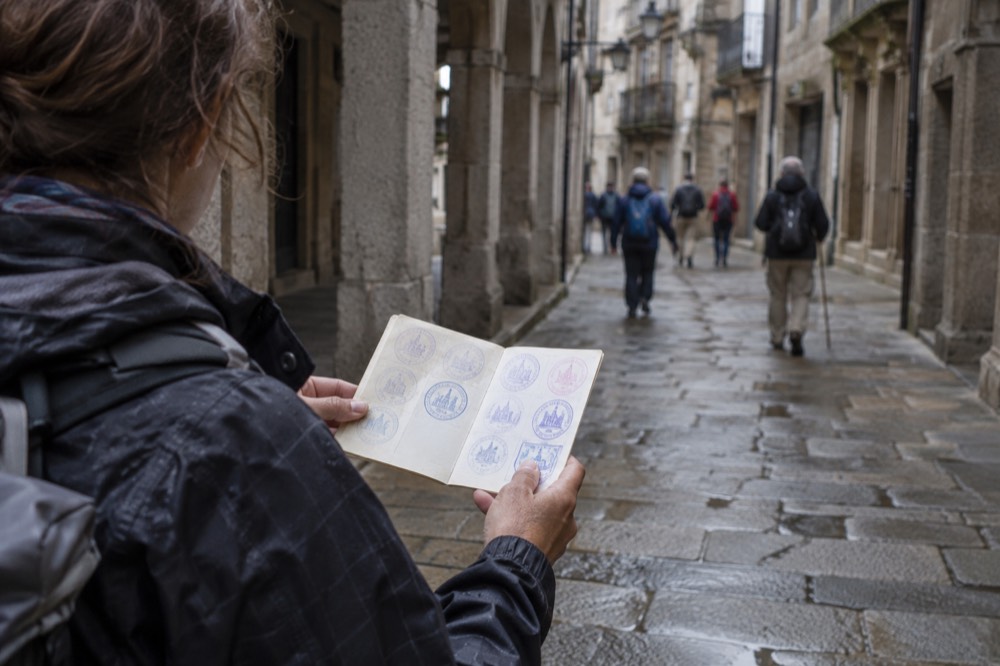
Yes, and hostels and albergues are the standard way to do it: the Compostela certificate requires walking the last 100km of a recognized Camino route, or the last 200km by bicycle, collecting at least two stamps per day in the credencial from official stamping points, and it is issued in person only at the Pilgrim's Office at Rua das Carretas 33. Where you sleep does not affect eligibility as long as the distance and stamp rules are met.
The certificate logic is distance-based, not accommodation-based. Pilgrims who walk from Sarria, about the most popular 100km-plus start, stay in a chain of albergues and hostels along the route and finish in the same kind of bed in Santiago. The rules are set out in full in the site's pilgrim passport credential, Sarria to Santiago and Pilgrim's Office guides.
| Compostela requirement | The verified rule |
|---|---|
| Minimum walking distance | Last 100km on foot or horseback |
| Minimum cycling distance | Last 200km by bicycle |
| Stamps | At least two per day, from official stamping points |
| Collection | In person only, at Rua das Carretas 33 |
| Office closures | 25 December and 1 January, hours seasonal |
| Scale of demand | 530,987 Compostelas issued in 2025, a record |
After collecting the certificate, many pilgrims attend a pilgrim mass. Note the dated change here: until 15 October 2026 the masses are at the Cathedral's High Altar at 7:30am, 9:30am, noon and 7:30pm, but from 16 October 2026 the 9:30am, noon and 7:30pm masses relocate to the Church of San Agustin while the 7:30am mass stays in the Cathedral's Communion chapel. The pilgrim mass guide tracks this. And if you hope to see the Botafumeiro swing at the end of a mass, know that it is currently suspended: dome restoration scaffolding covers its mechanism, the Cathedral confirmed this in writing on 5 September 2026, and no return date has been published.
What Can You Do Around Your Hostel In Santiago de Compostela?
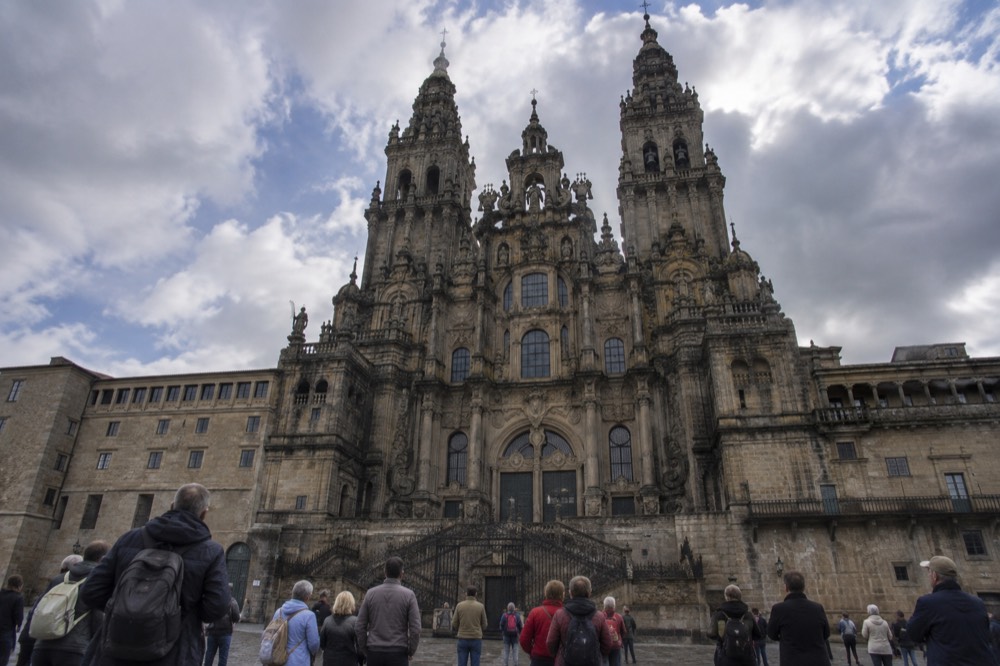
Almost everything worth doing is within an easy walk of any old-town hostel bed: the Cathedral interior is free to enter daily, the museum visit runs from about 9 to 23 EUR depending on ticket type, the rooftop and Carraca Tower tour costs 15 EUR general or 12 EUR reduced and takes about 60 minutes up roughly 140 steps to around 72 meters above the city. The main decision a hostel guest makes is not how to reach the sights but which order to see them in.
The Cathedral's own liturgy and ticketing pages are the sources for those figures, and the site's Cathedral tickets and opening hours guide assembles them. A guided visit saves standing in ticket lines on peak days, and a walk with an official guide is the efficient first move for orienting yourself on arrival day, when you are too tired to plan.
The small-group format suits hostel travelers for an obvious reason: you arrive alone, and a small group is the fastest way to meet people who are not in your dorm. For the Cathedral itself, the combined museum and old-town visits bundle the skip-line access that matters in July and in the 2027 Holy Year. The most-booked version, the Cathedral, Museum, and Old Town Tour, pairs a licensed guide with museum entry, with Check availability for current slots.
Food is the other half of any Santiago day. A tapas walk through the Rua do Franco side of the old town pairs the hostel budget with the city's Galician kitchen, and the tapas tours in the roster cover what is included and for how much on the live listing. For eating independently, the tapa bars guide lists the streets that matter.
Once you have seen the city, the coast calls. Full-day trips run west to Finisterre and the Costa da Morte, and the hostel crowd fills them, since most pilgrims finish their walk and then want one more day of Galicia. The Finisterre and Costa da Morte complete tour, from $60 per person and rated 4.8 from 860 reviews, is typical of the format.
| Day trip from the roster | From price | Rating | Format |
|---|---|---|---|
| Finisterre and Costa da Morte, most complete tour | $60 | 4.8 from 860 reviews | Full day |
| Finisterre, Muxia and Costa da Morte, 7 stops | $60 | 4.8 from 1,714 reviews | Full day |
| Rias Baixas with winery, optional mussel boat | $54 | 4.8 from 322 reviews | Full day |
| Catedrais beach, Lugo and Asturias | $68 | 4.9 from 181 reviews | Full day |
| Ribeira Sacra canyons, Sil river and Ourense | $64 | 4.3 from 11 reviews | Full day |
The dedicated guides to Finisterre, Costa da Morte and Muxia describe where those buses actually take you, and the Rias Baixas wine country around Cambados has its own page for travelers who prefer Albarino to cliffs.
Common Questions About Hostels In Santiago de Compostela
Do I need a pilgrim passport to stay in a hostel in Santiago de Compostela?
Only for albergues that restrict beds to credencial holders. Independent hostels and their private rooms are open to any traveler, and plenty of non-pilgrim guests stay in them year-round. The Camino-specific albergue rules are covered in the site's Camino accommodation guide.
Can I book a Santiago de Compostela hostel for the 2027 Holy Year yet?
The Holy Year runs from the Holy Door opening on 31 December 2026 through 31 December 2027, and demand across that window is expected to be exceptional after the record 530,987 Compostelas issued in 2025. Booking as far ahead as listings allow is the sensible move, and checking live availability regularly is the only way to catch releases.
Is there a tourist tax on hostel beds in Santiago de Compostela?
Yes, Santiago de Compostela has charged a municipal tourist tax since 1 October 2025, a surcharge on Galicia's tourist-stay tax, applying per person per night for a maximum of 5 nights, from 1 EUR in private albergues, campsites and tourist apartments up to 2.50 EUR in five-star hotels, with under-18s and stays in Xunta-run public albergues exempt.
How far is the airport from the hostel area?
About 12km, with bus line 6A covering the trip in roughly 25 to 45 minutes for 1 EUR paid to the driver, or 0.36 EUR on a rechargeable card. A contract change expected in autumn 2026 may raise the fare to around 6 EUR under a new operator, so verify the fare on the city's transport page for your travel date.
Will I see the Botafumeiro swing during my hostel stay?
Not currently. The Botafumeiro is out of action because scaffolding for dome restoration covers its hanging mechanism, a status the Cathedral confirmed in writing on 5 September 2026, and no return date has been published. Normally it swings on 12 solemnities a year, but no visitor should plan around seeing it until the Cathedral announces its return.
Do hostels in Santiago de Compostela fill up completely?
On the peak dates, yes. Around the 25 July feast of St. James and into the Holy Year from 31 December 2026, beds in the old town can sell out entirely, and the wet October-to-March stretch outside holidays is the easiest period to find something close in at short notice.
The shared-room economy of this city is not an afterthought, it is the accommodation the place was built around, from the medieval pilgrim hospital on the Praza do Obradoiro to the albergues at the end of every Camino route. The Santiago de Compostela Travel Guide editors keep these pages current as the 2027 Holy Year approaches. Book the window, check the live listing, and bring earplugs: the dorm next to you will contain someone who walked a very long way to be there, and they will be up early.