Is A Coruña Worth Visiting?
Is A Coruña worth visiting on a Santiago de Compostela trip? The answer, the train connection, what the city offers, and how it compares with Finisterre and Rías Baixas day trips.
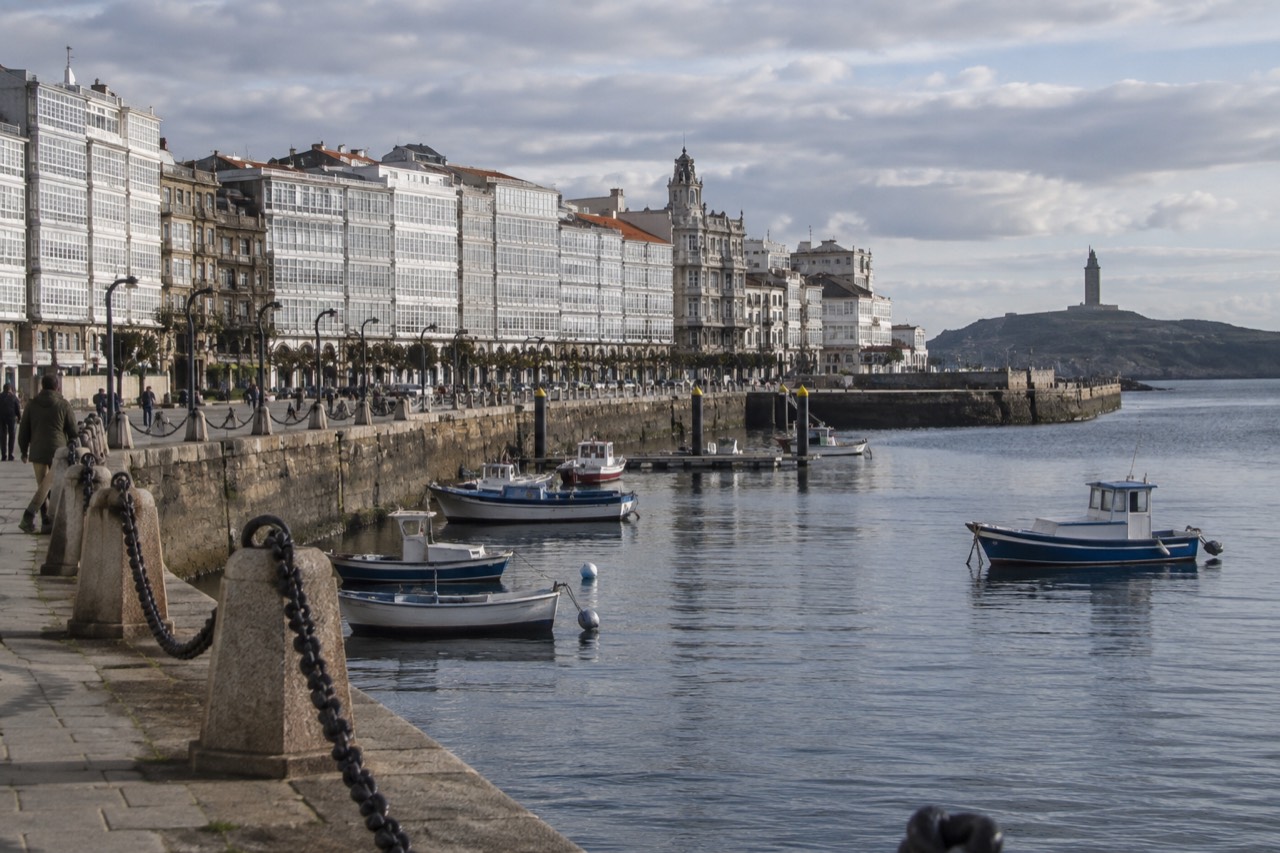
A Coruña is one of the day-trip destinations the research behind this site verified alongside Santiago de Compostela itself, and it sits on Galicia's Atlantic coast a short, direct train hop from the pilgrim city. Travellers finishing the Camino de Santiago often find themselves with a spare day in Santiago de Compostela and ask the obvious question: is the coast city worth the detour, or is the time better spent on the Costa da Morte or the Rías Baixas? The short answer is that A Coruña rewards the right kind of visitor, and this page lays out exactly which kind that is.
Before the specifics, one naming note. The city's canonical modern spelling in both Spanish and Galician is A Coruña, and the older Spanish form "La Coruña" still appears on signs and in older guides. Both name the same place. Nothing on this page should be read as describing a different city, and nothing here invents a figure: where the details behind the Santiago de Compostela Travel Guide do not carry a number, this page says so instead of guessing.
Is A Coruña Worth Visiting?
Yes, for most travellers with time to spare after reaching Santiago de Compostela, A Coruña is worth visiting: it is a genuine Galician Atlantic city with a seafront character, a historic old quarter and a working urban energy that the cathedral city, for all its beauty, does not have. The one caveat is weather and timing. The same wet, oceanic climate that greens the Camino also hits this coast, so the city is a better bet with a full free day than with a rushed half afternoon.
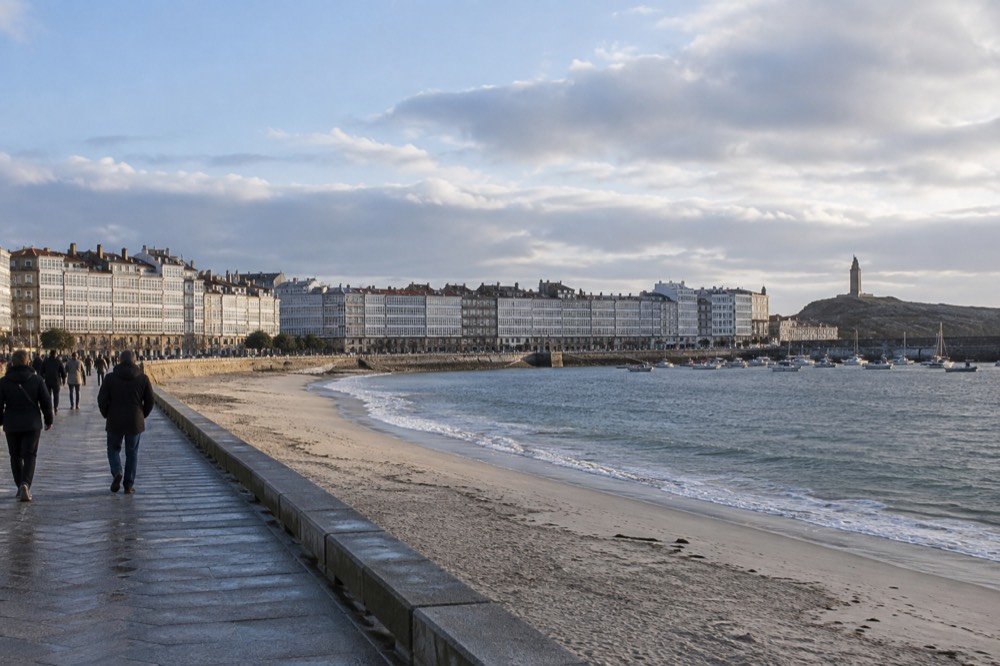
The honest framing is comparative. Santiago de Compostela is a compact, stone, UNESCO-listed old town built around one enormous cathedral; its daily rhythm is set by pilgrims arriving. A Coruña is bigger, more lived-in, arranged along its waterfront, and it has a city beach and promenade culture. Neither is a substitute for the other. The travellers who enjoy A Coruña most are usually those who have already seen Santiago de Compostela's core sights, have burned through the tapas bars of Rua do Franco, and want a different register of Galicia for a day.
The travellers who should skip it are those with only one or two nights in Santiago de Compostela total. If the itinerary is tight, the pilgrimage city itself plus one targeted outing will beat a rushed coast-city dash. The one day in Santiago de Compostela question comes first, and the answer to it shapes how much sense A Coruña makes.
There is also a seasonal angle. AEMET's climate data for the region shows a temperate oceanic pattern, wet year-round, wetter from October to March, driest in July and August. A seafront city is at its best in that drier window, when the promenade and the beach are usable, and at its most atmospheric, if less comfortable, in the wet months. This page won't print invented monthly rainfall figures for A Coruña, because none were officially published for the city.
How Do You Get From Santiago de Compostela To A Coruña?
The train is the practical answer: Santiago de Compostela and A Coruña are linked by direct regional and high-speed services, and the connection is a short hop on the rail network, short enough that the two cities function as an easy day-trip pair in either direction. The research behind this site confirms the direct link but does not carry a verified minute count for the journey, so check the operator's own timetable search before locking a plan rather than trusting any specific duration quoted in a blog.
That restraint matters. Timetabled minutes change with each schedule revision, and the verified pack deliberately records this route as a range, not a number. What is stable is the structure: no change of train is needed on this corridor, unlike the journey toward Porto, which has no direct rail line and requires changing at Vigo. A Coruña, in rail terms, is one of the easiest escapes from Santiago de Compostela there is.
The practical day-trip shape is simple. Take a morning train out, spend the middle of the day in A Coruña, and return in the evening. Because it is a city rather than a single monument, the visit works as a wander: the old quarter, the waterfront, the seafood lunch, the return. The city deserves, and comfortably fills, a full day at an unhurried pace.
For context on how this fits the wider region, the northern Spain itinerary question is the natural companion read, since A Coruña is one node in a Galicia circuit that also includes Vigo, Pontevedra, Lugo and Ourense, all of them verified destinations on this build.
If a guided outing appeals more than an independent train day, the roster below covers the strongest full-day options from Santiago de Compostela, led by the Costa da Morte excursion that this site rates as the single best coast day trip.
What Kind Of City Is A Coruña, Really?
A Coruña is a port and services city with a maritime promenade, a compact historic core and a reputation in Galicia for seafood, football and glass-galleried waterfront apartments, an urban, Atlantic identity quite distinct from Santiago de Compostela's ecclesiastical one. It is a place to walk a seafront, eat well and feel the scale of a real working city, rather than a place with one headline monument to queue for.
What this page will not do is invent specifics. The details below are confirmed for A Coruña as a day-trip destination and for the rail link, but opening hours, ticket prices and claims about specific attractions in the city are not officially published. So the guidance here is structural rather than itemized: plan A Coruña as a city walk plus a long seafood lunch, check any individual venue's own site before relying on it, and treat the seafront as the spine of the visit.
The contrast with Santiago de Compostela is the whole point of going. After days in a granite pilgrimage town whose centre closes early and whose rhythms follow the Cathedral's liturgy, arriving in a place with sea air and a working port gives the trip a second colour. Many Camino finishers describe exactly this appetite: something that is still Galicia, but not more of the same. Whether or not that appetite is yours decides most of the answer to is A Coruña worth visiting better than any list of sights could.
Timing within the day matters too. A seafront city shows best from late morning through afternoon, when the light is on the water. The wet-season caveat from the section above applies doubly here: a waterfront walk in driving rain is a different proposition from the same walk in July.
A Coruña Or The Coast Day Trips: Which One Fits?
If your spare day is your only day out of Santiago de Compostela, the Finisterre and Costa da Morte full-day tour is the stronger first choice for most visitors: it delivers the Atlantic cliffs, the lighthouse at what tradition calls the end of the world and the fishing villages of the Costa da Morte, with transport and guide handled. A Coruña is the better pick for a second spare day, for a rainy city day, or for anyone already done with the coast who wants urban Galicia instead.
The trade-off is city versus coastline. The Costa da Morte runs west of Santiago de Compostela toward Fisterra (Galician) or Finisterre (Spanish), and Muxía; both names are correct, and this site uses them interchangeably. That coast is the symbolic finish line for many pilgrims, the place where the walking traditionally ends at the sea, and the walk from Santiago to Finisterre has its own answer page. A guided bus tour over the same ground is the efficient version for anyone not up for two or three more walking days.
The Rías Baixas is the third leg of the triangle: winery country and mussel-boat water to the south, a softer, food-and-wine day compared with the wild Costa da Morte. The table below lays out the three realistic spare-day shapes from Santiago de Compostela, using prices and ratings exactly as the operator listings publish them.
| Day out from Santiago de Compostela | Type | From (per person) | Rating | Reviews |
|---|---|---|---|---|
| Finisterre and Costa da Morte complete tour | Full-day coast excursion, guided | $60 | 4.8 | 860 |
| Rías Baixas with winery and optional mussel boat | Full-day wine and boat excursion | $54 | 4.8 | 322 |
| Queimada show and tasting experience | Evening city experience, in Santiago de Compostela | $17 | 4.4 | 69 |
| A Coruña by train | Independent city day trip | Train fare, not verified in this site's research | n/a | n/a |
Note the last row's honesty: this site does not publish a train fare for the A Coruña run because none was verified for that exact journey. The airport bus fare for Santiago de Compostela's own SCQ airport is documented at 1 EUR to the driver on line 6A as of late September 2026, with a new contract expected to raise that, but that figure belongs to that route and transfers to no other journey.
For the coast day, the standout product in this site's roster is the Finisterre and Costa da Morte complete tour, a full-day guided excursion from Santiago de Compostela rated 4.8 from 860 reviews at a from-price of $60 per person, with the live price and current availability on the operator's live listing. Book ahead in the July and August peak.
How Should You Fit A Coruña Into A Santiago de Compostela Trip?
Fit A Coruña in as a post-Camino or post-sightseeing day, not as a competitor to Santiago de Compostela's essentials: most itineraries work best with two or three nights in the cathedral city first, the Cathedral, the old town and the pilgrim office taken care of, and then one clear spare day handed either to A Coruña by train or to a coast excursion. Trying to squeeze both the city and the coast into one day short-changes both.
The reasoning is logistical. The Cathedral's own arrangement currently deserves the first chunk of any visit: entry to the basilica is free, the museum runs roughly 10:00am to 8:00pm, and the rooftop tour costs EUR15 general or EUR12 reduced on the Cathedral's own ticketing. There is also a live change to know about: pilgrim masses at 9:30am, noon and 7:30pm relocate from the Cathedral's High Altar to the nearby Church of San Agustín from 16 October 2026, with only the 7:30am mass staying in the Cathedral's Communion chapel. None of that closes the Cathedral to visitors, but it is the kind of detail that rewards checking whether Santiago de Compostela is worth visiting with current information rather than stale assumptions.
A second practical angle: 2027 is the next Holy Year, with the Holy Door opening on 31 December 2026 and the Xacobeo running through 31 December 2027. Crowds in Santiago de Compostela will build toward that. A Coruña, as an overflow day, becomes more useful, not less, in a Holy Year itinerary, because it is a pressure valve that no other pilgrim is queuing for.
For Camino planners rather than city tourists, the same spare-day logic applies at the end of the walk. The how long the Camino takes and average Camino cost pages cover the walk itself; this page's advice is only about the day after the Compostela is collected at Rua das Carretas 33, when legs are stiff and a train beats trail shoes.
The one pattern to avoid is the double-header: A Coruña in the morning, a Costa da Morte tour in the afternoon. The coast tours are full-day products with fixed departure times from Santiago de Compostela, so they cannot share a day with a second city. Choose one per day, and if there are two spare days, do both.
Common Questions About A Coruña
Is A Coruña worth visiting?
Yes, for most travellers with a spare day after Santiago de Compostela, especially in the drier July to August window or on a full free day. It offers urban, seafront Galicia as a contrast to the cathedral city. Skip it only if your total time in Santiago de Compostela is one or two nights.
Is A Coruña the same city as La Coruña?
Yes. A Coruña is the current canonical spelling in both Spanish and Galician; La Coruña is the older Spanish form still seen on some signs and in older guides. Both name the same city on Galicia's Atlantic coast.
How do you get from Santiago de Compostela to A Coruña?
By direct train: the two cities are connected by direct regional and high-speed services and the route is a short hop. This site's research confirms the direct link but not a verified minute count, so check the operator's timetable search for current journey times before planning.
A Coruña or Finisterre: which is the better day trip?
For a single spare day, most visitors are better served by the Finisterre and Costa da Morte full-day tour, which handles transport and guide along the Atlantic coast. A Coruña suits a second spare day, a rainy city day, or travellers who want urban Galicia rather than cliffs and fishing villages.
Is A Coruña a good day trip in the rainy season?
It can be, with expectations set. AEMET's regional climate data shows wet conditions year-round, wetter from October to March. A city with covered streets, seafood restaurants and museums is a more forgiving rainy-day shape than an exposed coastal excursion, though any specific venue's hours should be checked on its own site.
Can you visit A Coruña and the Costa da Morte on the same day?
Not realistically as a tourist. The Costa da Morte excursions are full-day guided tours departing from Santiago de Compostela, and A Coruña deserves a full day of its own. Give each its own day if the itinerary allows.