St James Santiago de Compostela
Santiago de Compostela exists because of one man: St James the Greater, the apostle whose presumed tomb under the Cathedral has drawn pilgrims for more than a thousand years. This guide explains who he was, what tradition says happened to him, and how the city celebrates him now.
Short answer
St James the Greater, one of the twelve apostles of Jesus, is the figure beneath Santiago de Compostela. Tradition holds that his remains were brought by boat to Galicia after his execution in Jerusalem and discovered there in the early Middle Ages, whereupon a cathedral was raised over the spot and a city grew around it. The city's name literally means St James of the field of the star.
Santiago de Compostela, the pilgrim cathedral city in Galicia, northwest Spain, owes its entire existence to a single Galilean fisherman. St James the Greater, son of Zebedee and one of the twelve apostles, is the reason this granite city of arcaded squares and tolling bells stands where it stands, why hundreds of thousands of people walk across Spain and Portugal every year to reach it, and why the largest of its many festivals falls each 25 July. The Cathedral's own liturgy pages and the Oficina del Peregrino's published material together sketch the story, and this guide from the Santiago de Compostela Travel Guide editors lays out what is tradition, what is verified practice, and what a visitor can actually see and do today.
Who Was St James And Why Is He In Santiago de Compostela?
St James the Greater was one of the twelve apostles of Jesus, a Galilean fisherman and the brother of St John the Evangelist, executed in Jerusalem according to the Acts of the Apostles. Galician tradition adds that he had preached in Roman Iberia and that after his death his disciples carried his body by boat to northwestern Spain, where it was lost and then, tradition says, rediscovered centuries later, prompting a church, then a cathedral, then a city.
The name of the city carries this whole story inside it. "Santiago" is the medieval Spanish contraction of Sanctus Iacobus, Saint James, while "Compostela" is popularly explained as a compound of campus stellae, the field of the star, the light that tradition says guided the hermit Pelayo to the forgotten tomb. Scholars debate that etymology, but the popular version is the one told on the city's own tourism pages, and it is the version every local schoolchild learns.
What matters historically is verifiable in a different way. By the early Middle Ages a cult site at this spot was drawing pilgrims from across Europe, and the pilgrimage infrastructure, roads, bridges, hospices and hospitals, some of which still stand, is the ancestor of the modern Camino. The Old Town that grew around the shrine was inscribed by UNESCO in 1985, and the Camino Frances together with the Northern Routes received a separate UNESCO inscription of their own in 1993. They are two distinct listings, never one combined date, a detail many summaries get wrong.
| Symbol Or Title Of St James | What It Depicts | Where To Spot It In The City |
|---|---|---|
| Santiago Peregrino | The apostle as a pilgrim, staff, gourd, wide-brimmed hat, scallop shell | Statues and reliefs across the Old Town, notably on the Obradoiro facade |
| Santiago Matamoros | The legendary mounted warrior figure from medieval battle lore | Historic art inside the Cathedral Museum collections |
| The scallop shell | The pilgrim's badge of St James, carried since the Middle Ages | Markers along Camino routes, jewelry and emblems in shops citywide |
| The Cross of St James | A sword-shaped cross ending in a fleur-de-lis | On institutional emblems and in the Cathedral's carved detail |
The lore grew with the pilgrimage itself. Medieval pilgrims adopted the scallop shell as proof of arrival because the shell is native to Galician shores, and that badge survives today, stamped onto markers from the Pyrenees to the Atlantic, sold in the shops of Rua do Franco, and set into the pavements of the Old Town. The apostle as pilgrim, staff in hand, is the single most repeated figure in the city's sculpture.
Where Is St James Actually Buried Under The Cathedral?
Tradition and the Cathedral itself hold that the remains of St James lie in a crypt directly beneath the Cathedral's main altar, where a silver reliquary sits above the site identified as the apostle's early tomb. The relics were hidden at a time of feared raids and later lost and restored again to the crypt, which is the arrangement visitors see now. Whether the bones are genuinely the apostle's is a matter of faith rather than archaeology.
The layout is straightforward to describe. Pilgrims enter the Cathedral free of charge, at the daily opening window of roughly 7:00am to 9:00pm, and the two acts most of them came for are the embrace and the tomb. The embrace is the ritual hug of the seated medieval statue of St James on the altar screen above the High Altar, reached by steps behind the altar, traditionally performed by pilgrims who have just arrived. The crypt below holds the reliquary. General entry to the basilica is free.
The question of authenticity deserves honesty. No document chain ties the remains to the apostle's lifetime; the identification rests on an early medieval discovery narrative and on unbroken devotional tradition since. Visitors who want the skeptical as well as the devotional version can find both in the Cathedral's museum collections, whose displays walk through the discovery story, the medieval pilgrimage and the architecture that houses it all. The sibling page asking is St James actually buried in Santiago takes the evidence in more detail.
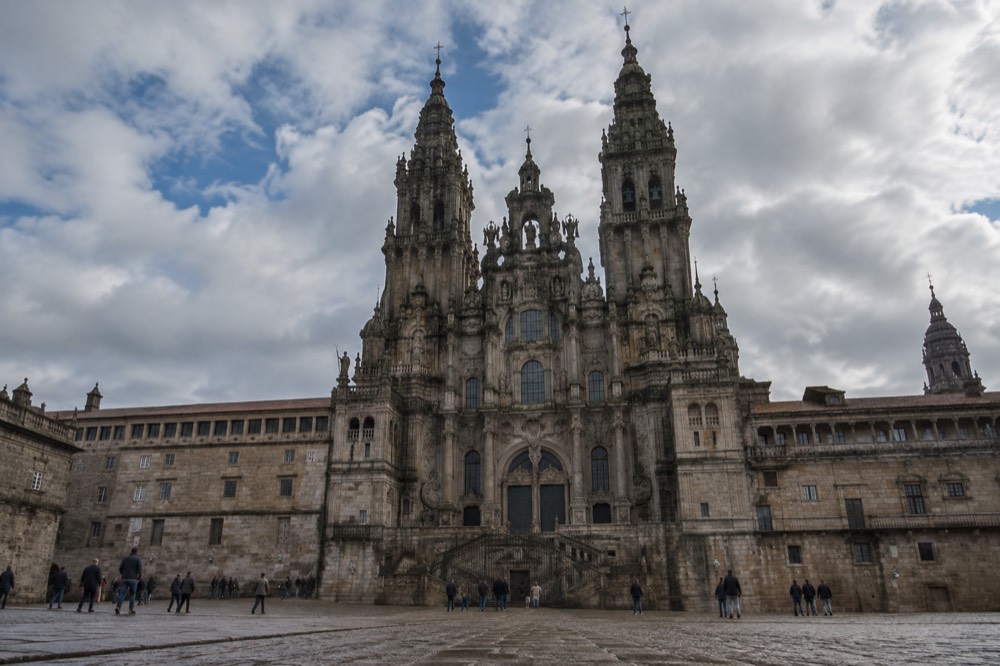
The Cathedral is also a working building site in 2026, which changes what pilgrims should expect. Restoration of the cimborrio, the crossing dome, has interior scaffolding over it, and the works preparation for the 2027 Holy Year have remodelling under way at the main chapel. None of this closes the basilica, the tomb or the embrace, but two related things have shifted, and both are covered in detail further down this page: the Botafumeiro is out of action, and most pilgrim masses move to a nearby church from 16 October 2026.
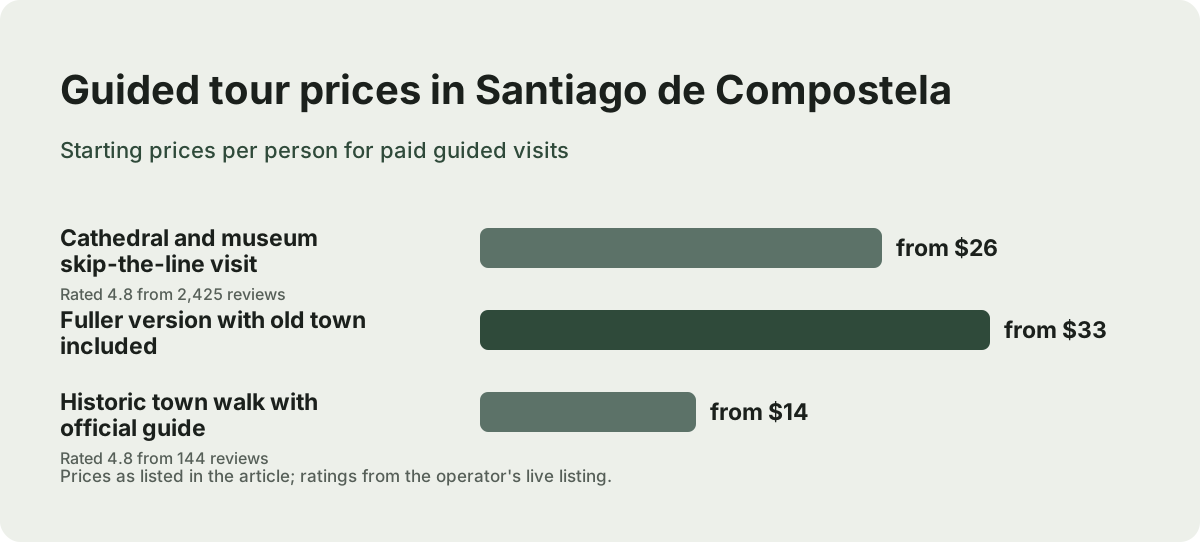
A guided visit ties the threads together, and the paid options range from a straightforward skip-the-line cathedral and museum visit from $26 per person, rated 4.8 from 2,425 reviews on the operator's live listing, to a fuller version with the old town included from $33.
What Is The Camino de Santiago And Why Does It End At His Tomb?
The Camino de Santiago is the network of medieval pilgrimage routes, today waymarked and walked by hundreds of thousands of people annually, that converges on the tomb of St James in Santiago de Compostela. The Oficina del Peregrino recorded 530,987 Compostela certificates issued in 2025, a record year, and to earn that certificate a pilgrim must cover at least the final 100km on foot or horseback, or 200km by bicycle, collecting two stamps per day in a pilgrim passport.
The certificate, the Compostela, is the institutional proof of a completed pilgrimage. It is issued in person only, at the Pilgrim's Office at Rua das Carretas 33, and only to those who have walked, ridden or cycled the required minimum distance on a recognized route with a properly stamped credencial. The rules are short but strictly applied, and the pilgrim office guide on this site explains the process step by step, from queueing to the Latin text of the certificate itself.
| Compostela Requirement | Rule As Published By The Oficina del Peregrino |
|---|---|
| Minimum distance on foot or horseback | Last 100km of a recognized route |
| Minimum distance by bicycle | Last 200km of a recognized route |
| Stamp requirement | At least two stamps per day from official stamping points |
| Collection | In person only, at Rua das Carretas 33, Santiago de Compostela |
| Certificates issued in 2025 | 530,987, a record year |
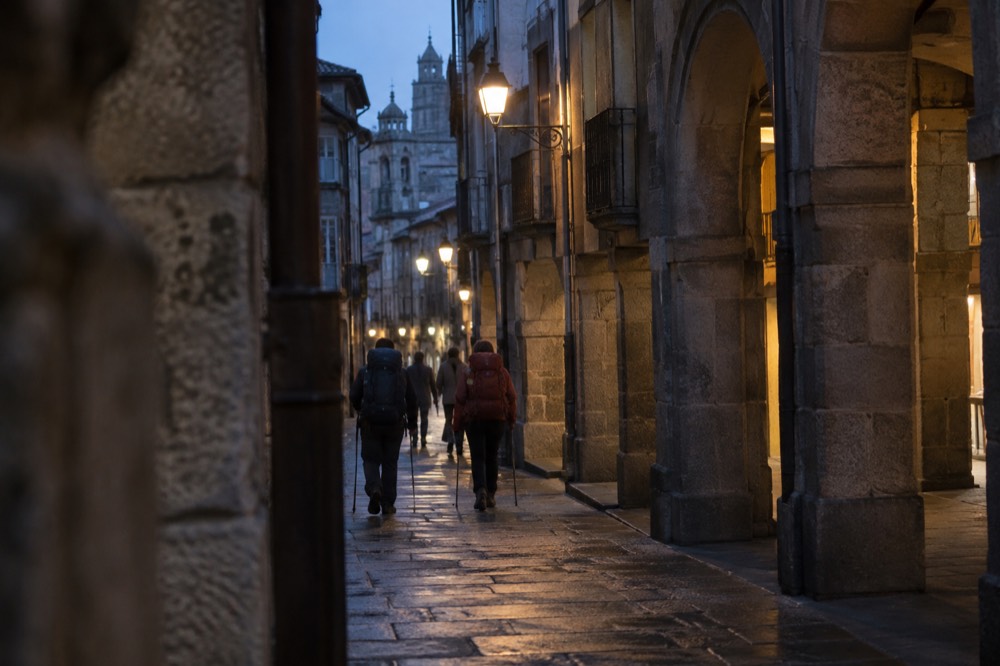
The routes themselves are a family rather than a single path. The Camino Frances is the classic trunk route across northern Spain; the Camino Portugues arrives from Lisbon and Porto; the Camino del Norte, the Camino Primitivo and the Camino Ingles each approach from a different coastline or port. Each has its own character, difficulty and staging, compared in this site's Camino routes overview and mapped in the Camino de Santiago map. The final stretch most first-time pilgrims choose, Sarria to Santiago, exists precisely because it measures just over the 100km minimum.
Accommodation along the way runs from municipal albergues with bunks in the low double digits of euros to private hostels and small hotels, a spectrum covered in the albergues and accommodation guide. What unites every route is the destination logic: they all exist to bring a pilgrim to the apostle's tomb, and the final walk into the city, down through the Obradoiro facade and into the Cathedral, is the moment the whole medieval system was built to deliver.
Walking the city on arrival is its own reward, and an official-guide historic walk is the practical way to see the St James iconography in context. The guided historic town walk with an official guide runs from $14 per person, rated 4.8 from 144 reviews on the operator's live listing, and it covers the Obradoiro, the Quintana and the squares where the apostle's story is carved in stone. Check availability
When Is The Feast Of St James In Santiago de Compostela?
The Feast of St James falls on 25 July every year, a fixed date, and it is the city's biggest annual celebration: a Pontifical Mass at the Cathedral, often with the national offering to the Apostle, followed by fireworks, orchestral concerts, folk events and street festivities across the Old Town. In years when 25 July lands on a Sunday, the celebration expands into a Jacobean Holy Year, and the next one is 2027, not 2026.
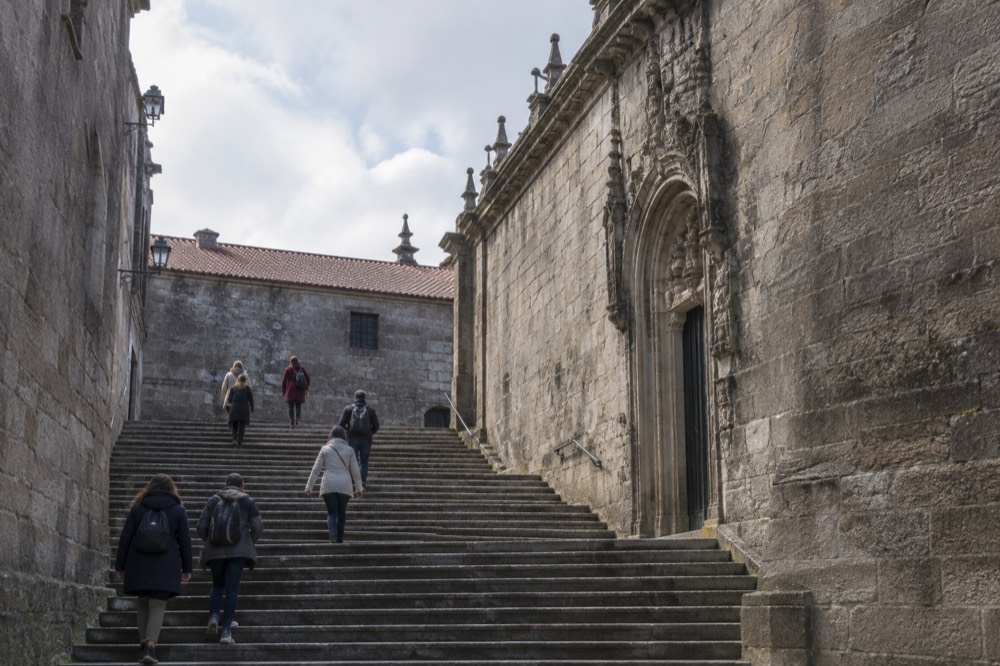
The Holy Year mechanics are worth getting right because so much online copy gets them wrong. A Xacobeo is declared whenever the feast of 25 July falls on a Sunday, following an irregular cycle set by the calendar. The Holy Door on the east flank of the Cathedral, on Praza da Quintana, stays closed in ordinary years and is opened solemnly for Holy Years. The next Holy Door opening is on 31 December 2026, with the Holy Year then running through 31 December 2027. The Holy Year 2027 guide on this site tracks what that means for crowds, tickets and accommodation.
For planning purposes, the feast week is both the best and the most demanding time to be in the city. Events listed in contemporary city coverage include the civic and religious ceremonies, public concerts and the fireworks display that closes the festa. The practical trade-offs of late July, crowds, accommodation prices and Galicia's summer weather, are worked through in the dedicated feast day page and the best time to visit advice elsewhere on this site.
| Key Date In The St James Calendar | What Happens |
|---|---|
| 25 July, every year | Feast of St James, Pontifical Mass, national offering, concerts, fireworks |
| 31 December 2026 | Holy Door opens solemnly on Praza da Quintana, ceremony planned for early evening |
| 1 January to 31 December 2027 | Jacobean Holy Year, Xacobeo 2027 |
| Any year when 25 July falls on a Sunday | Holy Year declared, Holy Door opened |
Can You See The Botafumeiro Swing In Santiago de Compostela?
No, not currently. The Botafumeiro, the giant incense censer hung from the Cathedral crossing, is out of action while scaffolding for the restoration of the cimborrio covers its hanging mechanism, a status the Cathedral confirmed in writing on 5 September 2026 with no published return date. It normally swings at twelve fixed solemnities a year and at no daily mass, so even in ordinary times it was never a daily spectacle.
In normal operation, the Cathedral Chapter guarantees the Botafumeiro's swing at twelve solemnities annually, including Epiphany on 6 January, Easter Sunday, Pentecost, the Feast of St James on 25 July, the Assumption on 15 August, All Saints on 1 November, the Immaculate Conception on 8 December, Christmas Day and the Translation of the Apostle on 30 December. Outside those dates it flew only by private group request, at an indicative cost of around 450 to 500 euros, a private option that is itself suspended while the mechanism is out of action. Nobody planning a 2026 visit should book or promise around it.
The suspension is mechanical, not liturgical. The censer itself is intact and the ritual continues on paper; it is the dome restoration, the same project preparing the Cathedral for the 2027 Holy Year, that covers the swinging apparatus. This site's dedicated Botafumeiro page carries the full solemnity list, the current status, and the history and engineering of a censer famous for the sheer force of its arc.
What Are The Pilgrim Mass Times In Santiago de Compostela Cathedral?
The Cathedral's daily pilgrim masses are held at 7:30am, 9:30am, 12:00 noon and 7:30pm, all currently at the High Altar, but from 16 October 2026 the 9:30am, noon and 7:30pm masses relocate to the nearby Church of San Agustin while main-chapel remodelling continues, and only the 7:30am mass stays inside the Cathedral, in its Communion chapel. Visitors from mid-October 2026 onward should plan around the relocated schedule.
The relocation is temporary and tied to the Holy Year preparation works, and the Cathedral has not published an end date for it. What does not change is the basilica itself: it remains open daily from roughly 7:00am to 9:00pm with free general entry, and the tomb, the embrace and the museum visits all continue. The pilgrim mass guide on this site keeps the full detail, and the cathedral tickets and opening hours page covers what needs booking versus what is free.
| Pilgrim Mass | Time | Location Until 15 October 2026 | Location From 16 October 2026 |
|---|---|---|---|
| Early morning | 7:30am | Cathedral, High Altar | Cathedral, Communion chapel |
| Morning | 9:30am | Cathedral, High Altar | Church of San Agustin |
| Midday | 12:00 noon | Cathedral, High Altar | Church of San Agustin |
| Evening | 7:30pm | Cathedral, High Altar | Church of San Agustin |
What Can You See In Santiago de Compostela Connected To St James?
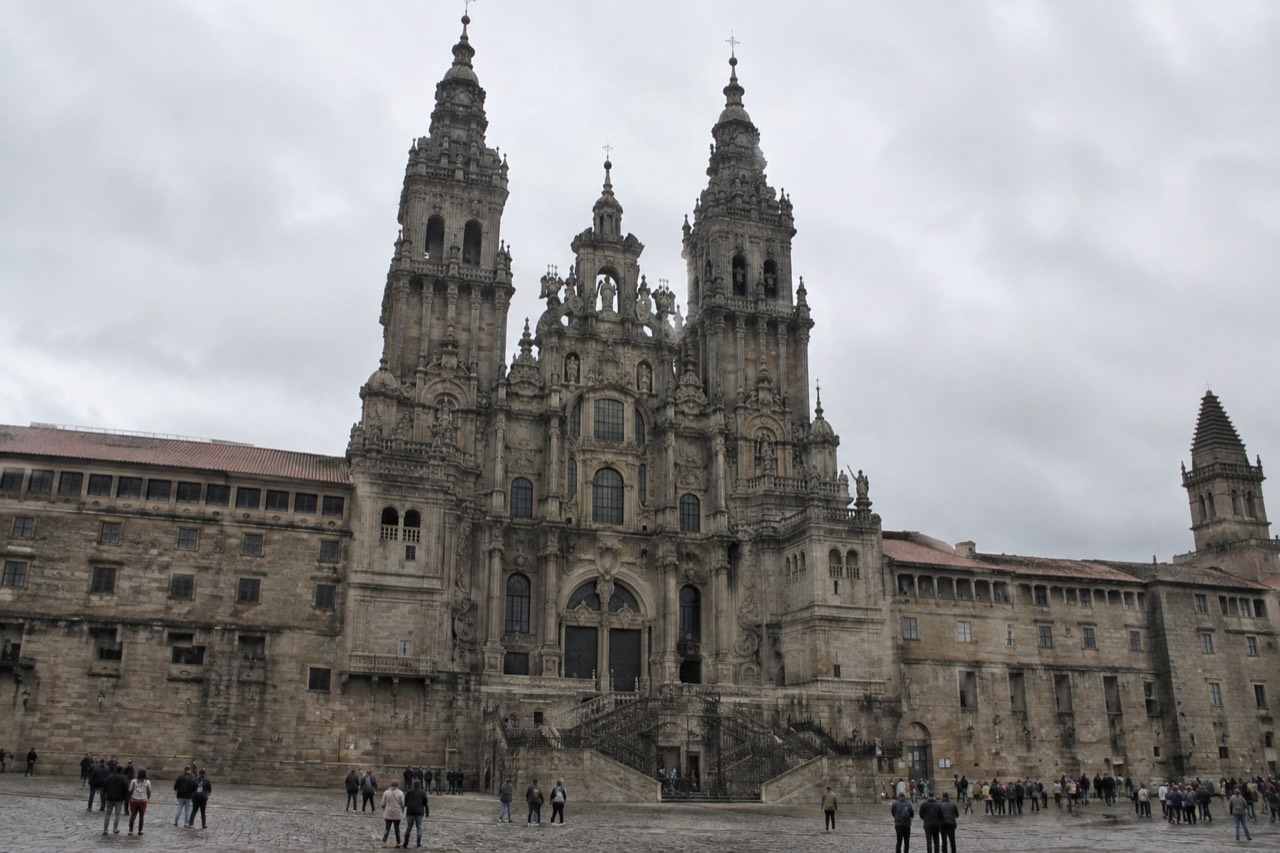
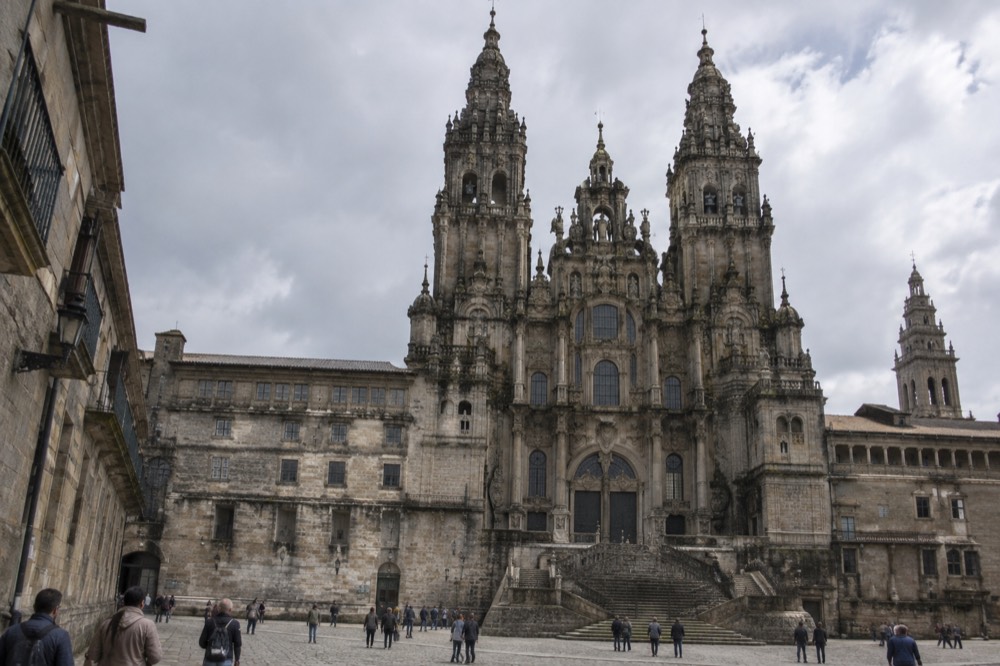
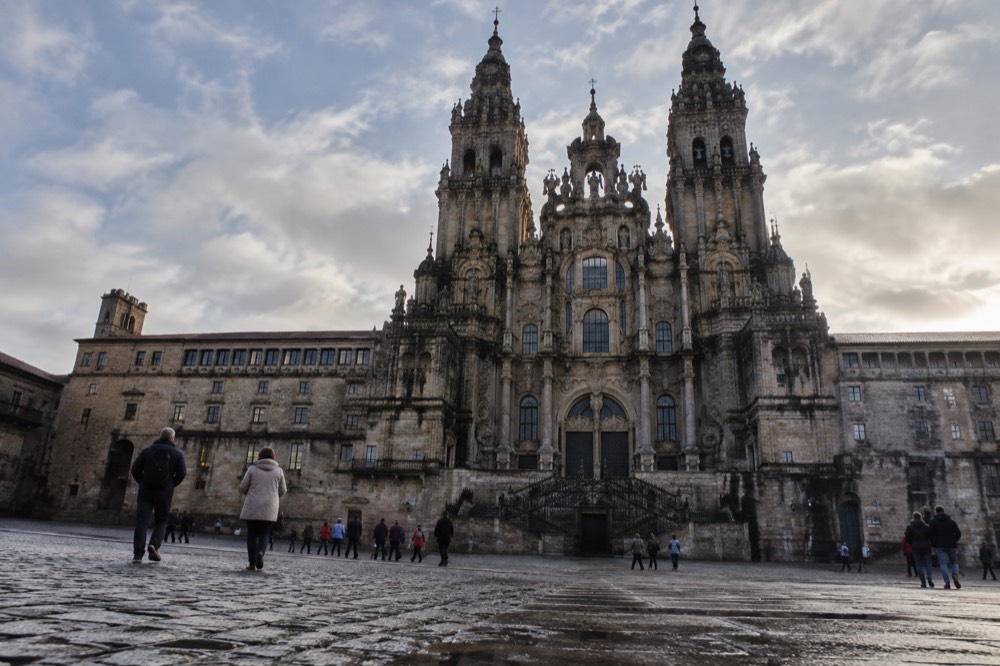
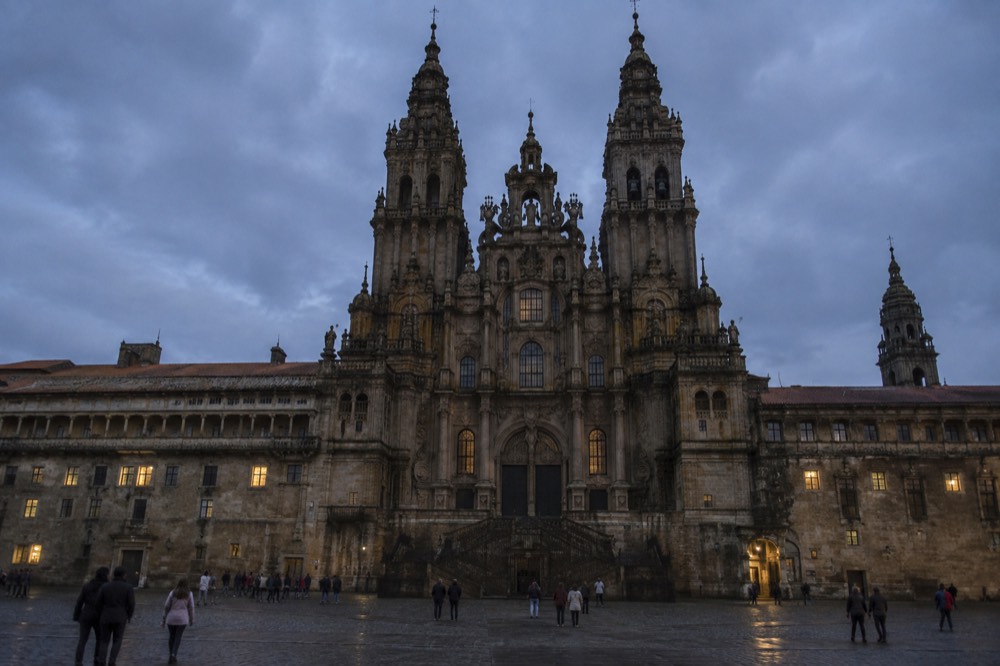
The visible St James trail runs from the Obradoiro facade, where the pilgrim apostle stands in the central niche greeting arrivals, through the embrace statue and the crypt reliquary inside the Cathedral, out to the Holy Door on Praza da Quintana, and up to Monte do Gozo, the hill with the monument marking where pilgrims traditionally first sight the city. Every piece of it is walkable in a day inside the Old Town and its immediate surroundings.
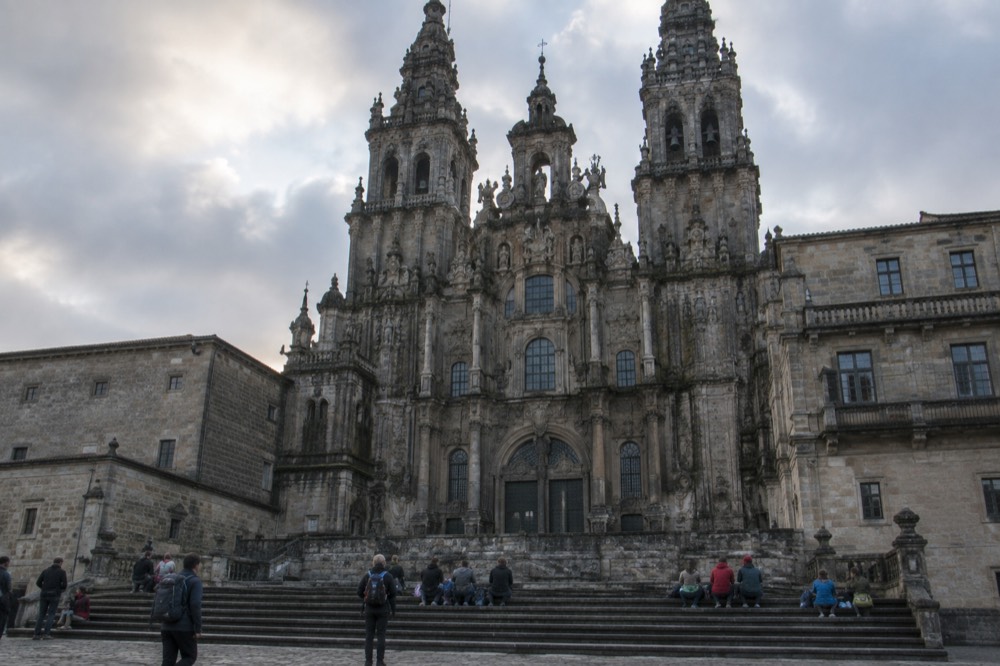
The Obradoiro facade is the theatrical opening. Its baroque staging places St James above the central door, pilgrim's staff in hand, flanked by prophets and angels, and it is the image that greets everyone stepping into Praza do Obradoiro from the west. Inside, the sequence of embrace, altar and crypt is the devotional core. Around the corner, the Holy Door on the Quintana side is normally a sealed portal except in Holy Years, when it becomes the pilgrims' ceremonial entrance. The carving around that door shows the apostle and his brother in stone, and this site's Praza da Quintana page explains the iconography piece by piece.
The Cathedral's paid visits add depth to what free entry shows. The museum, open daily around 10:00am to 8:00pm with the ticket office closing 30 minutes earlier, charges a range of 9 to 23 euros depending on ticket type. The rooftop tour, the Cubiertas and Torre de la Carraca visit run by the Cathedral itself, costs 15 euros general and 12 reduced, runs about 60 minutes, includes about 140 steps and reaches a viewing height of roughly 72 metres; it also includes free access to the museum's permanent collection and other Cathedral spaces, valid for seven days. The rooftops visit is the one that shows the Botafumeiro's whole swing arc, currently stationary, from above the crossing.
| St James Sight In The City | Where | Access |
|---|---|---|
| The pilgrim apostle in the facade niche | Obradoiro facade, Cathedral west front | Free, visible from Praza do Obradoiro at any hour |
| The embrace statue of St James | Behind the High Altar, Cathedral | Free, stairs behind the altar |
| The crypt and silver reliquary | Beneath the main altar, Cathedral | Free with basilica entry |
| The Holy Door | Praza da Quintana, Cathedral east flank | Free to view; ceremonial entry in Holy Years |
| Monte do Gozo pilgrim monument | Hill about outside the city | Free, reachable on foot or by local transport |
Beyond the Old Town, the St James story extends down the Galician coast. Tradition continued the apostle's journey past Santiago to Fisterra, the Roman-era end of the world, and Muxia, where a legendary stone boat is said to have carried his body ashore, which is why many pilgrims keep walking three further days after collecting the Compostela. The full-day Finisterre, Muxia and Costa da Morte excursion from $59 per person, rated 4.7 from 2,312 reviews on the operator's live listing, is the practical way to see that final chapter, and this site's Fisterra and Muxia pages cover both for travellers making the trip under their own power.
How Do Modern Pilgrims And Visitors Experience St James Today?
Today St James is experienced through three overlapping crowds: long-distance pilgrims arriving with credencials after weeks on the road, short-stay visitors absorbing the city's UNESCO-listed Old Town, and Galicians for whom 25 July is a regional holiday and family occasion. The practical common ground is the Cathedral's free basilica, the ticketed museum and roof visits, and a city compact enough to walk end to end in well under an hour.
Arrival logistics shape the experience. Most pilgrims come in on foot, and the arriving in Santiago on the Camino guide walks the final kilometres and first hours. Others arrive by air into Santiago-Rosalia de Castro airport, a short bus ride from the centre, or by rail, and this site covers the airport, the Madrid train connection and the Porto-to-Santiago route on their own pages for anyone planning the approach from outside Galicia.
| Way Visitors Engage With St James | Typical Cost Or Requirement |
|---|---|
| Basilica entry, tomb and embrace | Free, daily roughly 7:00am to 9:00pm |
| Cathedral Museum visit | 9 to 23 euros depending on ticket type |
| Rooftop and Carraca tower tour | 15 euros general, 12 reduced, timed slots |
| Compostela certificate | Free, requires the distance and stamp rules above |
| Historic town walk with official guide | From $14 per person on the operator's live listing |
The eating and staying layers have their own St James connections. The almond-and-St-James-cross Tarta de Santiago, stamped with the cross of the order that grew around the pilgrimage, is the canonical finish-line dessert and has its own page in this site's coverage of tarta de Santiago alongside the wider Galician food advice. Where to eat and where to sleep are covered in the dedicated where to eat and where to stay guides, and the city has charged a municipal tourist tax since 1 October 2025, a surcharge on Galicia's tourist-stay tax ranging from 1 EUR per person per night (capped at 5 nights) in private albergues, campsites and tourist apartments to 2.50 EUR in five-star hotels, with under-18s and stays in Xunta-run public albergues exempt.
For a city of its size, Santiago de Compostela punches far above its weight, and the reason is never the climate or the coastline alone. It is that for well over a thousand years people have believed an apostle lies beneath the altar, and every scallop shell on every pavement marker, every pilgrim's hug of the statue, and every 25 July firework exists because of that belief. The tours below are the practical ways to see that belief made visible, on foot in the Old Town or out along the coast where the legend ends.
For visitors who want just one booking to anchor a short stay, the historic town walk with an official guide is the strongest fit for this page's subject: it puts the St James iconography of the Obradoiro, the Quintana and the Old Town squares into a single guided narrative, from a starting price of $14 per person on the operator's live listing.
Common Questions About St James And Santiago de Compostela
Who was St James in Santiago de Compostela?
St James the Greater, one of the twelve apostles and a Galilean fisherman, is the apostle whose presumed remains tradition says were brought to Galicia and rediscovered in the early Middle Ages at the site where Santiago de Compostela now stands.
Where is St James buried?
Tradition and the Cathedral both place his remains in the crypt beneath the Cathedral's main altar, beneath a silver reliquary. The identification rests on devotional tradition rather than archaeological proof.
When is the Feast of St James?
Every 25 July, a fixed date, marked by a Pontifical Mass, the national offering, concerts and fireworks in Santiago de Compostela. When 25 July falls on a Sunday the city celebrates a Holy Year; the next is 2027, with the Holy Door opening on 31 December 2026.
Is the Botafumeiro working right now?
No. It is suspended under cimborrio restoration scaffolding, confirmed in writing by the Cathedral on 5 September 2026, with no published return date. It normally flies only at twelve fixed solemnities a year, never daily.
What do pilgrims have to do to get the Compostela?
Walk at least the last 100km, or ride a horse that distance, or cycle the last 200km of a recognized route, collecting two stamps per day in a pilgrim passport, then present it in person at the Pilgrim's Office at Rua das Carretas 33.
Can you see the Holy Door?
Yes, from Praza da Quintana at any time, but it is a sealed portal outside Holy Years. It opens ceremonially on 31 December 2026 for the 2027 Jacobean Holy Year and stays open through 31 December 2027.