Galicia Spain: A Travel Guide To Santiago de Compostela And The Green Northwest
Galicia Spain rewards the traveller who arrives for the pilgrim city of Santiago de Compostela and stays for the coast, the canyons and the octopus. Here is how to plan it.
Short answer
Base yourself in Santiago de Compostela for at least three days, one for the Cathedral and old town, one for a Costa da Morte or Rias Baixas day trip, and one for an inland option. Visit in July or August for the driest weather, or May and June for fewer crowds. Fly into Santiago de Compostela airport or take the roughly three to four hour high-speed train from Madrid.
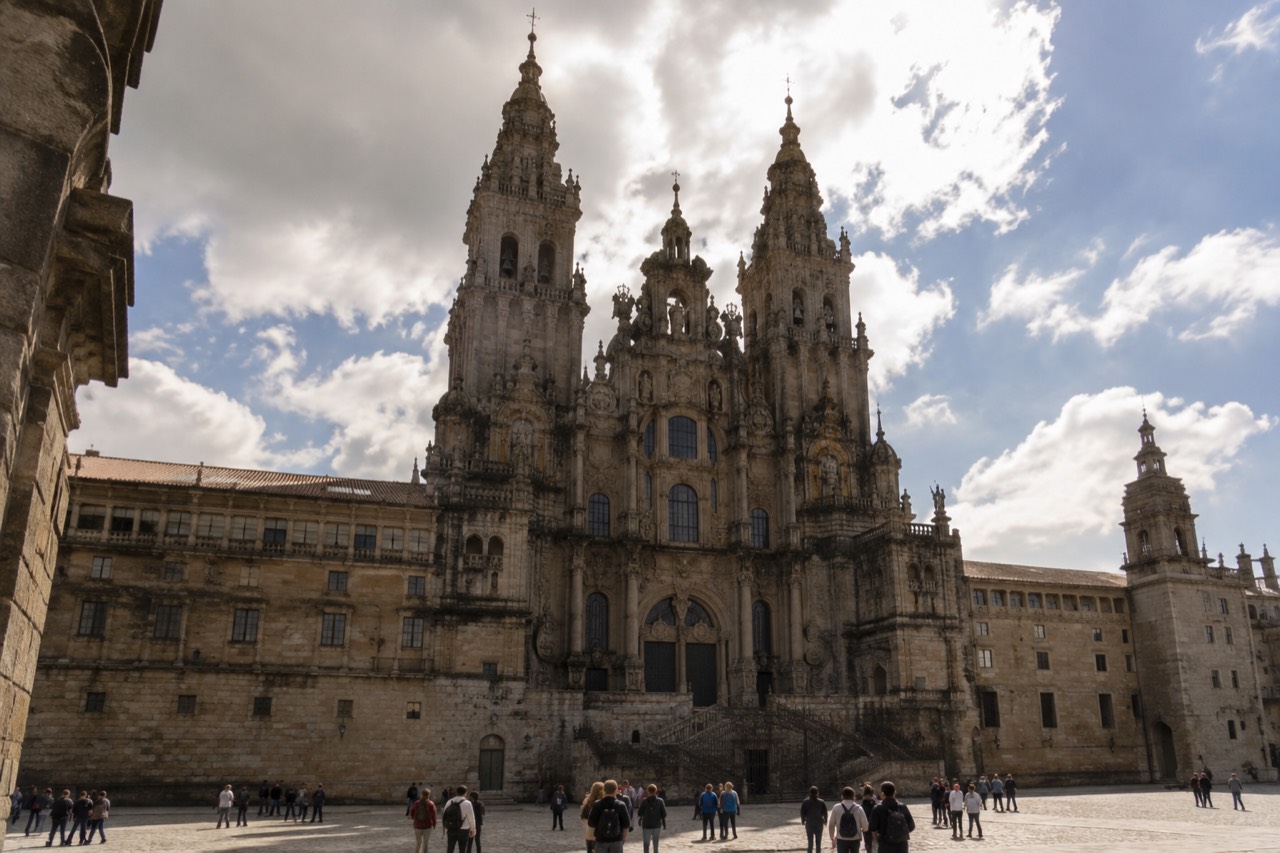
Galicia Spain sits at the exact point where most Camino itineraries end, and it is far more than a finish line. The region holds the pilgrim cathedral city of Santiago de Compostela, a UNESCO World Heritage old town, some of the seafood cooking Spain is proudest of, and a coastline of drowned river valleys that the Romans believed ran to the world's end. The Oficina del Peregrino's own figures recorded 530,987 Compostela certificates issued in 2025, a record year, which tells you how many people now arrive here on foot and then discover they have barely scratched the region. This guide, from the Santiago de Compostela Travel Guide editors, covers the whole of Galicia but keeps the city as its anchor, because nearly every Galicia trip runs through it.
What Is Galicia Spain And Where Is It?
Galicia Spain is the autonomous community occupying the country's green northwest corner, framed by the Atlantic on two sides and the Portuguese border to the south, with the pilgrim cathedral city of Santiago de Compostela at its heart. It is a wet, Atlantic-facing region of estuaries, granite towns and its own Galician language, and it belongs firmly to Spain even though it feels, eats and rains differently from the rest of the country.
Four provinces make up the region: A Coruna, Lugo, Ourense and Pontevedra. Santiago de Compostela itself carries the region's administrative weight, and the city's Cathedral has been the destination of the Camino de Santiago since the Middle Ages. The Old Town was inscribed on the UNESCO World Heritage list in 1985, and the Camino Frances with the Routes of Northern Spain received a separate inscription in 1993.
What surprises most first-time visitors is the landscape. This is not the dry, sun-baked Spain of postcards. AEMET's climate data for the Santiago de Compostela station shows annual precipitation on the order of 1,690 to 1,890mm, which is more than falls on most of Britain. The result is a region of deep green fields, eucalyptus and oak, mossy stone walls and raised granite granaries called hórreos, dotted along almost every rural lane.
Culturally, Galicia is bilingual. Street signs in Santiago de Compostela read "Praza do Obradoiro" and "Rua do Franco" in Galician first, and the local language is closer to Portuguese than to Castilian Spanish. The region's identity shows up on the plate too: octopus rather than paella, Albarino white wine rather than Rioja, and a Celtic-tinged folk tradition complete with bagpipes, the gaita galega.
How Many Days Do You Need In Galicia?
Three days is the realistic minimum: one for Santiago de Compostela's old town and Cathedral, one for a coastal day trip toward Fisterra or the Rias Baixas, and one for an inland option such as Lugo or the Ribeira Sacra canyons. Five days lets you add the Cies Islands off Vigo without rushing, while a full week allows a proper Galicia road trip across all four of the region's provinces.
The single-city version is entirely viable. A classic first pattern pairs two days in Santiago de Compostela with one or two organized day trips, and the tour roster backs this up: the Finisterre and Costa da Morte full-day excursions, the Rias Baixas winery and mussel-boat trips and the Ribeira Sacra cruise all depart from the city and return the same evening.
Walkers finishing the Camino should budget differently. Many pilgrims take a rest day in the city before doing anything else, and the region is generous with those: beaches at the Rias Baixas, hot springs around Ourense and quiet monasteries inland. The editors' suggested split, for a five-day non-pilgrim trip, is two city days, one Costa da Morte day, one Rias Baixas day and one flexible day for weather, because it will rain on at least one of them.
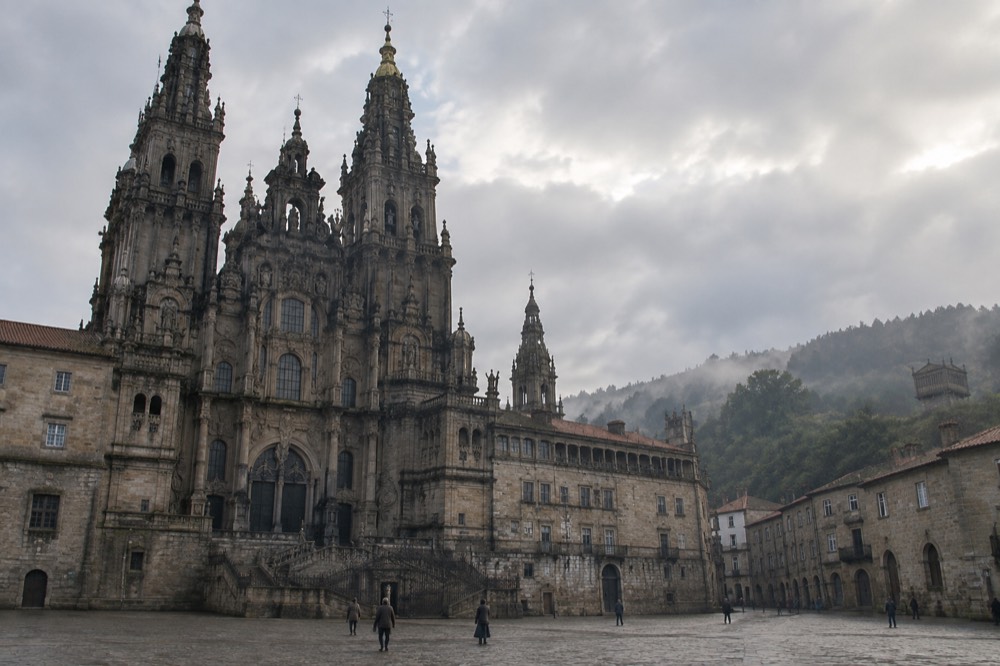
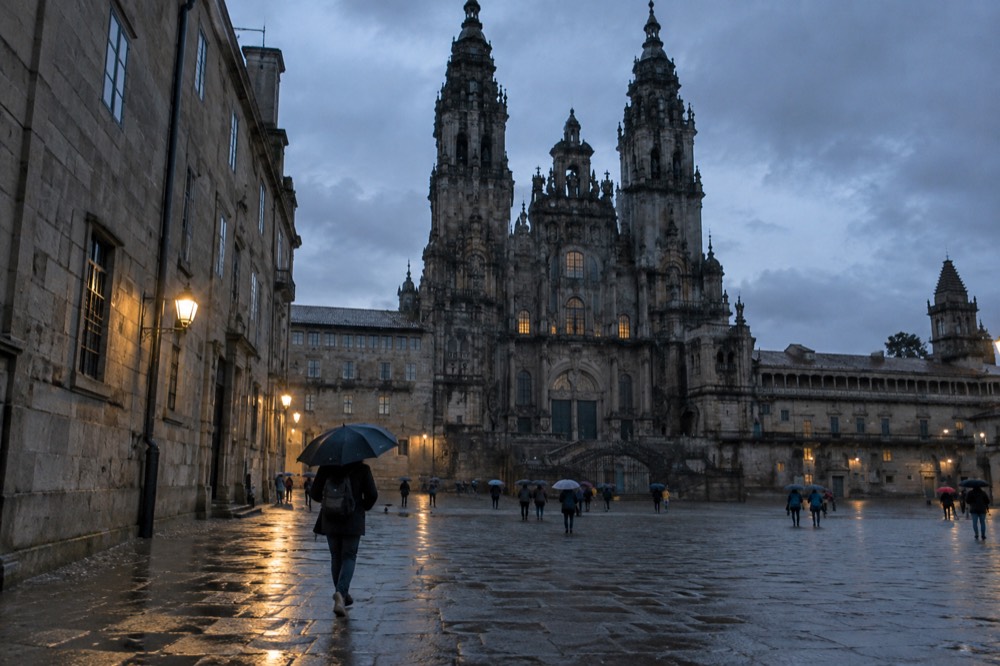
A photo-first trip also works well here. Santiago de Compostela is compact, golden at dusk and dramatically crowded at midday, so many visitors book a guided shoot for the quiet hours and spend the busy middle of the day in the museums.
When Is The Best Time To Visit Galicia?
July and August are the driest and warmest months and the easiest for coastal sightseeing, while April to June brings thinner crowds and greener countryside at the cost of showers. October to March is wet and cool, AEMET's station data for Santiago de Compostela showing annual rainfall on the order of 1,690 to 1,890mm, so pack serious rain gear and keep indoor plans in reserve for the wettest stretches.
The region's weather logic is simple: it rains all year, but the balance shifts. The wettest stretch runs October to March and the driest is July and August. The editors' planning table keeps it honest, and the full breakdown lives in the weather guide and the best time to visit guide.
| Season | Character | What It Means For Visitors |
|---|---|---|
| July to August | Driest and warmest period of the year | Best for coastal day trips and beach islands; busiest in the old town |
| April to June | Mild, showery, very green | Good balance of crowds and scenery; pack a rain layer |
| September to October | Cooling, rain returning | Quieter streets after the summer, harvest-season Albarino country |
| November to March | Wet and cool, short days | Cheapest and emptiest; museums and food carry the trip |
Two calendar anchors are worth planning around. The Feast of St. James falls every 25 July and the city fills with concerts, fireworks and a pontifical mass; the dedicated feast day guide covers it. And the 2027 Holy Year, the Xacobeo, opens with the Holy Door ceremony on 31 December 2026, so the period from New Year 2027 onward will be the region's busiest since the last Holy Year.
One honest caveat for incense-minded visitors: the Botafumeiro, the giant swinging censer, is currently out of action because restoration scaffolding on the Cathedral's dome covers its hanging mechanism. The Cathedral confirmed the suspension in early September 2026 and has published no return date. It normally flies on twelve fixed liturgical dates a year, from Epiphany in January through the Transfer of the Apostle on 30 December, but do not build a trip around seeing it swing until the Cathedral's own liturgy page says otherwise.
What Are The Must-See Places In Galicia?
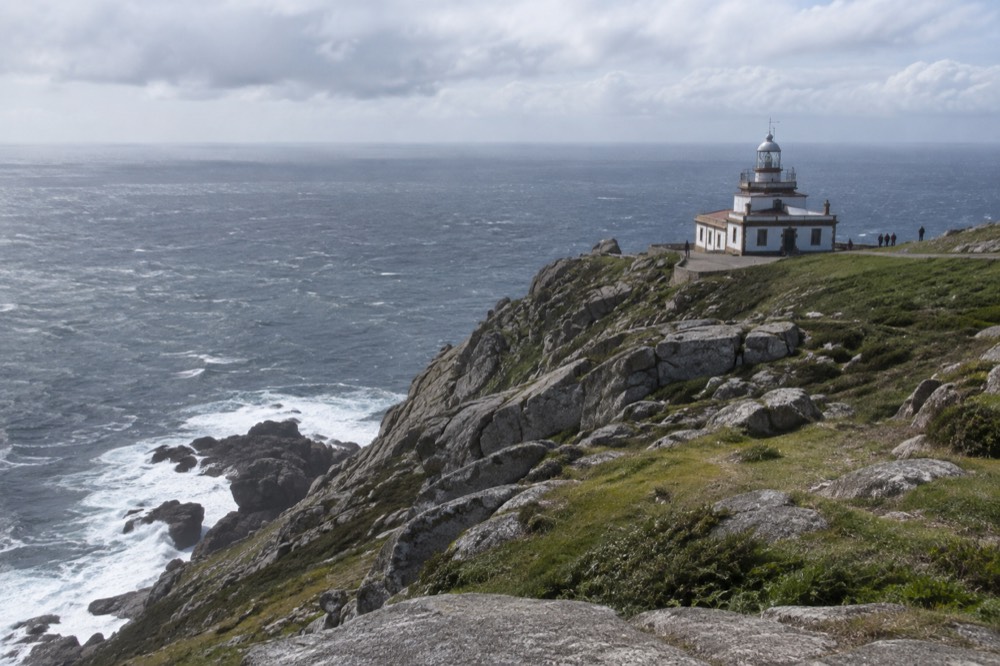
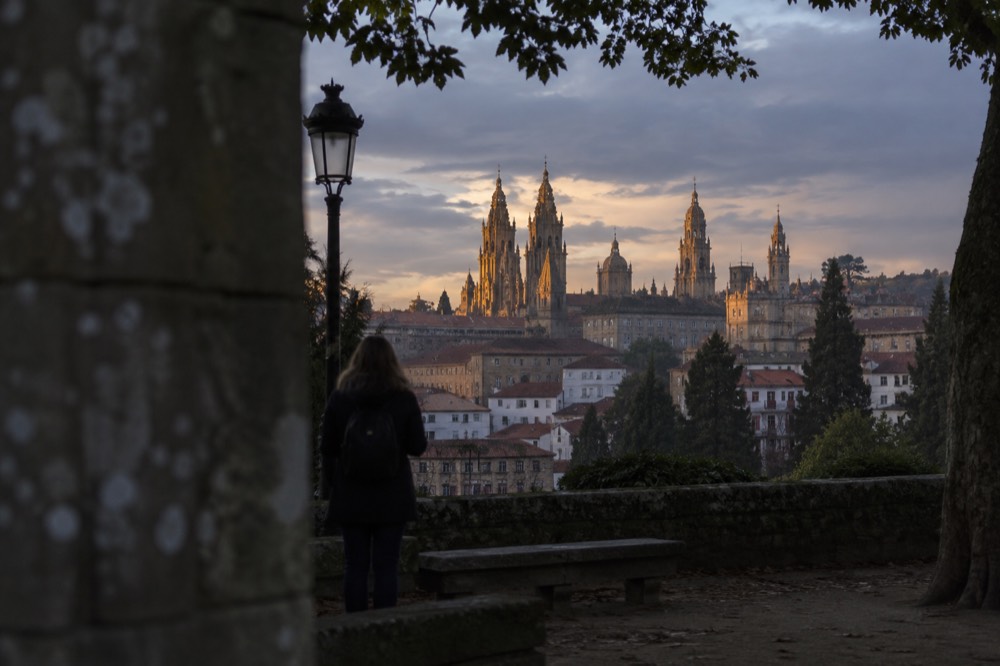
Santiago de Compostela itself is the anchor: the Cathedral with the Apostle's tomb beneath its high altar, the UNESCO-listed old town wrapped around it, the guided rooftops tour and the classic Alameda view across to the towers. Beyond the city, Fisterra's lighthouse, the Rias Baixas winery villages, the Roman walls of Lugo and the Cies Islands give the region its coastal and inland range. Most first visits stitch two or three of these onto the city itself.
Inside the city, start at the Cathedral. Entry to the basilica itself is free, the museum complex runs EUR9-23 depending on ticket type, and the guided Cubiertas rooftops and Carraca tower tour costs EUR15 general or EUR12 reduced, timed slots and about 140 steps included, bookable on the Cathedral's own ticketing site. The full ticket detail is in the Cathedral tickets and hours guide.
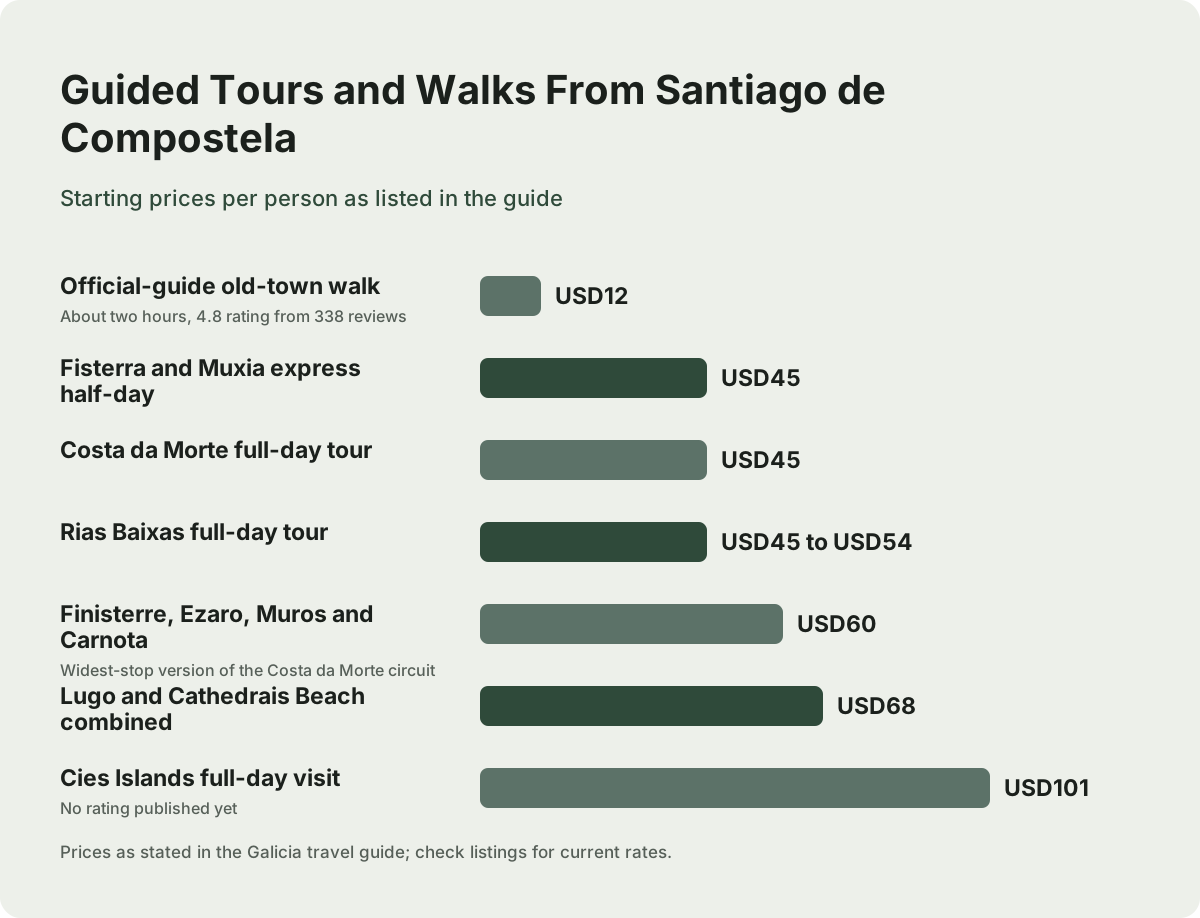
After the Cathedral, the old town is the sight. The granite squares, the Portico da Gloria, the convents of San Martino Pinario and the pilgrim streets funneling in from every direction reward a guide: the official old-town walks from USD12 per person cover the history in about two hours, and free tip-based GuruWalk walks, with the individual guide named on each listing, do the same route for whatever you choose to tip. Pair either with the food, because Galicia's cooking is half the reason to come, and the where to eat guide maps the best of it.
For travellers who prefer a paid guide with a fixed itinerary, the official-guide old-town walk is the standard choice. It runs about two hours through the same granite lanes, from USD12 per person, and the listing carries a 4.8 rating from 338 reviews. It suits anyone who wants the history delivered in full without the tip-based structure of a free walk.
The wider must-see list is genuinely regional, and each of these has a dedicated guide on this site. The table keeps the choices honest about what they are.
| Place | Why It Matters | Verified Detail |
|---|---|---|
| Santiago de Compostela old town | UNESCO World Heritage since 1985, the Camino's end point | Cathedral interior free entry, museum EUR9-23, rooftops EUR15/12 |
| Cathedral rooftops and Carraca tower | Guided walk at roughly 72m over the stone roofs | About 60 minutes, around 140 steps, timed tickets online |
| Fisterra and the Costa da Morte | Cliffs, lighthouses and the "end of the world" coast | Full-day tours from USD45, half-day express options from USD45 |
| The Rias Baixas | Albarino wineries, mussel boats and estuary villages | Full-day tours from USD45 to USD54 |
| Lugo | The only fully intact Roman walls in Spain | Full-day combined tours with Cathedrais Beach from USD68 |
| The Cies Islands | Protected Atlantic islands with beaches off Vigo | Full-day visits from USD101, no rating published yet |
Which Day Trips From Santiago de Compostela Are Worth It?
The Costa da Morte and Fisterra circuit is the most-booked day trip from Santiago de Compostela, a full day of cliffs, lighthouse stops and beaches along the coast Galicians long treated as the world's edge. The Rias Baixas mussel-boat and winery trips run a close second, then the Ribeira Sacra canyons with their Sil river cruise, the Roman walls of Lugo paired with Cathedrais Beach, and the Cies Islands for a full-day boat-and-beach itinerary.
The numbers back the ranking. The full-day Finisterre, Muxia and Costa da Morte excursions carry review counts in the thousands, rated 4.7 to 4.8 across the main listings, and the widest-stop version of that circuit, the Finisterre, Costa da Morte, Ezaro, Muros and Carnota tour from USD60, adds three coastal towns most visitors never reach. Short on time? An express half-day to Fisterra and Muxia exists from USD45.
The Rias Baixas is the food-and-wine counterpart. Boats haul mussels out of the estuary while passengers drink Albarino poured at the rail, and the trips visit the winery villages inland afterward; the Rias Baixas guide and the Albarino wine guide cover the region in depth, and the winery and boat option from USD53 pairs well with either. If you want to taste the coast without committing a whole day, Check availability on the multi-stop coastal option, since it runs the widest range of stops in one departure.
Inland Galicia deserves its own day. The Ribeira Sacra is a canyon landscape of monasteries and terraced vineyards where the Sil river runs far below the plateaus, and the combined cruise-and-Ourense tours from USD64 include the river boat through the gorge. Ourense, the region's hot-spring town, is the natural second half of that day. The Lugo guide and the A Coruna guide cover the two northern cities, and both connect to Santiago by direct train.
| Day Trip | Type | Length | From (USD) | Rating |
|---|---|---|---|---|
| Finisterre, Muxia and Costa da Morte, 7 stops | Coastal | Full day | 60 | 4.8 (1,714 reviews) |
| Finisterre, Costa da Morte, Ezaro, Muros and Carnota | Coastal | Full day | 60 | 4.6 (229 reviews) |
| Rias Baixas winery with optional mussel boat | Wine and coast | Full day | 54 | 4.8 (322 reviews) |
| Ribeira Sacra cruise, monasteries and Ourense | Inland canyons | Full day | 68 | 4.6 (166 reviews) |
| Lugo and Cathedrais Beach excursion | Roman walls and beach | Full day | 68 to 75 | 4.6 to 4.9 |
| Cies Islands visit | Islands and beaches | Full day | 101 | No rating published |
What Food And Drink Is Galicia Famous For?
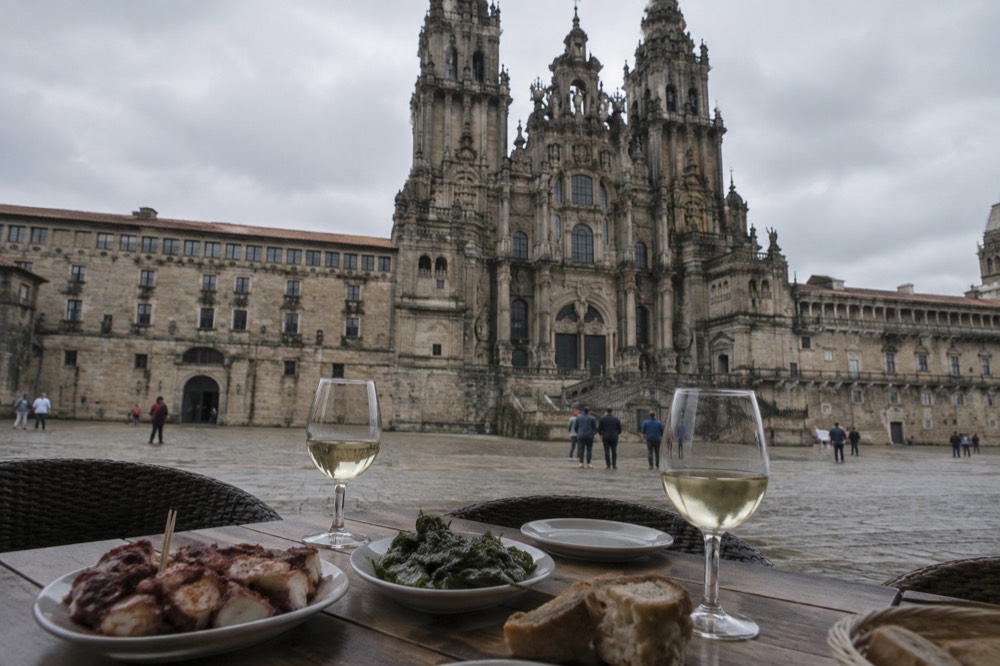
Galicia Spain is famous for octopus, specifically pulpo a la gallega, for padron peppers, empanada, tarta de Santiago and the Albarino whites of the Rias Baixas, plus the ceremonial queimada ritual performed around Santiago de Compostela. Fresh fish and shellfish from the Atlantic estuaries anchor the region's cooking, and the tapas bars within a short walk of the Cathedral serve much of it.
The classic plates are documented in depth on this site: the Galician food guide is the full overview, and there are dedicated pages for padron peppers, pulpo a la gallega and the almond tarta de Santiago. The short version: expect octopus with paprika and olive oil on wooden plates, small green peppers whose heat is a lottery, and a Santiago tart with the cross of St. James stenciled in sugar.
Where to eat it splits into two experiences. The traditional market, Mercado de Abastos, feeds half the city's restaurants and is worth walking through in the morning, though its current hours should be checked on the venue's own site rather than assumed. In the evening the action moves to the tapas bars, where a guided tapas tour from USD52 or a foodie walk with drinks and live music from USD51 solves the language problem and the standing-room problem at the same stroke.
The queimada is the theatrical one. Orujo spirit is set alight in a shallow clay pot while a chant is recited, and the two Santiago de Compostela queimada experiences, from USD17, stage the whole ritual with a tasting. The Rua do Franco guide covers the street most visitors end up on.
| Food or Drink | What It Is | Where To Try It |
|---|---|---|
| Pulpo a la gallega | Octopus, paprika, olive oil, coarse salt, on a wooden plate | Tapas bars and the market district of Santiago de Compostela |
| Padron peppers | Small green peppers, fried, some hot, most not | Any tapas bar in the old town |
| Tarta de Santiago | Almond cake with the St. James cross in sugar | Old town bakeries and dessert counters |
| Albarino | The Rias Baixas white wine, crisp and saline | Winery villages on Rias Baixas day trips |
| Queimada | Flame-lit orujo spirit ritual with a recited chant | Queimada show and tasting experiences, from USD17 |
| Seafood platters | Estuary shellfish, percebes, clams, razor shells | Old town seafood restaurants |
How Do You Get To Santiago de Compostela And Around Galicia?
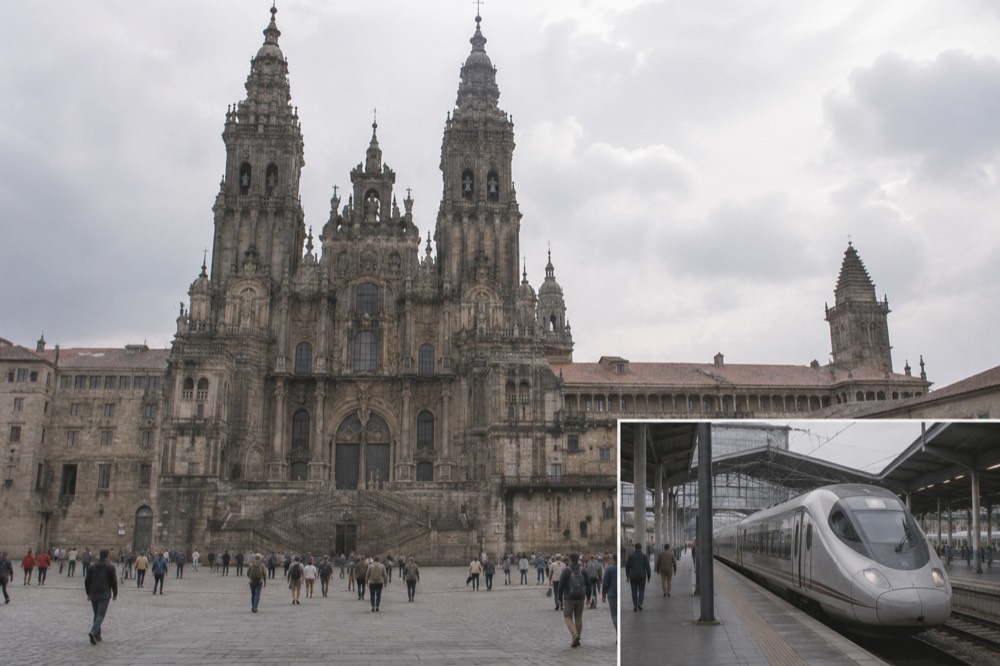
Fly into Santiago de Compostela's airport about 12km from the old town and take the line 6A bus, currently EUR1 paid to the driver, or arrive by train: high-speed services from Madrid take roughly three to four hours, Vigo is about an hour away, and A Coruna is a short hop. There is no direct rail line to Porto, so Portugal-bound travellers change at Vigo. Rental cars suit the coast; the city itself is entirely walkable.
The airport connection is in transition. Line 6A, run by Tussa, is the current service at EUR1 cash or EUR0.36 on a rechargeable card, with a journey of roughly 25 to 45 minutes, but a new Monbus contract with a fare near EUR6 is expected to take over in late 2026, so treat the current fare as subject to change. The full detail, including the flight options, is in the airport guide and the flights guide.
Rail works well for a Galicia-first itinerary. Direct high-speed services link Santiago de Compostela and Madrid in roughly three to four hours, covered in the Madrid train guide, and Vigo is about an hour away with the Porto route requiring a change there, which the Porto to Santiago guide explains. Getting around the region once you are in it is a mix of trains along the main corridors, organized day-trip coaches and rental cars for the coastal corners.
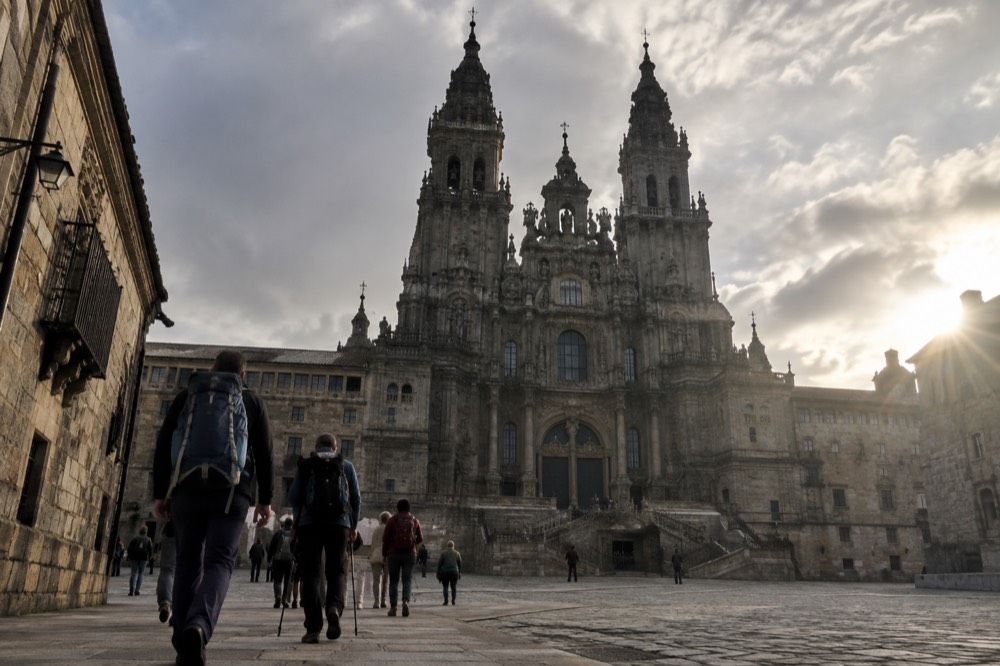
Camino arrivals are their own category, and they end on foot. The classic final stages are covered in the Sarria to Santiago guide, the Camino routes guide and the Camino map, with albergue accommodation and the pilgrim credential handling the paperwork end.
| Route | Typical Time | Detail |
|---|---|---|
| Madrid to Santiago de Compostela | Roughly 3 to 4 hours | Direct AVE/Avlo high-speed services |
| Santiago de Compostela to A Coruna | A short hop | Direct regional and high-speed services |
| Santiago de Compostela to Vigo | Roughly 1 hour | Direct Media Distancia and regional services |
| Santiago de Compostela to Porto | No direct rail | Change at Vigo, then onward into Portugal |
| Airport to old town | Roughly 25 to 45 minutes by bus | Line 6A, EUR1 cash or EUR0.36 by card, fare due to change |
What Does A Galicia Trip Cost?
Entry to Santiago de Compostela's Cathedral is free, the Cathedral Museum runs EUR9-23 depending on ticket type, the guided rooftops and Carraca tower tour costs EUR15 general or EUR12 reduced, and Santiago de Compostela has charged a municipal tourist tax since 1 October 2025, from 1 EUR to 2.50 EUR per person per night for up to 5 nights. Guided old-town walking tours start from USD12 per person, and the popular day trips run roughly USD45 to USD101. Galicia overall sits in the middle of Spain's price range.
The big fixed costs are tours and tickets, and those are transparent. Walking the city costs from USD12 for a guided visit, or nothing but a tip on the free GuruWalk options with their guides named on the tour page. Day trips cluster between USD45 and USD75, with the Cies Islands visit at USD101 as the top of the range. Hotel and parador rates move with season and demand, so the editors point readers to the live pages rather than printing figures: the best hotels guide and the hostels guide cover both ends, and the budget guide handles the low end in full.
Two money notes matter more than averages. First, Santiago de Compostela has charged a municipal tourist tax since 1 October 2025, a surcharge on Galicia's tourist-stay tax, ranging from 1 EUR to 2.50 EUR per person per night for up to 5 nights, with under-18s and stays in Xunta-run public albergues exempt. Second, the free things in Santiago de Compostela are unusually good: the Cathedral interior, the old town itself, the Alameda viewpoint and the pilgrim mass all cost nothing, and the pilgrim mass guide explains how to attend one.
| Item | Cost | Notes |
|---|---|---|
| Cathedral interior, Santiago de Compostela | Free | No ticket needed for general entry |
| Cathedral Museum | EUR9-23 | Depends on ticket type, general or reduced |
| Rooftops and Carraca tower tour | EUR15 general, EUR12 reduced | Guided, about 60 minutes, timed slots online |
| Old-town walking tour | From USD12 | Official-guide versions, about 2 hours |
| GuruWalk free tours | Tip-based, no fixed price | Guide named on each listing |
| Full-day day trips | USD45-101 | Coast, wine, canyons, walls or islands |
| Queimada show and tasting | USD17 | Ceremonial spirit ritual with tasting |
| Tourist tax | Santiago de Compostela has charged a municipal tourist tax since 1 October 2025, a surcharge on Galicia's tourist-stay tax, from 1 EUR to 2.50 EUR per person per night for up to 5 nights, with under-18s and Xunta-run public albergues exempt | Re-check rates before travel |
What Should First-Time Visitors Know Before Arriving In Galicia?
Three practical things shape a Galicia trip right now: the Botafumeiro is suspended because of dome-restoration scaffolding with no return date, the 9:30am, noon and 7:30pm pilgrim masses move from the Cathedral to the Church of San Agustin on 16 October 2026 while works prepare for the Holy Year, and 2027, not 2026, is the next Holy Year, with the Holy Door opening on 31 December 2026. Anyone walking in from Sarria should also understand the Compostela certificate rules before the final stage.
The certificate rules come from the Oficina del Peregrino: the last 100km must be walked, or on horseback, or the last 200km cycled, with at least two stamps per day in the credencial, and the document is issued in person only at Rua das Carretas 33. The pilgrim office guide and the Compostela certificate guide cover the whole process, and the office's record 530,987 certificates in 2025 mean the queues are real.
Beyond the Camino-specific machinery, the general rules are northern-Spanish rather than southern. Rain is a season-long possibility rather than an event, restaurants eat late, and the museums of the city, including the Museo do Pobo Galego and the Museo das Peregrinacions, have hours that shift and should be checked on each venue's own site before a visit. Sunday free-admission policies at those museums are not something the editors can currently verify, so treat them as unconfirmed rather than assumed.
For the language, a handful of Galician words earn warm welcomes: "ola" for hello and "grazas" for thanks appear in the daily life of the region, and locals switch to Spanish without hesitation. And for anyone pairing the trip with Portugal, the two-country version is common: Porto connects to Santiago de Compostela with a change of transport at Vigo, and the coastal Camino Portugues route between them is covered in the Camino Portugues guide.
Common Questions About Galicia Spain
Is Galicia part of Spain or Portugal?
Galicia is an autonomous community of Spain, occupying the country's northwest corner. Its Galician language is closer to Portuguese than to Spanish, and the region borders Portugal to the south, but it has been politically part of Spain since the modern state's formation.
What is Galicia Spain famous for?
Galicia is famous for Santiago de Compostela and the Camino de Santiago that ends there, for octopus and Albarino wine, for the Costa da Morte and Fisterra lighthouse, and for a green, rainy landscape that looks nothing like the popular image of Spain.
Do people in Galicia speak Spanish?
Yes, nearly everyone in Galicia speaks Spanish, and Galician is the co-official regional language you will see on every street sign, including in Santiago de Compostela. Visitors need no Galician at all, though "ola" and "grazas" are appreciated.
Is Galicia Spain worth visiting without walking the Camino?
Yes. The record 530,987 Compostelas issued in 2025 show how many people arrive as pilgrims, but the region stands on its own: a UNESCO old town, full-day coastal excursions, the Rias Baixas wineries and the Ribeira Sacra canyons fill a week without a single walking stage.
What is the rainiest part of the year in Galicia?
October to March is the wettest stretch, while July and August are the driest months. AEMET's station data for Santiago de Compostela shows annual precipitation on the order of 1,690 to 1,890mm, so rain is possible in any month and a rain layer belongs in every bag.
How far is Santiago de Compostela from the rest of Galicia?
Santiago de Compostela sits roughly in the middle of Galicia's main corridor: Vigo is about an hour by train, A Coruna a short direct hop, and the coastal and inland day-trip destinations sit within a full-day round trip. The region's four provinces are all reachable from the city by train, coach or rental car.