Santiago de Compostela Festivals
Santiago de Compostela's festival calendar turns on one fixed date, 25 July, the Feast of St. James, and on the Holy Years that follow whenever that feast falls on a Sunday. The next Holy Year is 2027, and its doors open on 31 December 2026.
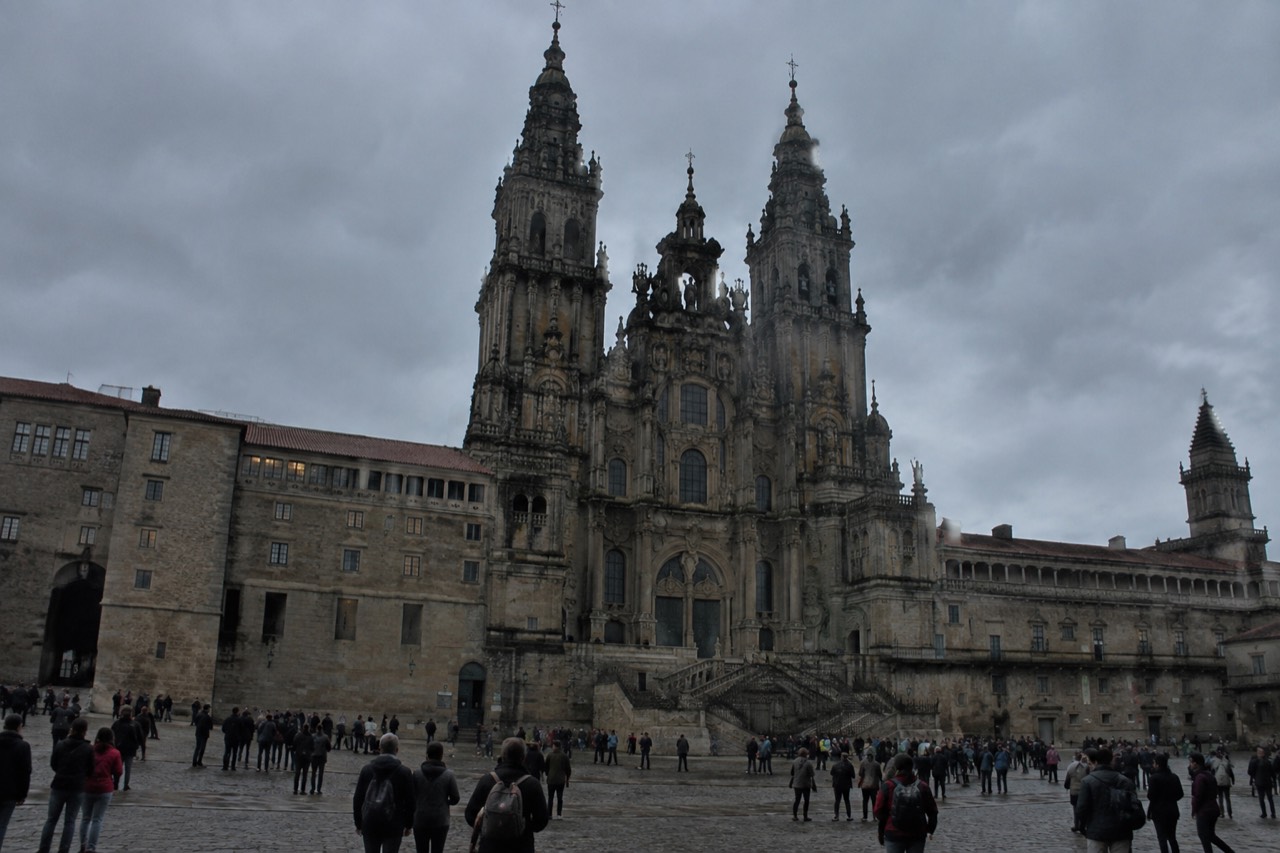
Short answer
The biggest Santiago de Compostela festival is the Feast of St. James on 25 July, marked by a Pontifical Mass with the national offering, fireworks, concerts and folk events. The next Holy Year (Xacobeo) is 2027, with the Holy Door opening on 31 December 2026. The Botafumeiro, normally swung on 12 solemnities a year, is currently out of action due to dome restoration scaffolding.
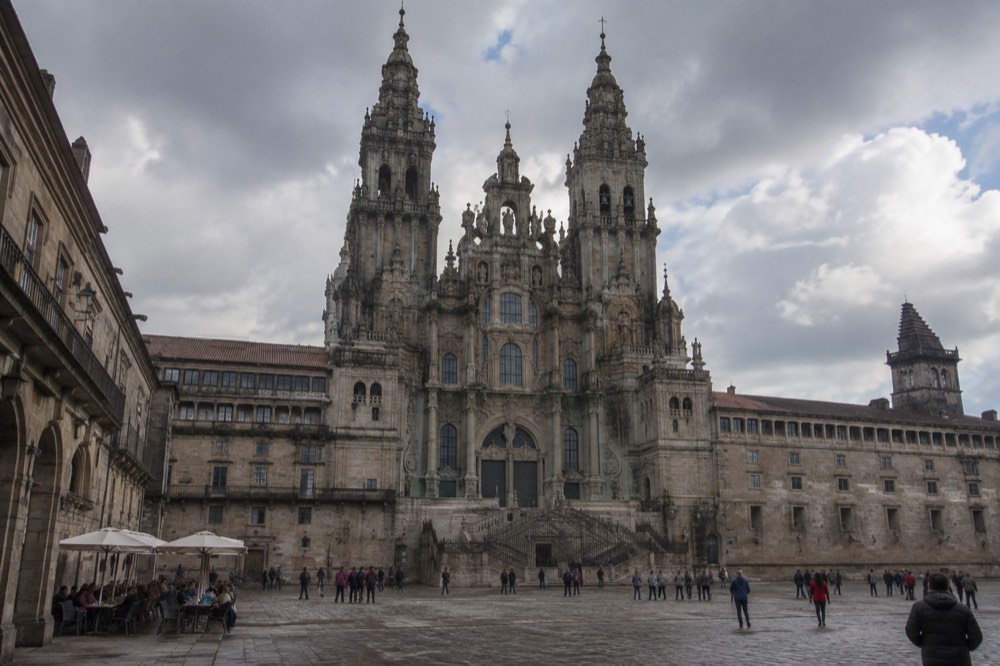
Santiago de Compostela in Galicia, Spain, runs its festival calendar around the tomb of St. James the Apostle, and everything else in the city's year bends toward it. The fixed anchor is 25 July, the Feast of St. James, which brings a Pontifical and civic Mass, the national offering to the Apostle, fireworks, concerts and folk events to the granite squares of the old town. Around that single day sits a web of liturgical solemnities, Holy Years and pilgrim celebrations that have shaped this UNESCO-listed city since the Middle Ages, drawing more than half a million pilgrims a year to collect the Compostela certificate.
The festival year has a rhythm worth knowing before booking anything. Summer peaks with the Apostle's feast, autumn shifts the liturgical map as restoration work inside the Cathedral moves masses to a nearby church, and the turn of 2026 into 2027 opens the most celebrated festival cycle of all: a Holy Year, when 25 July falls on a Sunday and the Holy Door at Praza da Quintana is unlocked. This guide lays out the verified dates, the events and the practical details, with one warning repeated early: the Botafumeiro, the city's most famous festival machine, is currently out of action.
What Are The Main Santiago de Compostela Festivals Throughout The Year?
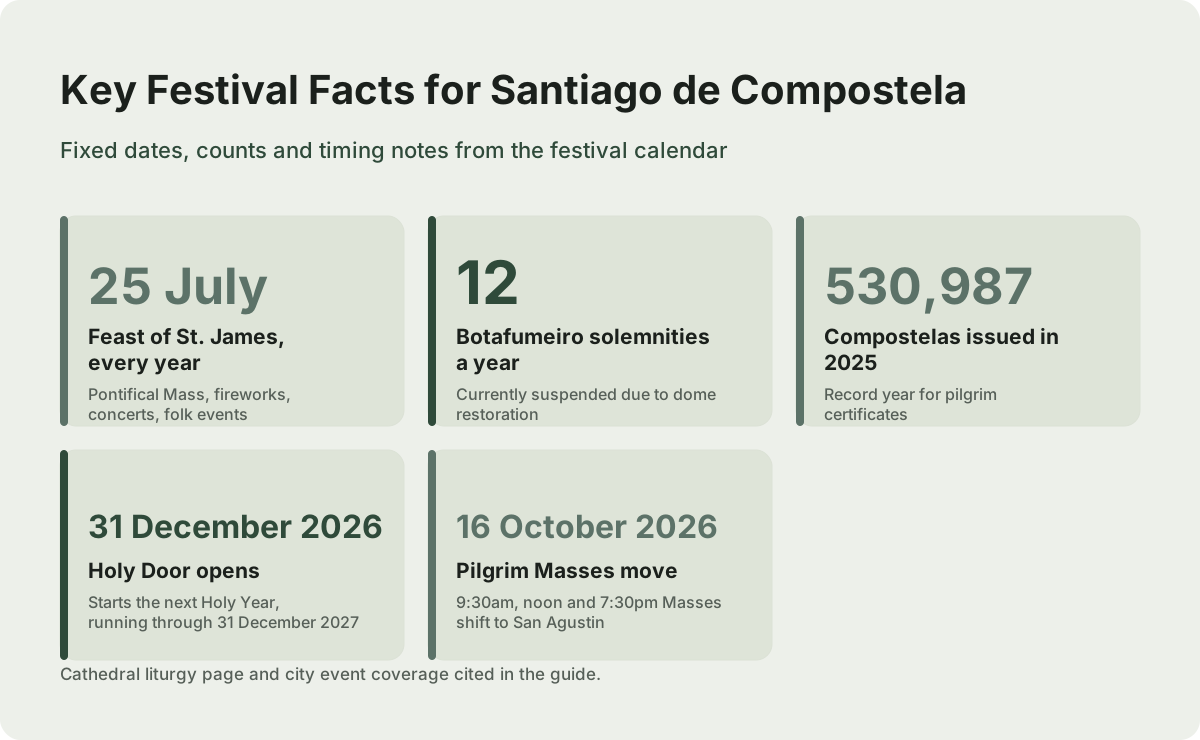
Santiago de Compostela's festivals center on three layers: the fixed Feast of St. James on 25 July, celebrated every year with a Pontifical Mass, national offering, fireworks, concerts and folk events; the twelve liturgical solemnities when the Botafumeiro normally swings at the Cathedral; and the Holy Year, declared whenever 25 July falls on a Sunday, with the next one running from 31 December 2026 through 31 December 2027. Layered onto the liturgical core, the city's squares host folk and civic gatherings through the warmer months.
That three-layer structure is what confuses first-time visitors. A traveler who arrives in, say, February expecting festival crowds in Praza do Obradoiro will find a quiet, rain-washed pilgrim city instead, because the great events bunch around the Apostle's feast and the solemnities that follow the Church calendar. The city's own event coverage confirms the 25 July pattern: a Pontifical Mass, the national offering to the Apostle, fireworks, concerts and folk events. Nothing in the verified research attaches a large secular festival to any other fixed date, so this guide sticks to what is confirmed rather than inventing a music-festival calendar.
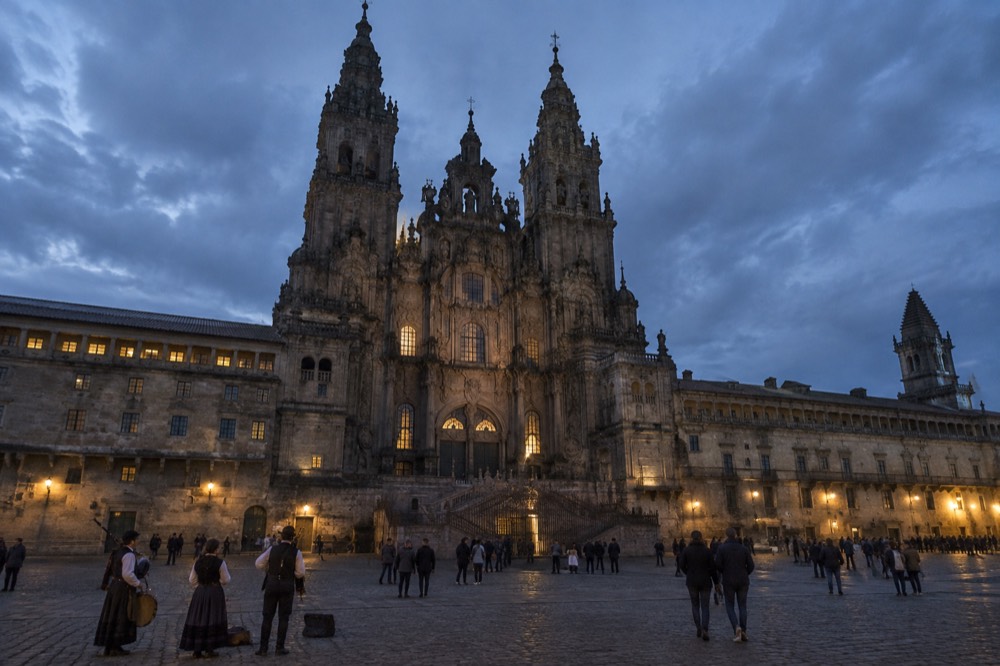
The first layer is the simplest to plan around. The Feast of St. James is fixed: 25 July, every year, whatever day of the week it lands on. Contemporaneous coverage of the Apostle's festivities lists concerts, orchestras, cinema and fireworks clustered around the date. The second layer, the solemnities, is where the Cathedral's own liturgy page is the only trustworthy source, because the Botafumeiro schedule belongs to the Cathedral Chapter alone. The third layer, the Holy Year, multiplies everything: more pilgrims, more events, and the Holy Door at the Quintana facade open for the full year.
Here is the framework in one table.
| Festival layer | Date or trigger | What it involves | Status |
|---|---|---|---|
| Feast of St. James | Fixed, 25 July every year | Pontifical and civic Mass, national offering to the Apostle, fireworks, concerts, folk events | Annual, confirmed |
| Holy Year (Xacobeo) | Whenever 25 July falls on a Sunday | Holy Door opens 31 December, runs through 31 December | Next: 2027, door opens 31 December 2026 |
| Botafumeiro solemnities | 12 fixed liturgical dates a year | Giant censer swung at the end of the main solemn Mass | Currently suspended, dome restoration |
| Pilgrim Masses | Daily, 7:30am, 9:30am, noon, 7:30pm | Mass for pilgrims at the Cathedral | 9:30am, noon, 7:30pm move to San Agustin from 16 October 2026 |
| Compostela certificate | Year-round | Certificate for qualifying pilgrims | Issued in person at Rua das Carretas 33 |
For pilgrims walking in, the arrival itself is a kind of festival. The Camino de Santiago delivers walkers into the city throughout the year, and the record 530,987 Compostelas issued in 2025 shows how the pilgrim flow has grown into a permanent event of its own.
What Happens On The Feast Of St. James On 25 July?
The Feast of St. James on 25 July is Santiago de Compostela's biggest annual festival: the city marks the Apostle's day with a Pontifical and civic Mass that often includes the national offering to St. James, followed by fireworks, concerts and folk events across the old town. The date is fixed on 25 July every year, and when it falls on a Sunday the festival expands into a full Holy Year. Coverage of the Apostle's festivities lists concerts, orchestras, cinema and fireworks clustered around the day.
The Mass is the heart of it. Pilgrim masses are normally held daily at the Cathedral at 7:30am, 9:30am, noon and 7:30pm, per the Cathedral's own liturgy page, and the 25 July liturgy is the most elaborate of the year, a Pontifical Mass drawing civil and religious authorities alongside thousands of pilgrims. One timing note matters for anyone planning around the feast: from 16 October 2026 until further notice, the 9:30am, noon and 7:30pm masses relocate from the Cathedral's High Altar to the nearby Church of San Agustin, because main-chapel remodelling ahead of the 2027 Holy Year is underway. Only the 7:30am mass stays inside the Cathedral, in its Communion chapel. Before 16 October 2026, all four masses remain at the High Altar.
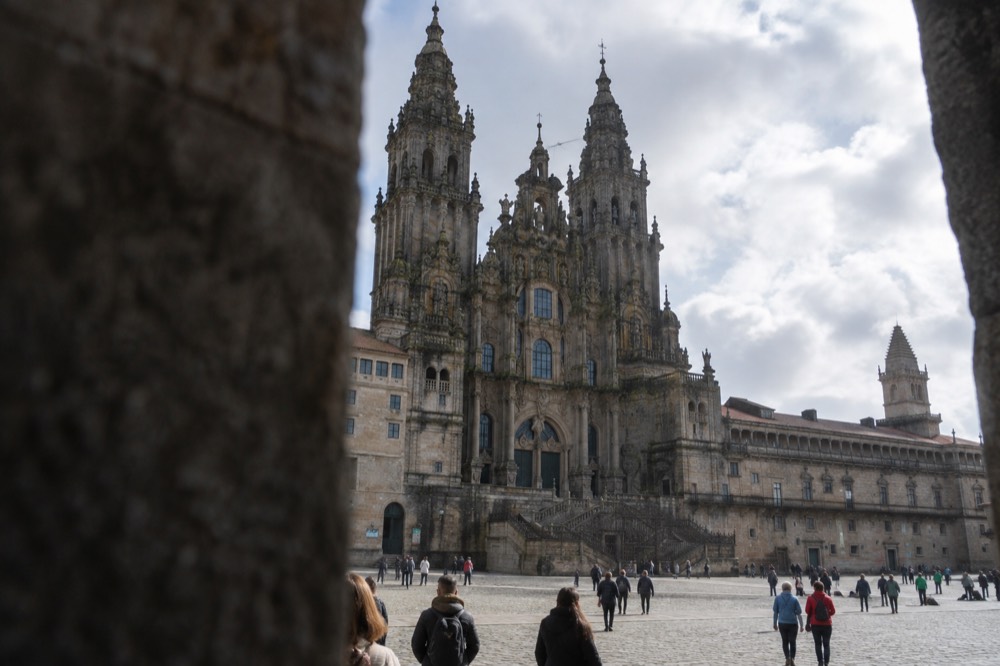
The feast day sits inside a wider festive stretch. The Espanol's Quincemil coverage of the Apostle's fiestas describes concerts, orchestras, cinema and fireworks, which gives a sense of scale: this is a multi-day civic celebration, not a single morning's Mass. Anyone booking for late July should expect the old town at maximum occupancy, and the where to stay guide covers the neighborhoods that keep some breathing room during the peak. Eating follows the same rule: the classic festival foods of the season, including tarta de Santiago, appear in every pastry window in town.
The historic town itself becomes the festival venue. A licensed official guide walking the lanes around Praza do Obradoiro, the Cathedral and the medieval quarter explains why the streets were built to processional widths, and that context turns a festival visit from spectatorship into understanding. For travelers who want the city first and the coast second, a full-day excursion to Catedrais Beach, Lugo and Asturias stretches the festival week outward, while the Rias Baixas boat-and-winery trip pairs the Apostle's feast with the albarino harvest country south of the city.
Does The Botafumeiro Swing During Santiago de Compostela Festivals?
The Botafumeiro normally swings at the main solemn Mass on twelve fixed liturgical dates a year, including the Feast of St. James on 25 July, the Assumption on 15 August and Christmas Day, but it is currently out of action: scaffolding for the Cathedral's cimborrio (dome) restoration covers its hanging mechanism, the Cathedral confirmed this in writing on 5 September 2026, and no return date has been published. No visitor can currently be promised a Botafumeiro flight.
This is the single most misunderstood item on the Santiago de Compostela festival calendar, because older guides still list the solemnity dates as if the censer were flying today. The normal schedule, guaranteed by the Cathedral Chapter, attaches the Botafumeiro to the main solemn Mass on twelve solemnities each year. It does not swing daily, and it does not swing at every pilgrim mass, the 7:30am, 9:30am, noon and 7:30pm services. Outside the guaranteed dates, a private or group request has historically been possible at an indicative cost of around 450 to 500 EUR, requested by email to the Cathedral, but that option is also unavailable while the mechanism is covered.
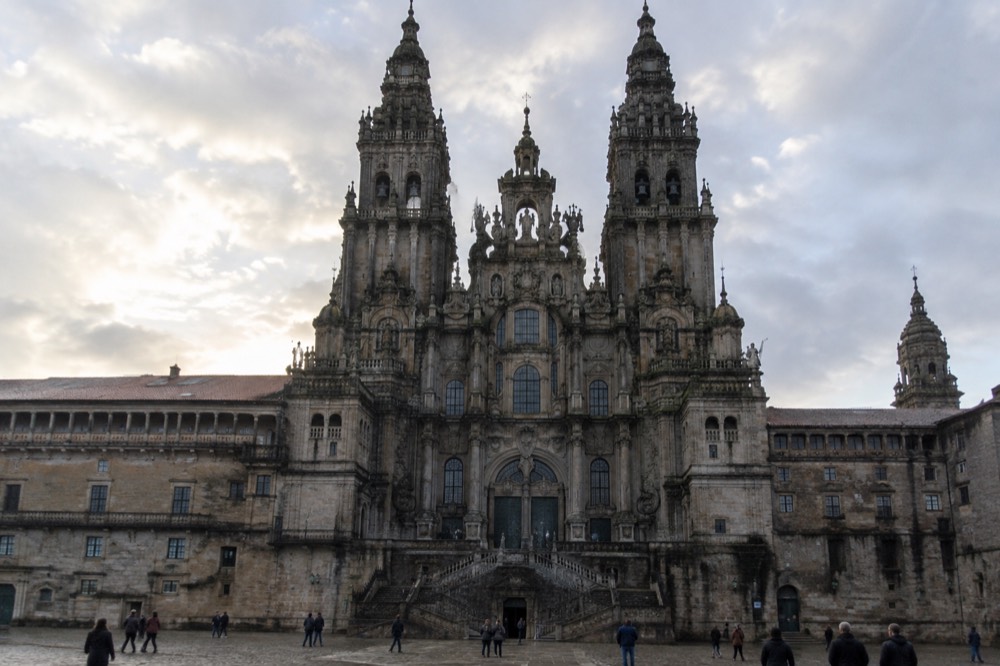
The twelve solemnities, as the normal annual schedule, are worth knowing for future trips, because restoration does end.
| Solemnity | Normal date | Botafumeiro's normal flight time |
|---|---|---|
| Epiphany | 6 January | End of the main solemn Mass |
| Easter Sunday | Moves with the liturgical calendar | End of the main solemn Mass |
| Ascension of the Lord | Moves, often mid-May | End of the main solemn Mass |
| Apparition of the Apostle at Clavijo | 23 May, or transferred | End of the main solemn Mass |
| Pentecost | Moves with the liturgical calendar | End of the main solemn Mass |
| Feast of St. James the Apostle | 25 July | End of the main solemn Mass |
| Assumption of the Virgin | 15 August | End of the main solemn Mass |
| All Saints | 1 November | End of the main solemn Mass |
| Christ the King | Last Sunday before Advent | End of the main solemn Mass |
| Immaculate Conception | 8 December | End of the main solemn Mass |
| Christmas Day | 25 December | End of the main solemn Mass |
| Transfer of the Apostle | 30 December | End of the main solemn Mass |
The Cathedral's liturgy calendar is the only source to check before travel, since the return date for the censer has not been announced. What is unaffected is the rest of the visit: the Cathedral's naves, the Apostle's tomb and the embrace area remain fully open, general entry is free, and the museum, rooftops tour and Portico da Gloria access continue under normal ticketing. The pilgrim mass guide and the feast-day deep dive on the Feast of St. James both carry more detail on the liturgical side of the calendar.
When Is The Next Holy Year And What Will It Change?
The next Holy Year (Xacobeo) is 2027, not 2026: it is declared whenever 25 July falls on a Sunday, which happens in 2027, and the Holy Door at Praza da Quintana opens solemnly on the evening of 31 December 2026, remaining open through 31 December 2027. A Holy Year turns the whole festival calendar up to full volume, with pilgrim numbers, liturgical celebrations and civic events all expanding across the year.
The mechanics are simple and worth having exactly right. 2026 is not a Holy Year, and the Holy Door stays closed through it. On 31 December 2026 the door is opened in a ceremony at the Quintana facade, and the Holy Year runs to 31 December 2027. After that, the next regular Holy Years are listed by the official city sources as 2032, 2038 and 2049, following the irregular six, five, six and eleven year cycle created by the requirement that 25 July fall on a Sunday. Anyone planning a festival trip around the phenomenon should read the full Holy Year 2027 guide, and anyone choosing between years should weigh it against the general best time to visit.
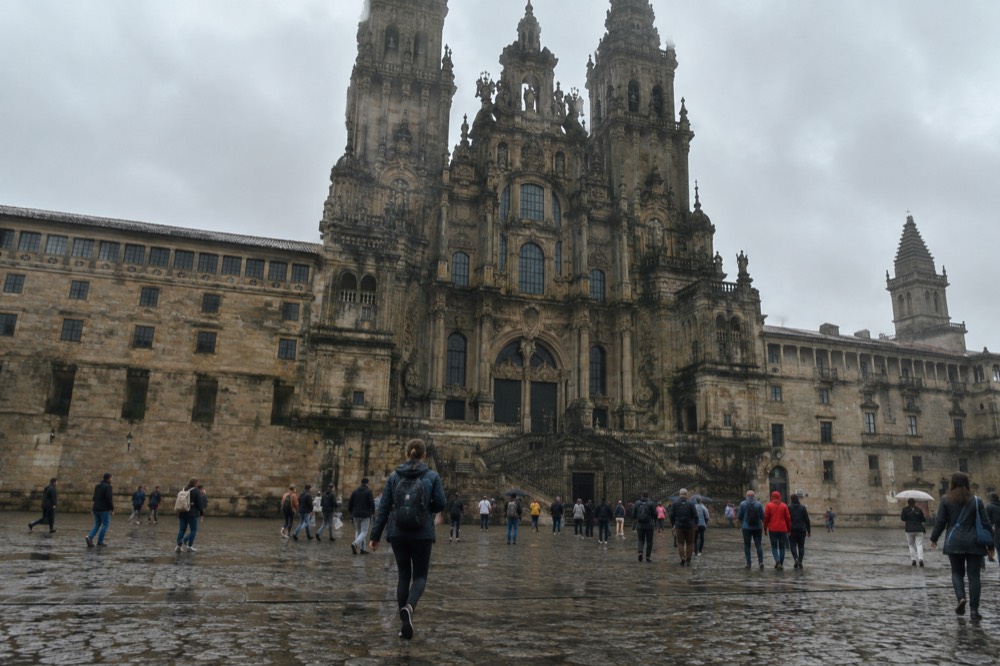
The restoration work now underway inside the Cathedral is being done in preparation for that 2027 Holy Year, which is why the main chapel is being remodelled and the masses are relocating from 16 October 2026. Festival visitors in late 2026 should hold both facts in mind at once: the city is already warming up for Xacobeo 2027, while parts of the Cathedral's interior liturgy move temporarily to the Church of San Agustin. The pilgrim flow is also on a rising line, with a record 530,987 Compostelas issued in 2025 per the Pilgrim's Office figures reported in the Spanish press, and a Holy Year reliably multiplies that figure.
| Holy Year milestone | Date | What happens |
|---|---|---|
| Holy Door opens | 31 December 2026, evening ceremony at Praza da Quintana | Holy Year 2027 begins |
| Holy Year 2027 runs | Through 31 December 2027 | 25 July 2027 falls on a Sunday |
| Next Holy Years | 2032, 2038, 2049 | Follows the 6-5-6-11 year cycle |
| Main chapel remodelling | Underway, masses relocate from 16 October 2026 | Preparation for the 2027 Holy Year |
| Botafumeiro suspension | From before 5 September 2026, no return date | Dome restoration scaffolding covers the mechanism |
How Do Pilgrim Masses Fit Into The Festival Calendar?
Pilgrim masses are held daily at the Cathedral at 7:30am, 9:30am, noon and 7:30pm, currently at the High Altar, but from 16 October 2026 until further notice the 9:30am, noon and 7:30pm masses relocate to the nearby Church of San Agustin, with only the 7:30am mass staying in the Cathedral's own Communion chapel. The Cathedral's liturgy page is the primary source for both arrangements, and any page quoting mass times near or after that date must state both.
For festival travelers this matters more than it might seem. The pilgrim mass is the emotional center of arrival for most walkers, and many visitors plan their first evening in the city around attending one. The pre-16-October-2026 arrangement keeps all four services at the Cathedral's main altar, which is what most older guides describe. From 16 October, the change is temporary and tied to the main chapel works, but it has no announced end date, so anyone visiting in late 2026 or during the early 2027 Holy Year should check the Cathedral's own liturgy page before planning an evening around a specific service. Other pages covering the same trip are gathered on Santiago de Compostela Travel Guide.
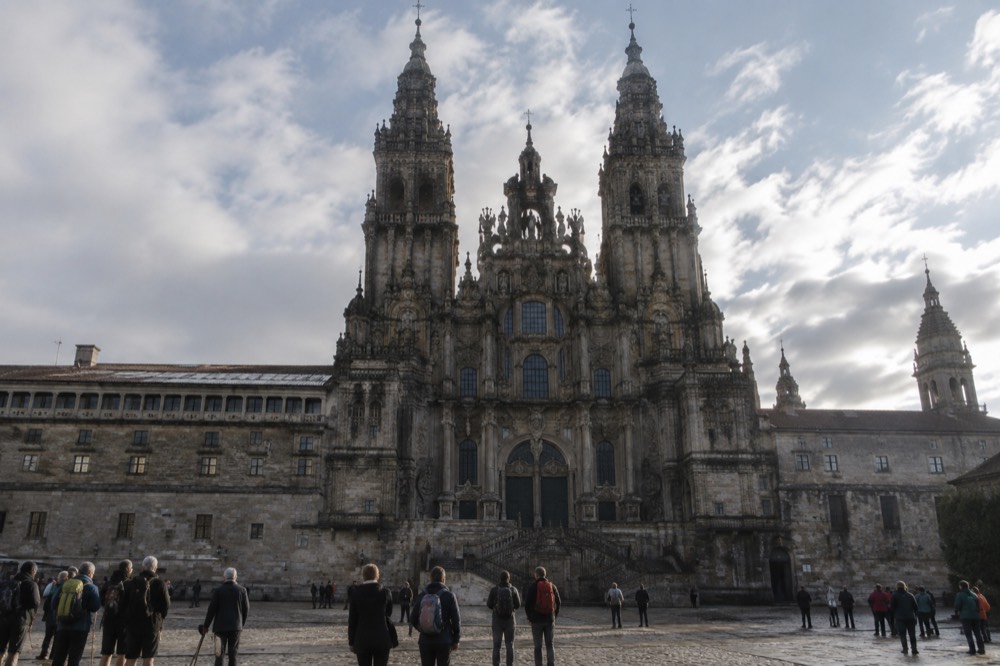
The Pilgrim's Office, at Rua das Carretas 33, is the other fixed point of the festival infrastructure. The Compostela certificate requires walking at least the last 100km of a recognized route, or cycling the last 200km, with at least two stamps per day in the credencial, and it is issued in person only. Walkers finishing in festival weeks should expect longer queues at the office, whose hours vary seasonally. The pilgrim office guide and the pilgrim passport credential guide cover the mechanics of both.
What Food And Drink Belongs To A Santiago de Compostela Festival?
Festival eating in Santiago de Compostela runs on Galician classics: tarta de Santiago, the almond cake stamped with the cross of St. James, pulpo a la gallega, padron peppers, and the queimada ritual, in which the flaming Galician spirit drink is recited over and served as a spectacle, available in the city as a dedicated show-and-tasting experience from $17 per person on the operator's live listing. The Rua do Franco and the old town's tapas bars carry the rest.
The food calendar is not formally tied to the liturgical one, but festival weeks reliably push the regional dishes to the front of every menu. Tarta de Santiago appears in every pastry window around 25 July, and the queimada show, with its chanted conxuro spell over the burning liquid, is the closest thing the city has to a secular festival ritual, staged as a bookable experience. The tapas tour of the city, from $52 per person, walks visitors through the bars where these dishes are done best.
| Festival food or drink | What it is | Where it fits the calendar |
|---|---|---|
| Tarta de Santiago | Almond cake stamped with the cross of St. James | Every pastry window, peak around 25 July |
| Pulpo a la gallega | Octopus with olive oil and paprika, served on wooden plates | Market and old town tables year-round |
| Padron peppers | Small green peppers, fried in coarse salt, occasionally hot | Summer season staple |
| Queimada | Flaming spirit drink with a chanted spell, staged as a show | Bookable tasting experience, $17 |
| Albarino | The white wine of the Rias Baixas | Pairs with the seafood side of the feast |
The historic town walking tour with an official guide, from $14 per person on the operator's live listing, is the natural first evening for a festival visit: it walks the squares where the events unfold and explains the processions, the Praza do Obradoiro stage and the legends attached to them. Between the feast-day crowds, the where to eat guide keeps the restaurant list honest.
How Do You Get To Santiago de Compostela For A Festival?
Santiago de Compostela airport (SCQ) sits about 12km from the old town, and line 6A, operated by Tussa, currently runs a roughly 30-minute-frequency service to the center for 1 EUR paid to the driver or 0.36 EUR per trip on a rechargeable card, though a new Monbus contract with a fare near 6 EUR is expected to start in autumn 2026, so the fare must be treated as subject to change. Train travelers reach the city from Madrid in roughly 3-4 hours on direct high-speed services.
The bus caveat is important and current. As of late September 2026, the official city transport page still lists the Tussa line 6A and its 1 EUR fare, but the same page flags the incoming Monbus reorganization and advises verifying line numbers after December 2026. Festival travelers arriving by air in late 2026 should check the airport guide close to travel time rather than relying on any single printed fare. Rail arrivals are covered in the Madrid to Santiago train guide, and walkers arriving on foot from the final stage have their own arriving in Santiago guide.
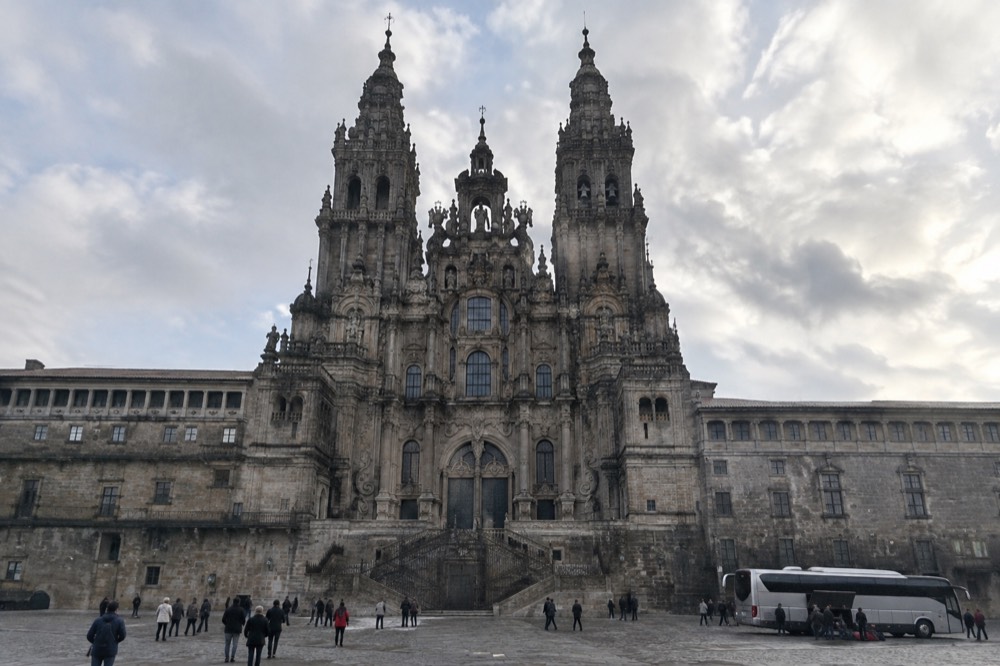
Weather deserves a place in any festival plan. AEMET's climate data for the Santiago de Compostela station shows a temperate oceanic climate, wet year-round, wetter from October to March, and driest in July and August, with annual precipitation on the order of 1,690 to 1,890mm. The weather guide carries the planning detail, but the headline for festivals is simple: the July feast is close to the driest window the city offers, while the New Year Holy Door ceremony on 31 December sits in the wettest.
| Festival travel item | What applies | Caution |
|---|---|---|
| Airport to city | Line 6A, Tussa, 1 EUR to driver, 0.36 EUR by card, about 12km from old town | Monbus reorganization with a fare near 6 EUR expected autumn 2026, verify before travel |
| Madrid by train | Direct high-speed services, roughly 3-4 hours | Exact timings vary, check Renfe |
| Vigo by train | Direct regional services, roughly 1 hour | No direct rail line to Porto, change via Vigo |
| Climate | Wet year-round, driest July and August, wetter October to March | Late July festivals fall in the driest window |
| Tourist tax | Santiago de Compostela has charged a municipal tourist tax since 1 October 2025 (a surcharge on Galicia's tourist-stay tax): per person per night for a maximum of 5 nights, from 1 EUR in private albergues, campsites and tourist apartments up to 2.50 EUR in five-star hotels; under-18s and stays in Xunta-run public albergues are exempt | Live policy area across Spain, re-check close to travel |
How Should You Plan A Festival Trip Around The 2027 Holy Year?
Plan a 2027 Holy Year trip around two dates: 31 December 2026 for the Holy Door opening ceremony at Praza da Quintana, and 25 July 2027, the Sunday feast day at the center of Xacobeo, and book accommodation far ahead because the record 530,987 Compostelas issued in 2025 arrived in a non-Holy year. Expect the Botafumeiro's return to be confirmed or not only via the Cathedral's own liturgy page, and expect the 16 October 2026 mass relocation to still be in force unless the Cathedral announces otherwise.
The practical sequence for a festival-first visit looks like this: pick the date window around a fixed solemnity or the feast day itself, book rooms early for the peak weeks, arrive a day or two ahead to walk the old town and the Cathedral with a licensed guide, attend the main liturgical event, and leave a rest day, which the city has its own rest day after the Camino guide for. Walkers finishing a route into a festival week should also build in time for the in-person Compostela collection at Rua das Carretas 33.
For festival visitors extending beyond the city, the full-day excursion to Catedrais Beach, Lugo and Asturias, from $68 per person on the operator's live listing, covers the dramatic natural arches of the Galician coast and the Roman walls of Lugo in one loop out of Santiago de Compostela. It is the strongest single option for travelers who have seen the feast-day program and want the region around it.
The Rias Baixas boat-and-winery excursion is the other natural pairing, from $53 per person, sailing the mussel beds of the Arousa estuary and tasting albarino at a winery in the heart of the denomination. Between the two, a festival week can stretch into a full Galician itinerary without inventing a single day of filler.
Whichever direction a festival trip stretches, the city's own event spine stays the same, and every excursion out of Santiago de Compostela lands travelers back in the old town by evening, when the squares do their best work under festival lights.
Common Questions About Santiago de Compostela Festivals
What is the biggest festival in Santiago de Compostela?
The Feast of St. James on 25 July is the city's biggest annual festival, marked by a Pontifical and civic Mass with the national offering to the Apostle, plus fireworks, concerts and folk events across the old town. The date is fixed every year, and when 25 July falls on a Sunday the celebrations expand into a full Holy Year.
When is the next Holy Year in Santiago de Compostela?
The next Holy Year (Xacobeo) is 2027, because 25 July 2027 falls on a Sunday. The Holy Door opens solemnly on the evening of 31 December 2026 at Praza da Quintana and remains open through 31 December 2027. The Holy Years after that are 2032, 2038 and 2049.
Does the Botafumeiro swing on festival days?
Normally it swings on twelve fixed liturgical solemnities a year, including the Feast of St. James on 25 July, but it is currently out of action: scaffolding for the Cathedral's dome restoration covers its hanging mechanism, the Cathedral confirmed this in writing on 5 September 2026, and no return date has been published. No visit can currently be promised a Botafumeiro flight, and the Cathedral's own liturgy page is the source to check.
Where do the pilgrim masses move to in October 2026?
From 16 October 2026 until further notice, the 9:30am, noon and 7:30pm masses relocate from the Cathedral's High Altar to the nearby Church of San Agustin, while the 7:30am mass stays in the Cathedral's Communion chapel. Before that date, all four daily masses are held at the Cathedral's High Altar.
How much does the bus from Santiago de Compostela airport cost during festivals?
As of late September 2026, line 6A operated by Tussa charges 1 EUR to the driver or 0.36 EUR per trip on a rechargeable card, but a new Monbus contract with a fare near 6 EUR is expected to start in autumn 2026. The fare should be treated as subject to change, and the city's transport page is the source to check close to travel.
Is there a tourist tax on festival accommodation in Santiago de Compostela?
Yes: Santiago de Compostela has charged a municipal tourist tax since 1 October 2025 (a surcharge on Galicia's tourist-stay tax), from 1 EUR to 2.50 EUR per person per night for a maximum of 5 nights, with under-18s and stays in Xunta-run public albergues exempt.
The festival calendar of Santiago de Compostela is, in the end, one long celebration with a fixed spine: 25 July every year, the solemnities around it, and the Holy Years that arrive whenever that day lands on a Sunday. The next window that matters is 31 December 2026, when the Holy Door opens at Praza da Quintana and Xacobeo 2027 begins.