Which Is The Most Beautiful Camino Route?
Comparing the Camino routes into Santiago de Compostela by scenery, from the Rias Baixas and Costa da Morte to the meseta, so you can pick the most beautiful walk for your own legs and dates.
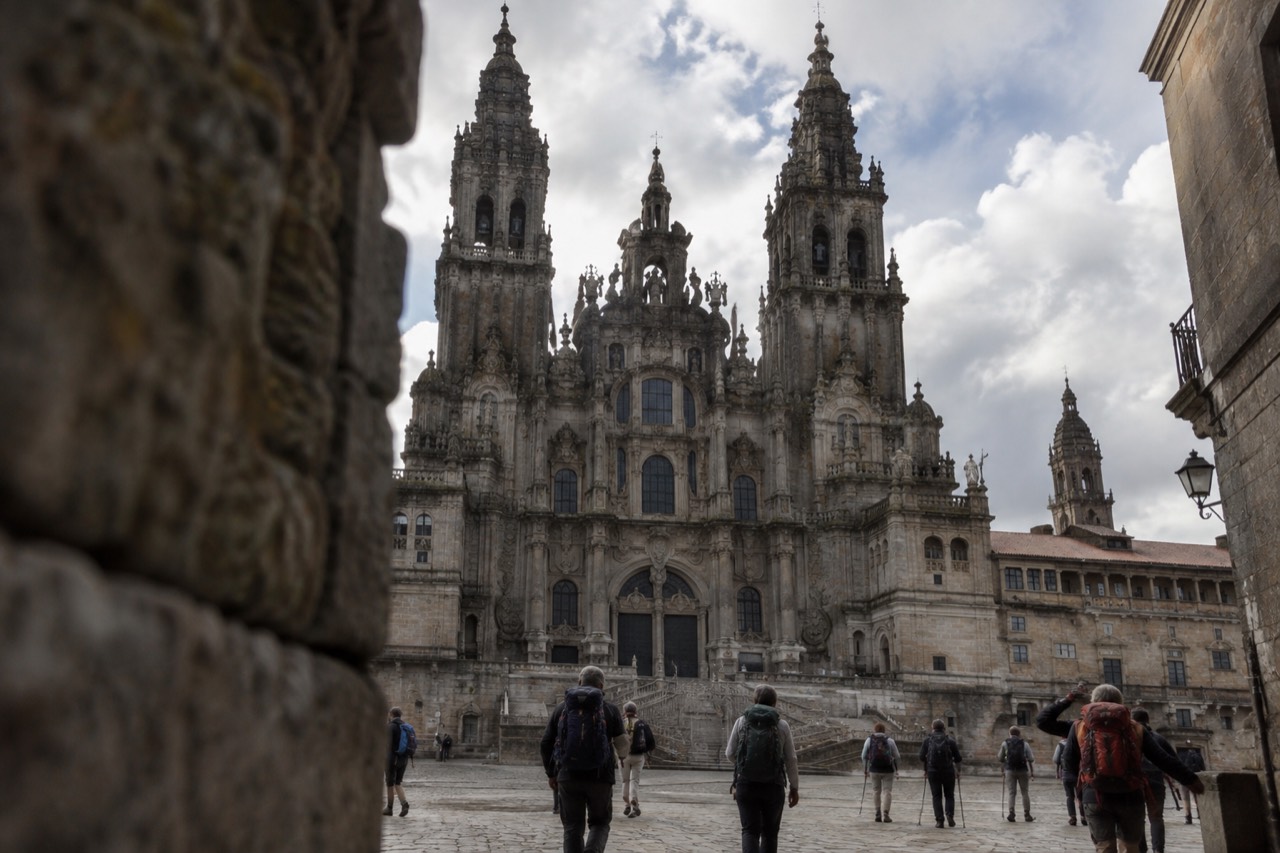
Every Camino route ends at the same place, the Cathedral of Santiago de Compostela in Galicia, Spain, but the scenery along the way varies enormously. The Oficina del Peregrino's own statistics say 530,987 pilgrims collected the Compostela certificate in 2025, a record year, and most of them walked the same one or two routes to get there. That concentration matters when the question is beauty, because the busiest path is not necessarily the one a walker would call the loveliest. This page compares the main routes on scenery, crowds and character, and explains which one earns the "most beautiful" label for which kind of walker.
Which Is The Most Beautiful Camino Route?
There is no single official answer, because no body ranks the routes by beauty, but the Camino Portugues along the Atlantic coast and the Camino del Norte through the green northern coast are the two most defensible picks for pure scenery, while the Camino Frances offers the greatest variety overall, from the Pyrenees to the meseta to green Galicia. The most honest answer depends on whether your idea of beauty is coastline, mountains, rural silence or stone villages, and each route delivers a different mix of those.
That answer needs unpacking, because "beautiful" means three different things to three different walkers. The Frances, the historic trunk route described in our guide to the Camino de Santiago routes, changes character dramatically: high mountain passes at the start, long flat plains through the middle, and the green hills and eucalyptus groves of Galicia in the final hundred kilometres. The coastal routes hold one consistent view, the ocean, and hold it for days at a time. The Primitivo, the oldest route, trades variety for mountain solitude.
What follows is a scenery-first comparison, not a difficulty ranking. If you are new to long-distance walking, difficulty and logistics matter more than views, and the question Which Camino Is Best For Beginners covers that separately.
How Does Each Camino Route Into Santiago de Compostela Look?
The Camino Frances moves from Pyrenees foothills to open plateau to green Galician farmland, the Camino del Norte and the coastal Portugues stay close to the Atlantic, the Camino Primitivo crosses the mountains of Asturias and rural interior Galicia, and the Camino Ingles packs quiet Galician woodland and estuary views into a short week. Each route's final stretch into Santiago de Compostela itself is similar: Galician lanes, small villages, and finally the towers of the Cathedral seen from Monte do Gozo.
The Frances is the route most walkers picture when they hear the word Camino. Its problem and its strength are the same: it is the route everyone else is on. A walker who wants the classic experience, the one in every photograph of pilgrims crossing the meseta under a huge sky, walks the Frances. A walker who wants to be alone with a landscape does not.
The del Norte and the coastal Portugues are the scenery picks. The Norte follows the northern Spanish coastline, with the sea appearing and disappearing over green headlands for most of the journey before the route turns inland through Galicia toward Santiago de Compostela. The coastal Portugues runs down the Atlantic side of northern Portugal, along estuaries, dune paths and fishing towns, before crossing back inland into Galicia. Neither has the monument density of the Frances; both trade history for horizon.
The Primitivo is the connoisseur's route. It is the oldest documented Camino, it crosses genuine mountain terrain in Asturias, and it rejoins the Frances close to Santiago de Compostela, so a walker gets both solitude and the shared final approach.
What Scenery Does Each Camino Route Offer, Stage By Stage?
The scenery comparison breaks down cleanly by landscape type: the Frances gives mountains, plains and green farmland in one walk, the Norte and coastal Portugues give sustained ocean views, the Primitivo gives forested Asturian mountains, and the Ingles gives compact Galician rural scenes with small climbs and estuary light. The table below matches each route to its dominant landscape, its quietest and busiest character, and what its final approach into Santiago de Compostela looks like.
| Route | Dominant scenery | Character | Final stretch into Santiago de Compostela |
|---|---|---|---|
| Camino Frances | Pyrenees, meseta plateau, Galician green hills | Busiest, most social | Galician farmland, eucalyptus, Monte do Gozo |
| Camino del Norte | Northern Atlantic coastline, green headlands | Quiet to moderate, hilly | Rural Galician lanes, rejoins Frances area |
| Camino Portugues (coastal) | Atlantic estuaries, dunes, fishing towns | Moderate, flat to rolling | Inland Galician villages and lanes |
| Camino Primitivo | Asturian mountains, deep forest | Quietest, most demanding | Mountain descent into Galicia, joins Frances |
| Camino Ingles | Galician woodland, estuaries | Very quiet, short | Short rural approach from the Galician coast |
Two honest caveats belong with that table. First, beauty on foot is partly weather: AEMET's climate data for the Santiago de Compostela station shows a wet, temperate oceanic climate, wetter from October to March and driest in July and August, and the same green that makes Galicia lovely in June makes it grey and dripping in November. Second, the busiest stretches of the Frances are busy precisely because they are beautiful; solitude and spectacle trade against each other on every route.
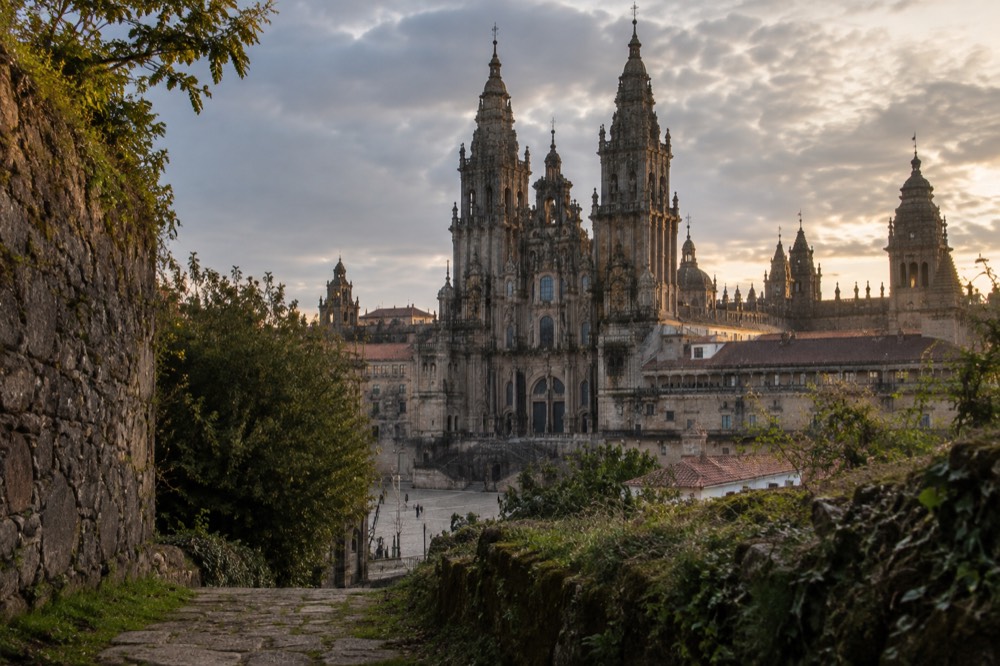
The final approach deserves its own mention. Almost every route funnels into the same last kilometres, and the moment the Cathedral towers appear from Monte do Gozo is the shared climax of all of them. Our one day in Santiago de Compostela guide covers what to do with the day after that moment, when the walking is over and the city begins.
Which Camino Route Should You Choose For Scenery And Solitude?
If scenery is the deciding factor and you can only pick one, the Camino del Norte is the strongest single answer for dramatic, sustained coastal views, the coastal Portugues is the strongest answer if you want ocean without the Norte's hills, and the Primitivo is the strongest answer if mountain silence is your idea of beauty. Walkers who want the classic, social Camino should still choose the Frances, and the Ingles suits anyone with one week who values quiet green lanes over spectacle.
Think about what you will remember in ten years. Some walkers remember the meseta's emptiness, days of horizon with no shade and no shade-seekers, as the most beautiful part of the whole Frances. Others remember it as the stretch they endured. Some remember a single coastal morning on the Norte, the sea below the path and nobody else in sight. Others remember cold fog on the same cliffs. Neither memory is wrong, and the honest way to choose is to rank what you like looking at, ocean, mountains, plains or villages, and then pick the route that serves it. The full index of guides sits on Santiago de Compostela Travel Guide.
Practical weight matters too. The Norte and Primitivo are hillier and less forgiving than the Frances, with fewer alternative beds on some stages. The Oficina del Peregrino's FAQs are blunt about the certificate rules: the last 100km must be walked, or the last 200km cycled, with at least two stamps per day in the credencial, and the Compostela is issued in person only at Rua das Carretas 33 in Santiago de Compostela. A walker choosing a quiet scenic route needs to plan the final 100km carefully to keep that rule intact. Our pilgrim passport guide covers the stamping system in detail.
When Is The Camino At Its Most Beautiful?
The Camino's landscapes peak in different seasons: Galicia's green hills and coastal routes look best from late spring to early summer when everything is in leaf and the sea is calm, the meseta section of the Frances is most tolerable and most photogenic in May and June or September, and July and August bring the driest weather, per AEMET's climate data for Santiago de Compostela, but also the peak crowds. Autumn brings golden colour and rain, and winter walking offers emptiness in exchange for short, wet days.
The seasonal choice is really a scenery choice. AEMET's figures for the Santiago de Compostela station show annual precipitation on the order of 1,690-1,890mm, which is what keeps the last hundred kilometres of every route so green. That green is the visual payoff of walking into Santiago de Compostela, and it is lushest in late spring. The same rainfall turns the coastal paths muddy from October, though autumn light on the Rias Baixas and the Costa da Morte, the Atlantic edge beyond Santiago de Compostela where many pilgrims continue to Fisterra, has a following of its own.
Timing also changes the crowd picture, and crowds change the beauty picture. On the Frances in high summer, a walker photographs a beautiful Roman bridge with fifty other walkers in the frame. In May, the same bridge may hold only a handful of pilgrims and a village dog. If solitude is part of what makes a view beautiful for you, the shoulder seasons win outright.
What Should You Do After Choosing Your Route?
Choose the route by scenery first, then book beds and transport around it: most walkers reach their starting point through Madrid or a regional airport, and the guide to getting to the Camino from Madrid covers the rail options, while the Frances, Primitivo and Norte all assume you have arranged either albergues or a luggage transfer for each stage.
Once the route is fixed, the remaining decisions are dates, boots and how many rest days to build in, and the final afternoon in Santiago de Compostela is best spent on the Cathedral itself.
Route choice drives everything downstream. The Frances has the densest albergue network; our Camino accommodation guide explains how the bed system works and why the quiet scenic routes need earlier planning. The airport choice follows from the route too, and the question of the best airport to fly into for the Camino is worth settling before you book anything, because starting points are scattered across Spain and Portugal.
The finish is the part every route shares. However beautiful the three weeks before it were, the walk ends at the same Praza do Obradoiro, and most pilgrims spend their first afternoon inside the Cathedral of Santiago de Compostela. A guided visit with skip-the-line entry to the Cathedral and its museum, such as Check availability on the operator's live listing, turns that afternoon from a queue into an explanation of what the whole walk was aimed at. The Cathedral's own liturgy page notes that pilgrim masses are held daily, and from 16 October 2026 the 9:30am, noon and 7:30pm masses relocate to the nearby Church of San Agustin while the 7:30am mass remains in the Cathedral's Communion chapel, so time your arrival mass accordingly.
Common Questions About The Most Beautiful Camino Route
Which is the most beautiful Camino route?
There is no official ranking, but the Camino del Norte and the coastal Camino Portugues are the strongest picks for sustained ocean scenery, the Primitivo for mountain solitude, and the Frances for variety, from the Pyrenees to the meseta to green Galicia, at the cost of sharing the path with far more pilgrims.
Is the Camino Frances beautiful if it is so busy?
Yes, and its variety is unmatched: mountains at the start, open plains in the middle, and green Galician farmland in the final hundred kilometres into Santiago de Compostela. The crowds are concentrated in the last stretch and in July and August; walking in May, June or September keeps most of the beauty and loses much of the crowd.
Which Camino route has the best coastal scenery?
The Camino del Norte follows the northern Spanish coastline with the Atlantic in view for much of its length, and the coastal Camino Portugues runs along estuaries, dunes and fishing towns. Both deliver days of sustained sea views; the Norte is hillier, the Portugues flatter and shorter.
Which Camino route is the quietest but still beautiful?
The Camino Primitivo, the oldest documented route, crosses forested Asturian mountain terrain and sees far fewer walkers than the Frances before joining it near Santiago de Compostela. The Camino Ingles is quieter still, though much shorter, and the Primitivo demands more climbing in exchange for its solitude.
Does every Camino route finish the same way?
Almost every route converges for the final approach into Santiago de Compostela, ending with the view of the Cathedral towers from Monte do Gozo and the walk down into Praza do Obradoiro. The scenery of that shared last stretch is green Galicia, and it looks the same whichever route brought you there.
Do I have to walk a route's full length for it to count?
No. The Compostela certificate requires only the last 100km on foot, or the last 200km by bicycle, with at least two stamps per day in the credencial, and the Oficina del Peregrino issues it in person at Rua das Carretas 33 in Santiago de Compostela. Many walkers choose the most scenic final hundred kilometres of a route rather than its full length.
The beautiful Camino route is the one whose landscape matches what you love looking at: pick the Norte or the coastal Portugues for the ocean, the Primitivo for the mountains, the Frances for everything at once, and every one of them delivers the same green, wet, unmistakable final approach into Santiago de Compostela.
Whatever route you choose, the towers of Santiago de Compostela Cathedral, seen at last from Monte do Gozo after hundreds of kilometres of someone else's landscape, are the same reward.