What Is Galicia, Spain Famous For?
Galicia, the region around Santiago de Compostela, is famous for the Camino de Santiago, its cathedral city, Atlantic coastline, Albarino wine and seafood culture. Here is what defines it.
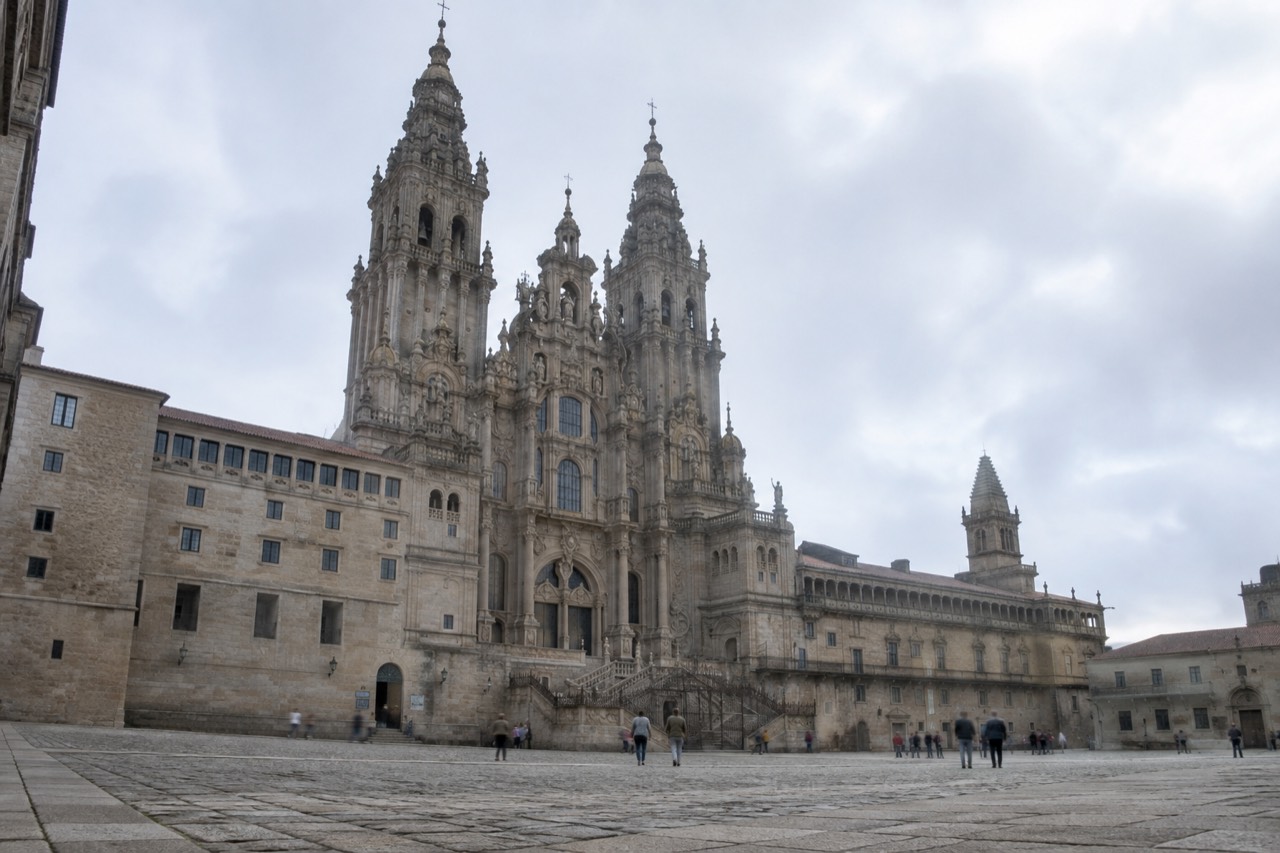
Galicia is the green, rain-fed northwest corner of Spain, and everything it is famous for flows from that geography: a pilgrim road that ends at Santiago de Compostela, an Atlantic coast scattered with lighthouses and beaches, and a food culture built on octopus, shellfish and white wine. The region's own figures back the reputation. The Pilgrim's Office in Santiago de Compostela recorded 530,987 Compostela certificates in 2025, a record year, and UNESCO holds two separate inscriptions for the area, the Old Town of Santiago de Compostela (1985) and the Routes of Santiago de Compostela (1993). Galicia is not a smaller version of southern Spain. It is its own place, with its own language, Galician, and a landscape closer to Ireland than to Andalusia.
What Is Galicia, Spain Famous For?
Galicia is famous for the Camino de Santiago, the thousand-year-old pilgrim network that converges on the Cathedral of Santiago de Compostela; for that cathedral city itself, a UNESCO World Heritage Old Town; for an Atlantic coastline of capes, estuaries and islands including Fisterra and the Cies Islands; and for a food-and-wine identity of octopus, shellfish, Padron peppers, tarta de Santiago, queimada and Albarino. Add its own language, Galician, and a wetter, greener climate than almost anywhere else in Spain.
Those strands all connect. Pilgrims have been arriving in Santiago de Compostela since the Middle Ages, and their road shaped the towns, the churches and even the food along the way. The Santiago de Compostela Travel Guide covers the city end of that story in depth; this page steps back to the region.
A quick map of what the name "Galicia" actually triggers for most people, in the order they meet it:
| What It Is Famous For | The Signature Example | Where You Meet It |
|---|---|---|
| The Camino de Santiago | Camino Frances, the classic walked route | Finishes at the Cathedral of Santiago de Compostela |
| The pilgrim city | Praza do Obradoiro and the Cathedral's Baroque facade | Santiago de Compostela Old Town, UNESCO 1985 |
| Atlantic coast | Fisterra lighthouse, Costa da Morte, Cies Islands | Western Galicia, day trips from Santiago de Compostela |
| Food | Pulpo a la gallega, Padron peppers, empanada | Tapas bars of Rua do Franco and the Mercado de Abastos |
| Wine | Albarino from the Rias Baixas estuaries | Cambados and the Salnes valley |
| Culture | The Galician language and queimada fire ritual | Everywhere, from greetings to festival nights |
Why Is The Camino de Santiago And Its Cathedral So Central To Galicia?
The Camino de Santiago is the single engine of Galicia's fame: pilgrims walked to the tomb of St. James in Santiago de Compostela for a thousand years, the Cathedral was built to receive them, and today the walk still brings hundreds of thousands of people a year into the region. In 2025 the Pilgrim's Office issued 530,987 Compostela certificates, a record. UNESCO lists the routes themselves as World Heritage, separately from the Old Town.
The Camino is not one path. The Camino Frances, the Portuguese route, the Northern coastal route, the primitive route from Oviedo and the short English route from Ferrol all converge on the same finishing line, and walkers qualify for the certificate by covering at least the last 100km on foot or 200km by bike, collecting two stamps a day in the pilgrim passport. The rules and the issuing process are explained in the guide to the Compostela certificate.
Two things matter for anyone planning a visit in the near future. First, the Botafumeiro, the Cathedral's famous giant thurible, is currently out of action: scaffolding for dome restoration covers its hanging mechanism, the Cathedral confirmed this in writing on 5 September 2026, and no return date has been published. Second, the next Holy Year, Xacobeo, is 2027, not 2026: the Holy Door opens on 31 December 2026 and the Holy Year runs through 31 December 2027, when 25 July falls on a Sunday.
The reach of that pilgrim tradition goes well beyond the walkers themselves. Hospitals, bridges and entire towns exist along the routes because medieval pilgrims needed them, and the scallop shell, the pilgrim's emblem, shows up on everything from city manhole covers to restaurant menus across the region. Modern Santiago de Compostela still runs on the same rhythm: the Pilgrim's Office queues, the mass greetings at the Cathedral, the backpacks leaning against bar stools. The Camino question people ask most often, how long the walk actually takes, is answered in how long it takes to walk the Camino de Santiago.
What Food And Wine Is Galicia Famous For?
Galicia is famous above all for seafood: pulpo a la gallega, octopus boiled and dressed in olive oil, salt and paprika, is the region's signature dish, alongside Padron peppers, tarta de Santiago, empanada and the shellfish of the Rias Baixas. The white wine of the region is Albarino, grown in the estuaries of the southwest coast. The fire ritual drink, queimada, comes with its own incantation.
The food identity is Atlantic, not Mediterranean. Rain makes Galicia green, and green Galicia grazes cattle and harvests shellfish rather than growing olives. Padron peppers carry the region's most quoted proverb: some are hot and some are not. Tarta de Santiago, the almond cake stamped with the cross of St. James, is the standard dessert in every Santiago de Compostela bar. The night-time queimada ceremony, in which orujo spirit is set alight and stirred, is both a drink and a small piece of theatre, and you can experience it in the city on a dedicated tasting evening.
Wine is concentrated in the Rias Baixas, the drowned river valleys of the southwest, where Albarino grapes grow within sight of the sea. Cambados is the historic heart of that country, and the wineries and mussel-boat estuaries around it make one of the most popular full-day trips out of Santiago de Compostela, a question examined in the best day trip from Santiago de Compostela. The mussels themselves are farmed on ropes hung from floating platforms in those same cold estuaries, which is why the shellfish trade and the wine trade grew up side by side on identical geography.
| Dish Or Drink | What It Is | Where It Belongs |
|---|---|---|
| Pulpo a la gallega | Boiled octopus, olive oil, coarse salt, paprika | Fairs and tapas bars across Galicia |
| Padron peppers | Small green peppers, fried, occasionally hot | Padron, south of A Coruna, and every tapas bar |
| Tarta de Santiago | Almond cake with the St. James cross | Santiago de Compostela, citywide |
| Albarino | Crisp white wine from coastal estuaries | Rias Baixas, around Cambados |
| Queimada | Orujo spirit, flamed and stirred with fruit | Night ritual, city and countryside |
| Percebes and scallops | Goose barnacles and vieira shellfish | Costa da Morte and the Rias Baixas |
Which Coastline And Landmarks Define Galicia?
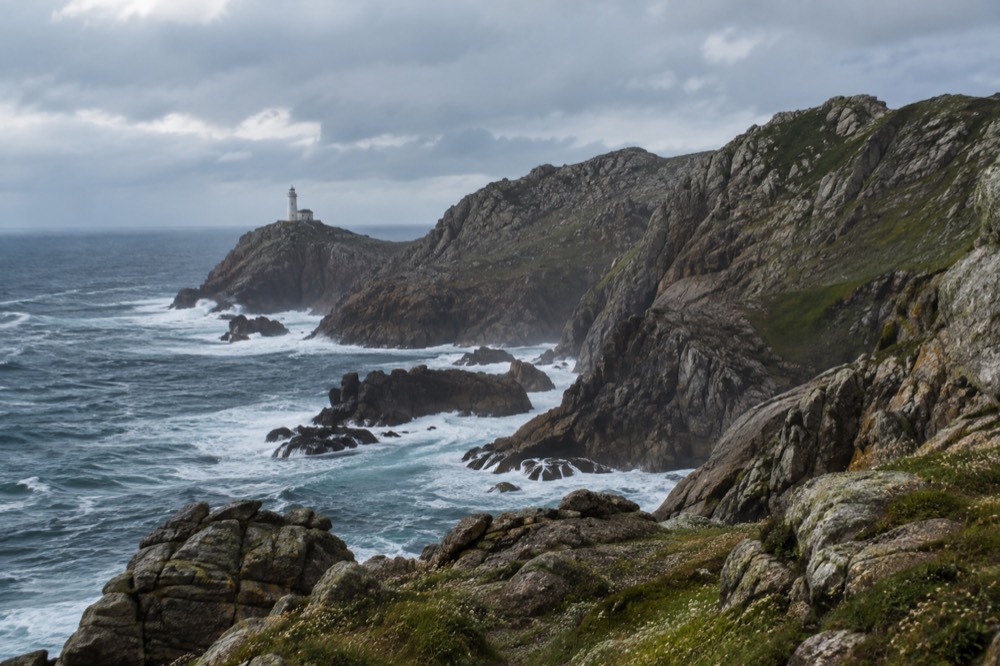
Galicia's coastline is its second act: Fisterra, the lighthouse the Romans called the end of the world, the shipwreck coast named the Costa da Morte, the mussel-raising estuaries of the Rias Baixas, and the Cies Islands, whose beach sits in a protected Atlantic national park. All of it sits within a day trip of Santiago de Compostela, which is why so many Camino walkers extend their trip west after arriving.
Fisterra, in Galician, is the same place as Finisterre in Spanish, and either name is correct. Pilgrims have always continued past the Cathedral to this cape, a tradition older than the modern road. The Costa da Morte stretches north of it, a name earned through centuries of wrecks rather than marketing. The Cies Islands, at the mouth of the Vigo estuary, cap the southern coast with a protected, visitor-limited national park beach. Lugo, inland to the east, adds a complete Roman wall to the list, and A Coruna and Vigo bookend the coast as Galicia's biggest cities.
Why Do People Say Galicia Is Different From The Rest Of Spain?
People say Galicia is different because it is: it has its own Romance language, Galician, closer to Portuguese than to Castilian Spanish; its own Celtic-tinged folk traditions, bagpipes included; a wet oceanic climate, rainier from October to March and driest in July and August, that keeps the country green year-round; and a history of emigration and return that left a distinctive culture on the Atlantic edge. Even the greeting is different.
The climate explains most of it. AEMET's data for the Santiago de Compostela station shows annual precipitation on the order of 1,690-1,890mm, wet by any Spanish standard, which is why the landscape looks like it belongs further north. The language question, including the local way of saying hello, is covered in how you say hello in Galicia, and the broader cultural case is laid out in why Galicia is different from Spain.
The differences are practical for a visitor. A Coruna is written the same in both Spanish and Galician, and you will see both Fisterra and Finisterre on maps and signs. Museums and markets keep their own hours, and specifics should be checked on each venue's own site rather than assumed from mainland-Spain habits.
Common Questions About Galicia, Spain
Is Galicia part of Spain or Portugal?
Galicia is an autonomous community of Spain, in the northwest of the country. Its language, Galician, is closely related to Portuguese, which is why the two are sometimes confused, but the region has been part of Spain throughout the modern era.
What is the capital of Galicia?
Santiago de Compostela is the administrative capital of Galicia and its most famous city, the endpoint of the Camino de Santiago and seat of the regional government.
What is the best time of year to visit Galicia?
July and August are the driest months, which is also when the Camino is busiest. The wet season runs roughly October to March. The exact trade-offs between weather and crowds are covered in the guide to the best time to visit Santiago de Compostela.
Can you visit Galicia's coast from Santiago de Compostela?
Yes. Fisterra, Muxia, the Costa da Morte, the Rias Baixas wine country and the Cies Islands are all established full-day or half-day tours from the city, and many Camino walkers add one after arriving.
What drink is Galicia famous for?
Albarino white wine from the Rias Baixas is the international flagship, and queimada, the flamed orujo ritual, is the cultural one. Galicia also brews its own beers and distills orujo de hierbas as a digestif.
Galicia's fame, in the end, is a single story told four ways: walk the Camino de Santiago into Santiago de Compostela, look west from Fisterra at the Atlantic that shaped this coast, eat what the estuaries and the rain-fed fields produce, and listen for a language that is not quite the Spain most visitors expect.