How Do You Say Hello In Galicia?
How to say hello in Galicia: the Galician greetings heard in Santiago de Compostela, how they differ from Spanish, and the phrases worth knowing on arrival.
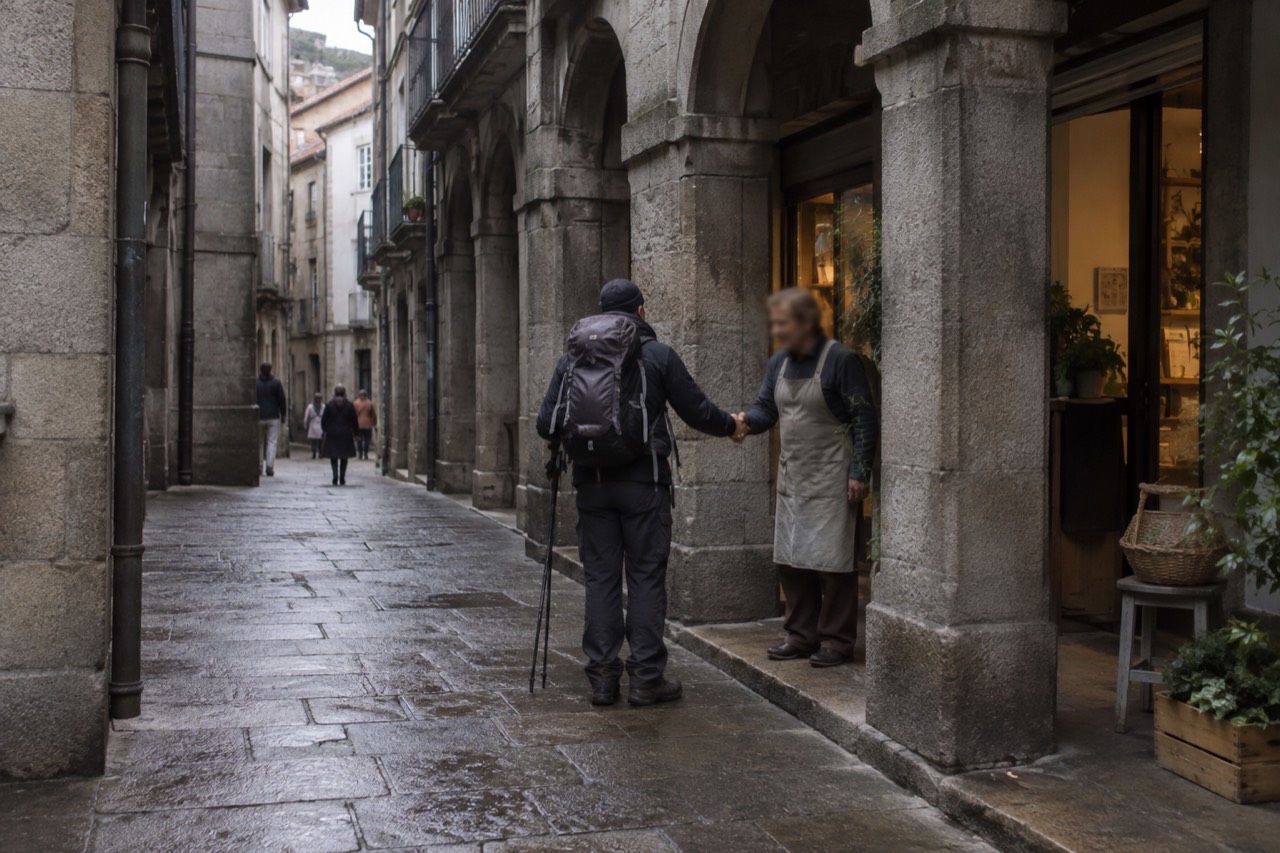
The first word most visitors hear on arriving in Santiago de Compostela, whether at the airport or under the incense-scented vaults of the Cathedral, is often not Spanish. It is Galician, the co-official language of this region, spoken alongside Spanish on street signs, in bars on Rua do Franco, and in the liturgy of the Cathedral itself. Knowing how to say hello in Galicia is a small thing that opens doors here, because locals notice the effort in a region where the language was suppressed for decades and is now proudly resurgent. This page gives the greetings, the pronunciation, and the context a first-time visitor to Santiago de Compostela actually needs.
How Do You Say Hello In Galicia?
The everyday hello in Galicia is "Ola", pronounced OH-lah, and it works at any hour of the day, followed in more formal settings by "Bo día" (good morning, boh DEE-ah), "Boas tardes" (good afternoon) and "Boas noites" (good evening or good night). Galician is the co-official language of Galicia alongside Spanish, so in Santiago de Compostela you will hear all of these daily, sometimes in the same sentence as Spanish greetings like "hola" and "buenos días".
That is the direct answer, and it is genuinely all you need to start a conversation. But the context matters, because Galicia is officially bilingual and the choice of language carries weight. Santiago de Compostela is the administrative and cultural capital of Galicia, and its city council, its university, and the Cathedral all operate in both Galician and Spanish. Street names on the granite plaques of the old town are in Galician: Praza do Obradoiro, not Plaza del Obradoiro, and Rua do Franco, not Calle del Franco.
A visitor who says "boa tarde" to a waiter will usually get a warm, slightly surprised smile. Nobody expects tourists to speak Galician, and Spanish works everywhere. But this is a region where the language was pushed out of public life under dictatorship, and its recovery since Spain's return to democracy is a point of local pride. Effort is noticed.
For pilgrims finishing the Camino de Santiago, there is one extra phrase worth learning before anything else. When pilgrims greet each other on the road into the city, the traditional call is "Ultreia", sometimes answered with "Suseia". It is a medieval word of encouragement, roughly "onward and upward", and it belongs specifically to the pilgrim culture of this city rather than to everyday speech. Pilgrims who have walked for weeks tend to know it before they know "ola".
What Language Is Spoken In Santiago de Compostela?
Two languages share official status in Santiago de Compostela: Galician (galego), the historical language of the region, and Spanish (castellán), and both are used daily in the city's government, schools, media and commerce. Galician is a Romance language descended from Latin, closer to Portuguese than to Spanish, and roughly half of Galicia's population speaks it habitually, with the great majority understanding it.
Galician and Portuguese grew from the same medieval root, the Galician-Portuguese of the troubadours, and only split definitively as political borders hardened in the late Middle Ages. A Galician speaker and a Portuguese speaker can often follow each other's gist, which surprises visitors who have just arrived overland from Porto on the Portuguese Camino. The written forms look similar too: "bo día" in Galician, "bom dia" in Portuguese.
In practice, daily life in Santiago de Compostela is fluidly bilingual. A single conversation on Praza do Obradoiro might open in Galician, drift into Spanish, and end in Galician, with nobody remarking on the switches. Service staff address strangers in Spanish by default, then switch to Galician when a local accent answers back. Radio and television from Galicia's own broadcaster carry news in both languages, and the city's festival posters, from the Feast of St James on 25 July to the smaller neighbourhood romarías, are printed in Galician first.
For a visitor, none of this creates a barrier. English is less widely spoken here than in Madrid or Barcelona, so a handful of Spanish or Galician phrases go further than they would in Spain's biggest cities. If you are planning a longer Camino walk, our page on how long it takes to walk the Camino de Santiago covers what to expect on the road where these greetings will become daily currency.
Which Galician Words Should A Visitor Learn For Santiago de Compostela?
Learn ten words, not a grammar: "ola" (hello), "bo día" and "boas tardes" (good morning, good afternoon), "gracias" or "grazas" (thank you), "por favor" (please), "desculpe" (excuse me), "si" and "non" (yes and no), "adiós" or "adeus" (goodbye), and "ata logo" (see you later), which is the warmest everyday farewell in Galicia. That handful covers almost every courtesy situation a visitor to Santiago de Compostela will meet.
The table below sets the Galician against its Spanish and English equivalents, with a rough pronunciation guide. Say the vowels short and clean, stress the syllable shown in capitals, and you will be understood everywhere in the city.
| English | Galician | Rough pronunciation | Spanish |
|---|---|---|---|
| Hello | Ola | OH-lah | Hola |
| Good morning | Bo día | boh DEE-ah | Buenos días |
| Good afternoon | Boas tardes | bo-ahs TAR-des | Buenas tardes |
| Good evening / night | Boas noites | bo-ahs NOY-tes | Buenas noches |
| Please | Por favor | por fa-VOR | Por favor |
| Thank you | Grazas | GRAH-sahs | Gracias |
| Excuse me | Desculpe | des-KOOL-peh | Disculpe |
| Yes / No | Si / Non | see / nohn | Sí / No |
| See you later | Ata logo | AH-tah LOH-goh | Hasta luego |
| Goodbye | Adeus | ah-DEH-oos | Adiós |
Notice how close several of these sit to Portuguese: "desculpe" and "adeus" are what a Lisbon or Porto local would say too, while the Spanish forms are the ones most guidebooks print. That is the linguistic geography of Galicia showing through, closer in its speech to the Atlantic neighbour than to the Castilian plateau.
The greeting that does the most social work in Santiago de Compostela is not the formal one. It is "boa tarde" said to a bartender at eleven in the morning, or "ola" called across a market stall, which marks you as someone making an effort rather than reciting a phrasebook. Locals will gently correct a mangled word and almost always switch to Spanish to help you along, so there is no penalty for trying.
A second table of food words earns its keep quickly, because Galician cuisine is the city's other great language, and menus are bilingual in a way that trips up visitors who only know Spanish dish names.
| English | Galician menu word | Spanish equivalent |
|---|---|---|
| Octopus | Polbo | Pulpo |
| Empanada pie | Empanada | Empanada |
| Padrón pepper | Pemento de Padrón | Pimiento de Padrón |
| Albariño wine | Albariño | Albariño |
| Santiago cake | Tarta de Santiago | Tarta de Santiago |
| Seafood | Marisco | Marisco |
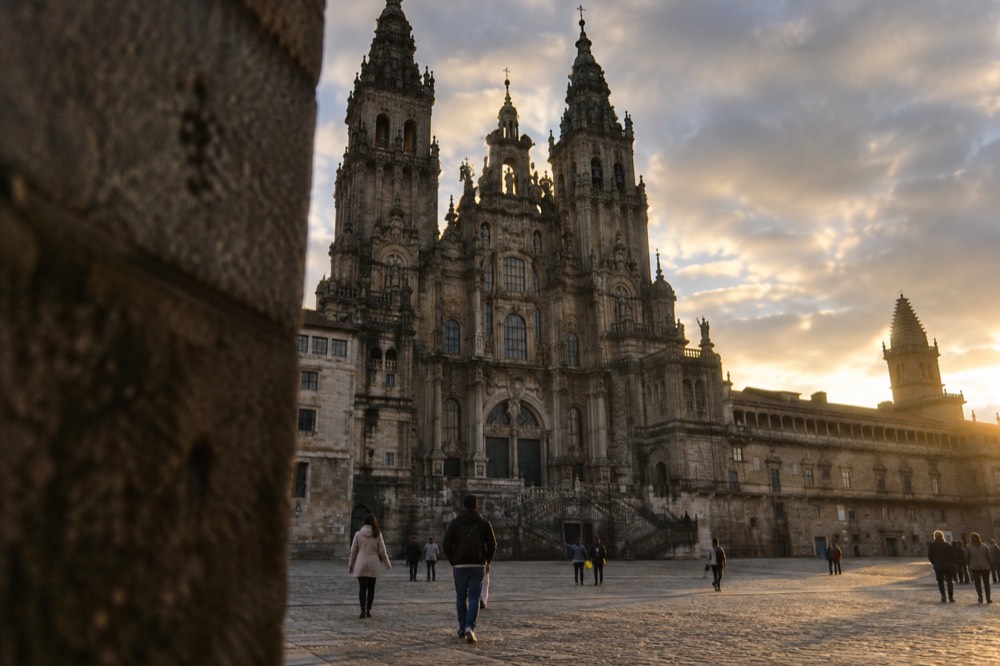
For pilgrims finishing their walk, one practical stop rewards a little Galician more than any other. The Oficina del Peregrino at Rua das Carretas 33 issues the Compostela certificate to those who completed the last 100km on foot, or the last 200km by bicycle, with two stamps per day in their pilgrim passport. The queue is international, the staff multilingual, but a "boa tarde" when reaching the counter is met with real pleasure.
Where Will You Hear Galician Spoken In The City?
You will hear Galician most reliably at the morning Pilgrim Mass in the Cathedral, among stallholders and shoppers at the Mercado de Abastos, in the tapas bars of Rua do Franco where locals outnumber visitors, and from the guides and staff who run the Cathedral's own tours, because official tourism roles in Galicia draw on a workforce that grew up with the language.
The Cathedral is a special case worth explaining. Its liturgy page publishes the pilgrim mass schedule, currently 7:30am, 9:30am, noon and 7:30pm, and from 16 October 2026 the 9:30am, noon and 7:30pm masses relocate from the High Altar to the nearby Church of San Agustin while main-chapel works prepare the Cathedral for the 2027 Holy Year. The 7:30am mass stays in the Cathedral's Communion chapel. Parts of the liturgy are sung and spoken in Galician, and even a visitor who understands none of it can hear the difference from Spanish within a minute.
A guided visit is the other easy place to hear the language at work. The Cathedral's own rooftops and Carraca Tower tour, a guided hour involving some 140 steps at roughly 72 metres above the square, is run by staff for whom Galician and Spanish alternate naturally, and questions asked in either language are answered in kind. Our companion page on the Cathedral rooftops tour covers what that visit involves, and the Cathedral of Santiago de Compostela guide gives the fuller picture of the building itself.
Do You Need Galician Or Spanish As A Visitor To Santiago de Compostela?
No, you need neither: English plus patience covers most tourist situations in Santiago de Compostela, though less completely than in Spain's largest cities, and Spanish is the default language that every waiter, taxi driver and hotel receptionist in the city speaks. Galician is a bonus that earns goodwill, never a requirement, and locals happily receive a greeting in either language.
The honest planning advice is to bring a little Spanish and a little Galician, weighted toward Spanish for practical transactions and Galician for greetings. A visitor who opens with "ola" or "boa tarde" and then continues in Spanish or English is doing exactly what thousands of local bilinguals do every day. What reads as effort, and is received warmly, is the choice to greet in the local language at all.
Pilgrims should know one thing about the Camino itself: on the French route through Sarria, the last 100km stretch that qualifies walkers for the Compostela, the villages are Galician-speaking and the waymarkers are in Galician. Our page on the difficulty of the Sarria to Santiago walk notes how rural that stretch is, and it is also the stretch where a "boa tarde" at a village café draws the biggest smiles. For the deeper background on why this region feels linguistically distinct from the rest of Spain, see why Galicia is different from Spain.
Common Questions About Saying Hello In Galicia
How do you say hello in Galicia?
"Ola", pronounced OH-lah, is the everyday Galician hello, usable at any time of day. The time-specific greetings are "bo día" in the morning, "boas tardes" in the afternoon and "boas noites" in the evening.
Is Galician the same as Spanish?
No. Galician is a separate Romance language, co-official with Spanish in Galicia, descended from Latin and historically closer to Portuguese. Most people in Santiago de Compostela understand and speak both, and daily life mixes them freely.
Can I get by in English in Santiago de Compostela?
Mostly yes, in hotels, tours and the Cathedral's visitor services, though English coverage is thinner than in Madrid or Barcelona. Carrying a few Spanish or Galician phrases, especially greetings, makes everyday transactions smoother.
What does "Ultreia" mean?
It is a medieval pilgrim greeting of encouragement, roughly "onward", traditionally answered with "Suseia". It is specific to Camino culture rather than everyday Galician speech.
Do people in Santiago de Compostela prefer Galician or Spanish?
There is no single preference; usage varies by generation, neighbourhood and context. Addressing a stranger in Spanish is always safe, and greeting in Galician is welcomed as a sign of respect for the region's culture.
A single word, "ola", is all the language a visit strictly requires, and it costs nothing to carry. For a fuller sense of what this city rewards beyond greetings, the Santiago de Compostela Travel Guide homepage gathers the walking tours, day trips and Cathedral visits that turn a greeting into a conversation, and the Cathedral's rooftop and Carraca Tower visit remains one of the best places to hear Galician spoken among the people who live and work in it.