Why Is Galicia Different From Spain? Santiago De Compostela's Region Explained
Why Galicia, the region around Santiago de Compostela, feels different from the rest of Spain: its own language, oceanic climate, Atlantic cuisine and Camino history.
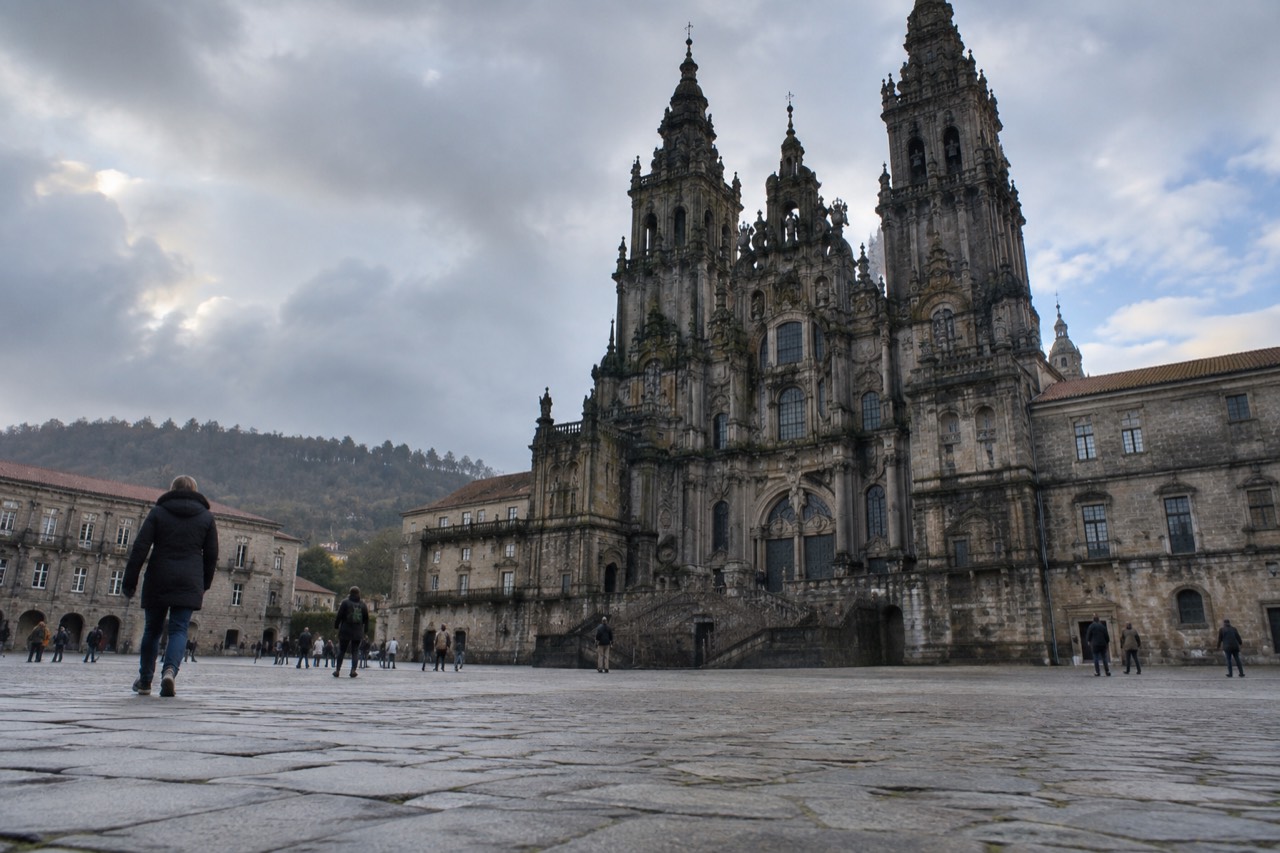
Galicia is the green, rainswept northwest corner of Spain, and Santiago de Compostela is its capital and its spiritual centre. Arriving visitors often say the region does not feel like the Spain of postcards at all. No whitewashed courtyards, no flamenco, no scorched summer plains. Instead there is granite, drizzle, bagpipes, octopus, a language closer to Portuguese than to Castilian, and a pilgrim city that has drawn travellers for over a thousand years. That gap between expectation and reality is the whole point, and it has historical, geographical and linguistic roots worth understanding before a trip.
Why Is Galicia Different From Spain?
Galicia differs from the rest of Spain because it was settled and shaped differently: it kept its own Romance language, Galician, alongside Spanish; its Roman and medieval history tied it to Atlantic Europe rather than to the Castilian interior; its oceanic climate makes it the greenest part of the country; and it has never seen itself as a folkloric province but as one of Spain's historic nations, with its own institutions, literature and identity centred on Santiago de Compostela. The difference is not cosmetic. It shows up in what people speak at the market, what they eat, what music plays at festivals, and how the whole region relates to the idea of Spain itself.
Start with the geography. Galicia sits above Portugal on the Atlantic coast, cut off from the Spanish interior by mountain ranges and rivers. For most of its history, moving goods and people by sea was easier than moving them overland, so Galicia looked outward to the Atlantic: to fishing, to emigration to the Americas, and to cultural exchange with Ireland, Brittany and northern Portugal. The interior of Spain, by contrast, was organised around Castile, Madrid and the dry central plateau. Two different worlds grew up inside one modern state.
Then there is the deepest marker of all: language. Galicia is officially bilingual. Spanish is spoken and understood everywhere, but Galician, Galego, is the co-official language of the region, spoken daily by a large share of the population, used in schools, on street signs and in government. Santiago de Compostela's own street names, Praza do Obradoiro, Rua do Franco, are Galician forms. A visitor who asks how do you say hello in Galicia gets an answer that is not Spanish at all.
Why Does Galicia Have Its Own Language?
Galician is not a dialect of Spanish but a separate Romance language that grew from Latin in the medieval Kingdom of Galicia, sharing roots and heavy mutual resemblance with Portuguese, since Galicia and Portugal formed part of the same linguistic area in the Middle Ages. It was a literary language centuries ago, later pushed to the margins of public life, and restored as co-official when Spain's regions gained autonomy.
Signs, menus and public life in Galicia, including in Santiago de Compostela, carry Galician spellings like Rua, Praza and compostelán.
That medieval pedigree matters to how Galicians see themselves. While Castilian Spanish was spreading south with the Reconquista, Galician-Portuguese was the language of courtly poetry across the northwest of the Iberian Peninsula. When political power shifted to Castile, Galicia became peripheral, but the language survived in villages, churches and kitchens. The dictatorship decades brought suppression, and democracy brought a cultural revival and, with it, official status.
The visible result for a traveller in Santiago de Compostela is a streetscape written in two languages. Cathedral plaques, city notices and the local press mix Galician and Spanish freely. Most Galicians switch between them without thinking, and the accent in Spanish spoken here sounds distinctively soft and Galician-influenced, nothing like the accents of Madrid or Seville.
Language is also the door into the rest of the cultural difference. Galician literature, Galician place names and Galician greetings are the everyday surface of an identity that also includes music, dress and festivals. To hear it all explained while walking the granite lanes of the old town, a guided walk with a local official guide is the efficient option, and it pairs well with the background reading below.
How Is Galician Culture Different In Santiago de Compostela?
Galician culture shows itself in Santiago de Compostela through its Celtic-Atlantic folk traditions: the gaita, the Galician bagpipe, leads festivals rather than flamenco guitars; the queimada, a flaming orujo ritual with a spoken spell against evil spirits, is a celebrated local ceremony; and the region's biggest festival, the Feast of St James on 25 July, honours the Apostle whose tomb the Cathedral was built around, making the city's own heritage festival a Galician national holiday at the same time. None of these belongs to the Spain of bullfighting-and-flamenco imagery.
The bagpipe is the emblem outsiders find most surprising. Galicia, with Asturias next door, is one of Europe's historic bagpipe regions, a tradition shared with Scotland and Ireland and tied to the Atlantic world rather than the Mediterranean. At folk festivals across the region, pipers in traditional dress lead processions, and the sound is as normal here as a brass band is elsewhere.
The queimada is the ritual that visitors can actually taste. Orujo, a Galician spirit, is set alight in a clay pot with sugar, lemon peel and coffee beans while the conxuro, a spoken incantation against witches and evil spirits, is recited. It is theatre, drink and folklore in one, and it is performed at celebrations rather than in ordinary kitchens. Santiago de Compostela offers dedicated queimada shows where the ceremony is performed as a cultural event with a tasting.
Underneath both sits the city's defining institution, the pilgrim tradition. The Camino de Santiago has funnelled travellers into the city for a millennium, and it has left Galicia with a culture of hospitality, roadside shrines and hospitality infrastructure that has no real parallel in the rest of Spain. The scale is documented: 530,987 pilgrims collected the Compostela certificate in 2025, a record year, and every one of them finished in Galicia.
To dig into that living heritage in person, the old town itself is the open-air museum. A private tour with a local guide, booked with the flexibility to choose the itinerary, is a good fit for travellers who want Galician history explained rather than just seen. Check availability.
How Is Galician Food Different From Spanish Food?
Galician food is Atlantic rather than Mediterranean: it is built on seafood, octopus, empanada pies, local cheeses and the Albarino white wines of the Rias Baixas estuaries, not on the olive-oil, tomato and cured-meat cooking of central and southern Spain. Signature dishes include pulpo a la gallega, octopus with paprika and olive oil on boiled potatoes, Padrón peppers, some hot and some mild, and Tarta de Santiago, an almond cake stamped with the cross of St James.
The difference starts with the sea. Galicia's coast is a maze of estuaries, the Rias Baixas and Rias Altas, where mussels are farmed on rafts and fishing villages still land their catch daily. Inland, the terrain is small farms, chestnuts and livestock rather than the vast cereal plains of Castile. That landscape produces a cuisine of shellfish, fish, potatoes, greens, cheese and wine that has more in common with northern Portugal or Brittany than with Valencia.
| Feature | Galicia | Common image of central/southern Spain |
|---|---|---|
| Staple protein | Octopus, shellfish, fish from the rías | Cured hams, lamb, grilled meats |
| Signature pepper dish | Padrón peppers, "some are hot, some are not" | Padrón rarely features outside Galicia |
| Wine culture | Albarino white from Rias Baixas | Rioja and other red-dominant regions |
| Star dessert | Tarta de Santiago almond cake | Flan, churros with chocolate |
| Signature spirit | Orujo, drunk plain or in the queimada ritual | Anís liqueurs |
| Bread and pie | Empanada, a savoury pie with fish or meat | Empanada is a Galician import elsewhere |
The regional market that anchors this in Santiago de Compostela is Mercado de Abastos, the city's fresh-food market and its second most visited site after the Cathedral, where locals shop for the day's fish, peppers and cheese. Galician cuisine, covered in detail in what is Galicia Spain famous for, is one of the main reasons travellers give for visiting the region at all.
Why Is Galicia's Landscape So Different From The Rest Of Spain?
Galicia's landscape is different because its climate is temperate oceanic rather than Mediterranean: AEMET's data for Santiago de Compostela shows annual precipitation on the order of 1,690 to 1,890mm, wet year-round with wetter months October to March and driest months in July and August, a pattern that keeps the region green, forested and mild while the Spanish interior runs dry, treeless in places and scorching in summer. It is, in honest terms, closer to Ireland's weather than to Andalusia's.
That rainfall shapes everything. Green pasture runs to the horizon, eucalyptus and oak woods cover the hills, rivers cut deep canyons, and the coast alternates cliffs with sandy coves. Agriculture here is small-scale and livestock-based, which historically produced the dispersed stone-village landscape, the hórreos, raised granite granaries that are one of Galicia's most distinctive structures. The pilgrim walking routes into Santiago de Compostela cross this terrain for days on end, and many walkers list the greenness itself as the trip's biggest surprise.
The same weather explains the rain question visitors ask most. Santiago de Compostela is a city where an umbrella is packing-list equipment even in summer, and the surrounding routes can be muddy, misty and magnificent in the same hour. The driest window is July and August, and the Camino seasons are planned around that reality.
What Makes Galicia's History And The Camino Different?
Galicia's historical claim to fame is the Camino de Santiago: the belief that the remains of the Apostle St James lie in Santiago de Compostela turned a remote Roman-era corner of Iberia into one of medieval Europe's great pilgrimage destinations, and the recognition is now doubled, with UNESCO inscribing the Old Town of Santiago de Compostela in 1985 and the Routes of Santiago, the Camino Frances and the Northern routes, in 1993 as two separate listings. Pilgrimage built the region's roads, hospitals, churches and ultimately the city itself.
The Camino's imprint is still administrative reality. The Pilgrim's Office at Rua das Carretas 33 in Santiago de Compostela still issues the Compostela certificate in person to walkers who cover at least the last 100km, or cyclists covering the last 200km, with two stamps per day in a pilgrim passport. Pilgrim masses are held daily in the Cathedral, at 7:30am, 9:30am, noon and 7:30pm at the High Altar, though from 16 October 2026 the 9:30am, noon and 7:30pm masses relocate to the nearby Church of San Agustin while main-chapel works prepare for the 2027 Holy Year. The Holy Door opens on 31 December 2026 and the Holy Year runs through 31 December 2027.
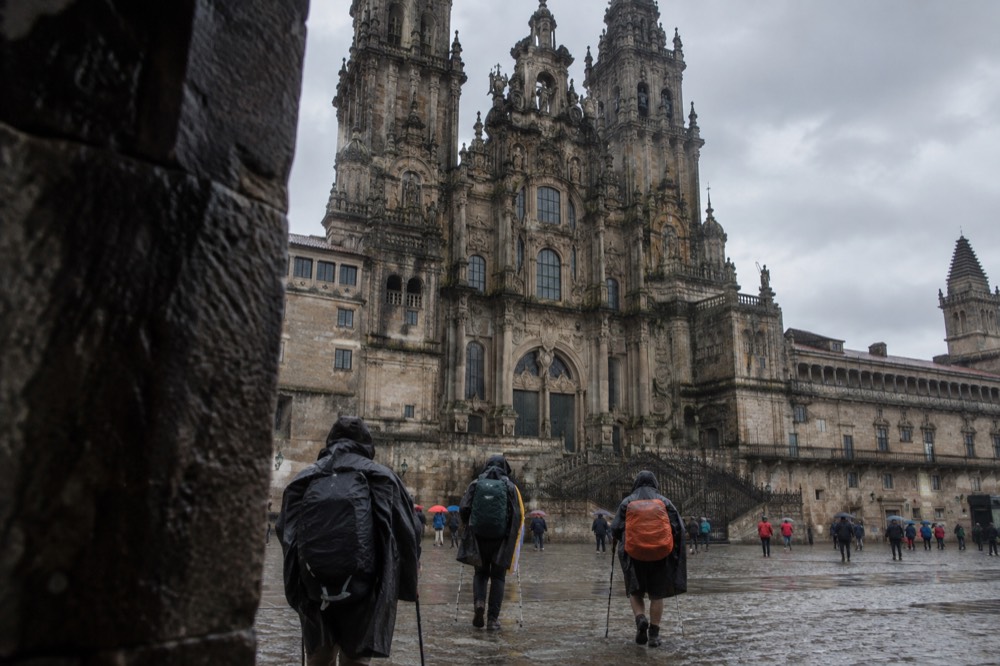
For travellers who want to experience that history rather than read it, the walk itself is the entry point, and questions like how long does it take to walk the Camino de Santiago and what is the average cost to walk the Camino de Santiago are where most planning starts. Galicia's network of trails is what makes the region function as one enormous historical site.
The three walks above cover the city end of that story, but the region's full range, from coastal Fisterra to the monasteries of Ribeira Sacra, rewards a guide with a car and a flexible plan. For travellers who want the itinerary shaped around what interests them most, whether that is food, architecture or the Camino's final kilometres, the private option below exists for exactly that.
Does Galicia Feel Like A Different Country?
Galicia feels like a different country in texture but not in fact: it is a fully autonomous community within Spain, with its own parliament, its own public broadcaster and Galician as a co-official language, yet it shares Spain's currency, government framework and borders. The feeling of difference comes from lived culture, language, weather and food, not from any political separation, and Galician identity runs alongside Spanish identity rather than against it for most residents. Nothing about it complicates a Spanish trip: the euro is used, EU rules apply and 112 is the emergency number.
Autonomy is the formal side of that. Under Spain's constitution, Galicia became one of the historic nationalities with its own statute, its own government, the Xunta de Galicia, and control over areas like education, health and its own language policy. That is why the region's official signage, schooling and media operate bilingually, while the traveller still moves through one country, one currency and one set of borders in every practical sense.
Day trips out of Santiago de Compostela show the range inside this single region: the Roman walls of Lugo, the beaches of the Cies Islands, the wine town of Cambados, the coast at Fisterra and Muxia where the Camino traditionally ends at the sea. Anyone weighing those options can start with what is the best day trip from Santiago de Compostela, and the broader northern coast question is covered in which part of northern Spain is best to visit. A Coruna, another Galician city with its own glass-fronted seafront, is argued over in is A Coruna worth visiting.
The honest summary is that Galicia is Spain the way Scotland is Britain: fully part of the state, unmistakably its own place. Santiago de Compostela, its capital and the end of the Camino, is where all of it, the language, the rain, the octopus, the bagpipes and the pilgrim roads, comes together most densely. This, as the Santiago de Compostela Travel Guide editors keep finding, is why the city rewards a second and third day.
Common Questions About Galicia And Spain
Why is Galicia different from Spain?
Galicia has its own co-official language, Galician, an Atlantic climate and cuisine, Celtic-tinged folk traditions like the gaita bagpipe and the queimada ritual, and a medieval history organised around the pilgrimage to Santiago de Compostela rather than the Castilian interior. All of that sits inside Spain as one of its autonomous historic nationalities.
Do people in Galicia speak Spanish?
Yes, everyone in Galicia speaks and understands Spanish. Galician is co-official and widely spoken daily, but a Spanish-only speaker can travel, order food and ask directions anywhere in the region, including Santiago de Compostela, without a language problem.
Is Galician its own language or a dialect?
Galician is a separate Romance language, co-official in the region, with medieval literary roots and a close relationship to Portuguese. It is not a dialect of Spanish, though the two languages coexist and most Galicians are functionally bilingual.
Why is Galicia so green compared with the rest of Spain?
AEMET's climate data for Santiago de Compostela shows annual precipitation on the order of 1,690 to 1,890mm, wet year-round and wettest from October to March. That oceanic rainfall pattern, far wetter than the Mediterranean and continental parts of Spain, keeps the region's pasture, forest and farmland permanently green.
What food is Galicia known for?
Octopus served a la gallega with paprika and potatoes, Padrón peppers, empanada pies, fresh fish and shellfish from the rías, Tarta de Santiago almond cake, Albarino white wine from the Rias Baixas and orujo, the spirit used in the queimada ritual.
Is Galicia a separate country from Spain?
No. Galicia is an autonomous community within Spain with its own parliament, government and co-official language, but it shares Spain's currency, laws and borders. The strong regional identity is cultural and linguistic, not a political separation.