What Do I Need To Avoid On The Camino?
The mistakes pilgrims make on the Camino de Santiago, from overpacked bags and missed stamps to credential rules, albergue etiquette and arrival-day errors in Santiago de Compostela.
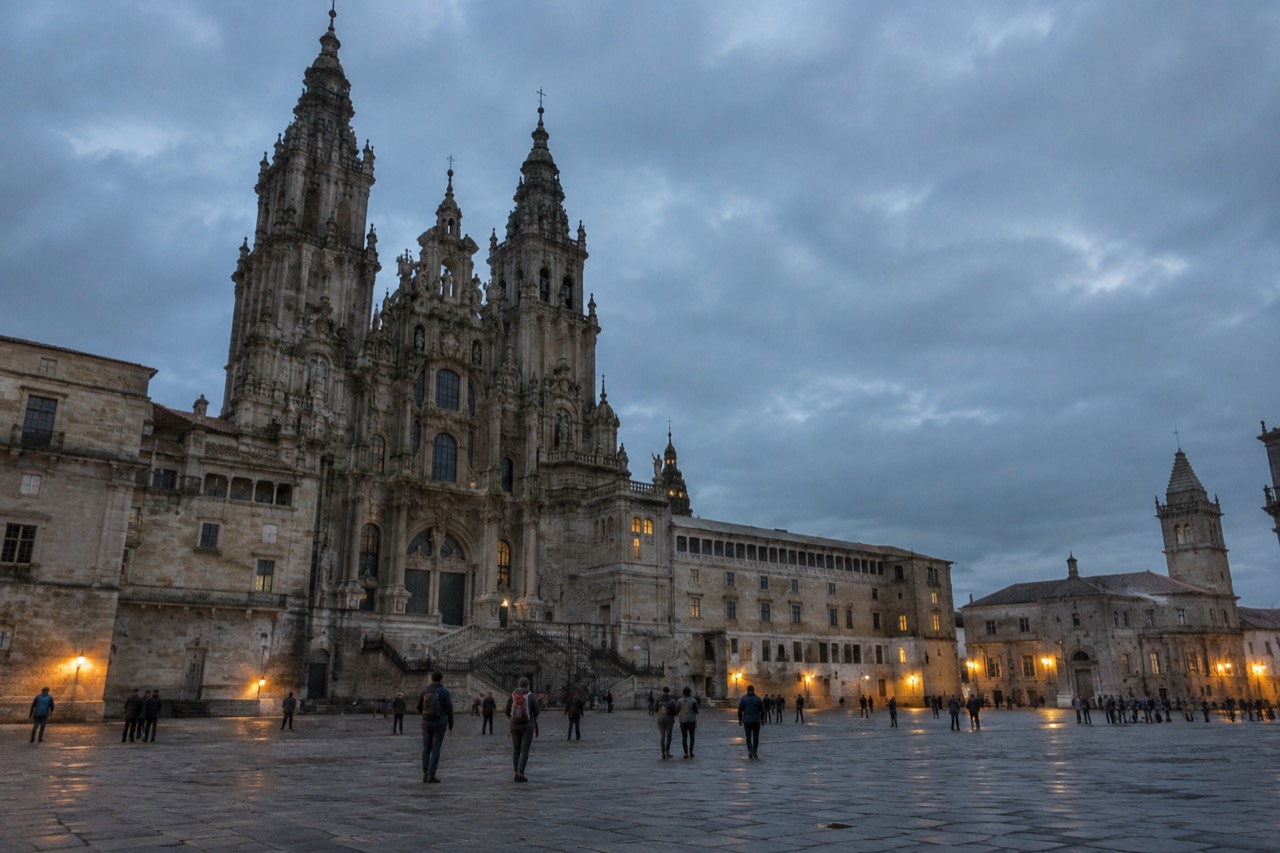
The Camino de Santiago ends at a single building: the Cathedral of Santiago de Compostela in Galicia, northwest Spain, and the walk is best understood through the rules the city itself publishes. The Oficina del Peregrino, the official pilgrim office at Rua das Carretas 33, issued a record 530,987 Compostela certificates in 2025, and its own FAQ pages describe precisely why walkers arrive and leave without one. The mistakes below are not folklore. They come from that office's published rules, from the Cathedral's own liturgy and ticketing pages, and from the recurring failure points every Camino route shares.
What Do I Need To Avoid On The Camino?
The five mistakes that genuinely cost pilgrims something are: walking without collecting two credencial stamps per day, skipping the last 100km on foot (or 200km by bike), starting too late in the day and losing the bed race, overpacking a bag beyond what the body can carry for weeks, and arriving in Santiago de Compostela assuming the Botafumeiro will swing, because the Cathedral confirmed in writing on 5 September 2026 that it is currently out of action with no return date published. Nearly every other Camino problem, from blisters to booked-out albergues, traces back to one of those five or to simple timing.
The certificate rules matter most because they are unforgiving. The Oficina del Peregrino's FAQs state that the Compostela requires the last 100km walked or covered on horseback, or the last 200km cycled, on a recognized route, continuously, with at least two stamps per day in the credencial from official stamping points. The certificate is issued in person only, at Rua das Carretas 33. A walker who taxis the final 20km has, in the office's own terms, broken the continuous route, and no amount of explaining fixes it at the counter.
The Botafumeiro point is the arrival-day trap. The giant thurible normally swings on 12 fixed liturgical solemnities each year, but the Cathedral has confirmed in writing that scaffolding for the cimborrio restoration covers its hanging mechanism, with no return date published as of September 2026. It is not swinging, and it is not bookable for private requests either. Pilgrims who plan their entire arrival around seeing it fly are planning around something that is currently suspended.
Timing errors are the quieter category. Start walking by 7am and the day belongs to you; start at 10am in July and every albergue in the next town may be full by mid-afternoon. The Camino de Santiago routes guide breaks down how the busiest stretches differ, and the cost answer covers the budget side of the same planning decisions.
Common Packing And Planning Mistakes On The Camino de Santiago
The packing mistakes that end walks early are carrying a bag above roughly 10% of body weight, packing for weather that does not match Galicia's climate, wearing footwear that is anything other than broken in before day one, and relying on a single guidebook app for a walk where albergue capacity, not distance, is the real daily constraint. AEMET's climate data for Santiago de Compostela shows a temperate oceanic pattern, wet year-round, wetter from October to March and driest in July and August, with annual precipitation on the order of 1,690-1,890mm. That is a rain-jacket climate even in summer, and the packing mistakes flow directly from ignoring it.
| Mistake | Why it hurts | What to do instead |
|---|---|---|
| Bag above 10% of body weight | Blisters, knee pain, abandoned walks by week two | Weigh the packed bag at home, cut until it is light |
| New boots on day one | Blisters almost always | Wear the shoes for weeks beforehand |
| No rain shell in summer | Galicia rains in every month, per AEMET data | Pack a light shell year-round |
| One pair of socks | Wet feet for days, the main blister cause | Two or three pairs, rotated and dried |
| Booking nothing in July and August | Full albergues on the busiest stretches | Book key stages ahead in peak season |
The planning half of the mistake list is mostly about the calendar. The best month answer covers the seasonal trade-offs in detail, and the how long it takes answer covers stage planning. The single most common planning error is scheduling no contingency days: a walk that has zero slack in it breaks the moment a knee, a storm or a full albergue appears, and all three appear regularly on every route into Santiago de Compostela.
The second most common is treating the Camino as a race. The Frances in particular tempts people into big early days, and the walkers who finish are rarely the ones who started fastest. The office's stamp rules also mean that a rest day needs stamps too, since the credencial has to show the continuous walk. Collect two stamps every single walking day from day one, not just near the end, because the office checks the pattern, not just the total.
Money, Credential And Bureaucratic Mistakes In Santiago de Compostela
The bureaucratic mistakes to avoid are: not getting the credencial stamped twice per day from official points, breaking the final 100km (200km cycling) continuity rule, expecting the Compostela at any office other than Rua das Carretas 33, overlooking that Santiago de Compostela has charged a municipal tourist tax since 1 October 2025 (per person per night, up to 5 nights, from 1 EUR in private albergues, campsites and tourist apartments to 2.50 EUR in five-star hotels, with under-18s and Xunta-run public albergue stays exempt), and planning around mass times without knowing that from 16 October 2026 the 9:30am, noon and 7:30pm pilgrim masses relocate to the Church of San Agustin, with only the 7:30am mass staying in the Cathedral's Communion chapel. Each of those is a published, dated rule, not a rumour.
The mass relocation is the newest and least-known item on the list. The Cathedral's High Altar masses run as normal until 15 October 2026 while main-chapel remodelling is prepared for the 2027 Holy Year. From 16 October 2026 the 9:30am, noon and 7:30pm masses move to the Church of San Agustin. Pilgrims who arrive expecting the noon mass at the High Altar after mid-October will be walking to the wrong church. The pilgrim mass guide on this site covers the full arrangement, both dated halves of it.
On the money side, the mistake to avoid is budgeting with invented numbers. Santiago de Compostela has charged a municipal tourist tax since 1 October 2025, a surcharge on Galicia's tourist-stay tax, ranging from 1 EUR per person per night in private albergues, campsites and tourist apartments up to 2.50 EUR in five-star hotels, for a maximum of 5 nights, with under-18s and stays in Xunta-run public albergues exempt. The certificate itself is free; the costs are the albergues, the food and the transport to the start line. Walkers aiming at the classic final stretch should read the Sarria to Santiago guide, since the 100km rule makes Sarria the busiest launch point on the entire network and the place where stamp discipline matters most.
Should You Book Anything For Arrival Day In Santiago de Compostela?
The Cathedral interior is free to enter, but its museum, rooftop and tower visits are ticketed, and slots sell out in peak season. The rooftop and Carraca Tower guided visit costs EUR15 general or EUR12 reduced on the Cathedral's own ticketing site, lasts about 60 minutes and involves about 140 steps at roughly 72m height. Two cathedral tours from the roster below handle the same territory with a guide, which matters for visitors who want the tomb, the Pórtico da Gloria and the museum explained rather than just seen.
That covers the ticketed interior sites. The question most walkers still have at this point is simpler: after weeks of walking, is it worth handing the arrival day over to a guide at all, or is a self-guided cathedral visit enough? For most, a short guided visit answers it in about ninety minutes, and the cancellation terms on the operator's live listing mean the decision does not have to be made weeks in advance.
Health, Safety And Weather Mistakes To Avoid In Galicia
The health and safety mistakes are: ignoring a blister on day two instead of draining and dressing it, not carrying sun protection despite the Atlantic climate, walking dehydrated in cool weather because it does not feel hot, treating waymarking as infallible when short unmarked stretches exist near road crossings, and dismissing the Camino as unsafe, when the consistent pattern across routes is that most incidents are blisters, strains and avoidable cold-and-wet conditions rather than anything involving other people. The physical list is what actually ends walks.
Blisters are the headline. Almost every abandoned Camino starts with a hotspot that was ignored, and the fix is boringly simple: stop the moment anything rubs, before it becomes a blister, and address it at the albergue that evening rather than walking on it the next morning. Wet feet are the underlying cause in Galicia, which loops straight back to AEMET's rainfall data. Sock rotation is not optional kit fuss here, it is the core medical intervention.
Safety worries deserve a calmer framing than they usually get. The solo walking answer addresses the most common fear directly, and the same pattern holds for older walkers: the Camino's own structure, marked routes, daily pilgrim traffic on the main routes and a wall-to-wall network of albergues, is the reason it works for teenagers and 75-year-olds alike. The mistakes that hurt people are weather and feet, not strangers.
| Risk | Realistic severity on the Camino | Standard avoidance |
|---|---|---|
| Blisters | Ends more walks than anything else | Stop at first rub, dry socks daily |
| Rain and cold, Oct-Mar | High, per AEMET seasonal pattern | Shell, warm layer, dry camp shoes |
| Heat, Jul-Aug | Moderate, especially on exposed stages | Early starts, water at every fountain |
| Getting lost | Low, brief gaps near road crossings | Map or app plus the waymarks |
| Overuse injury | Moderate, rises with bag weight | Lighter bag, shorter early days |
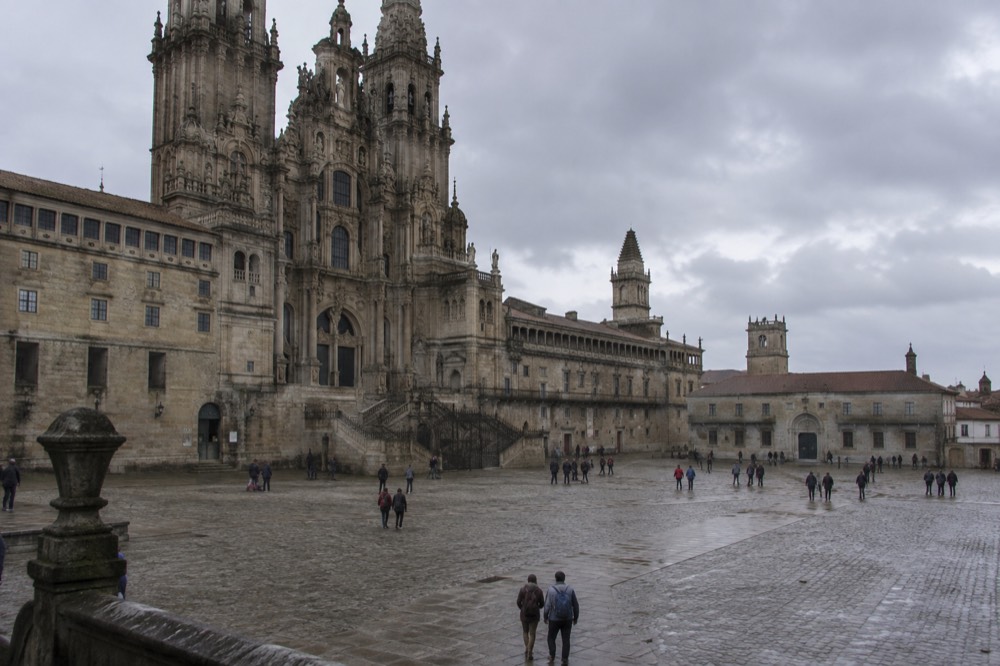
Arrival-Day Mistakes To Avoid In Santiago de Compostela
The arrival mistakes are: walking straight past the Oficina del Peregrino without collecting the Compostela, planning around the Botafumeiro when it is currently suspended, assuming mass times that change on 16 October 2026 do not apply, skipping the Cathedral museum and rooftops because the interior is free, and leaving the city within hours when the Old Town holds a separate UNESCO inscription (1985) from the Camino routes listing (1993). The finish line has its own rulebook, and most of it is about what is open, moved or suspended.
The office mistake is the costly one. The Compostela is issued in person only, and the office at Rua das Carretas 33 closes for the day in the early evening, so pilgrims arriving late who postpone the office visit to a morning departure sometimes fly home without the certificate they walked weeks for. Go the same day if the queue allows.
The Botafumeiro mistake is the emotional one. The Cathedral confirmed in writing on 5 September 2026 that the cimborrio restoration scaffolding has taken it out of action, with no return date, and it is unavailable for private requests too. Its normal annual rhythm, twelve fixed solemnities including the Feast of St James on 25 July, describes how it works when it works, not a promise. Do not schedule a visit around it without checking the Cathedral's own liturgy page first.
And 2027 is the next Holy Year, not 2026. The Holy Door opens on the evening of 31 December 2026 and the Xacobeo runs through 31 December 2027, which is why the main-chapel works and the mass relocation are happening now. Walkers who assume 2026 is a Holy Year, and that Holy Year crowds and ceremonies apply, are planning against the wrong calendar. The walk itself needs no Holy Year at all: the routes, the stamps and the certificate run every single year.
For travelers whose visit is short, a guided half-day in the city recovers a lot of ground. The Cathedral sightseeing tour below is the one worth booking ahead in peak season, and the historic walking tour in small-group format covers the old town's stones with an official guide. Check availability on the operator's live listing for the dates in question, since slots move fast in July and August.
For a full breakdown of what the walk itself involves, the main Camino guide on this site is the starting point, and Santiago de Compostela Travel Guide covers the city at the end of it.
Common Questions About Mistakes To Avoid On The Camino
What do I need to avoid on the Camino?
The core list: walking without two credencial stamps per day, breaking the last 100km on foot or 200km by bike, overpacking, starting too late in the day, and planning around the Botafumeiro, which the Cathedral confirmed in writing on 5 September 2026 is currently out of action with no return date published.
Can I get the Compostela if I skip a day of walking?
Rest days are fine, but the route must remain continuous. The Oficina del Peregrino's FAQs require the last 100km walked or on horseback, or the last 200km cycled, with at least two stamps per day from official points. Skipped distance, as opposed to skipped days, is what voids the certificate.
Where do I actually collect the Compostela in Santiago de Compostela?
In person only, at the Oficina del Peregrino, Rua das Carretas 33. The office's hours vary seasonally and it closes on 25 December and 1 January, so pilgrims arriving in the evening should plan the visit for the next morning rather than a departure day.
Does the Botafumeiro swing when pilgrims arrive?
Not currently. Scaffolding for the dome restoration covers its mechanism, and the Cathedral confirmed the suspension in writing on 5 September 2026. Normally it swings on twelve fixed solemnities a year, but no return date has been published, so do not build an arrival around it.
Are pilgrim masses affected by the Cathedral works?
Yes, and the change is dated. The 9:30am, noon and 7:30pm masses stay at the Cathedral's High Altar until 15 October 2026, then move to the Church of San Agustin from 16 October 2026. Only the 7:30am mass remains in the Cathedral, in its Communion chapel.
What is the biggest weather mistake on the Camino?
Underestimating rain. AEMET's station data for Santiago de Compostela shows a wet, oceanic climate with annual precipitation on the order of 1,690-1,890mm, wetter October to March and driest July and August. A rain shell belongs in the pack in every month.