Where Do People Go To The Bathroom On The Camino?
Practical answer to where Camino pilgrims find bathrooms between Santiago de Compostela stages: bars, cafes, albergues and public facilities, with etiquette and planning advice.
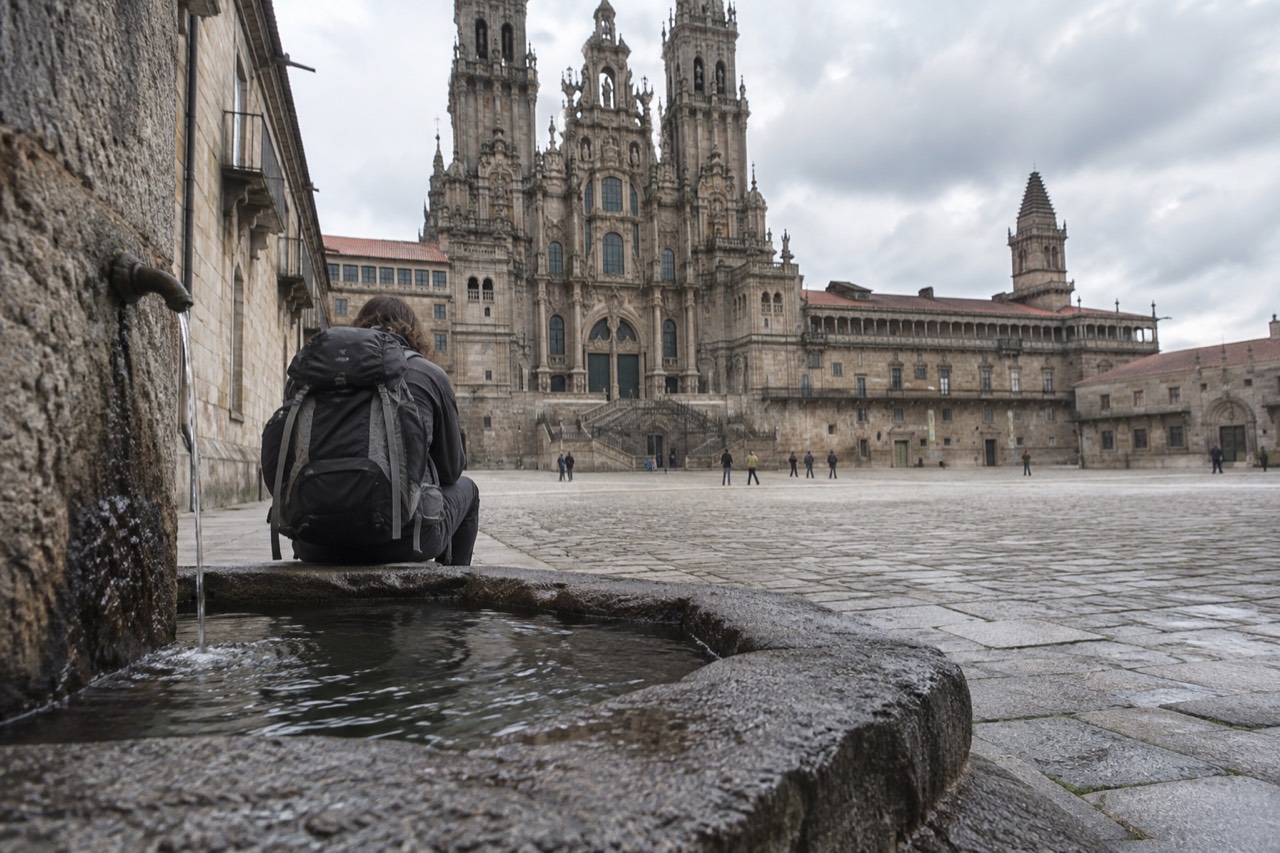
The Camino de Santiago is a long-distance pilgrimage walked by hundreds of thousands of people each year, all of them with the same basic human need. The routes that converge on Santiago de Compostela, the cathedral city in Galicia, northwest Spain, run through villages and small towns rather than wilderness, and that geography is the answer in miniature. Bathrooms on the Camino are almost always someone's business: a bar, a cafe, an albergue, a town hall, a municipal facility. Walkers who understand that pattern rarely go more than an hour or two without an option.
This page lays out where pilgrims actually go, stage by stage, and the etiquette that keeps doors open for the people walking behind you.
Where Do People Go To The Bathroom On The Camino?
The short answer is bars and cafes during the walking day, and albergues at the start and end of it. Bars and restaurants in the villages the route passes through are the backbone of the system, and using the toilet is normally considered part of buying a coffee or a snack. Public restrooms exist in larger towns, and pilgrims carry a small toilet-paper supply because it is not always stocked.
The routes to Santiago de Compostela pass through settlement almost constantly, so options are far more frequent than on a wild trail.
The rhythm of a Camino day shapes the rhythm of bathroom access. Most walkers leave their albergue early, often in the dark, after using its facilities. The first hour or two may pass through open farmland with no buildings, which is why experienced pilgrims make a habit before setting out. Then villages begin to appear, usually with at least one bar open for the morning coffee crowd.
A coffee ordered at the counter in a village bar costs a small amount and comes with an unspoken right to the restroom. This is the single most useful piece of Camino logistics knowledge, and it is why guidebooks to the route keep repeating it. Walkers who resist buying anything and ask directly tend to find that village bars are still generous, but the norm is consumption first, restroom second.
Which Places Actually Have Toilets Along A Camino Stage?
The reliable sources are village bars, cafes and restaurants, public and municipal albergues, private albergues and hostels, petrol stations on road-adjacent sections, larger town public restrooms, and the public buildings walkers pass, including some churches, town halls and information offices. Bars are the most frequent and most dependable, followed by albergues at the day's start and end. Petrol stations and supermarkets fill gaps on stretches where the route runs beside a road. Woodland and field edges remain a last resort on the quietest rural sections.
The mix shifts from route to route. The Camino Frances, the busiest and best-serviced route, has a bar or cafe within easy walking distance for most of its length, which is one reason it is the usual recommendation for a first Camino. Quieter routes have longer gaps, and walkers on those routes plan their stops more deliberately.
The table below summarizes the practical picture walkers encounter.
| Facility | Where you find it | Typical arrangement | Things to know |
|---|---|---|---|
| Village bar or cafe | Nearly every village on the main routes | Usually free with a purchase, such as a coffee or a drink | The backbone of Camino access; ask politely if unsure |
| Albergue | Start and end of each stage, sometimes mid-stage | Free or included for overnight guests | Some public albergues keep daytime hours too |
| Petrol station | Road-adjacent sections and edges of larger towns | Usually free to customers and passers-by | Useful where villages are sparse |
| Public restroom | Larger towns and city centres along the route | Free or a small coin charge in some places | Quality varies; carry coins |
| Church or town hall | Village centres, though not all are open | Access depends on opening hours | Do not assume availability |
| Woodland or field | Quiet rural stretches | None | Last resort; follow leave-no-trace habits |
Between these options, most walkers on the main routes rarely face a long gap. The habit that makes it work is simple: use the bathroom every time you stop somewhere that has one, whether or not you feel you need it yet. Guidebooks call this pattern of preemptive stops one of the small disciplines of the walk.
For route-by-route context, the Camino de Santiago routes guide compares the service density of the main paths into Santiago de Compostela, and the question of how long it takes to walk the Camino de Santiago affects how many stage stops you will be planning around.
What Should You Carry For Bathroom Situations On The Camino?
Every pilgrim should carry a small toilet-paper or tissue supply, a sealable plastic bag for carrying out waste paper on rural stretches, hand sanitizer, and a modest quantity of coins for coin-operated public restrooms in larger towns. Small resealable bags protect paper in rain, which the Camino supplies often, especially in Galicia where the climate is wet year-round. Nothing on this list is expensive or heavy, and all of it fits in a side pocket.
Paper is the item people forget. Not every bar restroom in a small village keeps it stocked, and the rural stretches between villages certainly do not. A small roll or a pocket pack of tissues solves the problem for the whole stage.
Hand sanitizer matters because running water is not guaranteed at every stop. Bars and albergues normally have it, but the last-resort spots on quiet sections do not, and a day of walking with unwashed hands is how stomach bugs travel through albergues. Pilgrims who sanitize consistently tend to avoid the gastrointestinal trouble that occasionally moves through dormitories in busy season.
Coins serve the coin-operated facilities in towns and cities along the route, including in Santiago de Compostela itself, where some public restrooms charge. Small change solves it without a detour to find any.
What Is The Etiquette Around Using Bar Toilets On The Camino?
Buy something before you use the restroom, keep the stop quick, and ask politely if the restroom is not obviously open to customers. A coffee, a bottled water or a snack costs little and keeps the arrangement working for every pilgrim after you. Never walk past the counter straight to the toilet, and never take a large group through a small village bar at once. The system survives on goodwill between walkers and the village businesses on the route.
This etiquette is not arbitrary. A village bar on a busy route can see hundreds of pilgrims pass through in a day in high season. If every one of them used the restroom without buying anything, the bars would close their doors to walkers entirely, and the Camino's practical infrastructure would collapse. Buying a coffee is the small payment that keeps the whole system alive.
Group behaviour deserves a mention. If you are walking with friends, stagger restroom stops rather than arriving as a block of ten people. Small village bars are small businesses with one or two staff, and a coordinated rush is unwelcome anywhere.
The same logic applies to albergues. If you stop at an albergue mid-stage for a rest, ask whether using the facilities is acceptable rather than assuming, and be gracious if the hospitalero, the albergue host, says the beds are being prepared and the facilities are for overnight guests. The Camino accommodation and albergues guide covers what to expect from public and private albergues at the end of each stage.
Are There Enough Bathrooms On The Busiest Routes Into Santiago de Compostela?
On the Camino Frances and the final 100km stretch from Sarria, yes, comfortably, because the route passes through villages and small towns so frequently that a bar or cafe appears many times in a walking day. The final stages into Santiago de Compostela are among the best-serviced of the entire network. Quieter routes have longer gaps between settlements, and walkers there should plan stops more deliberately and use every facility they pass.
The Sarria to Santiago final stretch deserves special mention because it is the most-walked section of the entire Camino. To earn the Compostela certificate, pilgrims must walk at least the last 100km on foot, which makes Sarria the classic starting point. That concentration of walkers means the bars, cafes and shops along that stretch are completely accustomed to pilgrim traffic and their needs, and the facilities reflect it.
The concentration also means peak-season crowds. In July and August, and in the run-up to the 2027 Holy Year, the bars along the final stages serve a steady stream of walkers all day. Buying a drink at each stop matters even more when the volume is high, because those businesses are carrying the load for everyone.
Walkers weighing which route suits them can compare options in the guide to which Camino is best for beginners, and the Camino Frances guide covers the services on the busiest route in detail.
What About Arriving In Santiago de Compostela Itself?
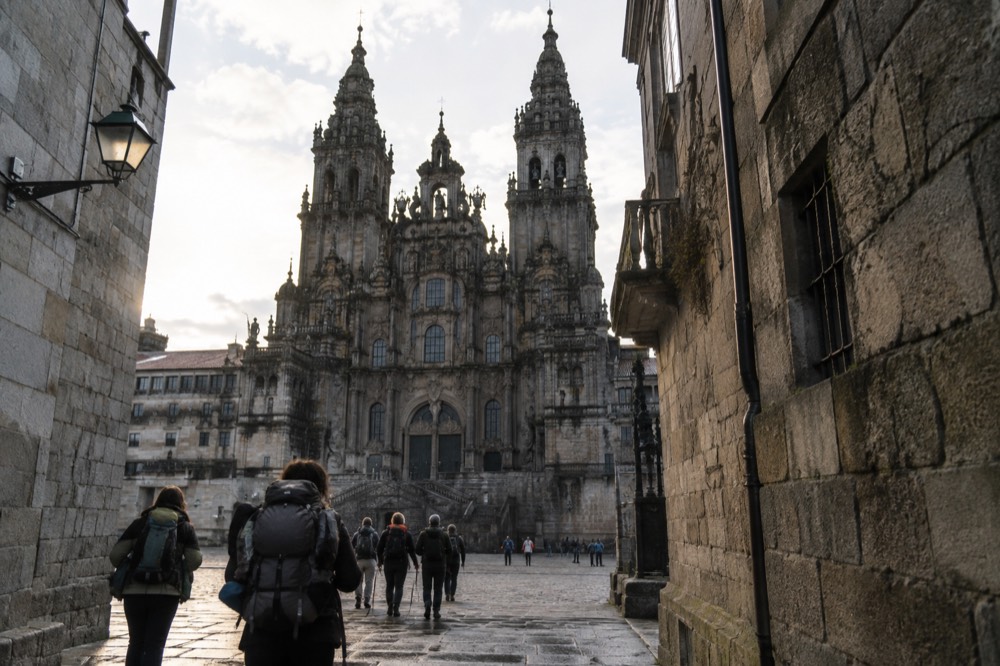
In Santiago de Compostela, public restrooms are available in the city centre, with some coin-operated facilities, and bars, cafes and department-store restrooms around the Old Town serve visitors constantly. The city handles enormous pilgrim and tourist footfall, and the practical advice is the same as on the trail: buy a coffee or a drink and use the facilities of the establishment. Facilities in the immediate area around the Cathedral get the heaviest use, so those in side streets are often quieter.
The Old Town of Santiago de Compostela has been UNESCO-listed since 1985, a separate inscription from the 1993 listing of the Routes of Santiago de Compostela, and its lanes fill with arriving pilgrims through the day. The practical consequences are predictable: the restrooms nearest the Cathedral are the busiest in the city. Walk two streets away and the pressure drops sharply.
Arriving pilgrims also have the option of their accommodation. If you have booked a hotel, hostel or albergue bed in the city, checking in first and then exploring with a fresh base is the comfortable sequence. The Pilgrim's Office on Rua das Carretas, where the Compostela is collected, is a short walk from the Cathedral, and the where to stay in Santiago de Compostela guide covers the neighbourhood options for the nights after arrival.
How Do Families And Older Walkers Handle Bathroom Planning?
Families walking with children and older walkers should shorten the gaps between stops deliberately, choosing stages with frequent villages and planning a restroom stop into every one of them. The busiest routes suit this best precisely because their service density is highest. Children cannot reliably wait for a quiet stretch to end, and older walkers should not have to, so the planning answer is frequency: stop often, use every facility, and carry the small kit of paper, sanitizer and coins that makes any stop straightforward.
The Camino is walked by people of every age, and this site answers the questions of whether a 70-year-old can walk the Camino and whether the Camino de Santiago can be done with kids in full elsewhere. Bathroom access is a quiet part of both answers. Routes with dense village services make the walk manageable for people who need predictable stops, and that is a legitimate reason to choose the Camino Frances over a quieter route.
Families should also know that bar owners on the main routes are famously tolerant of children, and a round of drinks and a snack covers the whole family's use of facilities graciously. The etiquette scales naturally.
Common Questions About Camino Bathrooms
Where do people go to the bathroom on the Camino?
Mostly in bars and cafes along the route, with the expectation of buying a coffee, a drink or a snack. Albergues cover the start and end of each stage, petrol stations fill gaps on road-adjacent sections, and larger towns have public restrooms, some coin-operated. Woodland and field edges are a last resort on quiet rural stretches.
Do you have to buy something to use a bar's bathroom on the Camino?
There is no formal rule, but the strong norm is to buy something first. A coffee or a bottle of water costs little and keeps goodwill between pilgrims and village businesses. Many bar owners will still say yes to a polite direct request, but the arrangement works best when walkers honour the custom.
Do albergues have bathrooms?
Yes, all of them do, though the standard varies widely from basic communal facilities in public albergues to hotel-like rooms in private ones. Overnight guests use them freely. Mid-stage, ask the hospitalero before assuming access.
What should I carry for bathroom stops?
A small toilet-paper or tissue supply, a sealable bag for carrying out used paper on rural stretches, hand sanitizer, and some coins for coin-operated public restrooms in towns. All of it fits in a side pocket and weighs almost nothing.
Are bathrooms easy to find on the last 100km from Sarria?
Yes. The Sarria to Santiago de Compostela stretch is the most-walked section of the entire Camino, and its villages and small towns are fully accustomed to pilgrim traffic. Bars and cafes appear frequently through the day, making it one of the easiest sections for bathroom planning.
Is it acceptable to go behind a bush on the Camino?
On quiet rural stretches it is sometimes unavoidable, and walkers who do it should follow leave-no-trace habits: go well away from the path, water sources and villages, and carry out all paper rather than leaving it. On the main routes it rarely needs to happen, because village bars appear so often.
Common Questions About Camino Bathroom Planning
Walkers heading out from Sarria can find the full stage picture in the Sarria to Santiago guide, and anyone still choosing a month can weigh the practicalities of timing in this site's guide to the best month to walk the Camino de Santiago. The bathroom question answers itself the same way most Camino questions do: the route is a populated network of small towns, not a wilderness trail, and the businesses along it are part of the pilgrimage's working infrastructure. Buy the coffee, carry the paper, and stop often.
(Editorial note from the Santiago de Compostela Travel Guide editors: this article reports on the route's practical infrastructure as documented by the sources cited across this site.) As the editors of Santiago de Compostela Travel Guide compile practical Camino answers, one thing stays constant across every route into the city: the system of village bars and albergues is the Camino's real infrastructure, and it runs on the small courtesies of the people walking it.