What Is The Nicest Town In Galicia?
The honest answer to which is the nicest town in Galicia, from Combarro's granite hórreos to Santiago de Compostela's UNESCO old town, with day-trip options and verified facts.
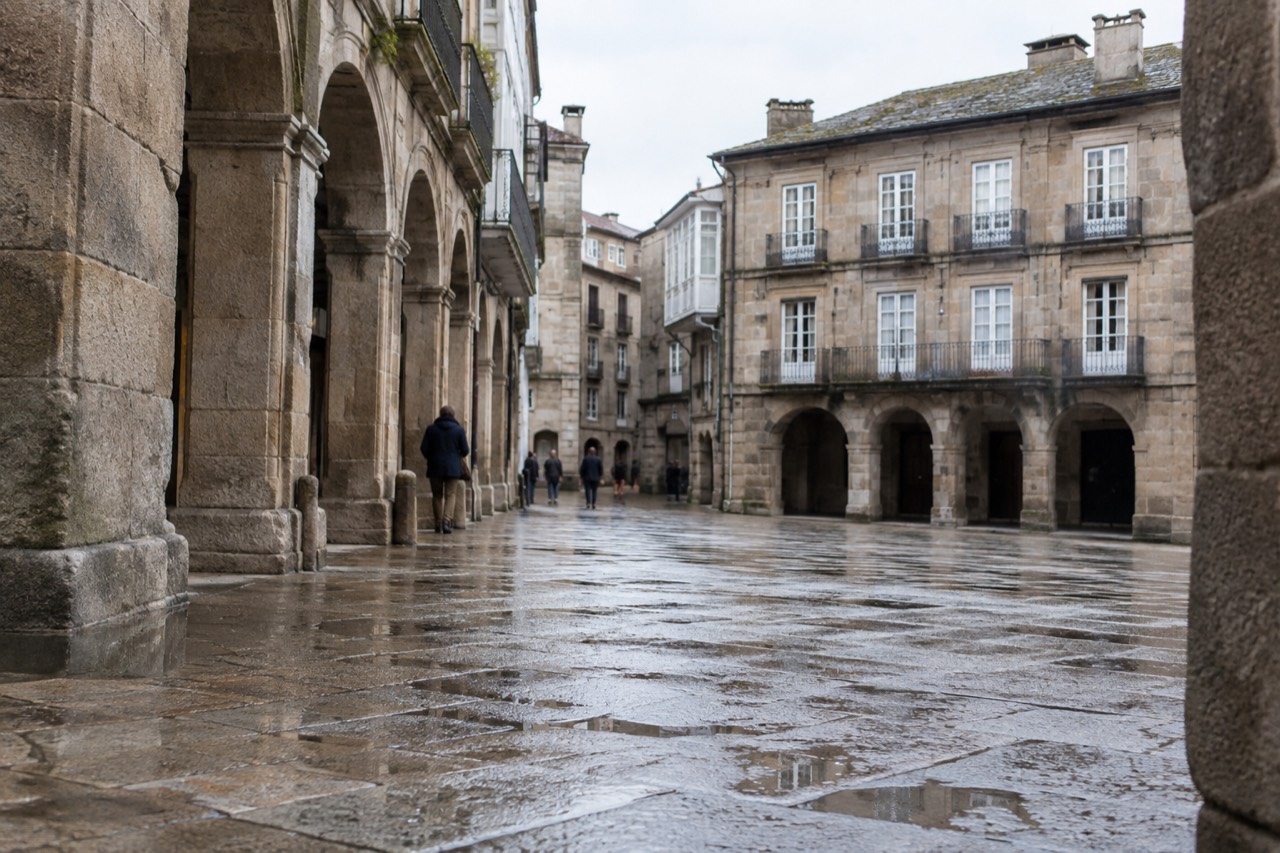
Galicia's Pilgrim's Office issued a record 530,987 Compostela certificates in 2025, and the overwhelming majority of those walkers finished in Santiago de Compostela, the granite cathedral city at the heart of the region. But Galicia is far bigger than its finish line. The region strings together fishing ports, Roman walls, wine valleys and cliff-edge cape villages along Spain's Atlantic coast, and the question of which town is the nicest of them all is a genuine debate among travellers who have seen more than the last hundred kilometres of the Camino. This page gives a direct answer, then explains the shortlist with verified facts rather than invented rankings.
What Is The Nicest Town In Galicia?
Combarro, a small granite fishing town on the Ria de Pontevedra, is the nicest town in Galicia for most travellers, because it concentrates everything the region does best in one walkable waterfront: rows of stone hórreos raised on stilts over the tide, a tight old quarter of Galician arcades, and Rias Baixas albarino country at the end of the street. Santiago de Compostela is the region's most extraordinary city, but as a town, the quieter, sea-facing Combarro takes the title.
That answer will divide opinion, and it should. Combarro is tiny, a place of a few lanes rather than a full day's sightseeing, and its charm depends on the tide, the light and the season. What it offers is the purest surviving version of a traditional Galician coastal village anywhere in the region, and the old hórreos, the raised granite granaries that stand directly over the water on the seafront, exist nowhere else in this concentration. Pontevedra province lists Combarro among its protected heritage, and the town sits inside the Rias Baixas, the southern fjord-like inlets where Galicia's albarino vineyards and mussel rafts share the same water.
The case for the rest of the shortlist is real too. Santiago de Compostela's old town has been UNESCO World Heritage since 1985, a status no other town or city in the region holds for its urban core. Fisterra and Muxia sit at the literal end of the Roman world, where the Costa da Morte meets the Atlantic. Pontevedra and Lugo carry Roman streets and walls. Vigo is the region's big city on the sea. A fair answer names Combarro first and then admits that the nicest town depends on whether the visitor wants stone, sea, wine or walls.
Why Combarro Beats The Bigger Names
Combarro wins because it delivers Galicia's signature images in a single seafront frame: dozens of hórreos standing on granite pillars above the tidal line, small boats moored a street away, and whitewashed tavernas serving pulpo a la gallega within a two-minute walk of all of it. No other Galician town puts the region's rural architecture, its seafood culture and its estuary landscape in one compact place, and none does it without a single modern intrusion on the waterfront.
The hórreo is the decisive detail. These raised grain stores, built of stone with slotted ventilations and crossed capstones to keep rodents out, are Galicia's most distinctive rural structure, and Combarro's seafront row is the largest and most photographed cluster anywhere along the coast. Because they stand over the ria itself, the tide moves beneath them, and the view changes through the day. The town's upper quarter adds tight granite lanes and traditional Galician solpor-style architecture, and the whole settlement is small enough to cross on foot in under an hour, which is exactly why it feels like a town rather than a city pretending to be one.
Combarro is also a working part of the Rias Baixas, not a museum piece. The mussel rafts, the floating wooden platforms that cultivate mejillones in the estuaries, operate in these waters, and the region's albarino wineries sit a short drive inland around Cambados. A day trip that combines Combarro with a winery visit and an optional mussel-boat crossing is one of the standard excursions from Santiago de Compostela, and it is a well-reviewed one: the Rias Baixas day trip with Arousa Island, Combarro and the mussel boat runs from $45 per person and carries a 4.7 rating from 30 reviews on the operator's live listing.
Reaching Combarro independently is straightforward in principle: it sits on the Pontevedra estuary, and Pontevedra city is a day-trip destination from Santiago de Compostela in its own right. The organised boat-and-winery version simply removes the connections and adds the estuary from the water, which is the angle most independent visitors miss. The best day trip from Santiago de Compostela depends heavily on whether the coast or the wine country is the priority, and Combarro is the one stop that covers both.
Where Does Santiago de Compostela Itself Rank?
Santiago de Compostela is not the nicest town in Galicia, it is the most extraordinary city, and the distinction matters: its UNESCO-listed old town, cathedral rooftops at roughly 72 metres, and the 1985 World Heritage inscription put it above every other settlement in the region for sheer density of monuments, while its population and university life make it a city rather than a town. On a pure towns-only shortlist it would not even qualify.
The city's case is nonetheless overwhelming. The Cathedral of Santiago de Compostela holds the reported tomb of St. James and opens daily from roughly 7:00am to 9:00pm, with free general entry through the Praterias door. Its Cubiertas rooftop tour, guided, about 60 minutes and around 140 steps, costs EUR15 general or EUR12 reduced on the Cathedral's own ticketing site, and it includes the Cathedral Museum's permanent collection. The old town around Praza do Obradoiro, with the Hostal dos Reis Catolicos, San Martino Pinario and the Rua do Franco food street, packs more carved granite per square metre than any other Galician urban core.
There are caveats a fair answer must state. The Cathedral's own liturgy page confirms that pilgrim masses at 7:30am, 9:30am, noon and 7:30pm run at the High Altar only until 15 October 2026; from 16 October 2026 the 9:30am, noon and 7:30pm masses relocate to the nearby Church of San Agustin while main-chapel works prepare for the 2027 Holy Year, with only the 7:30am mass staying in the Cathedral's Communion chapel. The Botafumeiro, the giant swinging censer, is also currently out of action: scaffolding for the cimborrio restoration covers its hanging mechanism, and the Cathedral confirmed the suspension in writing on 5 September 2026 with no return date published. None of this closes the old town, but a visitor promised the censer in flight today would be misled.
For most visitors the fix is a guided visit that handles the ticketing and explains what is and is not running. The Cathedral, Museum and Old Town guided tour runs from $33 per person with a 4.8 rating from 436 reviews, and the skip-the-line version on the same listing family runs from $26 per person with a 4.8 rating from 2,425 reviews. The Santiago de Compostela Travel Guide covers the Cathedral's tickets and opening hours in detail for anyone planning the visit independently.
Which Other Towns Belong On The Shortlist?
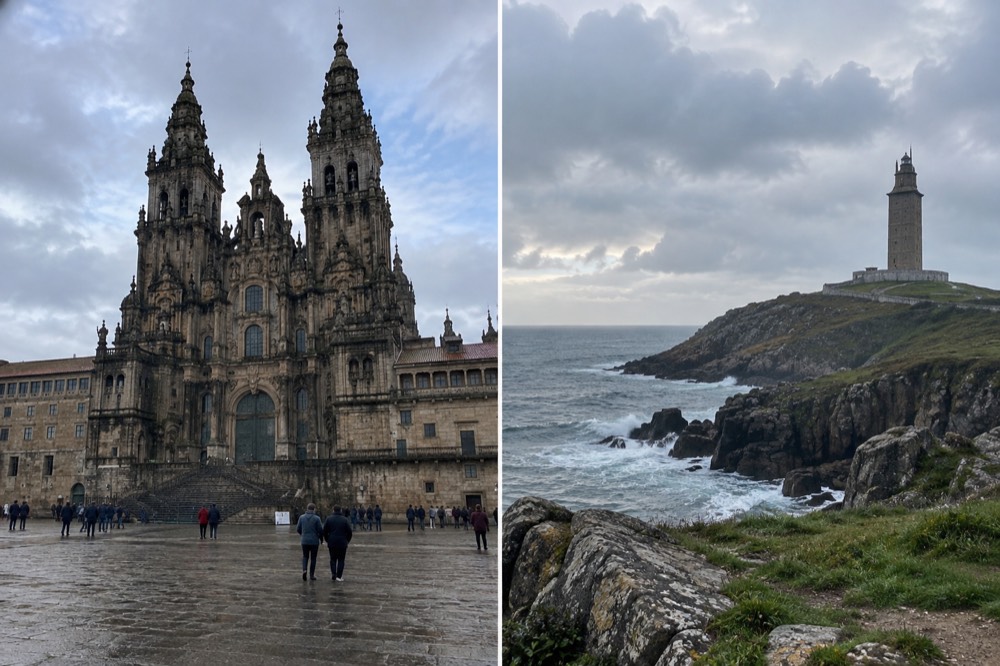
Pontevedra, Fisterra, Muxia, Lugo and A Coruna complete the honest shortlist, and each earns its place on a specific, verifiable asset: Pontevedra for its car-free old town and riverside Praza da Lena, Fisterra for its lighthouse at the end of the Camino, Muxia for the Sanctuary of Virxe da Barca on open Atlantic cliffs, Lugo for its complete Roman wall, and A Coruna for its seafront glass galleries and the Tower of Hercules.
None of those assets is invented. The Roman wall of Lugo is the only fully complete Roman wall in the region and is itself a separate World Heritage inscription from Santiago's old town. Fisterra's lighthouse marks the traditional end-of-world point where many pilgrims continue walking after Santiago, a route covered on this site's Camino Finisterre guide, and Muxia's clifftop sanctuary is the other finish of that same extension. Pontevedra's old town is celebrated in Galicia for its pedestrianisation, a policy the city itself promotes.
The practical difference between them is what the visitor pairs them with. A shortlist table helps:
| Town | Signature asset | Setting | Best paired with |
|---|---|---|---|
| Combarro | Seafront row of stone hórreos over the tide | Ria de Pontevedra, Rias Baixas | Albarino wineries and the mussel boat |
| Santiago de Compostela | UNESCO old town (1985) and Cathedral | Inland granite city, 12km from the airport | Cathedral rooftop and museum tickets |
| Fisterra | Lighthouse at the end of the Roman world | Costa da Morte cliffs | Muxia on the same coastline |
| Muxia | Sanctuary of Virxe da Barca on the cliffs | Atlantic open coast, Costa da Morte | Fisterra, same day trip |
| Lugo | Complete Roman wall, separate World Heritage listing | Inland plateau city | Ourense and the Ribeira Sacra canyons |
| Pontevedra | Car-free old town arcades | Ria de Pontevedra | Combarro, same estuary |
The coastal group has the strongest tour infrastructure from Santiago de Compostela, and the numbers from the operator listings bear that out. The Finisterre, Muxia and Costa da Morte full-day excursion runs from $59 per person with a 4.7 rating from 2,312 reviews, and the seven-stop version of the same coastline runs from $60 with a 4.8 rating from 1,714 reviews. The half-day express option to Fisterra and Muxia runs from $45 with a 4.4 rating from 50 reviews, which suits travellers who only have a spare afternoon. Whether A Coruna itself is worth the diversion is covered on its own page: is A Coruna worth visiting.
How Do You Visit The Nicest Towns From Santiago de Compostela?
The realistic plan is to base in Santiago de Compostela for two or three nights, take one full-day coastal tour to Fisterra, Muxia and the Costa da Morte, and take a second full-day Rias Baixas tour to Combarro and the albarino country, which together cover five of the six towns on the shortlist; Lugo and Pontevedra are the pair that most often need a separate trip, and Pontevedra can be folded into the Combarro day.
Santiago de Compostela works as the base because it is the region's transport hub. Trains run direct from the city to A Coruna as a short hop, to Vigo in roughly an hour, and to Madrid on high-speed services in roughly three to four hours. There is no direct rail line to Porto: travellers change at Vigo.
The city's own airport is about 12km from the old town, and the airport bus, currently line 6A at EUR1 to the driver, is subject to a reorganisation to a new operator with a higher fare expected around late 2026, so the fare should be treated as changing rather than fixed.
Timing matters as much as routing. AEMET's climate data for the Santiago station shows a wet, temperate oceanic pattern, wetter from October to March and driest in July and August, and the coastal towns lose much of their appeal in driving rain. The best month to walk the Camino de Santiago faces the same trade-off: summer is the driest and the most crowded, late spring and early autumn are the compromise most guides recommend. The same logic applies to standing on Fisterra's headland or walking Combarro's seafront at low tide.
The in-city day matters as much as the day trips. The Cathedral, Museum and Old Town tour covers the three assets a first visitor cannot skip, and pairing it with a separate coastal day gives a balanced week: one day of granite and archaeology, one day of cliffs and lighthouses, one day of hórreos, mussels and albarino.
For travellers with more time, the question of which part of northern Spain is best to visit extends the same logic beyond Galicia's borders, but within the region the shortlist above is complete: Combarro first, Santiago de Compostela as the crown, and four towns that each do one thing better than anywhere else in the region.
Common Questions About The Nicest Towns In Galicia
What is the nicest town in Galicia?
Combarro, for its seafront rows of stone hórreos standing over the tide on the Ria de Pontevedra. Santiago de Compostela is the region's most impressive city, but as a town, Combarro concentrates Galicia's coast, seafood culture and albarino country into one small walkable place.
Is Combarro worth a day trip from Santiago de Compostela?
Yes, especially when paired with the Rias Baixas. A full-day excursion combining Arousa Island, Combarro and the mussel boat runs from $45 per person and is rated 4.7 from 30 reviews on the operator's live listing, and it is the standard way to see the estuary from the water.
Can you visit Fisterra and Muxia in one day?
Yes. Full-day tours from Santiago de Compostela covering Finisterre, Muxia and the Costa da Morte run from around $59 to $60 per person, with review counts in the hundreds and thousands on their listings, and a half-day express version exists for tighter schedules.
Which is nicer, Lugo or Pontevedra?
They are different assets: Lugo has the only complete Roman wall in the region, itself a separate World Heritage listing, while Pontevedra has a celebrated car-free old town on its estuary. Pontevedra pairs naturally with Combarro; Lugo pairs with Ourense and the Ribeira Sacra canyons.
Does Santiago de Compostela count as a town?
It is a small city, and its UNESCO-listed old town, inscribed in 1985, plus its cathedral, university and role as the Camino's finish point make it the region's flagship urban destination rather than a contender on a towns-only list.
When is the best season for the coastal towns?
July and August are the driest months in AEMET's data for the region, though also the busiest. Late spring and early autumn offer the better compromise between dry headland walks and thinner crowds, and October to March is the wet stretch to avoid on exposed coastlines like the Costa da Morte.