What Does Compostela Mean In English?
The English meaning of the word Compostela, the two rival Latin origins behind the name of Santiago de Compostela, and how the same word became the name of the pilgrim certificate.
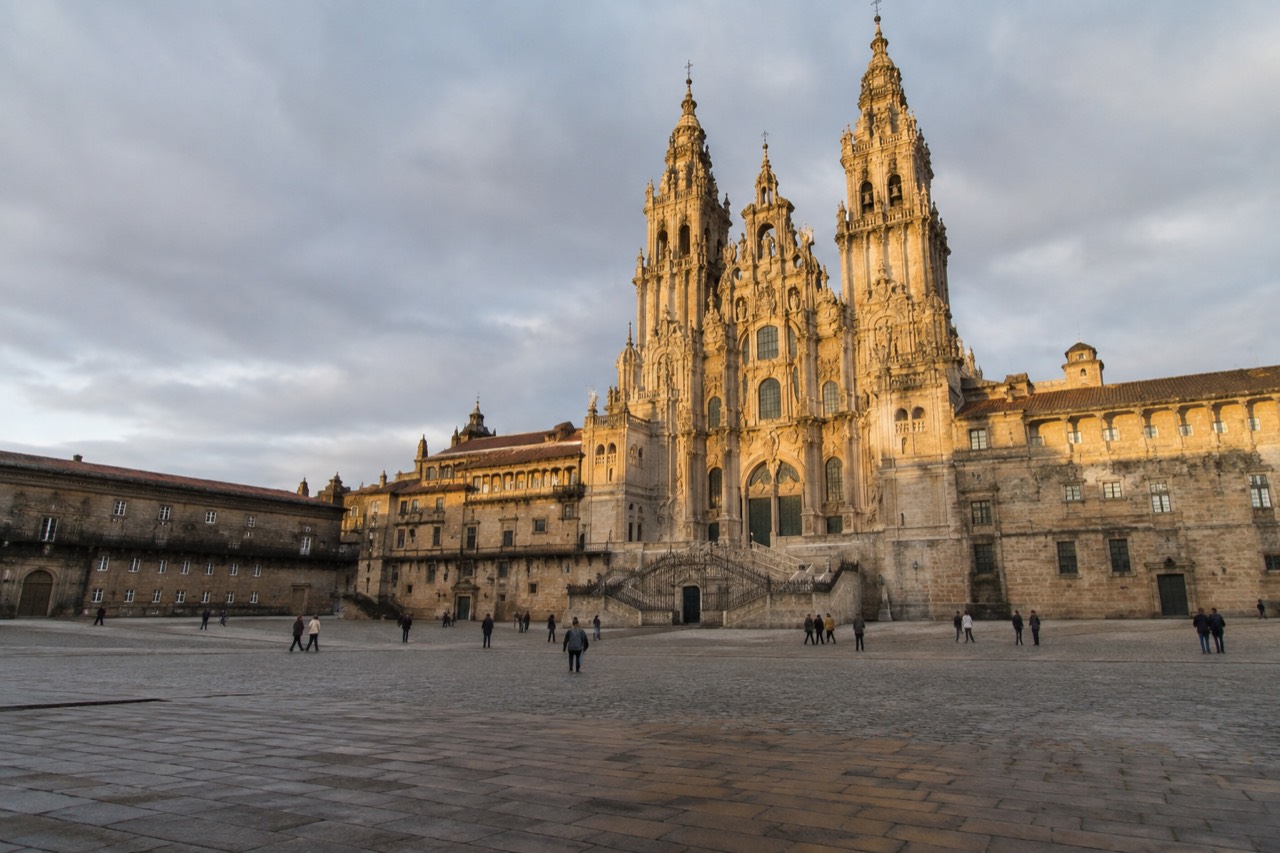
The word Compostela has two jobs in the English language, and both of them point at the same place: Santiago de Compostela, the pilgrim cathedral city in Galicia, northwestern Spain. First, it is half of the city's own name, the part that sits after "Santiago", which is simply the Galician and Spanish form of Saint James. Second, with a capital C, "the Compostela" is the certificate the Pilgrim's Office issues to walkers and cyclists who complete a recognized Camino route, the same document named in the Oficina del Peregrino's own FAQs. The two uses are related, and the story of the word explains why.
What Does Compostela Mean In English?
In English, "Compostela" has no standalone dictionary meaning: it survives only as a proper noun tied to Santiago de Compostela, the cathedral city in Galicia, Spain. The name is popularly explained as Latin "campus stellae", meaning field of stars, though scholars favour a humbler origin in "compositum", a burial ground. As a common noun in pilgrimage English, "a Compostela" is the certificate of completion issued to Camino pilgrims.
The popular story is the romantic one, and it is the version most guides repeat. In the old legend of the shrine's discovery, a hermit named Pelayo was led to a forgotten tomb in a woodland clearing by lights or a star, and the local bishop declared the remains to be those of Saint James the Apostle. A settlement grew around the discovery, and the patch of ground itself took a name that people later read as "field of stars". Pilgrims have been walking toward that field ever since, which is a long shadow for one word to cast.
The problem with the field-of-stars reading is linguistic rather than historical. Latin for a field of stars would more naturally be "campus stellarum" or a similar construction, and "stellae" in the genitive does not cleanly produce the "-tela" ending of Compostela. Latin place names ending in "-ela" or "-ella" are usually diminutives, small versions of a root word. That detail is what pushed medievalists toward the second, less photogenic theory.
Where Does The Name Compostela Come From?
The scholarly explanation is that Compostela comes from the Late Latin "compositum", meaning a well-ordered place where remains are laid, in other words a burial ground or cemetery, with the Galician-Latin diminutive "compostella" denoting a small one. The rival "campus stellae" reading, field of stars, is a medieval folk etymology attached after the fact, though it became inseparable from the city's identity.
Neither theory can be settled from documents alone, because the surviving early records already show the name in shifting spellings. What the burial-ground reading has going for it is the grammar of the region's late Latin, where diminutive endings were routine, and the simple fact that a site discovered as an old tomb would plausibly be named for exactly that. The star story, by contrast, is first told well after the shrine was already famous, which is the usual signature of a folk etymology: a place becomes celebrated, and its name is then reverse-engineered into something worthy of the celebration.
| Theory | Root | Literal English sense | Status |
|---|---|---|---|
| Field of stars | Latin campus stellae | The field or plain of the star | Popular legend, medieval folk etymology |
| Little burial site | Late Latin compositum + diminutive | A small, well-ordered place where remains were laid | Favoured by scholars of the word's grammar |
The two accounts have coexisted for centuries, and the city itself does not referee between them. The star version won the popular imagination because it matches the pilgrim experience: people walking the Camino de Santiago across the meseta under enormous night skies find the field-of-stars story easy to love. The burial-ground version fits the archaeology, since the entire shrine exists because a tomb was found there.
Either way, the meaning of the full city name resolves cleanly. Santiago de Compostela translates into English as "Saint James of Compostela", a saint's name attached to the place where his remains were said to lie. For a wider sense of what that saint means to the city, the companion piece on what Santiago de Compostela is famous for unpacks the whole pilgrimage tradition around the name.
For visitors who want the name made physical, the place to stand is the tomb itself. The Cathedral of Santiago de Compostela keeps the traditional remains of the Apostle beneath its main altar, and the modern city grew outward from that crypt in every direction. UNESCO recognized this twice, in two separate listings: the Old Town of Santiago de Compostela was inscribed in 1985, and the Routes of Santiago de Compostela, the Camino Frances and the Northern Spain routes, were inscribed separately in 1993. Two dates, two listings, one word at the centre of both.
How Did Compostela Also Become The Name Of The Pilgrim Certificate?
The Compostela is the certificate the Pilgrim's Office issues to pilgrims who meet its stated requirements, and its full formal name, in the Latin of the Church, actually speaks of "discharging" the debt of visiting the shrine. In practice "the Compostela" means one document: proof, stamped along the route, that a pilgrim walked or rode the required distance to Santiago de Compostela.
The Oficina del Peregrino's own FAQs set the rules plainly. The last 100 kilometres must be covered on foot or on horseback, or the last 200 kilometres by bicycle, on a recognized Camino route, and the pilgrim must collect at least two stamps per day in the credencial, the pilgrim passport, from official stamping points. The document is issued in person only, at the office's home at Rua das Carretas 33 in Santiago de Compostela, which is why the queue of walkers with rolled credentials is a permanent feature of the streets near Praza do Obradoiro. Everything else covered here is indexed on Santiago de Compostela Travel Guide.
| Compostela requirement | Rule as published |
|---|---|
| Walking distance | Last 100km on foot or horseback |
| Cycling distance | Last 200km by bicycle |
| Stamp evidence | Minimum two stamps per day from official stamping points |
| Where issued | In person only, Rua das Carretas 33, Santiago de Compostela |
| Recent demand | 530,987 Compostelas issued in 2025, a record year |
That 2025 figure of 530,987 Compostelas, reported by press coverage citing the Oficina del Peregrino's own count, is the strongest signal of how far the word has travelled from a disputed Latin root. Half a million people a year now carry the city's name home as a rolled sheet of paper, which makes the little document the most widely distributed bearer of the word Compostela in the world. The certificate's history and the city's are braided together, and the name of one became the name of the other, so that in English "collecting your Compostela" is now understood wherever long-distance walking is discussed.
The certificate and the Cathedral stand at opposite ends of the same journey, and most pilgrims who collect the first go straight to the second. A guided visit that includes the Cathedral interior, the Portico da Gloria, the rooftops and the museum covers the whole story of the shrine in one booked slot, and the operator's live listing shows current availability: Check availability.
How Does English Use The Word Compostela Today?
In modern English, Compostela appears in exactly three fixed contexts: as the second half of the city's name, as the certificate issued to finishing pilgrims, and occasionally as shorthand for the whole Camino destination. English has no everyday common noun "compostela", and writers who use it without a capital are almost always referring either to the document or to the Galician city.
Guidebooks and pilgrim forums have hardened these uses over the last few decades. "Getting the Compostela" is fully standard pilgrim English for collecting the certificate, and the phrase is understood on every Camino route from the Camino Frances to the Camino Portugues. "Santiago de Compostela" itself is fixed in English exactly as it is in Galician and Spanish, with the lowercase "de" preserved, because English does not translate the middle particle of a settled foreign place name.
That spelling discipline is worth a short table of its own, because the destination sits in a bilingual region and English writers routinely mangle the local forms. Galicia uses Galician spellings alongside Spanish ones, and the differences are small but real.
| Name | Language | English usage note |
|---|---|---|
| Santiago de Compostela | Galician and Spanish, identical | The settled English form, lowercase "de" kept |
| Fisterra / Finisterre | Galician / Spanish | Either accepted, never a hybrid spelling |
| A Coruna | Galician and Spanish, with tilde | "La Coruna" is the older Spanish form still seen |
| Praza do Obradoiro | Galician | The square before the Cathedral's facade |
| Museo das Peregrinacions | Galician | The pilgrimages museum, particles lowercase |
The broader naming story of the region, including why Galicia keeps its own spellings against the Spanish norm, is covered in the companion answer on why Galicia is different from Spain, and the question of what the saint himself is doing in the name is covered in the account of whether St James is actually buried in Santiago.
Why The Meaning Still Matters For Visitors To Santiago de Compostela
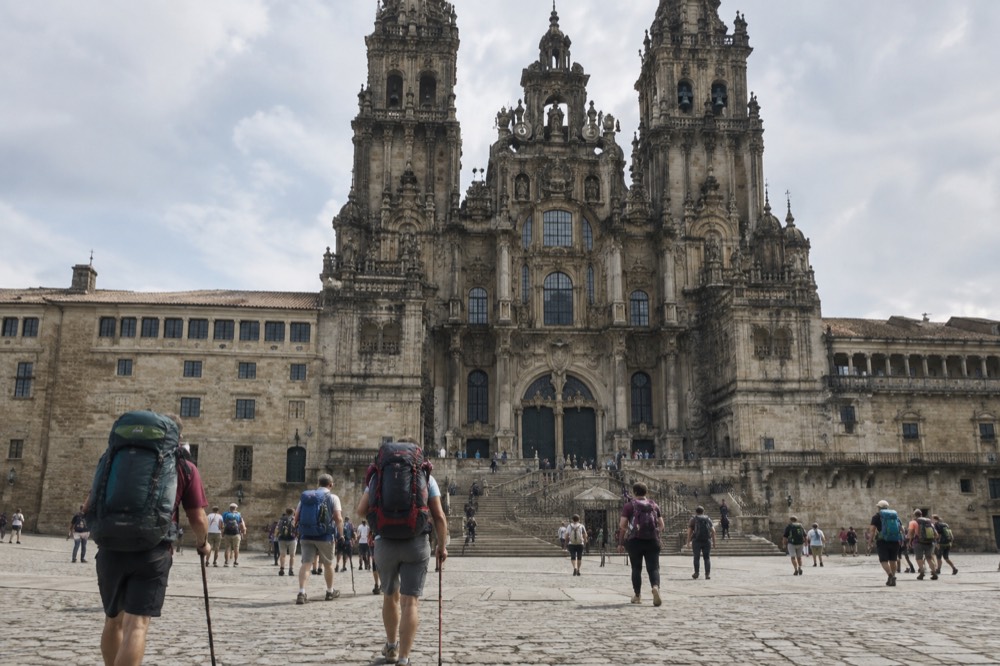
Knowing what Compostela means changes how the city reads: the name tells you the place exists because of a tomb, the pilgrimage exists because of the name, and the certificate pilgrims collect borrows the name because the walk ends where the word began. A visitor who understands the word understands the layout of the whole city, its cathedral, its queues, and its reason for being.
The practical edge is real too. Pilgrims finishing the Camino need to know that the Compostela certificate is issued in person at Rua das Carretas 33, that the credencial must carry two stamps a day, and that the rules on distance are the Oficina del Peregrino's own published requirements, not informal custom. Visitors who only came for the architecture can skip the certificate but will still meet the word everywhere, on street signs, on the certificate itself, and in the name of the city on every map of Galicia.
Timing matters around the name as well. The next Holy Year, the Xacobeo, begins when the Holy Door opens on 31 December 2026 and runs through 31 December 2027, and it falls in 2027 because 25 July falls on a Sunday that year. A Holy Year sharpens the meaning of everything the word Compostela touches, from the door itself to the volume of pilgrims collecting the certificate.
Common Questions About The Compostela
What does Compostela mean in English?
As a name, it belongs to Santiago de Compostela and is popularly explained as Latin for field of stars, "campus stellae", though the scholarly reading derives it from "compositum", a burial ground. As a common noun in pilgrim English, "the Compostela" is the certificate issued to pilgrims who complete a recognized Camino route.
Does Compostela mean field of stars?
The field-of-stars reading is the popular one and the version most guides repeat, but linguists generally treat it as a medieval folk etymology. The grammar of late Latin points more strongly to a diminutive of "compositum", a small burial site, which also fits the city's origin as a place built around a discovered tomb.
What is a Compostela certificate?
The Compostela is the document the Pilgrim's Office issues to pilgrims who meet its published requirements: the last 100km on foot or horseback or the last 200km by bicycle, with at least two credencial stamps per day, issued in person only at Rua das Carretas 33 in Santiago de Compostela.
Is Santiago de Compostela named after Saint James?
Yes. Santiago is the Galician and Spanish form of Saint James, so the full city name reads in English as "Saint James of Compostela", the saint attached to the place where his traditional remains were said to have been found.
Why are there two UNESCO listings for Santiago de Compostela?
The Old Town of Santiago de Compostela was inscribed by UNESCO in 1985, and the Routes of Santiago de Compostela, covering the Camino Frances and the Routes of Northern Spain, were inscribed as a separate listing in 1993. They are two distinct inscriptions, not one.
The word Compostela has been doing quiet work for a thousand years, and it still carries the whole city inside it, whether a reader meets it in a legend about stars, in a Latin word for a burial place, or on the rolled certificate in a pilgrim's hand.