How Many Pilgrims Arrived In Santiago de Compostela Today?
There is no official same-day count of pilgrims arriving in Santiago de Compostela, but the Pilgrim's Office recorded 530,987 Compostelas in 2025, a record that averages out to well over a thousand a day. Here is how the numbers actually work.
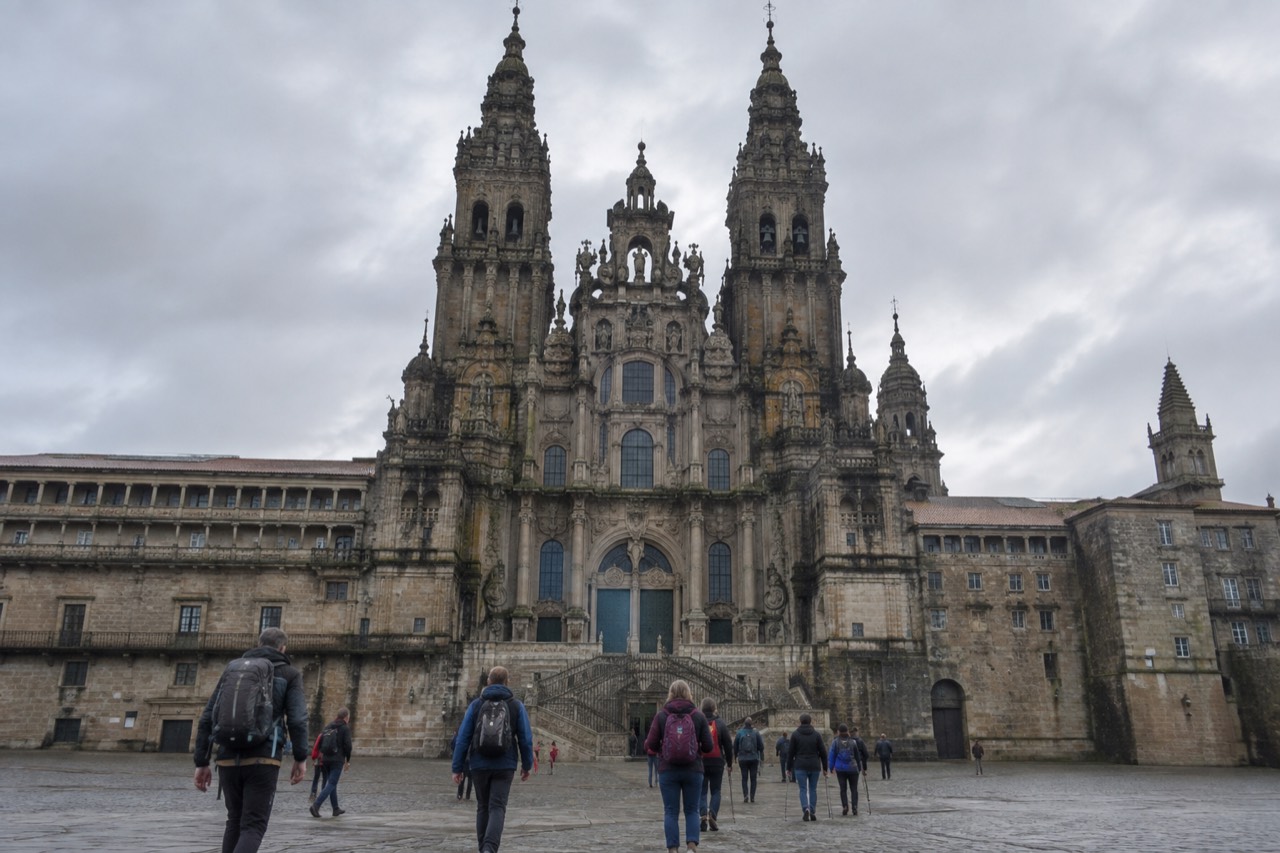
Santiago de Compostela, the cathedral city in Galicia in northwest Spain, receives pilgrims every single day of the year, in rain, in the July heat, and on the quietest February mornings. But the question of how many arrived on any particular day has no clean official answer, and the reason is structural: the body that counts them, the Oficina del Peregrino, does not publish a live daily figure. It counts Compostela certificates, one pilgrim at a time, at a counter on Rua das Carretas 33, and it releases those numbers as monthly and annual statistics. What follows unpacks what is actually known, what the record 2025 total of 530,987 Compostelas means for daily arrivals, and how the count really works on the ground.
How Many Pilgrims Arrived In Santiago de Compostela Today
No official same-day number is published for any given day. The Oficina del Peregrino counts arrivals through the Compostela certificates it issues in person at Rua das Carretas 33, and it releases those figures as monthly and annual statistics rather than a live daily total. The most recent full-year figure is 530,987 Compostelas issued in 2025, a record, which works out to well over a thousand arriving pilgrims a day averaged across the year, with peak-season days running far above that.
That average is a blunt instrument. The Oficina del Peregrino's own FAQs describe a strongly seasonal pattern, and the city's streets show it plainly: July and August bring dense daily flows along the Camino Frances and the approach into the old town, while winter weeks thin out dramatically. A summer Tuesday in late July, especially in a Holy Year, can multiply the annual average several times over. A wet Tuesday in January can fall far below it. The office's statistics are the only authoritative record because a Compostela is only issued in person, after the credencial, the pilgrim passport, has been checked for the required stamps.
There is also a definitional catch that any honest answer has to carry. The Compostela count only captures pilgrims who walked the last 100km, or cycled the last 200km, of a recognized route and collected two stamps per day. Day visitors, tourists, pilgrims who finished short of the distance requirement, and people who arrived without bothering to queue for the certificate are all invisible to the statistic. The 530,987 figure is therefore a floor for total arrivals, not a ceiling, and the number of people physically walking into the city on a given day is always higher than the number of Compostelas eventually issued for that date. For what happens after arrival itself, the arriving in Santiago on the Camino guide covers the practical sequence most pilgrims follow.
What Counts As A Pilgrim Arrival In Santiago de Compostela
An arrival is officially counted only when a pilgrim requests and receives the Compostela certificate at the Pilgrim's Office, which requires having walked at least the last 100km of a recognized Camino route, or covered the last 200km by bike, or the last 100km on horseback, collecting at least two stamps per day in the credencial from official stamping points. The certificate is issued in person only, at Rua das Carretas 33, and every issued Compostela is logged as one arriving pilgrim.
The Oficina del Peregrino's FAQs spell out these rules, and they matter because they define the entire statistical picture. A walker who starts in Sarria, the most common launch point on the Camino Frances, comfortably satisfies the distance rule, which is precisely why that town has become the busiest starting point for certificate-seeking pilgrims. A cyclist needs double the distance. A pilgrim who walks only the final stretch from a nearby town collects stamps but earns no certificate, and therefore never enters the count. The table below sets out the requirements as the office states them.
| Requirement | What The Oficina del Peregrino Requires |
|---|---|
| Minimum distance on foot or horseback | Last 100km of a recognized Camino route |
| Minimum distance by bicycle | Last 200km of a recognized Camino route |
| Stamp rule | At least two stamps per day in the credencial, from official stamping points |
| Where issued | In person only, Rua das Carretas 33, Santiago de Compostela |
| Office closures | 25 December and 1 January |
The seasonal shape of the count is visible in the annual total. The 530,987 Compostelas of 2025 were described in press reporting citing the office's own figures as a historic record, and 2025 was not even a Holy Year. That matters for anyone projecting forward: the next Holy Year, the Xacobeo of 2027, opens with the Holy Door ceremony on 31 December 2026 and runs through 31 December 2027, and Holy Years reliably multiply arrivals. Anyone asking about arrivals in 2027 is asking about a year the city is already preparing its main chapel works for.
If your own arrival day is approaching, the three experiences below rank among the most booked by pilgrims finishing their walk.
When Do Most Pilgrims Arrive In Santiago de Compostela
Arrivals peak in the summer months, with July and August the densest period and the feast of St. James on 25 July the single busiest day of the year in a normal season, while the shoulder months of May, June and September carry strong flows and the winter from November to March is the quietest stretch. Holy Years multiply every one of those figures, and the next one runs from the Holy Door opening on 31 December 2026 through 31 December 2027.
The seasonal logic follows the Camino itself. Long-distance routes need weeks of walking, and most walkers plan them for the driest, warmest stretch of the Galician year. AEMET's climate data for the Santiago station shows a wet, temperate oceanic pattern, wetter from October to March and driest in July and August, which pushes the walking season firmly toward summer even though rain is possible on any given day in any month. Pilgrims deciding when to walk usually weigh this trade-off, and the best month to walk the Camino question deals with it in detail.
The feast day itself behaves differently from every other day of the year. On 25 July the city marks its patronal feast with a Pontifical Mass that includes the national offering to the Apostle, plus fireworks, concerts and folk events, and arriving pilgrims time their final stage to land in the city in the days around it. When 25 July falls on a Sunday, the year becomes a Holy Year, which is exactly what happens in 2027, and the Holy Door, on Praza da Quintana, is opened solemnly on the evening of 31 December 2026 and stays open through 31 December 2027. The Cathedral Chapter's liturgical calendar gives the arrival-year rhythm another layer: the Botafumeiro normally swings on twelve fixed solemnities each year, from Epiphany on 6 January through the Transfer of the Apostle on 30 December. Those dates concentrate pilgrims too, though with one major caveat for anyone planning around it.
| Date | Solemnity When The Botafumeiro Normally Swings |
|---|---|
| 6 January | Epiphany |
| Easter Sunday | Resurrection |
| Ascension (mobile date) | Ascension of the Lord |
| 23 May | Apparition of the Apostle at Clavijo |
| Pentecost (mobile date) | Pentecost |
| 25 July | Feast of St. James the Apostle |
| 15 August | Assumption of the Virgin |
| 1 November | All Saints |
| Christ the King (last Sunday before Advent) | Christ the King |
| 8 December | Immaculate Conception |
| 25 December | Christmas |
| 30 December | Transfer of the Apostle |
One warning the Cathedral's own communications make necessary: the Botafumeiro is currently out of action. Scaffolding for the cimborrio, the dome over the crossing, covers its hanging mechanism, the Cathedral confirmed this in writing on 5 September 2026, and no return date has been published. The twelve-solemnity schedule above describes how the year normally runs, not a promise for the current season, and no page on this site will tell you it swings on a given date until the Cathedral says it is back.
Planning your arrival-day sightseeing before you travel?
What Happens On A Pilgrim's First Day In Santiago de Compostela
The first day follows a well-worn sequence: queue at the Pilgrim's Office on Rua das Carretas 33 for the Compostela, attend a Pilgrim Mass, and visit the Apostle's tomb, with the Cathedral open daily from around 7:00am to 9:00pm and entry free.
Until 15 October 2026 the masses are at the High Altar at 7:30am, 9:30am, noon and 7:30pm; from 16 October 2026 the 9:30am, noon and 7:30pm masses move to the Church of San Agustin, and only the 7:30am mass stays in the Cathedral. Everything else covered here is indexed on Santiago de Compostela Travel Guide.
That mass relocation is main-chapel remodelling work preparing the Cathedral for the 2027 Holy Year, and it is dated information every arriving pilgrim currently needs. The Cathedral itself remains fully open to visitors, with normal hours and free general entry through the Praterias door, and the naves, the tomb and the embrace of the Apostle remain accessible. The Cathedral Museum, covering the permanent collection and Gelmirez Palace, runs daily from around 10:00am to 8:00pm with tickets ranging from EUR9 to EUR23 depending on type. The rooftop tour, Cubiertas and Torre de la Carraca, is guided, lasts about 60 minutes, climbs roughly 140 steps and reaches about 72m of height, at EUR15 general and EUR12 reduced on the Cathedral's own ticketing site.
| First-Day Stop | Verified Practical Detail |
|---|---|
| Pilgrim's Office | Rua das Carretas 33, Compostela issued in person only |
| Pilgrim Mass (to 15 Oct 2026) | Cathedral High Altar, 7:30am, 9:30am, noon, 7:30pm |
| Pilgrim Mass (from 16 Oct 2026) | 9:30am, noon, 7:30pm at Church of San Agustin; 7:30am stays in Cathedral |
| Cathedral interior | Open daily around 7:00am to 9:00pm, general entry free |
| Cathedral Museum | Daily around 10:00am to 8:00pm, tickets EUR9 to EUR23 |
| Rooftop tour | About 60 minutes, ~140 steps, EUR15 general, EUR12 reduced |
Most arriving pilgrims spend their first afternoon in and around the Cathedral complex, and a guided visit that bundles the Cathedral, the museum and the old town into one walk is the most efficient way to cover it when legs are tired and time is short.
How Can You Check Pilgrim Numbers For Yourself
The authoritative source is the Oficina del Peregrino itself, which publishes its arrival statistics on its own website as monthly and annual breakdowns of issued Compostelas, broken down by route, starting point, mode of travel and nationality. No live daily counter exists anywhere, and any site or social media account quoting a specific number for today is either reading the monthly statistics retroactively or estimating. The office's numbers are the only figures this site treats as canon.
That distinction matters because pilgrim-arrival numbers circulate loosely online, in tourist-office chatter and in news coverage, and the numbers rarely carry their source. The Oficina del Peregrino's own statistics pages exist precisely so that figures like the 2025 record of 530,987 can be checked at origin, and the office also logs which route each pilgrim walked and how they travelled. For context on the walking side of the ledger, the how long it takes to walk the Camino and average cost of walking the Camino pages cover what precedes the arrival.
Why 2027 Will Change The Arrivals Picture In Santiago de Compostela
The Xacobeo Holy Year of 2027, running from the Holy Door opening on 31 December 2026 through 31 December 2027, is the single biggest variable in the arrivals count, because a Holy Year multiplies pilgrim numbers across every season, and the city's own preparations, from the main chapel works to the mass relocation of October 2026, are already being carried out for it. The Holy Years after that are listed as 2032, 2038 and 2049, so 2027 is the near-term spike.
The mechanism is simple: when 25 July falls on a Sunday, the year is declared a Holy Year, the Holy Door on Praza da Quintana is opened, and plenary indulgences draw pilgrims who would otherwise never make the walk. The santiagoways.com Xacobeo pages and the city's own news coverage of Xacobeo 2027 both record the 31 December 2026 opening and the full-year run. For arrival numbers, the practical implication is that the 2025 daily average will be treated by everyone in the city as a floor for 2027, and the months before the opening, including late 2026, will already run above normal as pilgrims aim to arrive close to the ceremony. Pilgrims who want the Holy Year without the peak crowds plan the spring shoulder months of 2027 instead of July.
The finishing experience in a Holy Year is also why the Cathedral works are happening now. The chapel remodelling that moves the pilgrim masses to San Agustin from 16 October 2026 is scheduled so the High Altar is ready for the influx, and the rooftop, museum and Portico da Gloria visits continue on timed ticketing throughout. None of the current works closes the Cathedral to visitors, which the Cathedral's own communications confirm, so arriving pilgrims in late 2026 and through 2027 can still complete the full first-day sequence: certificate, mass, tomb.
For those with a day to spare after arriving, the coast calls. The three options below are the ones finishing pilgrims most often add on.
Common Questions About Pilgrim Arrivals In Santiago de Compostela
How many pilgrims arrived in Santiago de Compostela today?
No official same-day figure is published. The Oficina del Peregrino logs arrivals as Compostela certificates issued at Rua das Carretas 33 and publishes monthly and annual statistics, with 2025's record total of 530,987 working out to well over a thousand pilgrims a day on average, and summer days far above that average.
Where do the official pilgrim numbers come from?
From the Oficina del Peregrino, which counts issued Compostela certificates and publishes breakdowns by route, origin and mode of travel. The certificate is issued in person only, after checking the credencial for the required stamps.
Do all arriving pilgrims get counted?
No. Only pilgrims who meet the distance requirement, the last 100km walked or ridden on horseback or the last 200km cycled, with two stamps per day, and who queue for the certificate, enter the official count.
When is the busiest arrival day of the year?
In a normal year, the days around the feast of St. James on 25 July, with July and August the peak months overall. In a Holy Year such as 2027, arrivals multiply across the entire year from the Holy Door opening on 31 December 2026.
Where is the Pilgrim's Office in Santiago de Compostela?
Rua das Carretas 33. It is closed on 25 December and 1 January, and hours vary seasonally, so check the office's own site for the current opening times before you go.
Can I attend the Pilgrim Mass on arrival day?
Yes. Until 15 October 2026 the pilgrim masses are at the Cathedral's High Altar at 7:30am, 9:30am, noon and 7:30pm. From 16 October 2026 the 9:30am, noon and 7:30pm masses move to the Church of San Agustin, and only the 7:30am mass stays in the Cathedral.
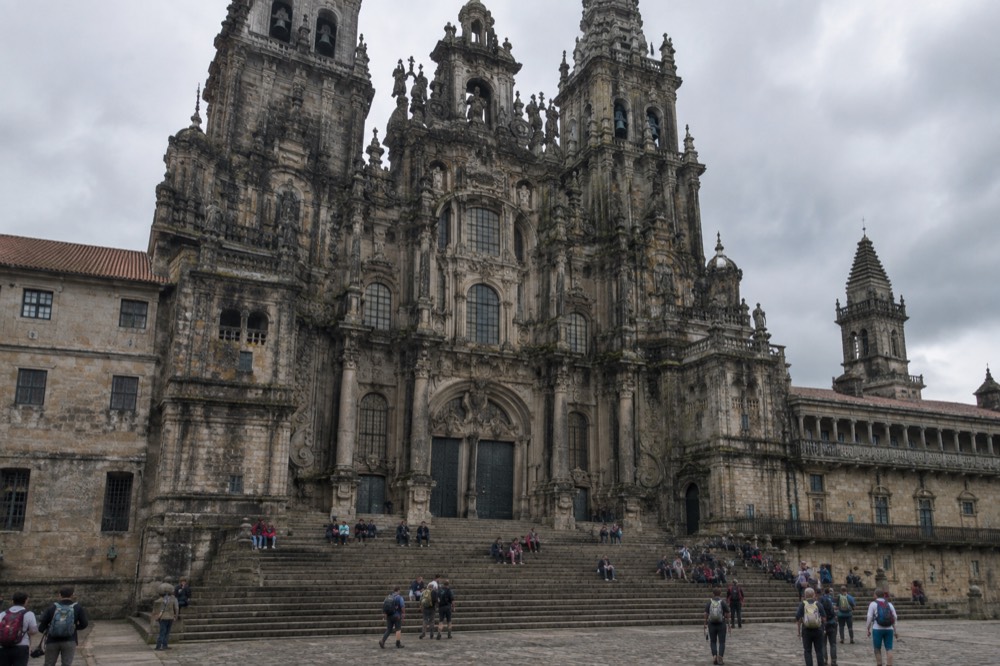
Whatever the exact number on any given day, the arrival itself is the constant: the walk down into the old town, the queue on Rua das Carretas, and the first sight of the Cathedral towers from Praza do Obradoiro are the same for the ten-thousandth pilgrim of a record year as for the lone walker of a January morning.