How Difficult Is The Portuguese Camino?
How difficult is the Portuguese Camino? An honest difficulty breakdown of the route into Santiago de Compostela: terrain, stages, cobbles, certification rules and who it suits.
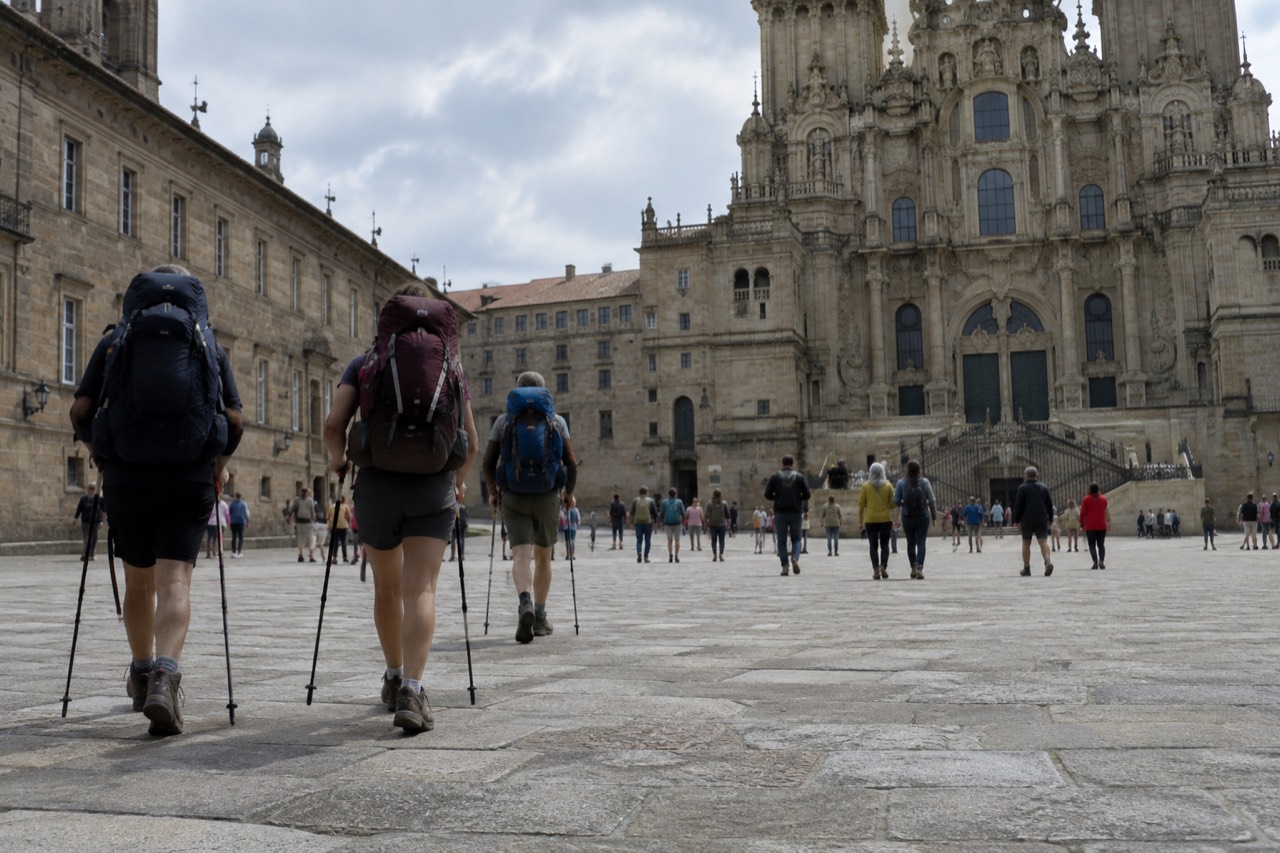
Santiago de Compostela, the pilgrim cathedral city in Galicia, northwest Spain, has been receiving walkers from Portugal for centuries, and today the Portuguese Camino is one of the busiest routes into it. Oficina del Peregrino figures recorded 530,987 Compostela certificates issued in 2025, a record year, and Portuguese-route pilgrims make up a large share of new arrivals from the south. Yet many first-timers planning the walk ask the same question before booking anything: how difficult is the Portuguese Camino?
How Difficult Is The Portuguese Camino?
The Portuguese Camino is one of the easier Camino routes into Santiago de Compostela: the terrain is mostly flat to gently rolling, waymarking is dense, and daily stages can be kept short because towns sit close together along the way. Its genuine difficulties are repetitive cobblestone and road walking rather than climbs, so fitness matters less than sturdy footwear and patience.
In practice, the Oficina del Peregrino's FAQs describe the certification rules, not a fitness test: the last 100km on foot, two stamps per day, no minimum pace. That framing matters. Nothing on the Portuguese Camino compares with the mountain stages other routes throw at walkers, and pilgrims of widely varying ages and fitness levels complete it every year.
The route from Porto enters Galicia and finishes across the same green, damp landscape that surrounds Santiago de Compostela itself: farm tracks, small forests, village lanes. AEMET's climate data for the region shows a temperate oceanic pattern, wet year-round and wetter from October to March, so difficulty is often decided by weather and footing rather than gradient. Mud, not altitude, is what slows people down.
What Makes The Portuguese Camino Easier Than Other Routes?
Three things keep the Portuguese Camino's difficulty low: near-flat terrain with no sustained climbs, frequent towns that let you break long stages into short ones, and continuous yellow-arrow waymarking that removes navigation stress almost entirely. The trade-off is that much of the walking is on tarmac or cobbles, which is harder on feet and joints than soft forest path.
The evenness of the stage distances is the practical advantage. Because the route passes through a chain of small towns, a walker who finds a 25km day too long can usually stop earlier and resume the next morning. That flexibility is exactly what makes shorter or slower Camino routes a realistic option for beginners and older walkers, a comparison we make in more depth in our guide to Camino de Santiago routes.
Footing deserves more attention than gradient. Cobbles in the Portuguese towns, and long paved stretches between them, reward cushioned shoes and can punish thin-soled sandals. Many walkers also alternate rest days, which the short-town spacing easily supports. The table below summarises where the route is genuinely easy and where it bites.
| Difficulty factor | Portuguese Camino reality | Who it affects most |
|---|---|---|
| Gradient | Mostly flat to gently rolling, no sustained climbs | Almost nobody finds it a barrier |
| Surface | Heavy cobblestone and road/tarmac sections | Walkers with joint or blister problems |
| Waymarking | Dense yellow arrows and scallop markers | Navigation is a non-issue for anyone |
| Stage flexibility | Frequent small towns, stages can be split | Slower walkers, older pilgrims, families |
| Weather | Wet year-round, wetter October to March | Anyone walking off-season |
| Crowding | Popular but quieter than the busiest routes | Pilgrims wanting solitude |
Guided support softens the difficulty further. If you prefer company and structure over independent planning, a local walking-guide option can carry the logistics, and any operator you consider should be checked for official-guide credentials and clear luggage-transfer terms before you commit.
Where Are The Hard Parts Of The Portuguese Camino?
The hardest parts of the Portuguese Camino are the cumulative ones: consecutive days of cobblestones and roadside walking, which wear feet down more than any single climb, plus wet-weather mud on farm tracks and long stretches with little shade in summer. The final approach into Santiago de Compostela adds suburban pavement and traffic.
Blister management is the single most common medical problem on flat, paved Caminos. The repetition of hard surfaces for hours a day, day after day, is what breaks people, and experienced pilgrims treat footwear and socks as the core equipment decision. Cushioned shoes, broken in well before departure, and quality merino socks do more for a Portuguese-route walker than any amount of hill training.
Weather is the second multiplier. AEMET's data for the Santiago de Compostela station shows annual precipitation on the order of 1,690-1,890mm, spread across the year with a wetter October-to-March stretch, so a shoulder-season walker should expect rain days and plan footwear, layers and dry accommodation stops accordingly. The drier July-August window trades rain for heat and hard, shadeless pavement.
How Many Days Does The Portuguese Camino Take?
The Portuguese Camino from Porto to Santiago de Compostela is typically walked over about two weeks at normal touring pace, though the only fixed number that matters is the certificate rule: the Compostela requires the last 100km on foot or the last 200km by bike, completed with at least two stamps per day. There is no minimum number of days for the walk itself.
That last-100km rule is what shapes most plans. Because the certificate counts only the final stretch, many time-pressed walkers start inside Galicia and walk the required distance over five or six days into Santiago de Compostela, while others walk the full route from Porto at a relaxed pace. Cyclists must cover the last 200km, and the Oficina del Peregrino's FAQs spell out that the credential must show two stamps per day from official stamping points along the way.
Pace expectations are covered in detail on our page about how long it takes to walk the Camino de Santiago, and the seasonal timing question, including weather trade-offs, in the best month to walk the Camino. Both matter more to a Portuguese-route walker than route difficulty itself.
What Does Arriving In Santiago de Compostela Involve?
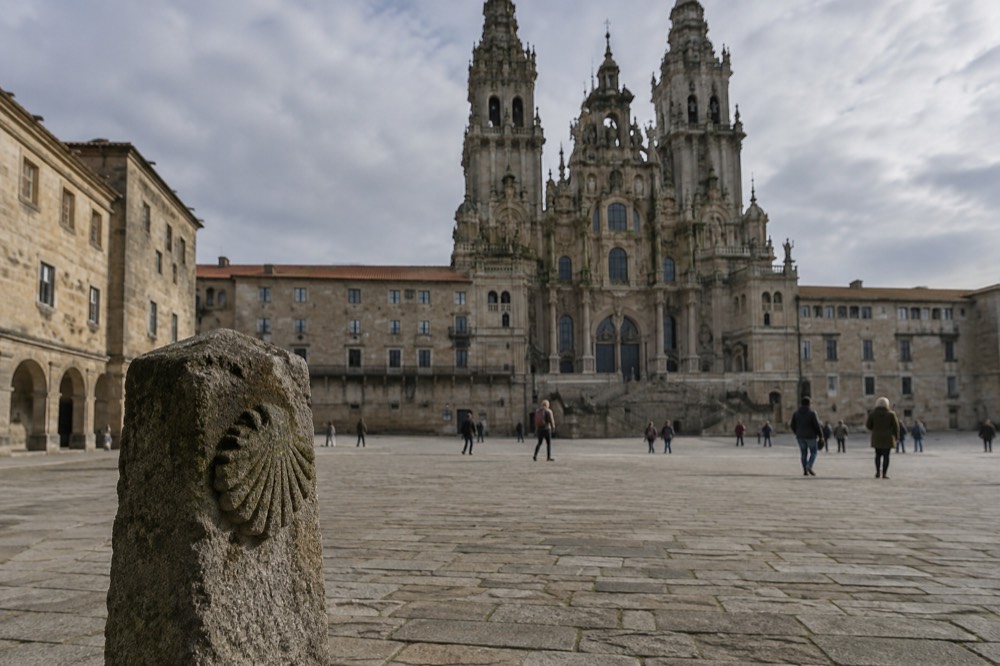
Arriving in Santiago de Compostela means the Praza do Obradoiro, the Pilgrim's Office at Rua das Carretas 33 for the Compostela certificate, and, until 15 October 2026, pilgrim masses at the Cathedral's High Altar at 7:30am, 9:30am, noon and 7:30pm. From 16 October 2026 those three daytime and evening masses move to the nearby Church of San Agustin, with only the 7:30am mass staying in the Cathedral.
The certificate itself is issued in person only, and the office's seasonal hours vary, roughly 8am-8pm depending on the time of year, closing on 25 December and 1 January. The queue on a busy day can be long, which is why many walkers treat the office visit as part of the arrival ritual rather than a chore.
Once the paperwork is done, most pilgrims spend a full day in the old town. The UNESCO listing covers the Old Town itself, inscribed in 1985, and the Routes of Santiago de Compostela carry a separate 1993 inscription, a distinction worth knowing when guides blur the two together. A guided walk of the Cathedral, its museum and the surrounding streets compresses that sightseeing into a few well-spent hours.
Is The Portuguese Camino Right For A First-Time Pilgrim?
For a first-time pilgrim the Portuguese Camino is a strong choice precisely because its difficulty is low: flat terrain, forgiving stage spacing and unambiguous waymarking remove the three things that typically defeat beginners on longer, harder routes. A walker who can comfortably walk 15-20km in a day at home can complete it with rest days.
First-timers should still read up on the practical rules before setting out. The credential system, the two-stamps-per-day requirement and the in-person issuance at Rua das Carretas 33 all trip up newcomers who treat the certificate as an automatic formality. Our guides to the pilgrim passport and to the Camino Frances cover the mechanics, and beginners comparing routes should also read which Camino is best for beginners.
Age and solo walking come up constantly in this conversation, and the honest answer is that the Portuguese route's gentle profile is why questions about whether a 70-year-old can walk the Camino, or whether it is safe for a woman to walk alone, are answered with more confidence here than on steeper alternatives. The route's traffic of other pilgrims means you are rarely alone for long.
How Does Portuguese Camino Difficulty Compare With The French Route?
Against the Camino Frances, the Portuguese Camino is easier: it lacks the sustained mountain stages of the French route, keeps towns closer together, and presents fewer long, remote days. Its penalties are more pavement, more cobbles and, on the French route's logic, fewer of the high, dramatic sections that some walkers come for.
The Camino Frances carries the bulk of the annual pilgrim traffic, which is why walkers chasing solitude often switch to the Portuguese route; the trade-off is fewer albergue beds in some stretches, so booking ahead matters more in season. Our head-to-head on which is better, the Portuguese Camino or the French Camino, breaks the comparison down fully.
Difficulty, in the end, is a footprint-and-calendar question on the Portuguese route. Choose cushioned shoes, respect the rain, build in a rest day or two, and the walk into Santiago de Compostela is one of the gentlest introductions to the Camino anywhere in Europe, which is exactly why its popularity keeps growing. The Santiago de Compostela Travel Guide editors will keep tracking route conditions and the Cathedral's restoration schedule as the 2027 Holy Year approaches.
Common Questions About The Portuguese Camino
How difficult is the Portuguese Camino?
It is one of the easier Camino routes into Santiago de Compostela: mostly flat, well waymarked and flexible in stage length. Its main difficulty is repetitive cobblestone and tarmac walking rather than climbs.
Do I need to train before walking the Portuguese Camino?
You should be comfortable walking 15-20km in a day before starting. The terrain is gentle, but consecutive days on hard surfaces test feet and joints more than fitness.
How far do I have to walk on the Portuguese Camino to get the Compostela?
The Oficina del Peregrino requires the last 100km on foot, or the last 200km by bike, completed continuously with at least two stamps per day on your credential from official stamping points.
Is the Portuguese Camino harder than the Camino Frances?
No. The Portuguese route is flatter and has no equivalent of the French route's mountain stages, though it trades that for more road and cobblestone walking.
Can beginners walk the Portuguese Camino?
Yes. Its gentle profile, dense waymarking and closely spaced towns are exactly why beginners and older walkers choose it, and rest days are easy to insert along the way.
What is the biggest difficulty on the Portuguese Camino?
Footwear and weather. Blister-prone hard surfaces dominate the route, and AEMET data shows the region is wet year-round, wetter from October to March, so mud and rain do more to slow walkers than any hill.